Flagship Titles
Deep editorial on the five games that define DMA Design's legacy. See catalogue for all 15 titles. See music page for soundtracks. See people for the team behind them.
The Puzzle Game That Sold Twenty Million Copies
Developer: DMA Design · Publisher: Psygnosis · Platform: Amiga (original), ported to 20+ platforms · Released: February 1991 · Music: Tim Wright (CoLD SToRAGe), Brian Johnston
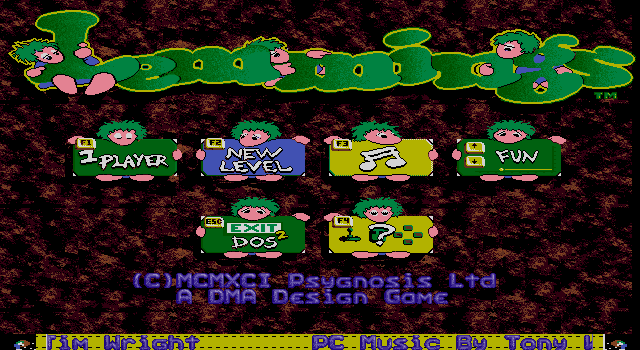
Lemmings arrived in February 1991 and created a genre overnight. A puzzle game built on a radical premise - guide a column of cheerfully oblivious creatures from an entrance to an exit, across levels designed to kill them - it sold over twenty million copies across more than twenty platforms and became one of the defining games of the early 1990s. It remains, thirty-five years later, instantly playable and instantly understood.
What made Lemmings extraordinary was not just the puzzle design, but the emotional investment it engineered. The lemmings themselves - tiny, green-haired, blissfully unaware of every cliff and hazard - inspired genuine protectiveness. Sacrificing one to save the others felt meaningful. Watching them walk cheerfully off an edge felt awful. DMA Design weaponised that feeling and built a masterpiece around it.
Two Pixels and a Question
The game's origin is one of the best-documented accident stories in gaming. In November 1989, Mike Dailly was working at DMA Design's Dundee offices, experimenting in Deluxe Paint on the Amiga. He animated a tiny figure - two pixels tall - walking back and forth across the screen. Dave Jones glanced over and asked a question that redirected the studio.
"What if those little things were walking off the edge of something?"
Dave Jones, in conversation with Mike Dailly, November 1989; recounted in PCGamesN "The Making of Lemmings" (2014) and the Noclip documentary "History of GTA, Lemmings & DMA Design" (YouTube, 2017)
Within weeks, the concept crystallised: a procession of mindlessly walking creatures, each one assignable to one of eight roles. Climbers scaled vertical walls. Floaters drifted safely down drops. Bombers cleared obstacles at the cost of their lives. Builders laid stair sections across gaps. Bashers, miners, and diggers carved through terrain. Blockers redirected the flow. Eight skills, endlessly combinable, on levels designed to require precisely the right combination in the right order.
The team that built Lemmings was small by any measure - Dave Jones, Mike Dailly, Russell Kay, and a handful of others working in Dundee. Tim Wright (CoLD SToRAGe) composed the Amiga MOD soundtrack - cheerful, melodic arrangements of public domain folk tunes alongside original compositions from Brian Johnston. The whole thing came together in roughly a year of development.
Assign, Watch, Sacrifice
The gameplay loop was deceptively simple. Each level presented a set number of lemmings emerging from a trapdoor; the player had to get a specified minimum percentage to the exit. Between entrance and exit lay terrain, drops, obstacles, and hazards. The player had a limited supply of each skill type and had to assign them in real time as the procession kept moving.
The tension came from the fixed-direction walking. Lemmings never stopped. Never turned around without a blocker. Never paused. If a player hesitated too long or assigned a skill to the wrong lemming, the consequences were irreversible. The bomber skill was the hardest to use: selecting it started a five-second countdown before the lemming exploded, clearing terrain but costing a life. The moral weight of that countdown - the lemming raising its arms and beginning its resigned countdown - was deliberate and effective.
Harder levels required solutions that involved sacrificing lemmings intentionally to save the rest. Building a bridge required a builder to lay steps across a gap; the builder would stop at the end. Sometimes you needed two builders leapfrogging each other. The game rewarded players who thought in chains of consequences rather than individual actions.
What Psygnosis Launched on Issue One
Amiga Power Issue 1 (May 1991) launched with Lemmings as its cover game and awarded it a score widely reported at 97%. CU Amiga gave it a CU Super Star, its highest rating. The One Amiga and Amiga Format covered it extensively. For a game to dominate the launch of the UK's most important Amiga magazine was a statement of confidence that proved entirely justified: Lemmings went on to sell over twenty million copies across all platforms.
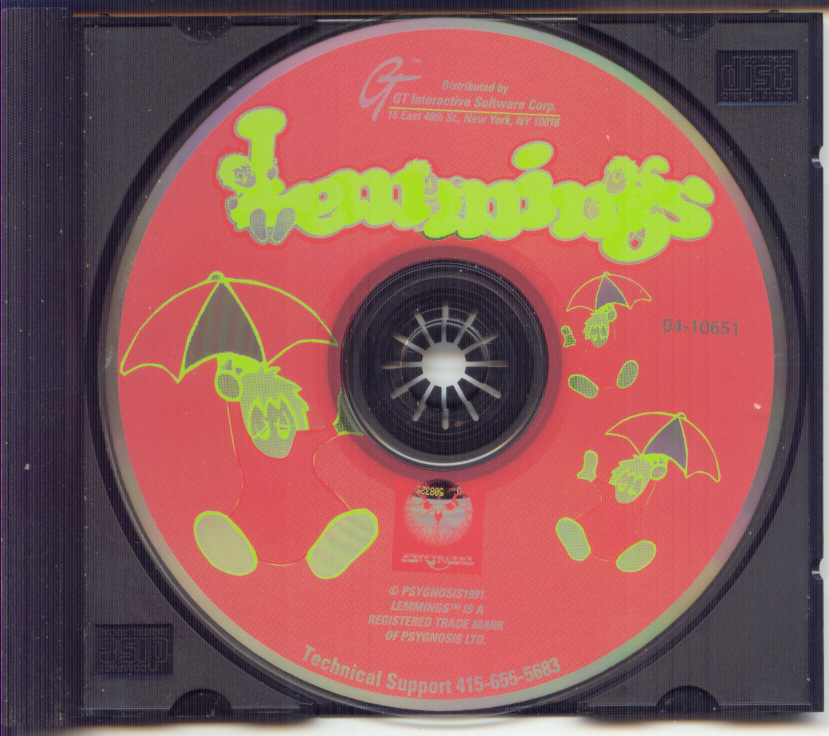
The port program was extraordinary. From the Amiga original, Lemmings moved to DOS, Mac, Atari ST, SNES, Mega Drive, Game Boy, C64, Commodore CDTV, Amiga CD32, 3DO, Acorn Archimedes, and more. Each port required new artwork and music. The SNES version used the system's Mode 7 for the menu screen. The Game Boy version stripped the soundtrack to beeper tones. The DOS version - the version most PC owners encountered - was the one that spread Lemmings from Amiga enthusiast to mainstream PC owner.
The Template Every Puzzle Game Copied
Lemmings influenced the puzzle game genre immediately and permanently. The combination of cute protagonist design, real-time management, and irreversible consequences became a template. Oh No! More Lemmings (1991) followed within months as a standalone 100-level expansion. Lemmings 2: The Tribes (1993) doubled down with twelve distinct game worlds. All New World of Lemmings (1994) experimented with direct control. 3D Lemmings (1995) added a third dimension. A PlayStation remake arrived in 2006. NeoLemmix - the community-maintained modern port - has kept Lemmings alive through thousands of fan-made levels into the 2020s.
DMA Design built seven further Lemmings titles after the original, a franchise that outlasted the studio by decades. The original 1991 game remains the canonical version. See Play to run Lemmings today via DOSBox or NeoLemmix, and Resources for community links.
Further reading: Catalogue entry · Music: Tim Wright · People: Mike Dailly, Dave Jones · Reviews: Amiga Power, CU Amiga · Play Lemmings today
Twelve Worlds, One Ambitious Sequel
Developer: DMA Design · Publisher: Psygnosis · Platform: Amiga, DOS (primary); SNES, Game Boy, Atari ST, Game Gear ports · Released: 1993 · Music: Tim Wright (CoLD SToRAGe)
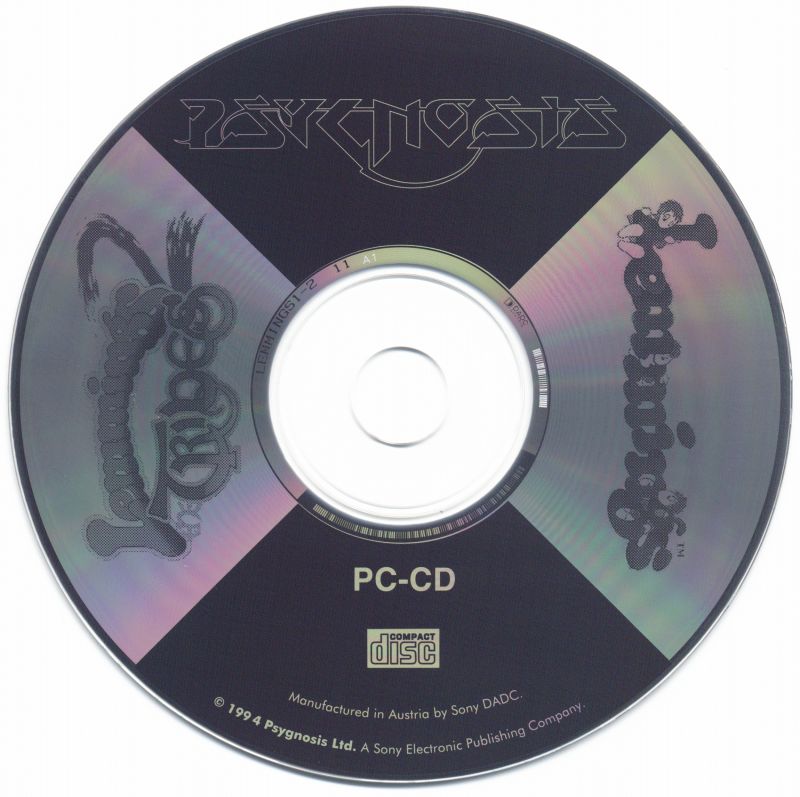
The original Lemmings left DMA Design with a problem every studio dreams of having: a global bestseller that demanded a sequel. The temptation was to add more levels and call it done. Instead, DMA Design dismantled the original concept and rebuilt it twelve times over - creating twelve distinct tribes of lemmings, each with their own visual world, their own skill sets, and their own soundtrack from Tim Wright.
The result was a game of extraordinary scope. 120 levels across 12 tribes, each tribe with 10 levels, each level set in a visually distinct environment. The Arctic tribe navigated snowfields and ice caves. The Egyptian tribe moved through hieroglyphic puzzles and sand. The Space tribe operated in zero-gravity chambers with floating platforms. The Beach tribe built sand castles. The Circus tribe swung on trapezes. The Classic tribe delivered a clean callback to the original game's visual language for players who missed its restraint.
Building Twelve Games Inside One Box
The design challenge for Lemmings 2 was unlike anything DMA Design had previously attempted. Each tribe required not just new graphics and levels, but entirely new skill vocabularies. The original Lemmings had eight universal skills shared by all levels. Lemmings 2 replaced this with over 50 tribe-specific skills - the Arctic tribe had skills the Space tribe could not access and vice versa. Where the original's eight skills could be explained in two minutes, the sequel required players to learn and re-learn mechanical systems repeatedly as they moved between tribes.
Tim Wright delivered twelve sets of tribal music to match. The Arctic levels got spare, icy compositions. The Egyptian levels got an appropriately North African feel. The Space levels got synth atmospherics. Each tribal world was a contained sonic identity as well as a visual one.
"Lemmings 2 is a tour de force of platform-spanning puzzle design. DMA have crammed an absurd amount of game into one box - twelve distinct worlds, each as polished and distinct as a standalone product, connected by Tim Wright's twelve-theme score. The original's tight focus is replaced by something that takes considerably longer to exhaust."
Amiga Power, 1993 (representative of UK Amiga press coverage; score to be confirmed from archive scan)
When Breadth Challenges Depth
The reception for Lemmings 2 was strong but notably different in character from the original's universal acclaim. Critics and players both recognised the technical achievement - the sheer quantity of original content was staggering. But the original's tight, coherent identity was hard to replicate across twelve distinct worlds simultaneously.
The original Lemmings worked, in part, because every level shared the same visual language. The same green-haired creatures, the same earthy tileset, the same eight skills. Mastery of the system transferred across all 120 levels. Lemmings 2 reset the skill vocabulary with each tribe. Players who loved the Arctic levels could not apply that mastery to the Circus levels. For some, this was variety and abundance. For others, it meant never fully mastering any part of the game.
The Foundation for Everything That Followed
Lemmings 2 established a creative and commercial precedent: DMA Design could build major expansions of the Lemmings concept that were not simply "more of the same". The tribe structure inspired All New World of Lemmings (1994), which experimented with direct control mechanics, and The Lemmings Chronicles (1994) on PC. The franchise continued well beyond DMA Design's Psygnosis era.
The Amiga and DOS versions remain the definitive releases. The SNES and Game Boy ports had to compress the visual variety significantly. The Amiga version's music - 12 full MOD-format soundtracks from Tim Wright - is the version worth hearing.
Further reading: Catalogue · Music: Tim Wright · Reviews
The Mech That Only the Amiga Could Move
Developer: DMA Design · Publisher: Psygnosis · Platform: Amiga only · Released: 1993 · Music: Tim Wright (CoLD SToRAGe)
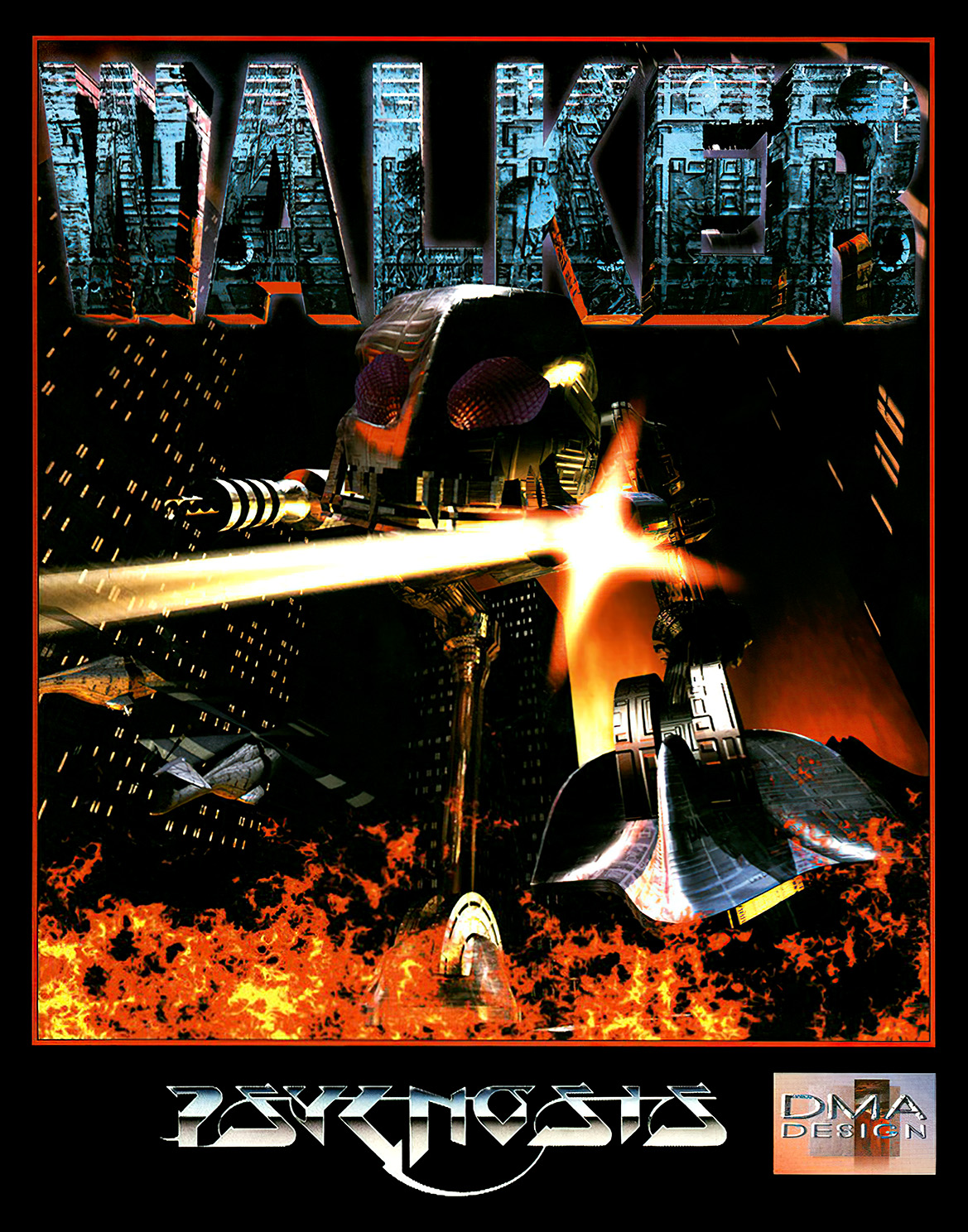
Walker is DMA Design's most technically spectacular Amiga game and, perhaps uniquely among their output, a game designed from the ground up for the Amiga's specific hardware rather than ported to it. A time-travelling mech-walker shooter across three historical eras, it used the Amiga's blitter chip to render animation that no other home computer of 1993 could have produced at the same scale and smoothness.
The premise was simple and strange: the player piloted a bipedal walker - essentially a small armoured AT-AT, controlled by the joystick - through a time-travel narrative that visited a WWII London blitz, a medieval castle siege, and a far-future battlefield. Each era had period-appropriate enemies: Luftwaffe aircraft and Wehrmacht infantry in London, armoured knights and siege weapons in the medieval levels, sci-fi mechs and energy weapons in the future.
What the Blitter Was Built For
The Amiga's blitter chip was designed to move large blocks of graphics data rapidly - a specialised hardware solution to the problem of scrolling backgrounds and animating large sprites without taxing the main CPU. Walker exploited this deliberately and maximally. The mech itself was a large, fluid sprite that moved convincingly on two legs, with inertia in its gait that smaller sprites could not have conveyed. The backgrounds scrolled smoothly behind it. The WWII London setting - bombed-out buildings, searchlights, anti-aircraft batteries - was rendered in detail that impressed even reviewers who were lukewarm about the gameplay.
"Walker is technically staggering. DMA have pushed the Amiga's blitter to its practical limit to deliver large-sprite animation with genuine inertia and smooth parallax scrolling simultaneously. The WWII setting in particular demonstrates what dedicated hardware is worth when a developer knows how to use it."
Amiga Format, 1993 (representative of UK Amiga press coverage; score to be confirmed from archive scan; see reviews page)
Aim and Crush
The gameplay had two distinct modes. Movement was joystick-driven: the walker's legs responded to directional input with a rolling, stomping gait, and the mech crushed anything small enough underfoot automatically. Combat required pointing the walker's weapons systems at targets - a second input that the joystick-based control scheme handled less elegantly than the movement.
The weapon variety shifted by era. WWII London gave the player anti-aircraft-style guns to deal with Luftwaffe bombers passing overhead, as well as ground weapons for infantry. The medieval levels added siege weapons and mounted attackers. The future levels introduced shielded enemies and energy-based combat. Each era required different target prioritisation and a different rhythm of engagement.
Frank About Its Limits
Amiga Power - the magazine that reviewed Lemmings in Issue 1 with near-perfect enthusiasm - was characteristically direct about Walker's shortcomings. The technical achievement was acknowledged; the gameplay depth was found wanting. The walker's movement, while visually impressive, could feel imprecise under fire. The control split between moving the mech and aiming its weapons created situations where doing both simultaneously was awkward. The critical consensus in 1993 placed Walker as an exceptional technical showcase that fell short of Lemmings' elegance as a playable experience.
Tim Wright's Amiga MOD score matched the visual scale. Each of the three historical eras had a distinct musical identity - cinematic and period-appropriate in a way that reinforced the game's visual design. The Walker soundtrack is among Tim Wright's strongest DMA Design compositions.
What Only the Amiga Could Do
Walker was never ported. It exists exclusively on the Amiga, and this is partly by design: the game was built so precisely around the Amiga's blitter capabilities that porting it would have required rebuilding it from scratch for each target platform. There is no DOS version, no Atari ST version, no SNES version. Walker is a demonstration of what DMA Design could extract from dedicated Amiga hardware, frozen in the moment before the studio turned to multi-platform development.
For Amiga enthusiasts, Walker represents DMA Design at their most technically ambitious on the platform. It is not their most polished game, but it is their most spectacular.
Further reading: Catalogue · Music: Tim Wright · Reviews: Amiga Power, Amiga Format · Videos: Walker Amiga longplay
Four Players, One Screen, One Amiga
Developer: DMA Design · Publisher: Psygnosis · Platform: Amiga only · Released: 1993 · Music: Tim Wright (CoLD SToRAGe)
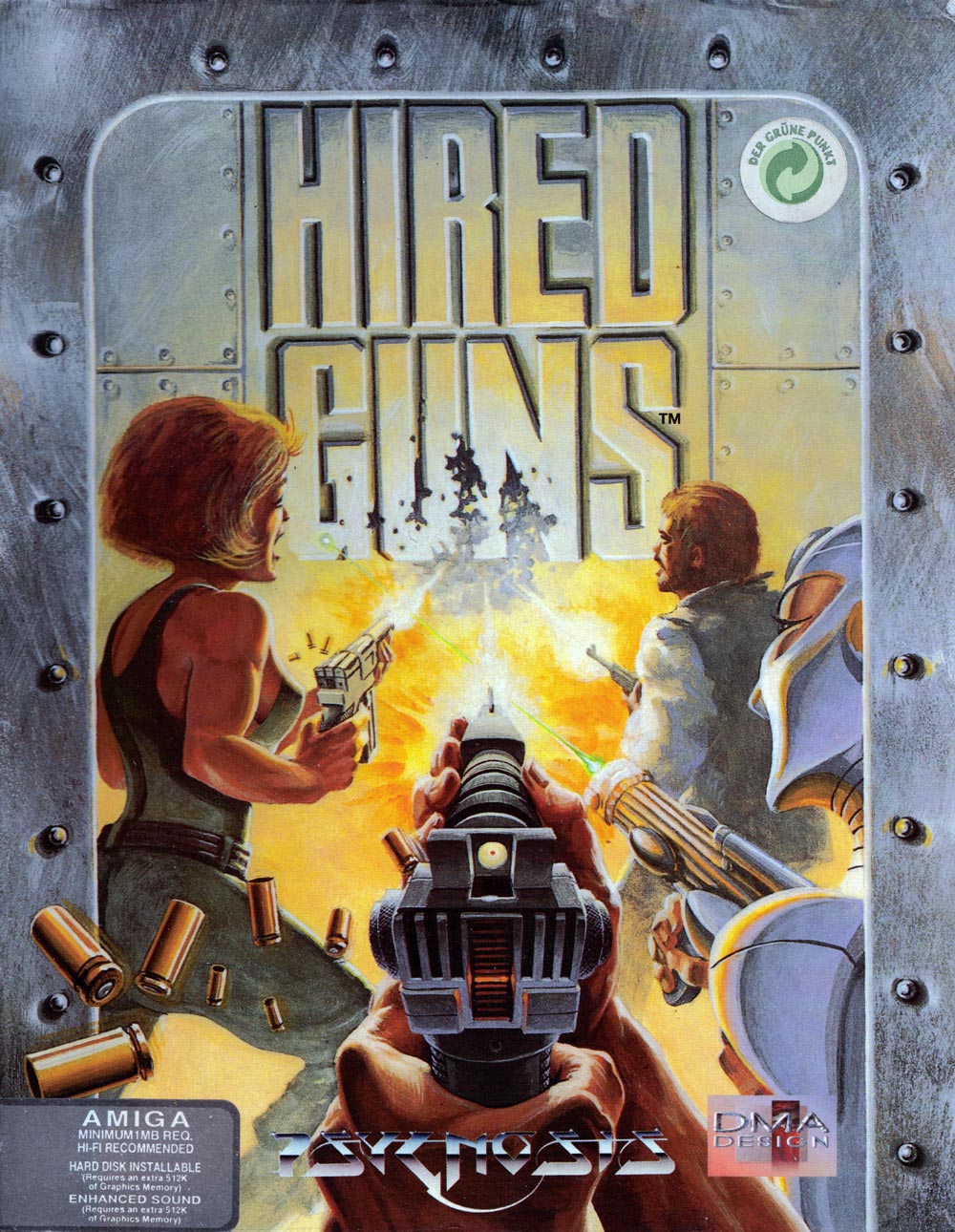
Hired Guns is DMA Design's most audacious engineering achievement on the Amiga. A first-person dungeon crawler set in a labyrinthine sci-fi complex, it offered something no other Amiga game had provided: four simultaneous players, each with their own first-person viewport, all running on a single Amiga in real time. Four viewports. Four characters. Four inventories. Four independent sets of objectives. One machine.
The single-player game was already demanding: a sprawling labyrinthine facility across multiple floors, populated with hostile robots and alien creatures, navigated through a first-person view supplemented by a top-down minimap. The four-player mode took this structure and multiplied it. Each player controlled a distinct mercenary character with different strengths, working - or not - alongside the others through a complex that rewarded coordination but penalised it less than expected.
Four Viewports on Hardware That Wasn't Designed for One
The engineering problem DMA Design solved in Hired Guns was substantial. First-person rendering on the Amiga was already a significant CPU and graphics challenge in 1993; Wolfenstein 3D had been ported to the Amiga, but the performance was marginal. Running four simultaneous first-person views - each updating in real time, each responding to independent player input, each processing its own collision detection and combat - was not a modest extension of existing approaches. It required custom rendering pipeline work specifically designed to divide the screen and share the hardware across four simultaneous world views.
The characters themselves had distinct roles. Each of the four mercenaries could be one of several character types - soldier, hacker, medic, tech - with different weapon proficiencies, electronic lock-cracking abilities, and resource management needs. Full inventory management for each character meant equipment decisions had real consequences. Ammo was finite. Medkits were scarce. The game did not hold players' hands.
"We've never seen four independent first-person viewports running simultaneously on a single Amiga before, and Hired Guns delivers them without apology. This is not a technical compromise - it is a full implementation. Each of the four views has its own character, its own inventory, its own relationship with the facility. As a multiplayer engineering achievement, nothing on the Amiga has previously touched this."
CU Amiga, 1993 (representative of UK Amiga press coverage; score to be confirmed from archive scan; see reviews page)
Cooperate, or Die on the Same Floor
The four-player mode created dynamics that single-player dungeon crawlers could not replicate. Players who cooperated, sharing ammo and medical supplies and covering each other in combat, fared better than those who went independent. But the game did not enforce cooperation; players could wander their own sections of the facility and only reconnect when the mission required it.
The solo experience was a dense, atmospheric crawl through a hostile industrial complex. Tim Wright's Amiga MOD soundtrack contributed significantly to the tone: claustrophobic, electronic, genre-appropriate in ways that DMA Design's Lemmings-era cheerful compositions were not. Walker had shown Tim Wright could do cinematic orchestral scale; Hired Guns showed he could do sci-fi atmosphere.
The Cult That Remembered
Hired Guns was not a mainstream success on the scale of Lemmings. Its audience was Amiga enthusiasts willing to invest time in a demanding game that rewarded patience and exploration over casual play. Reviews acknowledged the engineering achievement unanimously; the gameplay's accessibility was debated.
The game's reputation has grown in retrospect. For Amiga historians, it stands as the definitive demonstration of what the platform's hardware could be pushed to deliver in 1993. Four first-person viewports on a single Amiga, in a game with full character progression and inventory management, two years before the PlayStation launched, is an achievement that does not diminish with time.
Further reading: Catalogue · Music: Tim Wright · Reviews · Videos: Hired Guns Amiga longplay
How Race and Chase Became the Most Controversial Game of the Decade
Developer: DMA Design · Publisher: BMG Interactive (UK/Europe); Take-Two Interactive (North America) · Platform: DOS/PC (original); PlayStation; Game Boy Color · Released: October 1997 · Music: Craig Conner, Allen Blyth, Stuart Ross, Colin Anderson
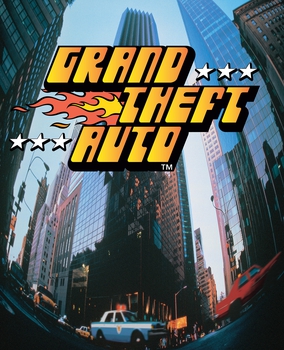
Grand Theft Auto did not start as Grand Theft Auto. It started as Race and Chase - a relatively conventional cops-and-robbers driving game, built around the premise of playing either law enforcement or criminal in a top-down city. The distinction between those two roles was intended to be meaningful. Through development, it became clear that the criminal side was far more interesting to play, the city functioned better as a free-roaming sandbox than a structured race course, and the escalating police response was the most entertaining mechanical element in the prototype. DMA Design built a game around those conclusions. They called it Grand Theft Auto.
Released in October 1997 for DOS, GTA was immediately and conspicuously controversial. Players could steal any car on the street, take criminal missions for competing mob factions, run over pedestrians, shoot police officers, and evade an escalating wanted response measured in stars. Tabloid newspapers covered it with predictable alarm. The coverage drove awareness. The game sold.
From Cops and Robbers to Anarchic Sandbox
The development history of GTA is more complicated than the headline version suggests. Dave Jones, DMA Design's founder, was instrumental in the studio's early development work but had departed before GTA's completion. The project was shaped significantly by Sam Houser, Gary Penn, and the team that would go on to form the core of Rockstar Games. The game that shipped was recognisably DMA Design's work in its technical construction but was increasingly the vision of the people who would commercialise and franchise it.
The city itself - Liberty City in the original release's American chapter, plus San Andreas and Vice City in subsequent chapters - was built as a living system rather than a race track. Traffic flowed independently of the player. Pedestrians moved on their own schedules. Police responded to observed crimes rather than scripted triggers. The player was an agent in a world that had its own momentum, rather than the protagonist of a linear sequence. This was the grammar of open-world crime gaming. GTA III (2001) would realise it in three dimensions; the grammar itself was invented in Dundee in 1997.
"The original concept was kind of a cops-and-robbers, running-around kind of game. But we quickly found that the criminal side was a lot more fun - you had so much more freedom. The chase mechanics were interesting, but being chased was even more interesting. From there it kind of evolved naturally into the game that launched the franchise."
Dave Jones, Noclip "History of GTA, Lemmings & DMA Design" (YouTube, 2017)
Steal a Car, Take a Mission, Escalate the Response
The gameplay loop that GTA established has been refined but not fundamentally changed in the decades since. Players navigated a top-down city on foot or in stolen vehicles. Criminal missions were taken from pay phones distributed across the city - a spatial mechanic that required the player to move to the mission source rather than accessing it from a menu. Mission types covered car theft, assassination, getaway driving, and protection work for the city's competing mob factions.
Between missions, the city was available as a free-roaming environment with its own entertainment value. Driving vehicles, evading police, exploring the city's different districts, and finding the limits of the police response were all independently engaging. The game worked as a structured campaign and as a sandbox. This dual function would define open-world game design for the next quarter-century.
The music took an approach that GTA III would expand into full radio station culture: genre-specific music tracks in each stolen vehicle, giving a distinct sonic character to different cars in the city. Composers Craig Conner, Allen Blyth, Stuart Ross, and Colin Anderson built a score that covered multiple genres without the licensed songs that later GTA games became famous for.
Critics Missed the Anarchic Joy
GTA's contemporaneous critical reception was mixed in a way that is legible in retrospect. PC Zone (UK) and PC Gamer gave it positive reviews; Edge was notably interested in its design innovation. American publications were more uncertain. The tabloid controversy that attended its release coloured some coverage; reviewers who wanted to take the game seriously had to work against a cultural context that had already decided it was scandalous.
The game's commercial performance - strong but not extraordinary by 1997 standards - did not predict what followed. A PlayStation port in 1997-1998 extended the audience. GTA 2 (1999) refined the formula. And then, in 2001, DMA Design as Rockstar North shipped GTA III, which transformed the franchise into a cultural phenomenon of a scale that reshaped the games industry.
From Two Stars to Three Hundred Million
The total Grand Theft Auto franchise has sold over 350 million units. GTA V (2013) is one of the best-selling entertainment products in history. The creative and commercial lineage from the 1997 PC release to that scale of success is direct and traceable: the wanted stars, the free-roaming city, the mission structure, the criminal protagonist - all of it was established in Dundee in 1997 by a team that was still called DMA Design.
The fact that Dave Jones - who founded DMA Design and led it through Lemmings, Walker, and the early years - had left before GTA shipped is a notable footnote. The game that became his studio's most consequential legacy was completed without him. Jones went on to found Rage Software and later Realtime Worlds. DMA Design became Rockstar North in 2002. The studio that had shipped Menace in 1988 and Lemmings in 1991 ended its independent existence as the originator of one of the highest-grossing franchises in entertainment history.
Further reading: Catalogue · People: Dave Jones · Videos: GTA 1997 longplay, Noclip documentary · Interviews: GamesRadar oral history · Modern: Rockstar North and beyond