Editorial Deep-Dives - NES / SNES / N64

Flagship Titles

Four games. Four hardware generations. Four moments when the platform genre was rewritten from the ground up - by the same core team, with the same design philosophy, and radically different technology each time. Browse the complete series in the games catalogue.

? Super Mario Bros. - NES - 1985

World 1-1 Changed Everything

A side-scrolling platformer with 32 stages and physics so precisely tuned that players learn every rule in the first thirty seconds without reading a word.

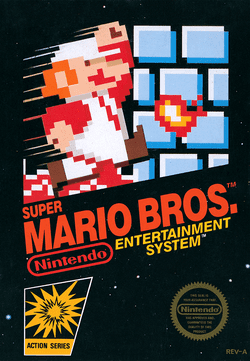
Super Mario Bros. (1985) NES North American box art
Super Mario Bros. (1985) - bundled with the NES in North America and credited with ending the 1983 video game market crash.

Release

JapanSeptember 13, 1985
North AmericaOctober 18, 1985
PlatformNES / Famicom
PublisherNintendo
DirectorsMiyamoto, Tezuka

By the Numbers

Worlds8
Stages32
Power-upsMushroom, Fire Flower, Star
Copies sold40+ million
ComposerKoji Kondo
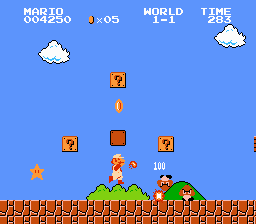
Super Mario Bros. World 1-1 NES gameplay - Mario approaching the first Goomba
? Development

Fourteen Months to Revive the Industry

Nintendo shipped the Famicom to Japan in July 1983, one month before the American video game market collapsed. The 1983 crash - driven by console oversaturation and low-quality licensed games - had wiped out billions in retail revenue and convinced most North American retailers that home gaming was finished. When Nintendo began preparing the NES for US release in 1985, the company needed a software title that would prove the hardware was fundamentally different from what had come before.

Shigeru Miyamoto and Takashi Tezuka worked at Nintendo R&D4, the internal division Miyamoto had led since Donkey Kong. Development of Super Mario Bros. ran from early 1984 to September 1985 - roughly fourteen months. The design philosophy was established at the outset: players would learn everything through play, without instruction screens or text prompts. Miyamoto drew levels on graph paper before any code was written, mapping enemy placements, obstacle positions, and power-up rewards spatially before the engine existed to run them. Profiles of Miyamoto, Tezuka, and composer Koji Kondo are in the People section.

One design decision restructured the entire game. Miyamoto added a power-up that grew Mario to double his height. The immediate problem: large Mario couldn't fit through gaps that small Mario could navigate. The team had to go back through every level and redesign passages so that both sizes had meaningful uses - small-only shortcuts, large-only block breaks. What started as a visual effect became the game's central mechanic and its core tension.
The mushroom grows Mario to large size - but then large Mario can't fit through small gaps. We had to go back and redesign levels so there were things only small Mario could reach. That's how the two-size system became a game design tool rather than just a visual effect. Shigeru Miyamoto, Iwata Asks: Super Mario Bros. 25th Anniversary, Nintendo.com, 2010
? Design

A Tutorial That Never Announces Itself

World 1-1 opens on a static screen. Mario stands on grass. A single Goomba walks left toward him. Behind Mario: nothing but sky. Ahead: a question-mark block, a pipe, open ground. No instructions. The level teaches everything through encounter: the Goomba is a threat (it moves toward Mario), the question-mark block rewards hitting from below (it's at jump height), the pipe is an obstacle taller than Mario without a boost. In thirty seconds, the player has absorbed the game's grammar - enemies, power-ups, obstacles - without reading a word.

Mario's physics carry the game. Jump height varies with button-hold duration: a tap produces a small hop, a full hold generates a long arc that clears multiple enemies. Running (holding B) extends horizontal momentum and widens the jump range. The interaction between speed, jump arc, and enemy placement changes in every stage, which is why 32 stages feel like 32 distinct problems rather than repetitions of the same idea.

Three power-ups - the Super Mushroom (grow), the Fire Flower (fireballs), the Super Star (temporary invincibility) - are the entire item vocabulary. Each does exactly one thing. The simplicity is deliberate: players learn the rules completely in World 1, then the game tests them across increasingly hostile terrain in Worlds 2-8.

? Reception & Legacy

Forty Million Copies and the End of the Crash

Super Mario Bros. launched in Japan in September 1985 and sold immediately. In North America, the NES hardware launched in October 1985 with the game bundled in the box alongside R.O.B. the Robot. By the end of 1987, 7 million NES units had sold in North America and the video game market had returned to pre-crash levels. The credit went directly to Super Mario Bros. - the game that retailers and parents trusted as evidence that home gaming was back. Nintendo Power's inaugural issue in 1988 named it the greatest NES game ever made.

The game's influence extended beyond sales figures. Its design grammar - the mushroom power-up, the flagpole end-of-stage, the question-mark block, the Goomba, the Koopa shell - became the vocabulary of an entire genre. Every 2D platformer that followed either adopted these elements or defined itself against them. World 1-1 is cited in university game design courses as the canonical example of implicit teaching through level layout: the idea that a skilled designer can teach a player everything without interrupting the experience with a tutorial.

The game entered the World Video Game Hall of Fame in 2015 and was acquired by the New York Museum of Modern Art in 2012 as part of their architecture and design collection. Over 40 million copies have been sold across all platforms and compilations. The complete series catalogue is at games.html.

? Super Mario Bros. 3 - NES - 1988

Eight Worlds and No Compromises

The most ambitious NES game ever built: eight themed worlds, five new power-up forms, a world map that makes the game feel twice as large as it is, and a Japanese release sixteen months before North America ever played it.

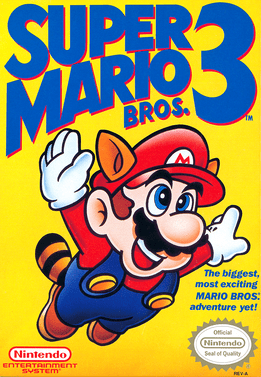
Super Mario Bros. 3 (1988) NES North American box art
Super Mario Bros. 3 (1988) - eight themed worlds on a single NES cartridge, including Giant Land, Ice Land, and the Pipe Maze.

Release

JapanOctober 23, 1988
North AmericaFebruary 12, 1990
PlatformNES / Famicom
PublisherNintendo
DirectorShigeru Miyamoto

By the Numbers

Worlds8 themed worlds
Power-up forms5 (Raccoon, Tanooki, Frog, Hammer, Fire)
Koopalings7
First-year sales7 million copies (NA)
US launch gap16 months after Japan
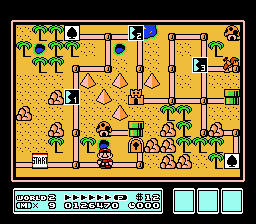
Super Mario Bros. 3 World 1 overworld map showing the per-world structure
? Development

Two Years, Eight Worlds, One Cartridge

Miyamoto's team at Nintendo R&D4 spent roughly two years on Super Mario Bros. 3 - a development time roughly double that of the original game. The scope was ambitious from the start: eight themed worlds each with its own overworld map, unique enemy set, signature mechanic, and distinctive visual identity. Grass Land, Desert Land, Water Land, Giant Land, Sky Land, Ice Land, Pipe Maze, and Dark Land represent a breadth of environmental design that the NES had never hosted on a single cartridge.

Takashi Tezuka was Miyamoto's co-designer, as on the original game. The expanded development team worked around the NES's memory constraints to fit the full game on a single cartridge. Tricks included shared sprite banks across worlds, enemy behaviour re-use with new appearance skins, and compression of stage geometry data. The Tanooki suit's stone-statue animation - requiring Mario to temporarily render as a static environmental block - involved briefly hiding the Mario sprite and displaying a substitute that matched nearby tile textures.

The theatrical framing was a deliberate creative decision. The overworld maps are presented as stages in a show: enemies move between scenes, the player chooses routes through a map, and the Koopalings wait at the end of each act as a boss encounter. Miyamoto has described SMB3 as his attempt to make a game that felt like watching a performance while also being the performer.

With Super Mario Bros. 3, we thought of the whole game as a kind of theatrical production. The curtain going up at the start wasn't accidental - we wanted players to feel they were watching something being performed for them, while they were also the performers. Shigeru Miyamoto, Nintendo Power, Volume 14, 1990
? Design & Technical

Five Suits and an Inventory Screen

SMB3 retains the core physics of the original - variable jump, momentum, enemy stomping - and layers a transformation system on top that fundamentally expands what Mario can do. Five new power-up suits each alter Mario's physics and abilities: Raccoon Mario (tail swipe, run-to-takeoff flight), Tanooki Mario (flight plus the ability to turn into an invincible stone statue), Frog Mario (exceptional underwater control, poor land movement), Hammer Mario (throw hammers, duck into the shell for protection), and the returning Fire Mario. Each form changes the risk-reward calculation of every encounter.

The overworld map introduced a structural innovation: players navigate a top-down world map connecting all stages in a world, choosing their own route and encountering wandering enemies (Hammer Brothers, Boomerang Brothers) who offer bonus items when defeated. An inventory system lets players carry power-ups collected on the map and deploy them at the start of any stage. This creates a resource management layer above the action gameplay that SMB1 never had.

On the technical side, SMB3 achieved parallel-layer scrolling effects on NES hardware by cycling through sprite priority in every scanline - a technique that created the appearance of depth without dedicated hardware support. The airship stages used a two-layer scroll with independent speeds for foreground elements and background clouds, giving the impression of altitude and motion that the NES had no built-in capability to produce.

? Reception & Legacy

The Most Anticipated Game Launch in US History

Japan received Super Mario Bros. 3 in October 1988. North America waited until February 1990 - a sixteen-month gap during which anticipation built to a level the industry had not seen before. American players knew the game existed from magazine coverage imported from Japan. The delay was not unusual for Nintendo's localisation process, but the profile of the game made it extraordinary: by early 1990, Super Mario Bros. 3 was genuinely famous before it was available to buy. Launch day queues in American cities were reported by local newspapers as news events.

Nintendo Power awarded the game a perfect score. Electronic Gaming Monthly's reviewers called it "the best video game ever made." The game sold 7 million copies in North America in its first year and debuted at number one in every market. Its critical and commercial performance was unprecedented for a sequel on existing hardware - the NES had launched in 1983 and SMB3 made it feel new again in 1990.

The game's legacy is structural. The world-map-plus-themed-worlds architecture became the dominant platformer structure for the following decade: Donkey Kong Country, Mega Man, Sonic the Hedgehog 3, Kirby's Adventure, and hundreds of subsequent platformers adopted variations of the model SMB3 established. The seven Koopalings - Larry, Morton, Wendy, Iggy, Roy, Lemmy, Ludwig - became recurring Nintendo characters and have appeared in dozens of subsequent Mario titles across forty years.

? Super Mario World - SNES - 1990

Not Faster Pixels - A Deeper World

The SNES launch title. Yoshi's debut. 96 exits. The game that proved 16-bit was a new era, not just an upgrade.

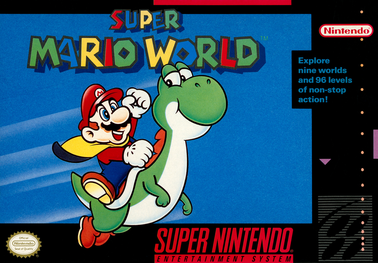
Super Mario World SNES box art - Mario, Yoshi and Princess Toadstool
Super Mario World (1990) - released as Super Mario Bros. 4 in Japan, positioning it explicitly as the fourth numbered entry in the series.

Release

JapanNovember 21, 1990
North AmericaAugust 13, 1991
PlatformSuper Nintendo / SNES
PublisherNintendo
DirectorTakashi Tezuka

By the Numbers

Worlds9 (inc. Special Zone)
Stages72
Exits96
Yoshi Colours4 (+ Baby Yoshi)
Power-upsCape Feather, Fire Flower, Super Mushroom
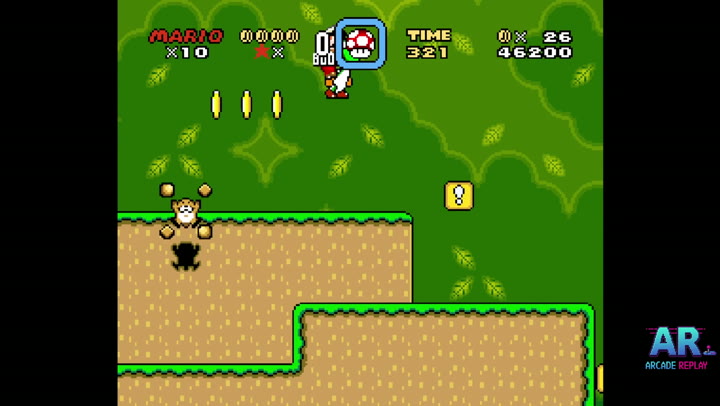
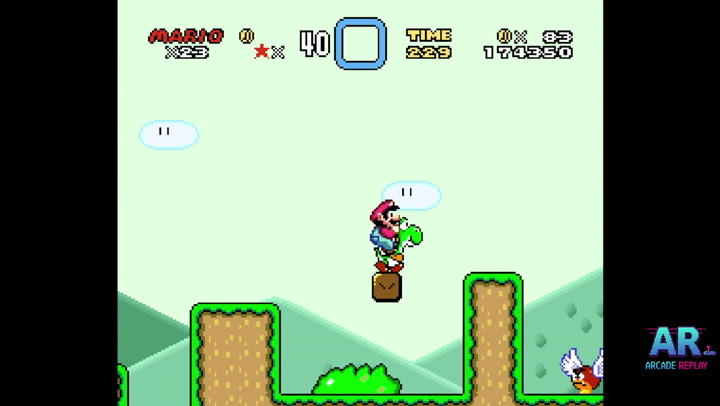
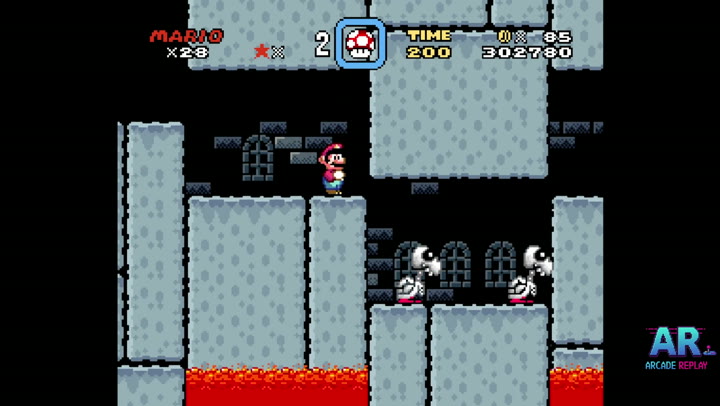
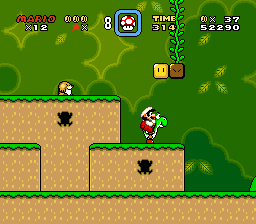
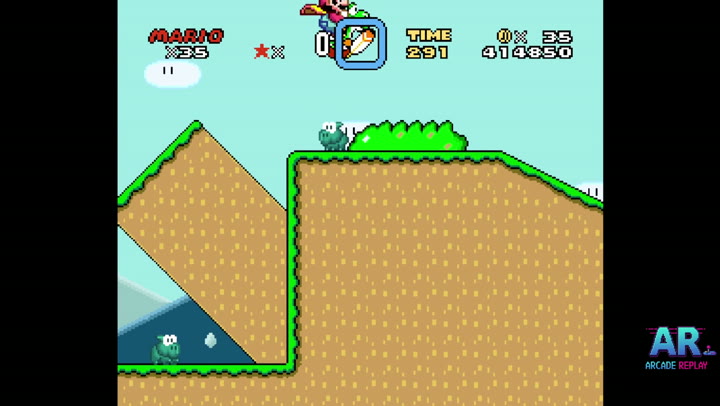
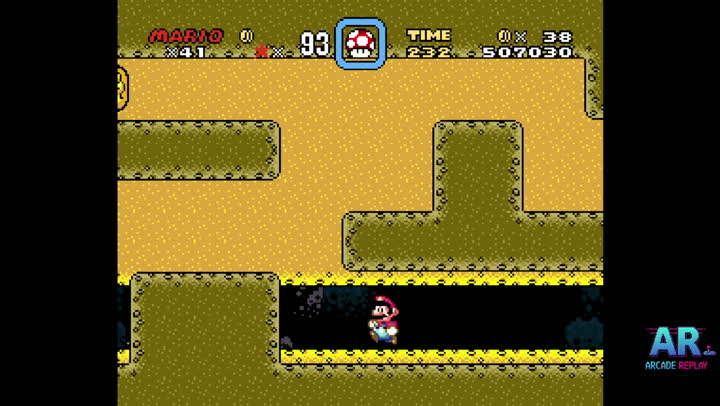
Super Mario World - Yoshi's Island area, early game Super Mario World - Donut Plains area gameplay Super Mario World - mid-game area

96

Total Exits

72

Stages

5

Yoshi Colours

1990

Launch Year (JP)

? Development

The Character Who Needed a New Console

Miyamoto had a design for a rideable dinosaur companion as early as 1985. The NES hardware could not make it work. He waited for the SNES.

Development Alongside the Hardware

Takashi Tezuka directed Super Mario World while Miyamoto supervised as producer - reversing the dynamic of the NES titles, where Miyamoto directed directly. Development ran in parallel with the SNES hardware specification: the team could request graphical features from the hardware engineers and design levels around capabilities the chip was still being built to deliver. The result is a game where the hardware's strengths are on display in almost every stage - the 512-colour palette, the larger sprite resolution, the stereo output from the Sony SPC700 chip, and the Mode 7 scaling effect used in Ghost Houses and the Bowser finale.

Miyamoto had sketched a rideable dinosaur companion for Mario during development of the original Super Mario Bros. in 1985. The NES hardware's sprite system couldn't animate it at the speed and resolution he needed. The concept was shelved for five years. The SNES's larger sprite hardware, wider colour depth, and improved animation capability finally gave the team what they needed. Yoshi arrived in Super Mario World not as an afterthought but as a transformation of the game's core mechanics.

What Yoshi Actually Does

Yoshi's core ability is swallowing enemies. But the system extends further. Different coloured shells grant Yoshi different abilities: Blue Yoshi gains the ability to fly when holding any shell. Yellow Yoshi creates a dust cloud that destroys enemies when holding a shell. Red Yoshi spits fireballs when holding a shell. These interactions are layered on the base Yoshi mechanics to create a system of discovery that rewards players who experiment with enemy encounters.

Yoshi can also flutter-kick - pressing the jump button while Yoshi is in the air causes a brief extension of the jump arc. This ability, refined into the signature flutter-jump across later Yoshi games, became one of the series' most distinctive mechanics.

Super Mario World SNES gameplay - Mario riding Yoshi in a grassland stage
Super Mario World gameplay - Mario riding Yoshi through Dinosaur Land. The SNES hardware delivered the animation resolution that the NES couldn't provide.
I had wanted to include a rideable character in Mario since the beginning, but the original Famicom hardware couldn't express what I was imagining. Super Mario World was finally the game where the technology let me make it happen. Shigeru Miyamoto, Nintendo Power, Volume 28, 1991
? World Map

Dinosaur Land and the Road Behind the Road

A fully explorable overworld connecting 72 stages, hidden switch palaces, and a secret warp network that the game never mentions.

One Connected Geography

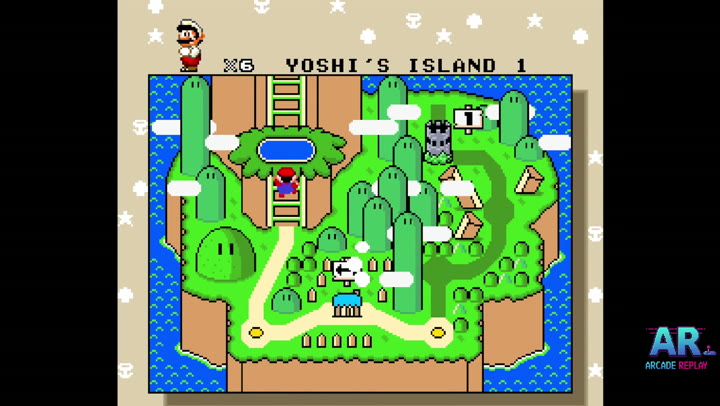
Super Mario World's overworld expanded significantly on the per-world maps of SMB3. Dinosaur Land is a single connected geography rather than a set of separate world maps. Clearing a level opens paths in multiple directions; some paths require finding secret exits hidden inside stages - alternate routes reached by carrying a key to a keyhole, or by reaching a midpoint flag from an unconventional angle. The world feels larger than its 72 stages because of how the paths branch and reconnect across the map.

Switch Palaces create persistent consequences across the world. Each Palace contains a giant ! switch; hitting it makes blocks of the matching colour solid throughout every stage in the game. Players who find all four Switch Palaces unlock new routes through previously completed levels. The changes are permanent for that save file - what you do in one Palace alters the entire world.

The Star Road

A secret warp network hides within the main game. The Star Road is accessible only by finding the secret exit in Donut Plains 1 - an exit that requires a specific technique and rewards the player with access to five hidden stages spread across Dinosaur Land. Each Star Road stage opens a warp to a different region of the main world. Completing all five stages opens access to the Special Zone: eight stages with difficulty that far exceeds anything in the main game.

Completing all Special Zone stages triggers a permanent visual change: the landscape shifts from summer green to autumn colours, enemy sprites transform (Koopa Troopas become Mario-masked characters, other enemies change entirely), and the change persists until the console is switched off. It is the game's hidden reward for completionists.

Super Mario World Dinosaur Land overworld map - Mario navigating the Yoshi's Island starting world
The Dinosaur Land overworld map - Super Mario World's fully connected world geography, with 9 worlds, Switch Palaces, Ghost Houses, and the hidden Star Road all visible from a single map view.
? Level Design

Seventy-Two Stages, Each With One Idea

How Tezuka's team designed 72 stages that feel distinct, teach specific skills, and reward mastery without explaining anything.

Super Mario World - late game stage Super Mario World - Bowser's castle area Super Mario World - Donut Plains area with Yoshi

Teaching Through Layout

Super Mario World continues the implicit teaching philosophy of SMB1. Yoshi's Island 1 - the first stage - introduces Yoshi by placing a Yoshi egg beside a Goomba on an open platform. The player learns that eggs release Yoshi, that Yoshi interacts with enemies, before any explanation is given. The egg itself teaches that round items on platforms should be examined.

Ghost Houses introduce puzzle-oriented platforming: stages where the exit requires finding a hidden door rather than reaching a flagpole. The first Ghost House is gentle enough to solve by accident; later Ghost Houses require knowledge earned from earlier encounters. The game never tells you Ghost Houses work differently - the player discovers this by attempting the flagpole approach and failing.

The Cape and Speed

The Cape Feather transforms Mario into Cape Mario, who can run to build momentum and take off into sustained horizontal flight. In skilled hands, Cape Mario can bypass entire stages - but the mechanic requires precise timing. The cape rewards mastery with routes and items inaccessible any other way, and punishes impatience with stall-speed drops.

? Reception

Critics Ran Out of Superlatives

Super Mario World launched in Japan bundled with every Super Nintendo sold, meaning every consumer who purchased the hardware in 1990 received the game in the box. In North America, the same bundle arrangement ensured the game reached its audience before a single review was published. By the time critical coverage arrived, over 2 million copies had already shipped.

Nintendo Power gave the game a perfect score and ran a twelve-page cover feature. Electronic Gaming Monthly's reviewers called it the strongest launch title they had reviewed for any system. The consensus was that SMW demonstrated the SNES capabilities more completely than any tech demo could: Mode 7, the 512-colour palette, stereo audio from the SPC700 chip, and the larger sprite resolution were all visible in the first twenty minutes of play, deployed in service of gameplay rather than as showpieces.

Over 20 million copies were sold across the SNES lifetime, making it one of the best-selling platform games ever made and the second best-selling SNES title. The full franchise sales context is in the games catalogue.

? Legacy

The Cape and the Template

Super Mario World established the design vocabulary of 16-bit platformers. The Cape Feather's momentum-based flight, the dual-exit stage structure, the connected overworld with Switch Palace effects, the Ghost House as a puzzle variant on the standard stage - each of these elements influenced the SNES and Genesis platformers that followed. Donkey Kong Country (1994), Kirby Super Star (1996), and Yoshi's Island (1995) all developed within the frame that SMW defined.

Yoshi, introduced here, became one of Nintendo's most enduring characters. Super Mario World 2: Yoshi's Island (1995) gave him his own series, casting him as protagonist in a game with a radically different aesthetic and mechanics. Yoshi's Story (1997) and subsequent Yoshi titles continued the franchise. The character has appeared in more Nintendo properties than any other Mario-adjacent character. The Yoshi's Island entry in the games catalogue covers the sequel in full.

Among speedrunners, Super Mario World retains an active community forty years after release. The game's secret exit structure, Star Road routing, and cape flight tech create a rich category system - Any%, 96 Exits, All Castles - each requiring distinct skill sets. The Videos section includes curated runs from each category.

? Reception

Sold Out Before It Left Japan

The game that shipped with every Super Nintendo in the West — and still earned its own reviews.

Super Mario World was a launch title in Japan (November 21, 1990) and in North America (August 13, 1991), bundled with every Super Nintendo unit sold in Western markets. This bundling context makes its sales figures difficult to separate from the console itself, but the game went on to sell over 20 million copies — making it one of the best-selling games of all time and the best-selling SNES title.

Critical reception at launch was near-universal acclaim. Mean Machines (UK) awarded it 96% in their launch review, calling it “the most complete and satisfying platform game ever designed.” Nintendo Power gave it a 9.4/10 in their initial coverage, with particular praise for Yoshi and the overworld map system. Electronic Gaming Monthly scored it 32/40, noting that its depth would reveal itself gradually rather than immediately — a caveat that was vindicated as players found the Star Road weeks after launch.

The game’s bundled status meant that nearly every SNES owner played it, which gave it an unusual double role in the market: a demonstrator of the hardware’s capabilities and a fully-realised creative work in its own right. That combination — the demonstration and the achievement — set a standard for launch titles that few subsequent console releases have matched.

Super Mario World is the game I am most proud of from the Super Famicom era. It brought together everything we had learned — Yoshi, the overworld, the cape — and I think the result was the most complete expression of what we were trying to say with the Mario series at that time. — Takashi Tezuka, director of Super Mario World, interview in Nintendo Dream, 2005
? Legacy

The Blueprint Nobody Stopped Using

Yoshi became a franchise. The overworld became a template. The cape became a case study.

The Yoshi Franchise

Yoshi’s debut in Super Mario World generated enough audience response that Nintendo developed a spin-off series built around the character. Super Mario World 2: Yoshi’s Island (1995, SNES) featured Yoshi as the primary playable character, transporting Baby Mario through a hand-drawn world with a crayon aesthetic that became one of the most distinctive visual designs of the era. The Yoshi series extended to the Nintendo 64 (Yoshi’s Story), Nintendo DS (Yoshi’s Island DS), and beyond.

The character’s mechanical core — swallowing enemies, producing projectiles from shells, providing a secondary jump — remained recognisable across every sequel and established Yoshi as one of Nintendo’s signature designs. His silhouette became as iconic as Mario’s own.

Design Influence: Overworld, Secret Exits, and Level Variety

Super Mario World’s connected overworld and secret-exit system became a design template repeated across 2D platformers throughout the 1990s and 2000s. The idea that a world map could reward exploration beyond stage completion — that finding a hidden exit could unlock new world paths rather than just extra lives — was picked up by Donkey Kong Country (1994), Kirby Super Star (1996), and dozens of games in the genre.

Nintendo themselves have revisited the Super Mario World template as a canonical form of Mario design. Super Mario Maker (2015, Wii U) and its sequel included “Super Mario World” as one of four foundational game styles, placing the 1990 SNES game alongside the NES original as a defining reference point. The implication was explicit: Super Mario World is not a product of its era but a permanent design vocabulary.

? Watch

Super Mario World: Full Longplay

SNES Longplay: All 96 Exits

A complete playthrough of Super Mario World - all 96 exits, the Star Road, the Special Zone, and the Bowser finale in the Valley of Bowser. Watch the cape flight mechanics, Ghost House solutions, and the secret warp network in full operation.

Longplay - World of Longplays / Archive.org

? Super Mario 64 - Nintendo 64 - 1996

The Leap Into Three Dimensions

June 1996. The N64 launched with two games. One of them invented the vocabulary that every 3D platformer still speaks.

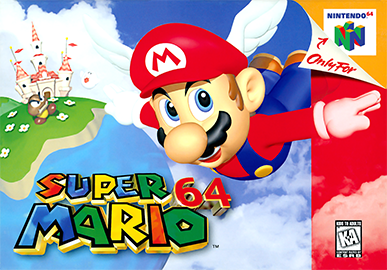
Super Mario 64 Nintendo 64 box art
Super Mario 64 (1996) - the N64 launch title that defined 3D platforming and drove hardware sales for two years after its release.

Release

JapanJune 23, 1996
North AmericaSeptember 29, 1996
PlatformNintendo 64
PublisherNintendo
DirectorShigeru Miyamoto

By the Numbers

Worlds15 courses + hub
Power Stars120
Move vocabularyTriple jump, wall kick, long jump, backflip
Copies sold11+ million
Voice actorCharles Martinet
? Development

Inventing the Camera

Miyamoto returned to the director's chair for Super Mario 64, his first time directing a mainline Mario game since Super Mario Bros. 3. Development began alongside the N64 hardware specification - the same parallel development process used for SMW and the SNES. The team could request hardware capabilities from the engineers and design game systems around features the chip was still being built to support.

The first and hardest problem was the camera. In 2D, the camera follows Mario horizontally. In 3D, the camera must orbit around Mario, avoid geometry, respond to player input, and remain useful in enclosed spaces and open fields simultaneously. No console game in 1995 had solved this problem satisfactorily. Miyamoto's team co-developed the camera system with Pax Softnica, building what they called the "Lakitu camera" after the in-universe character who holds it. The C buttons on the N64 controller were designed in part to give players direct camera control.

Early prototypes, shown at Shoshinkai 1995 and then E3 1995 under the title "Super Mario FX," showed Mario in flat 2D courses before the 3D engine was complete. By E3 1996, the final game was playable and drove queues across Nintendo's entire show floor. The game shipped as an N64 launch title in Japan in June 1996 and North America in September 1996. For full profiles of Miyamoto and the Nintendo EAD team, see People.

The camera was the hardest problem we had to solve. In 2D you just follow Mario horizontally - there's one axis. In 3D the camera has to avoid geometry, track Mario through turns, and still feel responsive to the player. We had to invent a new system from the ground up. Shigeru Miyamoto, Electronic Gaming Monthly, Issue 86, September 1996
? Design & Technical

A Full Movement Vocabulary in Three Dimensions

Mario enters Peach's Castle as a hub world and accesses 15 painting-portals leading to self-contained 3D courses. Each course contains between 6 and 8 Power Stars, each requiring a distinct objective: racing a penguin, carrying a baby to its mother, climbing a mountain, finding 8 red coins, defeating a boss. The non-linear objective structure - most worlds can be attempted in any order - is what makes the game feel open rather than sequential.

Mario's movement was designed around the N64's analogue stick. Gentle input produces walking; full deflection produces a sprint. The movement vocabulary expanded far beyond any previous Mario game: the triple jump (run, jump, jump, jump in sequence) launches Mario to extraordinary height; the wall kick (jump while facing a wall, kick off mid-air) enables vertical climbing of narrow shafts; the long jump (crouch-dodge-jump from a sprint) covers horizontal distance; the backflip (crouch then jump while stationary) gains height from a standstill. These moves interact with the geometry of each course, meaning players find new routes through stages as their movement fluency improves.

The game runs at 30fps on N64 hardware while rendering large, open environments with multiple enemies. The draw distance across outdoor courses was larger than any previous 3D game on a home console. Enemy collision, Mario's physics, and the camera system all ran simultaneously within the hardware budget, a feat of systems programming that held up for years as the industry benchmark.

? Reception & Legacy

The Universal Perfect Score

Critical reception was immediate and near-unanimous. Electronic Gaming Monthly awarded Super Mario 64 a 9.8 out of 10, calling it the greatest game ever reviewed. Edge magazine gave it 10/10 in their September 1996 issue. GameFan scored it 99/100. No major publication gave the game less than an 8.5. The game sold over 1 million copies during the N64 launch week in Japan and 2.5 million copies in North America in its first three months. It drove N64 hardware sales for two years after launch and sold over 11 million copies total.

The legacy of Super Mario 64 is the genre it created. The 3D platformer as a category - collect-a-thon structure, hub world to level portals, analogue movement, third-person controllable camera - did not exist in its modern form before 1996. Banjo-Kazooie (1998), Donkey Kong 64 (1999), Spyro the Dragon (1998), and Crash Bandicoot (1996) were all developed with direct awareness of SM64's architecture. The camera system, the hub-world structure, and the analogue movement mapping all became conventions that persisted across three console generations.

In 2020, Super Mario 3D All-Stars included a remastered version of Super Mario 64 with higher-resolution textures and widescreen output. The game is widely cited in game design education alongside Super Mario Bros. as one of the two definitional examples of a genre being invented in a single release. The complete series timeline is at history.html; the full catalogue is at games.html.