Nintendo EAD · Kyoto

The People

Three people at Nintendo. One vision of what a game could be. The creative core that built the most successful platform franchise in history.

? Creator

Shigeru Miyamoto

Director, Producer, Designer — the creator of Mario and one of the most influential figures in the history of games.

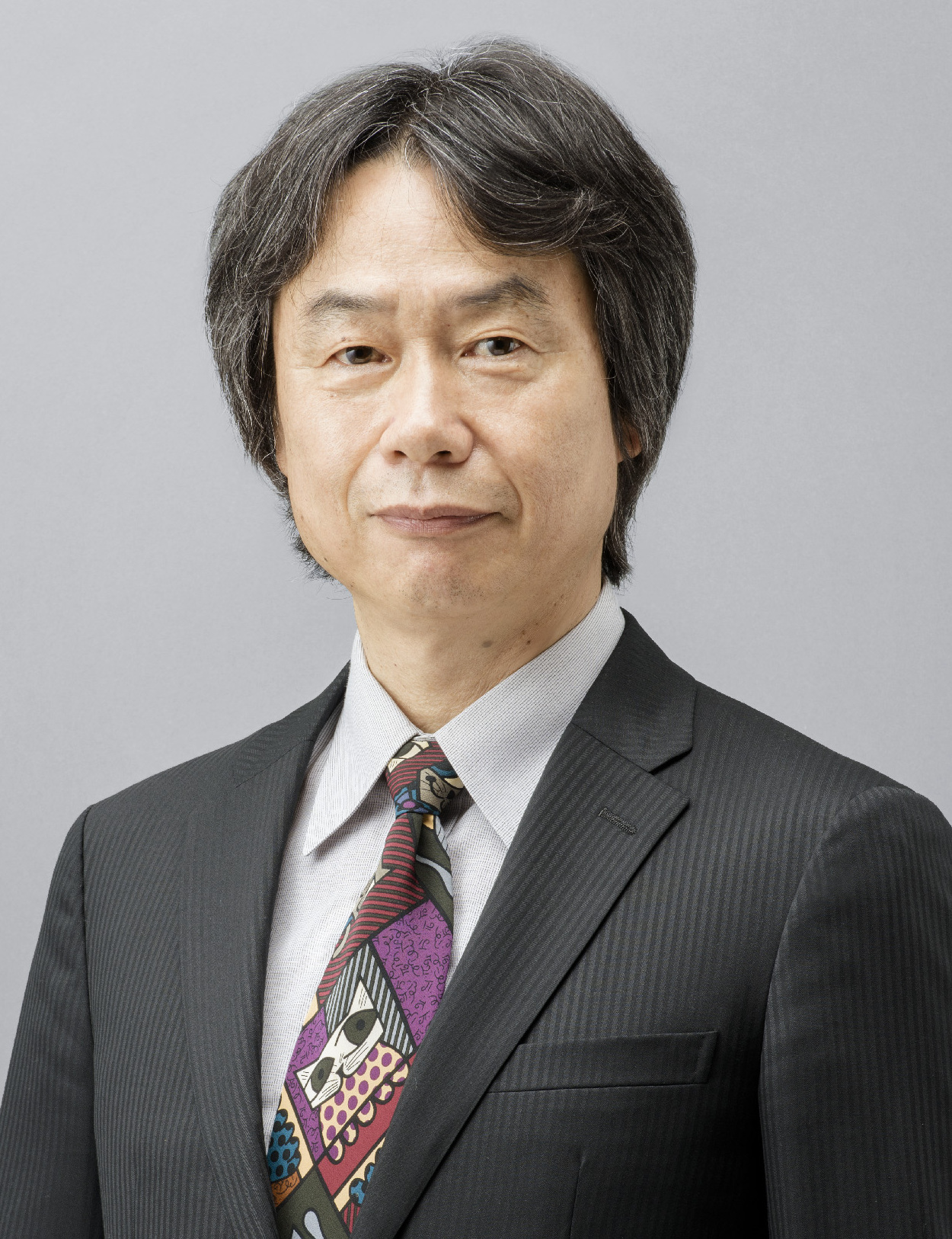
Shigeru Miyamoto - portrait photograph

Shigeru Miyamoto

Creator / Director / Producer

Shigeru Miyamoto is the creator of Mario and one of the most influential figures in the history of video games. Born in Sonobe, Kyoto in 1952, Miyamoto studied industrial design at Kanazawa College of Art before joining Nintendo in 1977. His first major creation was Donkey Kong (1981), which introduced Jumpman — later renamed Mario — as the player character. Mario was designed around the constraints of the hardware: a hat instead of animated hair, a moustache instead of a mouth, overalls to make arm movements readable at low resolution.

Miyamoto’s approach to game design centres on what he calls “obstacles that teach” — every challenge should show the player how to overcome it before requiring them to do so. In Super Mario Bros. 1-1, the first Goomba is preceded by a ? Block with a mushroom: the player learns that items help before the first enemy arrives. This philosophy of implicit teaching through level design became the foundation of the entire platform genre.

Notable Works

  • Donkey Kong (1981) - first Mario appearance as Jumpman
  • Mario Bros. (1983) - introduced Luigi and the name “Mario”
  • Super Mario Bros. (1985) - Director
  • Super Mario Bros. 3 (1988) - Director
  • Super Mario World (1990) - Producer
  • Super Mario 64 (1996) - Director/Producer
  • The Legend of Zelda (1986) - Creator/Director
Video games are bad for you? That’s what they said about rock and roll. — Shigeru Miyamoto
A delayed game is eventually good, but a rushed game is forever bad. — Shigeru Miyamoto
? Co-Designer

Takashi Tezuka

Co-designer, level designer, director — Miyamoto’s closest creative collaborator across three decades of Mario.

Takashi Tezuka - portrait photograph

Takashi Tezuka

Co-Designer / Director

Takashi Tezuka is the co-designer of Super Mario Bros. and one of Miyamoto’s closest creative collaborators across three decades. Joining Nintendo in 1984, Tezuka worked alongside Miyamoto from the very beginning of the Mario series — while Miyamoto conceived the overarching structure and mechanics, Tezuka focused on world-building, level design, and the feel of individual stages.

Tezuka is credited with writing much of the text in early Zelda games and co-designing the world structure of Super Mario Bros. 3. He served as the director of Super Mario World and Yoshi’s Island, with Miyamoto as producer — a collaborative arrangement that gave Tezuka responsibility for the day-to-day vision while Miyamoto provided creative oversight.

The aquatic underground levels in Super Mario Bros. — World 2-2 and similar water stages — are a famous Tezuka creation. He designed them partly as an expression of his own fear of the ocean, which he channelled into the unsettling Bloopers, Cheep Cheeps, and claustrophobic underwater corridors.

Notable Works

  • Super Mario Bros. (1985) - Co-Designer
  • The Legend of Zelda (1986) - Sub-Director / Story
  • Super Mario Bros. 3 (1988) - Co-Designer
  • Super Mario World (1990) - Director
  • Super Mario World 2: Yoshi’s Island (1995) - Director
I designed the underwater levels in Super Mario Bros. partly because I was afraid of the ocean. I wanted to put that feeling of unease into the game — the sensation of something coming from behind you in dark water. — Takashi Tezuka
Working with Miyamoto means your first idea is never your last idea. He’ll find the thing that’s missing and point to it immediately. That’s both the challenge and the education. — Takashi Tezuka
? Composer

Koji Kondo

The composer of the world’s most recognisable piece of game music — working within three pulse wave channels to create something timeless.

Koji Kondo - portrait photograph

Koji Kondo

Composer / Sound Director

Koji Kondo is the composer of the Super Mario Bros. theme — arguably the most recognisable piece of music ever written for a video game. Joining Nintendo in 1984 as their first dedicated sound programmer and composer, Kondo composed the entirety of the Super Mario Bros. soundtrack working within severe technical constraints: the NES could produce three pulse wave channels, a triangle wave for bass, and a noise channel for percussion.

The result — the Ground Theme, the Underwater Theme, the Underground Theme, and the Invincibility Theme — are melodies of such clarity and catchiness that they survive decades of cultural osmosis, game remixes, orchestral arrangements, and constant repetition without feeling dated.

Kondo’s approach was to use music as a gameplay information channel, not merely background texture. The “Hurry Up” variant that triggers when time runs low increases tempo and pitch, communicating urgency without a single word. The swimming theme is deliberately languid, reinforcing the slower movement of underwater stages.

I try to think about what the player is feeling at that moment — if they’re rushing, the music should rush. If they’re exploring, the music should breathe. The music is always in dialogue with the gameplay. — Koji Kondo
The theme from World 1-1 was the last thing I composed for Super Mario Bros. I had to write something bright and propulsive — something that said ‘this is an adventure’. I didn’t know it would still be played 40 years later. — Koji Kondo