From Merseyside Schoolteacher to Strategy Pioneer

A Horse-Racing Program on a Calculator

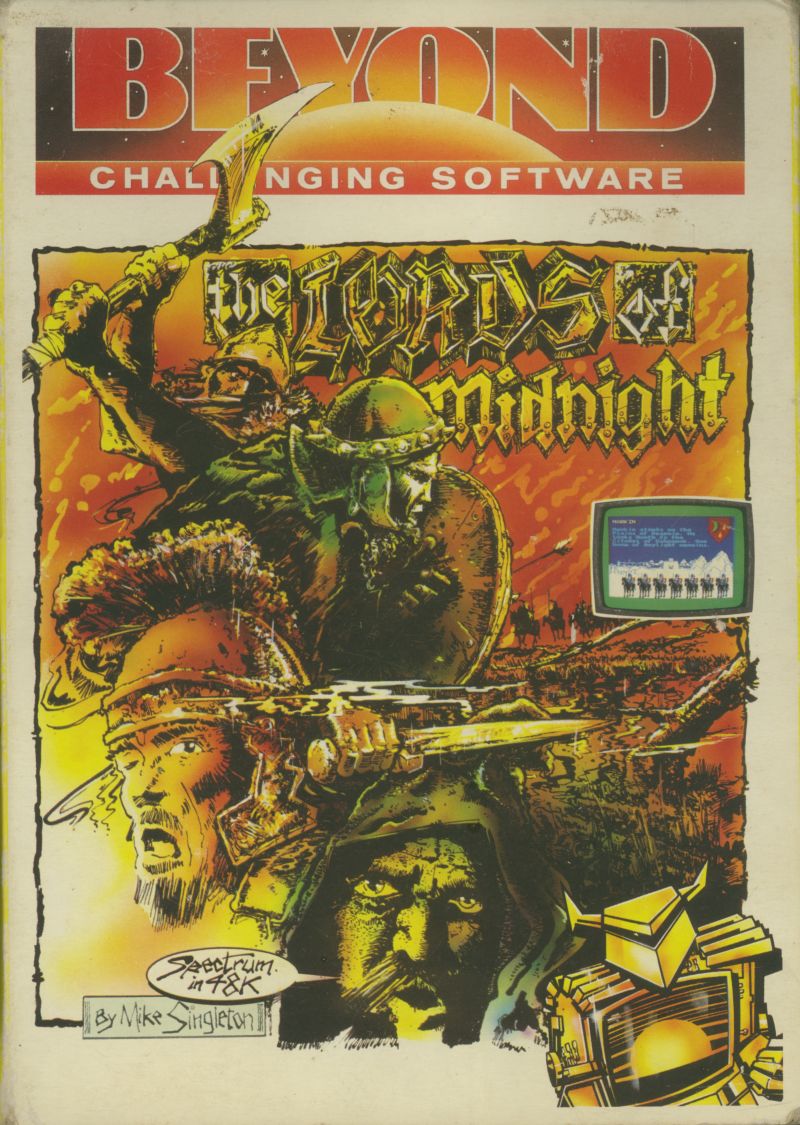
The Lords of Midnight ZX Spectrum box art by Beyond Software, 1984 - gold and green fantasy illustration
The Lords of Midnight, Beyond Software, 1984 - the game that followed from a betting shop calculator program.

Mike Singleton was born on 21 February 1951 in Liverpool. After studying English at university (having abandoned an earlier ambition to become a theoretical physicist), he spent approximately ten years teaching English on Merseyside. His first encounter with computing was practical rather than academic: around 1978, involved in a betting shop business venture, he created a utility program on a Texas Instruments calculator. This led him to a Commodore PET.

The PET produced Computer Race, a horse-racing simulation written for betting shops. It reportedly sold over 300 copies - enough to fund Singleton's transition from classroom to computer room. By 1982 he had retired from teaching entirely to work on games full-time. He was thirty-one years old, an age at which most prominent developers of the era had already built and peaked.

He was unusual in other ways too. He brought a writer's sensibility to his games - a concern for world-building, narrative, and the kind of epic scope that Tolkien had applied to fantasy fiction. When he wrote The Lords of Midnight, he also wrote the novella "The Lord of Midnight" that shipped with it. He contributed a regular column, "Fifth Column," to Computer & Video Games magazine. He was, from the beginning, as much an author as a programmer.
The Fourteen Months That Built a World

From September 1983 to April 1984, Singleton worked in marathon twelve-hour sessions to build The Lords of Midnight. The technical challenge was the defining one: how to render a navigable first-person 3D world on a ZX Spectrum with 48,000 bytes of RAM. His solution became known as "landscaping."

Landscaping used pre-scaled, billboarded images of terrain features - mountains, forests, castles, towers - arranged in perspective layers to simulate three-dimensional space. From eight directional viewpoints at each of more than 4,000 locations, the engine generated 32,000 distinct panoramic views. The world felt vast because Singleton had made it so at the level of data architecture rather than screen rendering.

The route to this solution began when Singleton met Terry Pratt - then an editor, later to found Beyond Software - around September 1983. Pratt saw the landscaping concept and pressed Singleton to develop it into a game. By April 1984, the game was done. Beyond Software published it, nearly bug-free. Crash magazine gave it 10/10.

"When people thought of a games programmer they imagined a 'fanatical whizz-kid,' not a retired schoolteacher."

Mike Singleton, interviewed in Crash magazine (Issue 41, June 1987)
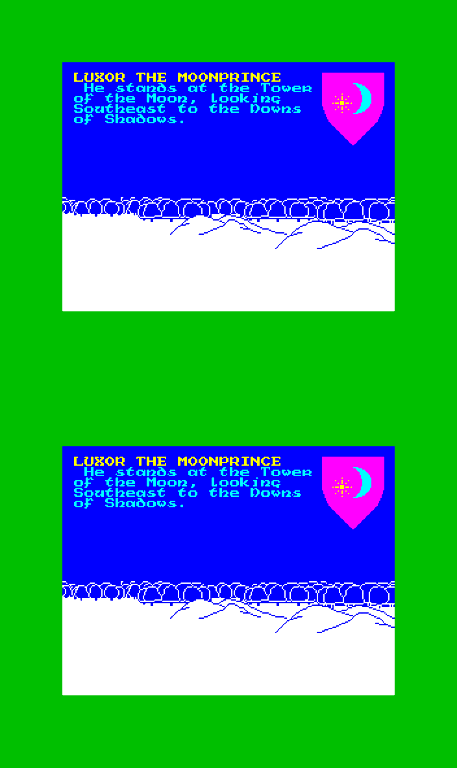
The Lords of Midnight ZX Spectrum gameplay screenshot: Luxor the Moonprince at the Tower of the Moon, showing the panoramic landscaping engine with terrain layers
Authentic ZX Spectrum gameplay - Luxor the Moonprince at the Tower of the Moon. The landscaping engine generates distinct views from each of the 4,000+ locations.

Doomdark's Revenge followed in 1985, expanding the world to 6,000 locations and introducing a more complex alliance system. A planned third title, Eye of the Moon, was announced in the Doomdark's Revenge manual but cancelled due to publisher disputes over platform support. See the Flagship section for the full development story of both Lords of Midnight games.

Maelstrom Games and the Midwinter Years

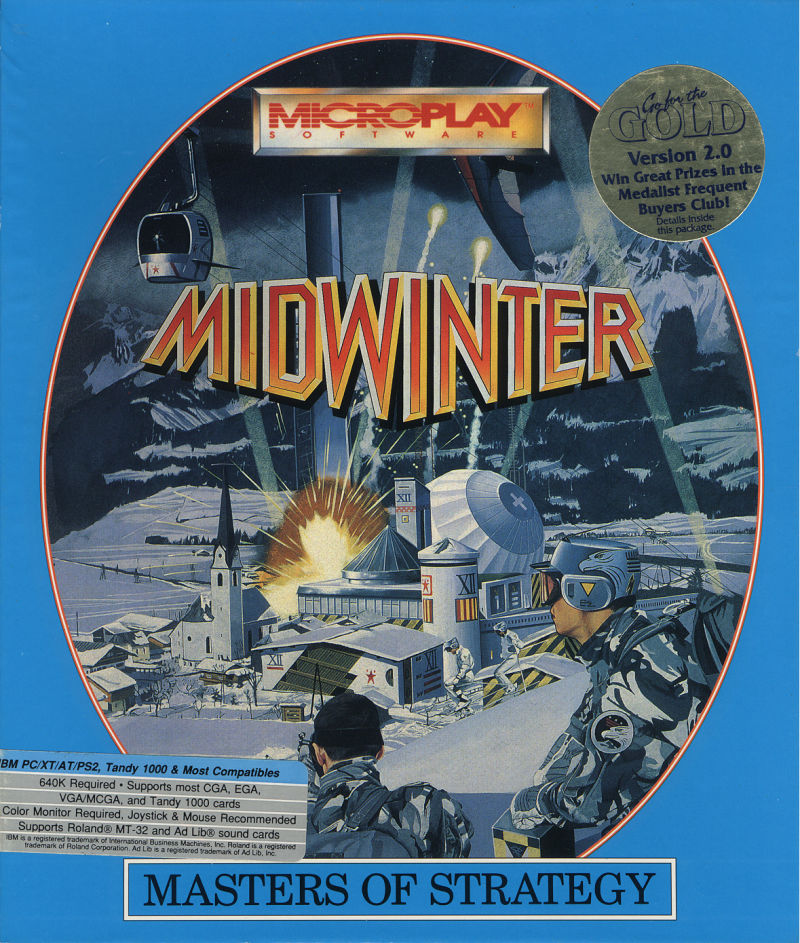
Midwinter PC/DOS box art, MicroPlay Software (Masters of Strategy Series), 1989 - ski soldier in winter combat scene with explosions
Midwinter (PC/DOS box art, 1989/90) - Maelstrom's most technically ambitious project.

Around 1986-1988, Singleton co-founded Maelstrom Games with Alan Jardine and David Gautrey. The studio's first title under the Maelstrom banner was Dark Sceptre (1987, Firebird Software), an action-strategy hybrid for the ZX Spectrum with a parallel play-by-mail version that Singleton adjudicated personally, via Microdrive cartridges sent through the post.

War in Middle Earth (1988, Melbourne House), a licensed Tolkien strategy game, followed. Then, in 1989, came Midwinter - Maelstrom's most ambitious project and Singleton's technical masterwork in a different key from Lords of Midnight. Set in a post-apocalyptic future Ice Age on a fractal-generated island of 160,000 square kilometres, it rendered real-time 3D on the Atari ST years before such environments were considered achievable.

Midwinter II: Flames of Freedom (1991) moved the setting from arctic warfare to a spy-thriller scenario on tropical islands, adding vehicle hijacking mechanics that anticipated later open-world games. After Midwinter II, Maelstrom's commercial momentum slowed.

Lords of Midnight: The Citadel (1995, Domark) was Maelstrom's attempt to return the Midnight universe to DOS PCs using a voxel engine. It received mixed reviews and is considered a commercial disappointment. Ring Cycle (1996, Psygnosis), based on Wagner's Ring opera cycle using a modified Citadel engine, was the studio's last notable release.

Later Work and the Unfinished Remake

In the 2000s, Singleton contributed to mainstream console titles, including work on Indiana Jones and the Emperor's Tomb (2003, LucasArts) and Gauntlet: Seven Sorrows (2005). These were contract roles rather than the solo or small-studio projects that had defined his peak years.

Around 2011, developer Chris Wild approached Singleton to collaborate on an iOS remake of The Lords of Midnight. The project was underway when Mike Singleton died on 10 October 2012, aged 61, from jaw cancer in Switzerland. Wild completed and released the remake in 2013-2014 as a tribute, supporting seven platforms including iOS, Android, Windows, and macOS. It received 9/10 from Pocket Gamer and 5/5 from Mirror.co.uk.

Both The Lords of Midnight and Doomdark's Revenge are available free on GOG.com via Wild's remake engine with modern quality-of-life improvements. The modern Lords of Midnight community - site, forums, and ongoing development - is maintained by Wild. Read more about the remake and community in the Modern Scene section.

Tribute and Retrospective

A 2012 tribute to Singleton released shortly after his passing, covering The Lords of Midnight and his legacy in the ZX Spectrum community.

Mike Singleton tribute video (theretrogamesnews, 2012). More video content in the video collection.