The Masterwork
The Legend of Zelda: A Link to the Past is the game in which Nintendo perfected the action-adventure template it had invented in 1986. Director Takashi Tezuka and producer Shigeru Miyamoto designed it simultaneously as a prequel to the NES games and a reinvention of the formula for SNES hardware. The result is a game of such structural elegance and sensory richness that it has never been improved upon in its own genre: larger games exist, more complex games exist, but none achieve the same balance of density, pacing, and wonder.
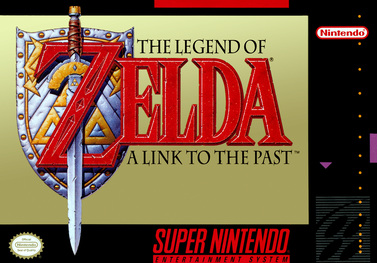
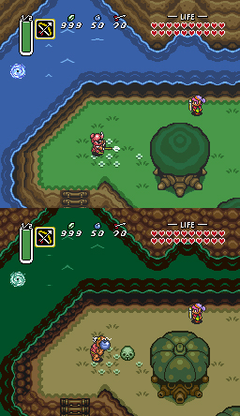
The game opens with a rainstorm. The wizard Agahnim has seized Hyrule Castle and broken the seal on the Sacred Realm. Link, woken by Princess Zelda's telepathic cry, infiltrates the castle dungeon and rescues her. Three Light World temples and the Master Sword later, Agahnim uses Zelda as a conduit to open the Dark World portal. Link follows. The second half of the game is the Dark World: Ganon's kingdom, a dark mirror of Hyrule where every familiar location has been corrupted.
Development Notes
Development began in 1989. Early builds of the game featured only the Light World; the Dark World was proposed for removal at a point when the schedule was falling behind. Tezuka argued successfully for its retention. The parallel-world architecture required that every Light World location have a Dark World counterpart — 256 overworld screens in total, meticulously cross-referenced.
The SNES's Sony SPC700 sound chip gave composer Koji Kondo unprecedented audio capability: sampled instruments, multiple channels, and the ability to create music that felt orchestral rather than synthesised. Kondo composed the Hyrule Castle theme, the Dark World overworld theme, and the Kakariko Village theme in this period — three of the most quoted pieces of game music in history.
“The Super Famicom’s sound chip was something completely new to me. For the first time I could work with sampled instruments — not synthesised approximations, but something that felt orchestral. The Hyrule Castle theme was the first piece I wrote for it, and it set the tone for everything that followed.” — Koji Kondo, Famicom Tsushin developer interview, 1991
The Dungeons of Hyrule
Hover any dungeon to see the full group respond — CSS :has() selector in action.
Three Light World temples and seven Dark World palaces.
Light World
Hyrule Castle
Opening dungeon — Boss: Ball & Chain Trooper
Light World
Eastern Palace
Temple 1 — Boss: Armos Knights
Light World
Desert Palace
Temple 2 — Boss: Lanmolas
Light World
Tower of Hera
Temple 3 — Boss: Moldorm
Dark World
Palace of Darkness
Palace 1 — Boss: Helmasaur King
Dark World
Swamp Palace
Palace 2 — Boss: Arrghus
Dark World
Skull Woods
Palace 3 — Boss: Mothula
Dark World
Thieves’ Town
Palace 4 — Boss: Blind the Thief
Dark World
Ice Palace
Palace 5 — Boss: Kholdstare
Dark World
Misery Mire
Palace 6 — Boss: Vitreous
Dark World
Turtle Rock
Palace 7 — Boss: Trinexx
Dark World
Ganon’s Tower
Final Palace — Boss: Agahnim II / Ganon
Ordered Walkthrough
Auto-numbered via CSS counter(). The canonical sequence for first-time players.
-
Hyrule Castle
The opening sequence. Rescue Princess Zelda from the dungeon beneath the castle before escaping into Hyrule.
-
Eastern Palace
The first proper temple. Introduces the Armos Knights boss and the Bow item. Northeast of Hyrule Castle.
-
Desert Palace
Hot-climate dungeon in the southwest. Requires the Book of Mudora to read the Hylian inscription at the entrance.
-
Tower of Hera
Death Mountain summit. Yields the Moon Pearl, essential for exploring the Dark World in human form.
-
Palace of Darkness
First Dark World dungeon. Visually oppressive, labyrinthine. Requires Bomb and Bow.
-
Swamp Palace
Water-flooding puzzle dungeon in the Dark World swamp. Requires draining and re-flooding chambers.
-
Skull Woods
Dark forest dungeon with multiple entry points. Yields the Fire Rod and Big Key.
-
Thieves’ Town
Urban dungeon in the Village of Outcasts. Rescuing a trapped girl is required to progress.
-
Ice Palace
Lake Hylia Dark World dungeon. Slippery ice floors and complex multi-floor navigation. Bombos Medallion required.
-
Misery Mire
Swamp dungeon requiring the Ether Medallion to open. Dark and disorienting.
-
Turtle Rock
Death Mountain Dark World. The hardest dungeon. Trinexx uses Fire and Ice; the Cane of Somaria solves pipe puzzles.
-
Ganon’s Tower
The final dungeon. Contains rematches with all previous bosses before the ultimate confrontation with Agahnim II and Ganon.
Light & Dark: Two Worlds, One Hyrule
Hyrule: The Living Kingdom
The Light World Hyrule of A Link to the Past is the most fully realised pre-3D Hyrule ever depicted. Kakariko Village is a genuine community — a smithy, a library, a chicken owner, a boy with a flute. Death Mountain towers to the north. Lake Hylia lies serenely to the south. The Lost Woods conceal the Master Sword's pedestal.
The overworld design rewards lateral exploration: some secrets are found by bombing walls, others by burning bushes, others by using the flute to summon a bird. The map is generous but not exhaustive; returning after acquiring new items always reveals new paths.
The Sacred Realm Corrupted
When Ganon touched the Triforce with a heart full of evil, the Sacred Realm became a dark reflection of Hyrule — the same geography, but corrupted. The Village of Outcasts mirrors Kakariko. Death Mountain's summit becomes the Floating Island. Lake Hylia's serene waters darken into the swamp surrounding Misery Mire.
Humans who enter the Dark World without the Moon Pearl are transformed into creatures matching their hearts. Link, protected by the Moon Pearl, retains his form — but encounters the transformed inhabitants: the flute boy who became a tree, the thief Blind who became a boss.
Sacred Relic of the Golden Land
A Link to the Past establishes the Triforce mythology that would define the series for decades. The Triforce is a relic left by the three Golden Goddesses — Din, Nayru, and Farore — at the moment of Hyrule's creation. It rests in the Sacred Realm: a golden triangle comprising three pieces, each embodying a virtue.
Courage (gold) corresponds to Link. Wisdom (blue) corresponds to Zelda. Power (red) corresponds to Ganon. When Ganon touched the complete Triforce, it split: each piece migrated to the hand of the person whose heart most closely embodied its virtue. The resulting cycle of power, wisdom, and courage — and the struggle between them — became the foundational myth of the Zelda series.
COURAGE · WISDOM · POWER
“We wanted every screen of the overworld to reward exploration. If you could reach somewhere, there should be something there — a secret, an item, a path you hadn’t found yet. The density of secrets was a deliberate decision: the world should feel inexhaustible.” — Takashi Tezuka, director, Super Famicom Magazine interview, 1991
“The Dark World theme was a challenge: I needed people to feel immediately that something was wrong without understanding why. I used the same melody as the Light World but harmonised it differently, so it sounds familiar and wrong at the same time — like a memory you can’t quite place.” — Koji Kondo, composer, Nintendo Sound Team interview, 1991
A World That Opens as You Earn It
A Link to the Past is played from a top-down perspective with eight-directional movement — a significant improvement over the original game’s four-directional controls. The camera stays fixed on a single screen; rooms scroll as Link moves between them rather than cutting. The result is a sense of spatial continuity that makes Hyrule feel cohesive rather than segmented.
The game’s progression is governed by items. Link begins with only a lantern and the sword inherited from his uncle; every subsequent tool — the Bow, the Boomerang, the Hookshot, the Pegasus Boots, the Flippers — is found in a dungeon and immediately applied to solve that dungeon’s puzzles, then kept for the rest of the game. Returning to the overworld with a new item always reveals paths previously blocked: a chest in an early location can’t be opened without a tool found in a later dungeon. This layered unlocking, applied across 256 screens, creates the feeling that the world is perpetually rewarding attention.
The first half of the game tasks Link with recovering the three Pendants of Virtue from the Light World temples, then pulling the Master Sword from its pedestal in the Lost Woods. The second half begins immediately after: Agahnim uses Princess Zelda as a conduit to open the portal to the Dark World, and Link follows. In the Dark World, Link becomes a pink bunny unless he possesses the Moon Pearl — an item from the Tower of Hera that preserves his human form. The Magic Mirror, meanwhile, allows instant return to the corresponding Light World location at any time, making the two layers function as a single navigational system rather than two separate halves.
Dungeons are architectural arguments. Each one introduces a new item in its first third, then constructs every subsequent puzzle around that item’s capabilities. The Ice Palace demands that players understand how ice floors combine with the Bombos Medallion’s thaw effect; Turtle Rock chains Cane of Somaria pipe puzzles across multi-floor traversal. Boss fights are mechanical tests of the dungeon’s item: using the Hookshot on the Helmasaur King’s face plate, or the Fire Rod on Kholdstare’s ice shell. The loop is clean: learn the tool, apply the tool, prove mastery against the boss.
See the Games catalogue for full item and world structure listings. The creators behind the design are profiled on the People page.
What the Super Famicom Made Possible
The Super Famicom launched in November 1990 with a graphics architecture dramatically beyond the NES. Its 65816 CPU and custom picture processing units could display 32,768 colours simultaneously (compared to the NES’s 54-colour palette), render sprites up to 64x64 pixels, and handle a Mode 7 affine transformation layer that could rotate and scale a flat texture in real time. A Link to the Past used all of it.
The overworld uses the standard tile-scrolling mode but with a 256-colour depth that gave Link’s Hyrule visible light gradation — the shadows in Kakariko Village, the haze on Death Mountain, the darkness creeping into the Dark World. Large sprites allowed enemies that read clearly at a distance. Inside Turtle Rock’s fire-breathing sections, Mode 7 renders a scaling ring of flame that was the closest a 1991 console game could come to 3D perspective. It is a brief effect, used sparingly, which makes it more striking.
The Sony SPC700 sound chip gave Koji Kondo eight independent audio channels with hardware ADSR envelopes and, crucially, the ability to use sampled waveforms rather than synthesised oscillators. The result was the first Zelda score that sounded orchestral: the Hyrule Castle theme’s strings, the Dark World overworld’s driving bass, the Kakariko Village theme’s woodwind melody. These were not approximations of instruments; they were recordings of instruments, processed into the SPC700’s 64 KB audio RAM.
“Eight channels felt limitless after the NES. I could write counterpoint, harmonise properly, give each section of the overworld its own sound. The music could finally breathe.” — Koji Kondo, composer, Nintendo Sound Team interview, 1991
The game shipped on a 16 Mb (2 MB) ROM cartridge — among the largest in the SNES launch lineup. The overworld scroll engine navigates 256 screens without a loading screen; the transition from Light World to Dark World via the Magic Mirror uses a palette swap and tile re-mapping rather than a full reload, creating the instant visual transformation that makes the two worlds feel simultaneously distinct and identical.
Critics Agreed. Four Million Buyers Agreed.
A Link to the Past launched in Japan in November 1991 and in North America in April 1992. The critical response was immediate and nearly unanimous. Nintendo Power, the primary US games publication of the era, awarded it 9.6 out of 10 in issue #35 — at the time one of the highest scores the magazine had given a single-player game. The review singled out the dual-world structure and the music as achievements without precedent on the platform.
Famitsu, the Japanese industry benchmark, gave it 34 out of 40 in 1991. GameFan and other specialist publications in North America scored it in the mid-to-high 90s. There was no critical consensus that it was anything other than exceptional.
“This is the best action game ever made for a Nintendo system. The dungeons are superbly designed, the overworld is massive, and the music is extraordinary. I cannot imagine a better action-adventure game being made on this hardware.” — Nintendo Power, Issue #35, April 1992 review
Sales figures confirmed the critical verdict. The game sold approximately 4.61 million copies on the SNES worldwide, making it one of the system’s best-selling titles. In Japan it shifted 1.56 million copies; North America accounted for the majority of the remainder. A GBA port in 2002 added another 1.66 million copies to the total.
Subsequent critical retrospectives have consistently placed it among the ten greatest games ever made. It appeared in GameFan’s 1996 list of the 100 greatest games, in GameSpot’s all-time rankings, and in the Guinness World Records Gamer’s Edition as a landmark action-adventure game. The consensus hardened rather than softened over time.
The Foundation That Refused to Age
The immediate legacy of A Link to the Past was structural: it established the template that the Zelda series would follow for twenty years. The dual-overworld mechanic resurfaced in A Link Between Worlds (3DS, 2013), a direct sequel set in the same Hyrule that used the Light and Dark World geography as its central conceit. The dungeon design philosophy — introduce a tool, build a dungeon around it, prove mastery at the boss — remains the series standard through Tears of the Kingdom (2023).
Outside Nintendo, the game’s influence is visible in every top-down action-adventure that followed. Alundra (1997) adapted the dual-world mechanic explicitly; CrossCode (2018) and Tunic (2022) cite it as a direct ancestor. The “item-gated exploration” loop that A Link to the Past crystallised became the foundational grammar of the Metroidvania genre, even though that genre is named for a different pair of games.
The game’s availability history is a measure of its perceived importance. It was ported to the Game Boy Advance in 2002 alongside the new Four Swords multiplayer mode. It launched on the Wii Virtual Console in 2007 and the Wii U Virtual Console in 2014. It was one of the 21 games included in the SNES Classic Edition (2017). It has been on Nintendo Switch Online since 2019. Every major Nintendo platform since the SNES has hosted it.
“I think the reason A Link to the Past still works is that the design has no waste. Every system serves every other system. The overworld exists to lead you to dungeons. The dungeons exist to give you tools. The tools exist to open the overworld further. There is no part of the game that is decoration.” — Shigeru Miyamoto, producer, 2002 GBA re-release interview
A Link to the Past’s place in the series is unambiguous: it is the game that made the Zelda franchise what it is. The original 1986 game invented the genre; the 1991 sequel perfected it. Everything the series became — the dungeons, the overworld, the lore, the music tradition — traces directly to the decisions made by Tezuka, Miyamoto, Kondo, and Koizumi in those two years of SNES development. See the History page for the full production story and the People page for the creators who built it.
Link’s Awakening: The Dream That Ends
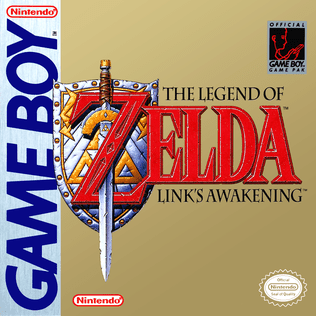
Game Boy · 1993 · Nintendo EAD · Director: Takashi Tezuka
Link’s Awakening is the strangest game in the early Zelda catalogue and the most emotionally resonant. It is not set in Hyrule. There is no Triforce, no Ganon, no Princess Zelda. Instead, Link has been shipwrecked on Koholint Island — a small, dense, eccentric place populated with Mario enemies, a girl named Marin who can make animals dance by singing, and a sleeping entity called the Wind Fish whose dream, it transpires, is the island itself. Waking the Wind Fish erases everything.
A Spare-Time Prototype That Nintendo Couldn’t Ignore
Link’s Awakening was not a planned project. In 1990, while the bulk of Nintendo EAD worked on A Link to the Past, a group of younger employees — led by Yoshiaki Koizumi, then working as an event designer, and including Takashi Tezuka among the advisers — began experimenting with a Game Boy adaptation of the SNES game’s engine in their free time. The prototype circulated internally. When Shigeru Miyamoto saw it, he greenlit it as an official Nintendo project and assigned Tezuka to direct.
The transition from hobby experiment to official release took approximately two years. The team was small by Nintendo standards — around twelve to fifteen people. Because the project had grown organically rather than through a formal spec, the developers had unusual creative latitude. Mario enemies appeared in the game because someone thought it would be funny; the final boss uses imagery from Doki Doki Panic (the game that became Super Mario Bros. 2) for similar reasons. Both were retained because Miyamoto liked the playfulness. Koizumi developed the narrative, including Marin’s arc and the game’s philosophical ending.
“With Link’s Awakening we had the freedom of a small project — nobody expected much, so we could try things that felt too risky for a big release. The ending is the most obvious example.” — Takashi Tezuka, director, Nintendo R&D1 interview, 1993
Same Grammar, Smaller World, Bigger Emotional Stakes
The gameplay uses the same top-down Zelda template established in A Link to the Past: explore an overworld, find dungeons, acquire items, defeat bosses. Koholint Island is compact by SNES standards but dense — eight instrument dungeons each yielding one of the Instruments of the Sirens, required to wake the Wind Fish from its egg atop Mt. Tamaranch. The dungeon design reuses item progression logic from A Link to the Past but adapts it for Game Boy’s two-button limit.
The signature innovation is the trading sequence: Link obtains a Yoshi Doll from a crane game, gives it to a woman who wants it for her baby, receives a Ribbon, gives the Ribbon to a dog... the chain runs fourteen items deep and yields Magnifying Glass, the item needed to read the hidden text that reveals the final dungeon’s secret. It is the first trading sequence in the Zelda series and became the template for dozens of subsequent games.
Mario enemies populate Koholint’s overworld and dungeons: Goombas can be jumped on, Piranha Plants emerge from pipes, a Chain Chomp named BowWow appears as a companion that helps clear a dungeon. These crossover elements are played completely straight — they are simply part of Koholint’s reality, and their presence reinforces the dreamlike logic of a place that obeys no consistent rules.
A Console Game in Monochrome
The Game Boy displayed four shades of green on a non-backlit 160×144 pixel LCD screen with no colour. Getting a Zelda game to run on it required compressing A Link to the Past’s overworld and dungeon data into a cartridge roughly one-eighth the size of the SNES original. The development team redesigned every sprite, tile, and layout from scratch — not porting assets but rethinking them for monochrome constraints.
The result is a game that communicates everything the original did using four shades and spatial economy. Dark dungeons are dark because the two dark shades dominate; bright outdoor areas use the two light shades. The Game Boy’s primitive audio chip — four channels, no sampling — required Minako Hamano (uncredited on the original, later confirmed) and Kozue Ishikawa to compose music that worked in a register completely different from Koji Kondo’s SPC700 work. The Tal Tal Heights theme became one of gaming’s most-quoted melodies from that hardware generation.
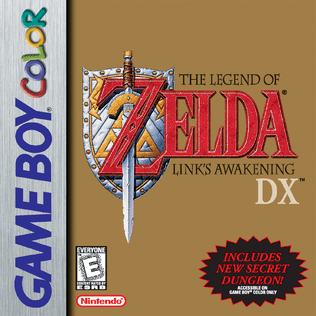
The 1998 DX version added full Game Boy Color support: 16-colour palettes for each area, a new dungeon accessible from the start (the Color Dungeon) with its own boss and reward, Super Game Boy compatibility borders, and a photograph side quest documenting Link’s interactions with Koholint’s residents.
Three Million Players on Monochrome Hardware
Link’s Awakening sold approximately 3.83 million copies on the original Game Boy — an extraordinary number for a handheld game in 1993. Nintendo Power awarded it 9.0 out of 10. GameFan gave it 99 out of 100. The critical consensus was that it had achieved something the platform had not previously demonstrated was possible: a Game Boy game that matched the quality of its SNES predecessor.
“The flute boy was the moment I understood what games could do that other media could not. You don’t watch someone find out the boy became a tree — you find out, and you decide what to do with that knowledge.” — Yoshiaki Koizumi, event designer, Game Developers Conference, 2002
The response was particularly notable for the ending. Games in 1993 did not typically end with the protagonist erasing everyone he had met. Reviewers noted that the game’s conclusion was unlike anything Nintendo had produced before it, and that Tezuka’s decision to retain Koizumi’s melancholy resolution validated the smaller-scale, experimental nature of the project.
What a Dream Leaves Behind
The DX version (1998) extended the game’s life onto Game Boy Color hardware and introduced an entire generation of players who had not owned original Game Boys. The 2019 Switch remake by Grezzo — using a toy-diorama art style that visually reinforced the dreamlike unreality of Koholint — sold over six million copies in its first two years and introduced the game to a third generation of players.
Link’s Awakening’s legacy within the Zelda series is the trading sequence (replicated in Oracle of Ages, Oracle of Seasons, and Majora’s Mask), the proof that a handheld Zelda could match a console Zelda in ambition, and Marin herself — who is among the most beloved characters Nintendo has ever produced outside its core IP. She appeared as a spirit in Super Smash Bros. Ultimate (2018).
For more on Link’s Awakening’s place in the catalogue, see the Games page. Yoshiaki Koizumi and Takashi Tezuka, the key creative figures behind this game, are profiled on the People page.