The Early Zelda Era
Seven years and four games: from a Famicom Disk experiment in 1986 to the quiet heartbreak of Koholint Island in 1993.
1984–1986
Origins: The Explorer’s Game
Nintendo's Famicom Disk System — a floppy-disk peripheral for the Famicom — offered two critical capabilities unavailable to standard cartridges: rewritable save data and more storage. Shigeru Miyamoto, fresh from the success of Super Mario Bros., saw an opportunity to make the kind of game he had always imagined: one that would capture the sensation of childhood exploration.
Growing up in Sonobe, a small town outside Kyoto, Miyamoto had roamed the surrounding countryside as a boy — following streams until they vanished underground, finding cave entrances that led to unknown depths, cresting hills to discover unexpected valleys. He wanted a game that gave players that feeling: not the momentum of Mario's forward sprint, but the open, patient discovery of a world that revealed itself to those willing to look.
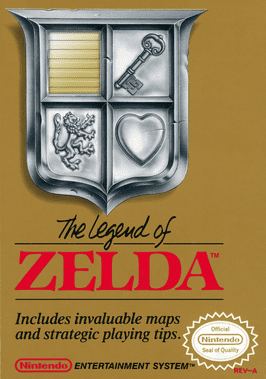
Collaborating with co-designer Takashi Tezuka, Miyamoto designed a 128-screen overworld with no prescribed direction, nine labyrinths hidden across Hyrule, and a battery-backed save system to preserve progress. Released on the Famicom Disk System in Japan in February 1986, the game arrived in North America in July 1987 in a gold cartridge — a deliberate premium presentation that matched the game's ambitious scope.
“The most important thing in game design is to surprise the player — not scare them, not trick them, but give them a moment where the world opens up and they gasp.” — Shigeru Miyamoto
1987–1988
The Black Sheep: Zelda II
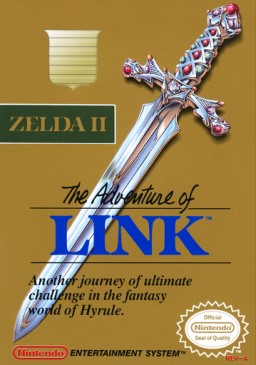
Zelda II: The Adventure of Link is the most radical entry in the series and the one that dares the most. Rather than repeat the top-down overworld formula of the original, director Tadashi Sugiyama and producer Miyamoto built a hybrid: a top-down overworld map for navigation, but side-scrolling action-RPG combat for towns, dungeons, and random encounters.
Link gains experience points and levels up Attack, Magic, and Life. A magic system awards spells from wise men in Hyrule's towns. The Great Palace at the game's end contains Dark Link — a shadow doppelganger of the player — as the final boss, 24 years before his legendary reappearance in Ocarina of Time's Water Temple.
The game is difficult by any measure. The Game Over screen — reading GAME OVER / RETURN OF GANON — sends the player back to the beginning of the game, not to a recent checkpoint. Players who persisted found a side-scrolling sword combat system of genuine precision and depth. Zelda II remains a one-of-a-kind entry: its mechanics have never been replicated in the series.
The radical departure from the original game’s format was intentional. The team wanted to experiment with RPG progression mechanics and avoid simply repeating the first game’s formula — a decision that made Zelda II the most mechanically distinctive entry in the series.
1989–1991
A Link to the Past: The 16-Bit Reinvention
History Documentary
The Super Famicom launched in Japan in November 1990. Nintendo's next Zelda — being developed by director Takashi Tezuka with Miyamoto producing — would be the platform's showcase action-adventure. The SNES's expanded colour palette, larger sprites, and Mode 7 capability allowed a Hyrule that felt genuinely alive rather than schematic.
The game's structural centrepiece — the parallel Light World and Dark World — was nearly cut from early builds. At a point when development was behind schedule, the Dark World mechanic was proposed for removal as a simplification. Tezuka fought to keep it, arguing that the Dark World was not merely additional content but the structural backbone of the second half: without it, Ganon's evil had no physical form the player could experience. The Dark World was retained.
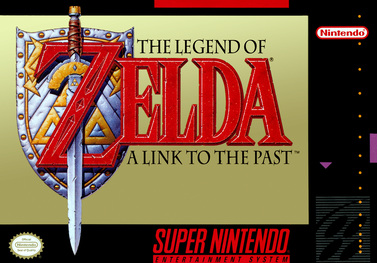
Released in November 1991 in Japan and April 1992 in North America, A Link to the Past introduced the Master Sword, Kakariko Village, Lake Hylia, and the Triforce mythology that would define the series for decades. The Hyrule Castle theme, the Dark World overworld theme, and the Kakariko Village theme — all composed by Koji Kondo — became among the most beloved pieces of game music ever written.
1991–1993
Link’s Awakening: The Dream Island
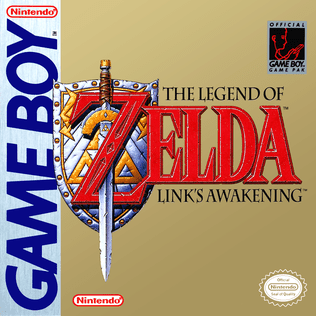
Link's Awakening began as an unofficial experiment: Nintendo EAD employees, working in their spare time, started building a Game Boy port of A Link to the Past's engine. When Miyamoto discovered the prototype, he greenlit it as an official project and handed it to director Takashi Tezuka — who proceeded to make something completely unexpected.
The game is set not in Hyrule but on Koholint Island, where Link has been shipwrecked. The island is small and dense, populated by eccentric characters including Mario's Goombas and a dog named BowWow borrowed from the Chain Chomp design. Its narrative is quietly philosophical: the island exists within the dream of a sleeping entity called the Wind Fish, and waking the Wind Fish will erase the island and everyone on it.
The ending — understated, sorrowful, final — was debated extensively during development. It was considered too dark for a Nintendo Game Boy title. Tezuka argued for keeping it. The result is one of the most poignant conclusions in the medium, built from pixel art and four-channel audio.
“With Link's Awakening we had the freedom of a small project — nobody expected much, so we could try things that felt too risky for a big release. The ending is the most obvious example.” — Takashi Tezuka, director of Link's Awakening