Thirty Seconds to the First Goal
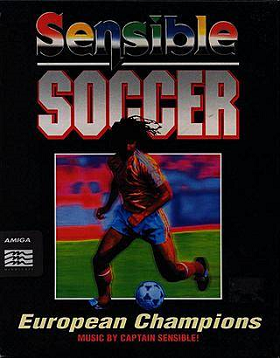
Sensible Soccer arrived in 1992 as the definitive answer to a question Amiga owners had been asking since 1988: could a football game actually feel like football? Not simulate it statistically, but feel right - immediate, physical, and fair. Jon Hare and Chris Yates answered that question by stripping the genre back to its essentials and rebuilding it with a clarity of purpose that no competitor could match.
The game's template came from the duo's own earlier work. MicroProse Soccer (1988) had proved that the top-down perspective could work for football; Sensible Soccer would prove it could work spectacularly. Everything in the new game was faster, sharper, and more responsive than its predecessors. Tiny pixel players moved at genuine pace. The pitch scrolled cleanly in eight directions. The ball behaved like a ball.
Two Designers, One Pitch
Development took place in Chelmsford, Essex, with Hare leading design and Yates handling programming. Stoo Cambridge, who had joined as artist, contributed the visual identity that would define the Sensible house style through the decade: the distinctive green pitch, the tiny, characterful player sprites, the miniaturized stadium surroundings rendered in careful pixel detail.
The decision to keep sprites small was deliberate and central. At the size Sensible Soccer used, the player could see the entire pitch at once - or close to it. Strategy was possible. You could see where the unmarked winger was. You could anticipate the pass before it was obvious. Bigger sprites would have given more visual detail but would have made the game smaller, claustrophobic, reactive rather than thoughtful.
The sprites had to be small. That was the fundamental decision. If you can't see the whole pitch, you can't play football - you're just reacting to whatever appears in front of you. We wanted players to be able to think ahead, to see the space before it opened up.
Jon Hare, Developer Spotlight documentary (May 2022)
One Button, a Thousand Decisions
The control scheme is deceptively simple. A joystick or keyboard handles movement. One button shoots or passes, depending on context. Hold that button while the ball is in flight and move the stick to add aftertouch. That is the entire interface. But the depth generated by those inputs is considerable.
Passing is read from the direction the stick points at the moment of the button press. Shot power builds as you hold the button. The aftertouch mechanic lets skilled players curl the ball in flight, bending shots around defenders, wrapping corners into the net from acute angles. At the highest level of play, Sensible Soccer becomes a game of geometry - reading angles, exploiting space, using the aftertouch to put the ball exactly where no goalkeeper can reach it.
The Curve That Redefined a Genre
The aftertouch mechanic was genuinely novel in 1992. No other football game of the era gave players real-time control over the ball's trajectory after kicking it. The ability to bend a shot in flight added a layer of skill expression that made the game endlessly rewarding to practise and deeply satisfying to master.
Technically, Sensible Soccer pushed the Amiga hardware efficiently. The sprite count, the scrolling speed, and the collision detection all operated at a level that gave the game its characteristic sense of pace without the slowdown that plagued many contemporaries. Chris Yates's optimized routines kept everything moving at the speed the design demanded.
Every Magazine Gave It a Cover
Sensible Soccer landed in 1992 to critical superlatives. Amiga Power awarded it exceptional marks on release. CU Amiga added a Superstar award. Zzap!64 praised the C64 version that followed. The game hit the top of the Amiga charts and stayed there for months, becoming one of the best-selling titles in the platform's history.
Publishers and players responded equally. Renegade Software handled the Amiga and Atari ST editions; ports followed to DOS, Mega Drive, SNES, CD32, and a half-dozen other platforms. Every port preserved the essential feel that made the original work. No translation muddied the controls or slowed the pace.
The Template Nobody Could Improve On
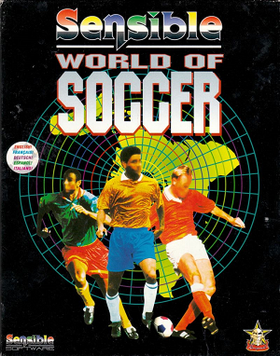
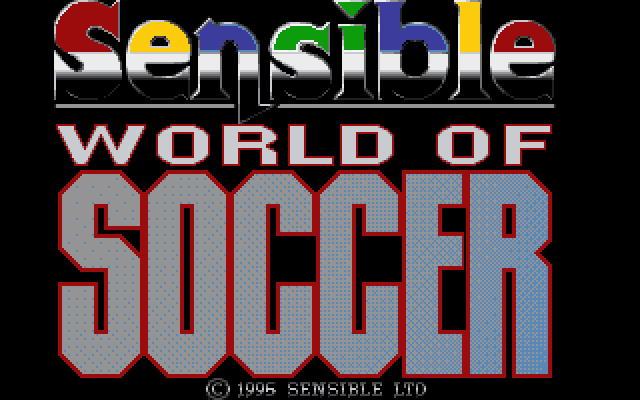
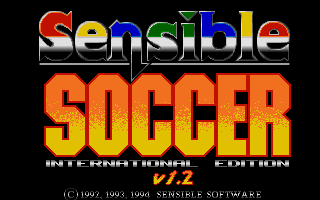
Sensible Soccer's direct control scheme and top-down pitch view became the visual and mechanical language for the entire Sensible Software football catalogue. International Sensible Soccer (1993) updated the national team database. Sensible World of Soccer (1994) wrapped the engine in a career mode of unprecedented scale. The annual SWOS editions through 96/97 refined the formula further still.
Beyond the Sensible Software series, the game's influence on football game design is visible across the following decade of sports titles. Its insistence on feel over simulation, on direct control over statistical depth, defined one pole of football game design that developers continued debating for years. Explore the full series in the Catalogue and the creative team behind the game in People.