Cannon Fodder
War! Before Anyone Fired a Shot
If there is a single moment in Richard Joseph's career that captures what game music could mean - culturally, politically, aesthetically - it is "War!", the opening theme of Cannon Fodder (1993). The song played before the game began. The player had not yet named a single soldier, not yet deployed anyone to a hilltop, not yet watched a grave appear in the memorial lawn. They heard the song first. Richard Joseph composed it, and Jon Hare wrote the words, and together they made an argument before the game had said anything else.
Cannon Fodder (1993) - Sensible Software's top-down anti-war statement on Amiga
Jon Hare's Brief: Give the Player Pause
Cannon Fodder placed players in command of infantry squads in a top-down action game, and its tone was deliberately, unflinchingly anti-war. Before the game's release, Sensible Software ran a marketing campaign featuring a poppy - the British symbol of wartime remembrance - alongside the "War!" song, drawing immediate tabloid condemnation. The Royal British Legion, who administer the Poppy Appeal, objected. The national press wrote about it. Cannon Fodder was news before it was a game.
Richard Joseph and Jon Hare were working toward a specific emotional effect. The song was not incidental colour - it was the thesis statement. Jon Hare has described the design intent in retrospective interviews as wanting players to feel something about the cost of war before the mechanics gave them permission to treat it as a game. That Richard Joseph's music achieved this at all - that thirty-two bars on Amiga hardware could carry a political position to the mainstream British press - is a measure of what he understood about music's capacity to create feeling.
"Cannon Fodder was meant to make you feel the weight of what you were doing. You name your soldiers at the start. When they die - and they die - they go into the graveyard and stay there for the whole game. We wanted you to notice. The song was the first part of that."
Jon Hare, Sensible Software co-founder - Retro Gamer magazine retrospective on Cannon Fodder
Name Them Yourself, Then Bury Them
Cannon Fodder is a real-time tactical action game. Players control squads of soldiers from a top-down perspective, directing them through missions against enemy forces. The defining mechanic is the graveyard: soldiers begin the game with names - either generated or entered by the player - and when they die, those names appear on gravestones that accumulate across the game's full campaign. A player who reaches the end of Cannon Fodder has watched dozens of named individuals die under their command and seen the cemetery grow accordingly.
The tactical layer is sharp and absorbing - Sensible Software's top-down engine handles movement and combat cleanly, the missions escalate in complexity, and the difficulty is real. But the game is designed so that the graveyard is always visible. You can ignore it and focus on the tactics. Or you can feel it. The music does not let you forget which option Sensible Software wanted you to choose.
Tracker Music Carrying the Weight of a Political Statement
The music Richard Joseph composed for Cannon Fodder is a masterclass in tonal precision. The "War!" theme walks the line between solemnity and accusation - it is neither triumphant nor bathetically tragic, but something more uncomfortable: a march that refuses to celebrate itself. Jon Hare's lyrics land with the weight of a political statement rather than a pop hook, and Richard Joseph's composition frames them accordingly.
The in-game soundtrack extends this sensibility. The Amiga tracker score maintains a tonal balance appropriate to the subject, moving between tension and dark humour in a way that matches the game's own sliding scale of satire. Richard Joseph was working with four audio channels and ProTracker format - the same hardware constraints as every other Amiga developer of the period - but deploying those constraints in service of a position, not just an atmosphere. This is some of his most sophisticated compositional work.
Front Pages Before Review Copies Shipped
The controversy that Cannon Fodder generated was unprecedented in UK game publishing. No game music had previously reached the mainstream British press as a political object - as something worth objecting to in an editorial rather than a review. That it did, that a game loading screen with a poppy and a song could become front-page news, speaks to the power of the combination: Richard Joseph's music, Jon Hare's words, and Sensible Software's uncompromising anti-war premise.
Contemporary games press - CU Amiga, Amiga Power, Amiga Format - all gave Cannon Fodder exceptional scores and specifically praised the music in their coverage. Amiga Power's review in particular acknowledged that the "War!" track was doing something no other game opening had attempted: making the player think before they played. The combination of critical acclaim and tabloid condemnation gave Cannon Fodder a cultural reach that most Amiga games never achieved.
The Loading Screen That Changed What Game Music Could Mean
Cannon Fodder has been commercially re-released multiple times and is available through emulation. The original Amiga version, with its ProTracker score, is the definitive version for audio purposes - the Mega Drive and SNES ports used hardware appropriate arrangements that cannot replicate what Richard Joseph achieved on the Amiga's four channels.
The cultural legacy of the "War!" opening extends beyond gaming. It is regularly cited in discussions of game music as a political form, in academic work on interactive audio, and in retrospective coverage of Amiga game history. The Royal British Legion controversy, far from harming the game, defined it. Thirty years later, Cannon Fodder is still remembered in significant part because of the song that opened it. Richard Joseph composed one of the most effective political pop hooks in British gaming history, and it plays before a single shot is fired.
Gods
Greek Mythology Heard Through a Synthesiser
Gods (1991) was the most ambitious sonic statement the Bitmap Brothers had yet made, and it rested on an unusual premise: the music was not composed for the game, but existed first, and was then integrated into it. The tracks came from Nation XII, the experimental project associated with John Foxx - the electronic music pioneer and original frontman of Ultravox before Midge Ure joined and the band had their commercial peak. Nation XII's synthesiser textures - minimalist, austere, rooted in Krautrock and early industrial music - gave Gods an audio character entirely unlike anything else in the Amiga library.
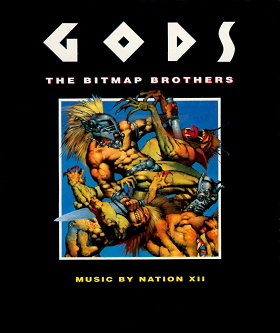
Gods (1991) - Dan Malone's industrial mythological art direction
Richard Joseph Did Not Write a Single Note
Richard Joseph's role on Gods was as audio director, not composer - and the distinction matters. The skill required to take pre-existing electronic music, identify which tracks would function within an interactive system, understand how they should shift and layer as the player moves through a Greek mythological world, and then implement them in Amiga ProTracker format at a time when interactive audio was barely a recognised discipline: this is different from composition, and in many respects harder to articulate.
John Foxx's position as original frontman of Ultravox - before Midge Ure joined and the band had their commercial peak - meant that Nation XII's music came from someone with a serious electronic music pedigree. Richard Joseph's task was to understand what that music was doing harmonically and texturally, and then make it work in a context its creators had not designed for. That the integration succeeds - that Gods sounds like a coherent, purposeful audio experience rather than a game with borrowed music stapled to it - reflects both the quality of the source material and the skill of the person making it interactive.
"The decision to use pre-recorded music rather than a composed tracker score was a creative gamble. The Nation XII tracks had an atmosphere that tracker music of the period couldn't replicate - but integrating them meant understanding their structure well enough to make them respond to gameplay. That was Richard's work."
Mike Montgomery, Bitmap Brothers co-founder - Retro Gamer retrospective on Gods
Four Worlds Between the Human and the Divine
Gods is a platform action game in which the player takes the role of Hercules, tasked by the gods with clearing four worlds of enemies in exchange for divine immortality. Each world is a multi-level environment of platforms, traps, and hostile creatures, with boss encounters and a persistent shopkeeper who sells items between stages.
The game is demanding - the Bitmap Brothers built their reputation on games that looked beautiful and played with precision, and Gods requires both reflexes and resource management. Ammunition, health, and items must all be managed, and the environments become more complex as the player progresses. The music serves the world-building as much as the gameplay: the Nation XII tracks give Gods an atmosphere of antiquity and alienness that its visual design (Dan Malone's industrial mythological illustrations) demands. When the two align, Gods feels like a coherent artistic statement rather than just a well-made game.
Licensed Music Made to Loop and Breathe
The technical challenge Richard Joseph faced on Gods was substantial. Nation XII's tracks were not composed for looping. They were not built with the tempo variations, structural repeats, and tonal consistency that tracker-composed game music typically has. To make them work in a ProTracker context - to make them loop cleanly, to ensure transitions between tracks did not jar, to make the audio feel responsive rather than incidental - required significant technical work alongside the curatorial judgment of which tracks to use.
The result is a soundtrack that operates differently from contemporary Amiga game music in ways that are immediately audible. The tracks feel spacious rather than driven; they breathe in a way that ProTracker compositions rarely do. Richard Joseph preserved something of the original material's quality while making it serve a completely different purpose.
What CU Amiga Heard That Others Missed
Contemporary reviews of Gods gave significant attention to its audio. CU Amiga and Amiga Power both specifically cited the soundtrack in their coverage, a distinction that mattered in a market where reviewer focus was overwhelmingly on graphics and playability. Gods was among the first Amiga games to have its music discussed as a component of artistic ambition rather than technical achievement. The Nation XII integration raised the standard of what a game soundtrack could aspire to be.
The Amiga Version as the Only Valid Reading
The Bitmap Brothers released Gods on Mega Drive and SNES, where the Nation XII integration was replaced with hardware-appropriate music arrangements. The console versions are competent games, but their audio makes an entirely different statement - or no particular statement at all. The original Amiga release, with Richard Joseph's Nation XII integration, is the only version that represents the full artistic intent.
Gods has been released on modern platforms via licensing deals. The Amiga version, with the original ProTracker audio, is preserved by the community and available through emulation. Richard Joseph's contribution to it - as an audio director making licensed music serve interactive purposes - is among the least obviously celebrated things he did, and among the most technically accomplished.
Speedball 2: Brutal Deluxe
When the Violence Was Always the Point
Speedball 2: Brutal Deluxe (1990) is the title most people reach for first when naming the Bitmap Brothers' finest hour - and Richard Joseph's music is inseparable from that assessment. This was a game about violence as sport, set in a dystopian future, and the soundtrack matched it exactly. Not metaphorically. Not thematically. It matched it the way bone matches impact - immediately, without ambiguity, as though the sound and the image had been designed by the same mind at the same time with the same intent.
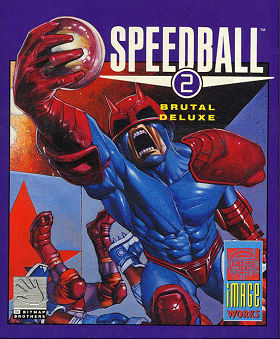
Speedball 2: Brutal Deluxe (1990) - the Bitmap Brothers' commercial and critical peak
The Bitmap Brothers' Production Peak
The Bitmap Brothers were not subtle about their ambitions. From their earliest releases, they positioned themselves as the studio that made the best-looking, best-sounding games on the Amiga - and they backed that claim up with production budgets, licensed artwork, and composers who understood what they were being hired to do. Richard Joseph had worked with them before Speedball 2; the game represented a peak for both the studio and for his contribution to it.
The Bitmap Brothers' commercial director Mike Montgomery has stated in multiple retrospective interviews that the studio's approach required every element - visuals, audio, and playability - to be the best available on the hardware. Speedball 2 is the game that most completely embodies that standard across all three dimensions.
"We never shipped a game where the sound didn't match the graphics. If you're going to make the best-looking game on the Amiga, you have to make the best-sounding one too. With Speedball 2, everything had to hit at once."
Mike Montgomery, Bitmap Brothers co-founder - gaming press retrospectives on the studio's approach
Thirty Seconds to Score or Be Scored Against
Speedball 2 is a futuristic sport game played on a closed metal arena. Two teams of nine players each compete to score by throwing a steel ball into the opponent's goal. Players can carry the ball, throw it, and physically assault opponents - the sport is violent by design, and the game makes no apology for this. Power-ups appear on the field, stars can be collected to upgrade team members between matches, and the pace is relentless.
What distinguishes Speedball 2 from its predecessor is the sophistication of the team management layer. Players can trade, train, and upgrade their squad across a full league season. The sport itself lasts thirty to ninety seconds per half; the investment in the squad management can extend across an entire campaign. The music serves both contexts: propulsive enough for the arena, persistent enough for the management screens.
Four Channels, No Warmth, Perfect
The Amiga score is percussive and mechanical, propelled by drum patterns that feel less like music accompanying the action than music enacting it. There is no warmth, no melodic sentimentality - the opening theme establishes the tone immediately: industrial, urgent, relentless. The sound design is equally considered; the crack of the ball hitting metal, the grunts and impacts of the players, are woven through the music so completely that the game's audio is experienced as a unified whole rather than a score and effects layer operating separately.
Richard Joseph's approach on Speedball 2 demonstrates something important about compositional judgment: understanding when not to use the full expressive range available. The Amiga's four channels could be made to sound warm, melodic, emotionally varied. Speedball 2 uses them to sound hard. That choice - the decision to match the game's violence rather than provide relief from it - is the defining creative decision in the score.
Reviewers Who Finally Noticed the Audio
Contemporary reviews of Speedball 2 gave explicit attention to the audio in a way that Amiga game reviews of the period often did not. CU Amiga and Amiga Power both awarded high scores for the sound design - a distinction that mattered because most reviews of the era treated audio as a checklist item rather than a subject of analysis. What they responded to was the music's absolute appropriateness to its context: a quality that requires compositional judgment as well as technical skill.
Seven Ports and the Amiga One Still Wins
Speedball 2 was ported to Atari ST, DOS, Commodore 64, Mega Drive, Game Boy, and Master System. Each version has a different audio implementation, constrained by the hardware capabilities of the target platform. The Amiga original, with its full four-channel ProTracker score, is the reference point - it demonstrates what Richard Joseph could do with tracker music and Amiga audio when he was working at the height of his powers.
The game has been re-released commercially multiple times and is available through emulation. Its music, heard without the game, sounds lean and purposeful. Heard within the game, it is definitive. Speedball 2 is the Bitmap Brothers title that most consistently appears in retrospective discussions of Amiga sound design, and Richard Joseph's score is the primary reason.
The Chaos Engine
Before Anyone Had a Name for What He Built
The Chaos Engine (1993) was the Bitmap Brothers' creative peak on Amiga hardware - a steampunk Victorian co-op shooter of extraordinary visual and audio sophistication. Its music, composed by Richard Joseph, was also his most technically ambitious work for the studio: a music system that adapted in real time to gameplay events. The industry would later call this approach adaptive audio or dynamic music. In 1993, on Amiga hardware, using ProTracker modules, Richard Joseph built it without the vocabulary for it.
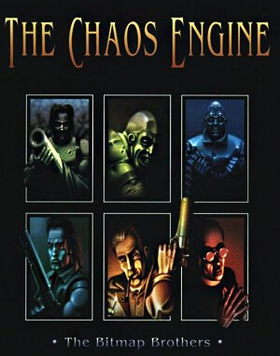
The Chaos Engine (1993) - the Bitmap Brothers' most technically sophisticated Amiga release
Six Modules That Talked to Each Other
The principle is familiar now - adaptive audio, dynamic music, state-triggered transitions - but in 1993, on Amiga hardware, with ProTracker modules, implementing a music system that could respond to player actions required compositional ingenuity alongside audio programming. Richard Joseph's solution was to compose multiple music modules - one for each major game state - that could transition cleanly between each other without jarring discontinuity.
Each module had to work as a standalone piece of music. It also had to be capable of transitioning to any other module, in either direction, at any moment the game logic demanded. The compositional constraints this imposes are substantial: shared tempos, compatible harmonic centres, transition points built into the structure of each piece. Richard Joseph was solving a music theory problem as much as a programming one.
"The challenge with The Chaos Engine was that the music couldn't just loop in the background - it had to respond to what the player was doing. Each section needed to transition cleanly to any other, and the player would never notice the join. Getting that right required understanding the music's structure at a level that most tracker composers of the era weren't working at."
Richard Joseph, discussing The Chaos Engine's interactive music system - Remix64 interview, 2002
Two Mercenaries Through Four Victorian Worlds
The Chaos Engine is a top-down run-and-gun game set in a steampunk Victorian universe where a mysterious entity known as the Chaos Engine has overrun Britain with mutated creatures. Players choose from six mercenary characters - each with different statistics and abilities - and can play solo or cooperatively with a second player. The co-op mode is central to the game's design: levels are built around two-player tactics, and the AI partner in single-player mode is a visible concession to a game meant to be played with another person.
Four worlds, each with multiple stages, provide the setting: jungle, lost world, ancient ruins, and clockwork mechanisms. Each environment has its own visual identity (from Dan Malone, whose art direction defined the Bitmap Brothers' aesthetic) and its own music module. The transitions between areas, and between game states within areas, are where Richard Joseph's interactive system becomes audible.
State-Triggered Transitions on Four-Channel Hardware
The co-op dimension adds a particular technical problem: the music must serve two simultaneous players whose game states may differ. If one player is in combat while the other is exploring, the music must work for both. Richard Joseph's system handled this by treating the game state holistically - the music responded to the highest-intensity state active at any given moment, rather than attempting to serve both players independently.
This approach - composing for the game state rather than the individual player - was ahead of the industry's mainstream thinking about adaptive audio. It would be years before CD-ROM storage made dynamic music more tractable for most developers, and years more before the techniques Richard Joseph implemented on the Amiga in 1993 became standard practice. The Chaos Engine did it on four audio channels.
Amiga Power's Most Technically Literate Review
Contemporary coverage of The Chaos Engine specifically noted the music's interactive qualities - a distinction that required reviewers to listen closely enough to observe that the score was changing in response to gameplay rather than simply looping. Amiga Power's review engaged with the interactive music system as a technical and artistic achievement, which was unusual for game coverage of the period. The game received exceptional scores across the Amiga press.
A Score Too Advanced for Its Era to Replicate Quickly
The Chaos Engine was re-released on Steam in 2013 by Mastertronic, making it one of the few Bitmap Brothers titles to receive an official modern release. The interactive music system, in its original Amiga form, is archived at AMP and Modarchive.
What The Chaos Engine demonstrates is the gap between what was technically possible on Amiga hardware in 1993 and what the industry was actually doing with that hardware. Richard Joseph's interactive music system was not replicated widely in contemporary Amiga games - the technical overhead was considerable, and few studios had his combination of compositional skill and audio programming ability. The approach became standard only when cheaper storage made it tractable for everyone. By then, Richard Joseph had been doing it for a decade.
Barbarian: The Ultimate Warrior
A C64 SID Score Before There Was a Career Path to Write One
Barbarian: The Ultimate Warrior (1987) was Richard Joseph's first major work, and it arrived into a context where game music was not yet a recognised profession. Palace Software's hack-and-slash action game generated tabloid coverage for its cover photography - Maria Whittaker in warrior costume becoming one of the most contested marketing images in early British game history. What the tabloids did not discuss was the C64 SID score. That score has outlasted the controversy by four decades.
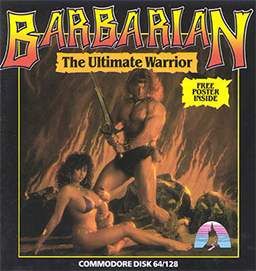
Barbarian: The Ultimate Warrior (1987) - Palace Software's controversial debut
Hired Through the Melody Maker
Richard Joseph's entry into game music was unconventional even by the standards of 1986, when the industry had no formal routes in. He had trained at the City of Manchester's music conservatoire, worked as a session musician with Shakatak (the British jazz-funk group), and released a solo single on EMI. He was, by any measure, a professional musician of the established kind - not someone who drifted into game music from programming or self-taught composition.
Palace Software placed an advertisement in Melody Maker, the UK music industry weekly. Richard Joseph saw it, applied, was hired, and began scoring Barbarian on a Commodore 64. The Remix64 2002 interview - the most significant primary source for his own account of his career - records this origin. The conservatoire background he brought to Palace was unusual in a field of largely self-taught composers, and it shows in the Barbarian score's harmonic construction.
"I came to game music from a classical background - session work, EMI, the conservatoire. When I sat down with the SID chip for the first time, I treated it the way I'd treat any instrument: learn its voice, then write for it rather than against it. Three voices is a limitation if you think in orchestral terms. It's a form if you think like a chamber composer."
Richard Joseph, discussing his approach to the C64 SID chip - Remix64 interview, 2002
Sixteen Moves and a Decapitation
Barbarian: The Ultimate Warrior is a one-on-one fighting game. Two players (or one player against an AI opponent) control barbarian warriors through a series of combat rounds, using a set of moves that includes standard strikes, special attacks, and - most notoriously - a decapitation move that executes a defeated opponent, accompanied by a goblin kicking the severed head offscreen. The mechanic was considered extreme for 1987 and contributed to the game's tabloid profile alongside the cover photography.
The game's fighting engine was technically sophisticated for the period. Large character sprites, multiple moves, and relatively fluid animation required significant technical work from the Palace Software development team. The C64 SID score operates at the same ambition level: complex enough for its hardware to make meaningful demands on the composer.
Three Voices and One Conservatoire Education
The Commodore 64 SID chip was, by 1987, a mature tool in the hands of skilled composers: three-voice polyphony, digital waveforms, programmable filters, envelope generators, and enough quirks to make each skilled composer's approach distinctive. Richard Joseph's Barbarian score uses these tools with the confidence of someone who understood music formally, not just the hardware.
The main theme moves through tension and aggression with a sense of harmonic construction - progressions that a conservatoire-trained composer would choose, not the pentatonic defaults that characterised less skilled C64 work. The filter sweeps are used as compositional events, not just timbral decoration. The three voices are managed so that the harmonic content and the rhythmic content share the available polyphony rather than competing for it. This is craft, not accident.
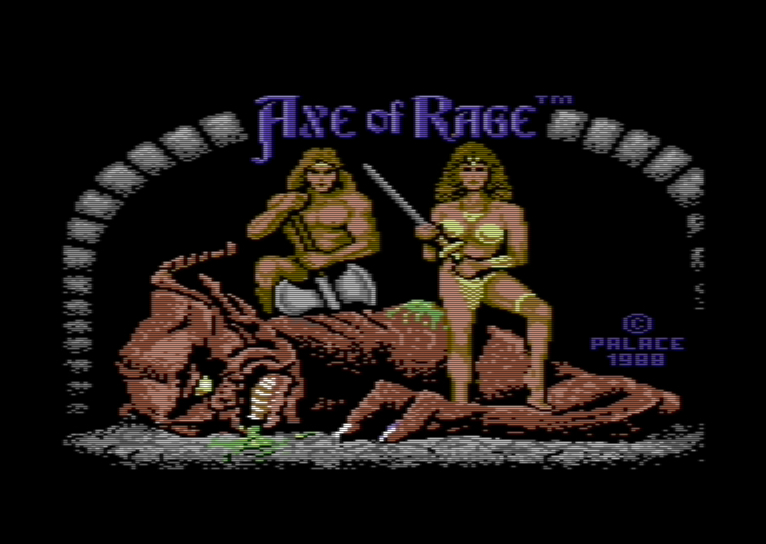
Barbarian II: The Dungeon of Drax (1988) - the SID score preserved in the HVSC
Zzap!64 Noticed Before the Tabloids Were Finished
Zzap!64 - the Commodore 64's premier UK magazine - reviewed Barbarian and specifically noted the music in a review landscape that rarely separated audio from the general score. This early critical recognition mattered: it established that Richard Joseph's C64 work was worth paying attention to on its own terms, not merely as functional accompaniment to the gameplay. The tabloid controversy over the cover photography dominated public discussion; Zzap!64's reviewer heard past it.
Preserved in the HVSC for Forty Years
Barbarian was followed by Barbarian II: The Dungeon of Drax (1988), with a second SID score now also preserved in the HVSC. These two games constitute Richard Joseph's foundational Palace Software legacy, and they established the compositional palette - emotional range, technical rigour, willingness to serve the game's atmosphere before serving technical showmanship - that would define the next twenty years of his career.
The SID files are still actively downloaded and played by the retro music community. Search for "Joseph_Richard" in the HVSC directory to find the full Palace Software era catalogue. The Amiga version of Barbarian used different music arrangements appropriate to that hardware's capabilities. Both versions are Richard Joseph's work, but the C64 SID is the foundation: the earliest surviving evidence of what this composer could do with silicon, and why Palace Software hired him when the game industry was not yet sure game composers were a thing worth hiring.