Richard Joseph
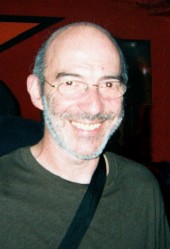
Richard Joseph
Composer & Audio Director - Active c.1986–2007
Richard Joseph was a British composer and audio director who brought formal musical
training to the game industry at a time when most developers were self-taught.
He studied at the City of Manchester's music conservatoire and worked as a session
musician - most notably with Shakatak, the British jazz-funk group -
before releasing a solo single on EMI.
He entered game development in 1986 through a Melody Maker advertisement placed by
Palace Software. Over the next twenty years he scored more than
25 confirmed titles for four studios: Palace Software, The Bitmap Brothers,
Sensible Software, and Elixir Studios. MobyGames credits him with 275 individual
contributions across 84 games.
His principal achievements - the Barbarian C64 scores, Speedball 2's percussive
Amiga soundtrack, the Nation XII integration in Gods, the "War!" opening of
Cannon Fodder, and The Chaos Engine's interactive music system - span the full
technical and emotional range of what game music could accomplish on 8- and 16-bit
hardware.
Richard Joseph died on 4 March 2007 after a long illness.
BAFTA honoured his contribution posthumously; the Remix64 community released a
charity tribute album, proceeds donated to Macmillan Nurses.
Read the full career history.
Collaborators
Jon Hare
Co-Director, Sensible Software - Cannon Fodder Collaborator
Jon Hare co-founded Sensible Software with Chris Yates in 1986, and the studio
became one of the most beloved in British game development. His creative partnership
with Richard Joseph during the Sensible Software years produced some of the most
distinctive game audio of the early 1990s.
Most significantly, Hare wrote the lyrics to "War!" - the Cannon Fodder (1993)
opening theme composed by Richard Joseph. The song's anti-war sentiment and its
association with a poppy (the symbol of British Remembrance Day) generated
significant press controversy before the game launched, and the combination of
music and message made for one of the most culturally charged moments in Amiga
game history. Hare has discussed Richard Joseph's contribution to Cannon Fodder
in retrospective interviews.
The collaboration extended across Mega Lo Mania (1991), Sensible Soccer (1992),
Cannon Fodder 2 (1994), and Sensible World of Soccer (1994). See the
full catalogue for all shared credits.
John Foxx / Nation XII
Recording Artist - Gods (1991) Music Collaboration
John Foxx is a British electronic music pioneer, best known as the
original frontman of Ultravox before his critically acclaimed solo career.
Nation XII was a project associated with Foxx, producing the
minimalist, synthesiser-based tracks that found their way into The Bitmap Brothers'
Gods (1991).
Richard Joseph served as audio director on Gods, integrating the licensed Nation XII
music into the game's interactive music system. The result was unlike anything
contemporary Amiga game audio - textural, atmospheric, distinctly non-arcade in
character. Wikipedia's entry for Gods confirms the Nation XII credit.
This collaboration demonstrates Richard Joseph's skills as an audio director,
not merely a composer: the ability to curate licensed material and integrate it
into a coherent interactive audio experience. Hear the result at the
music archive.
Betty Boo
Pop Artist - Cannon Fodder Era Collaborator
Betty Boo (Alison Clarkson) was a prominent British pop artist
in the early 1990s, known for her distinctive style and UK chart success.
Her connection to Richard Joseph's work is cited in community sources from the
Cannon Fodder promotional period; the precise nature of the collaboration
requires further primary-source verification.
The Cannon Fodder era - 1993, the year of "War!" - was a moment of unusual
intersection between game music and the mainstream British pop world, and Betty Boo
was a significant figure in that scene. Her documented association with this period
of Richard Joseph's career is noted here pending full verification.
Brian May
Guitarist / Recording Artist - Cited Collaborator
Brian May - Queen's lead guitarist, songwriter, and astrophysicist -
is cited in community sources as a collaborator with Richard Joseph on a game-related
project. The specific title and nature of this collaboration requires primary-source
verification; it may relate to Richard Joseph's work at Pinewood Studios or Audio
Interactive during the mid-1990s, when he was involved in interactive multimedia
productions beyond the purely game context.
This connection is noted here as documented in research notes pending full
verification. Any confirmed details will be added as primary sources are located.
Captain Sensible
Musician / Recording Artist - Cited Collaborator
Captain Sensible (Raymond Ian Burns) is a British musician,
best known as guitarist and vocalist with The Damned and for his solo UK number
one "Happy Talk" (1982). His political sensibility and profile in UK alternative
music make him a plausible collaborator for the politically charged Cannon Fodder
era - the "War!" campaign which courted controversy in 1993.
His connection to Richard Joseph is cited in community research; the specific
nature of the collaboration requires primary-source verification. This profile
is included as a placeholder pending full documentation.
James Hannigan
Composer - Elixir Studios Colleague
James Hannigan is a British game composer whose credits include
major titles across the Harry Potter, Command & Conquer, and Dead Space franchises.
He was associated with Elixir Studios during the same period as Richard Joseph -
the early 2000s production of Republic: The Revolution (2003) and Evil Genius (2004)
- and has been reported to have discussed Richard Joseph and the Elixir Studios
working environment in interviews.
Hannigan's career represents a lineage in British game composition that Richard Joseph
helped establish: formally trained, adaptable across genre and platform, committed to
the craft of interactive audio at a time when the industry was only beginning to
recognise it as such.