The House That Built the Code
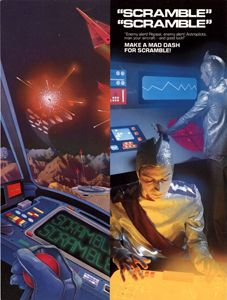
Konami was founded in 1969 in Osaka, Japan, initially as a jukebox rental and repair business. The name derives from its three founders: Kagemasa Kozuki, Yoshinobu Nakama, and Tatsuo Miyasako. By the late 1970s the company had pivoted into coin-operated arcade games, and by 1981 it had produced two genre-defining titles: Scramble and Frogger.
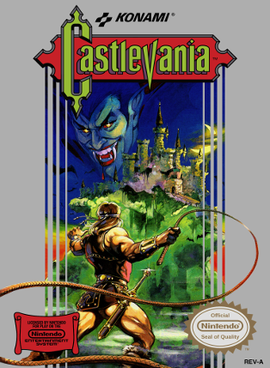
Through the 1980s and early 1990s, Konami became one of the most celebrated third-party publishers for the Nintendo Entertainment System. Castlevania, Contra, Gradius, TMNT, and Metal Gear — each a genre benchmark — each a Konami product. The company held a rare arrangement with Nintendo that allowed it to exceed the standard four-cartridge per-year publishing limit, using subsidiaries Ultra Games and Paladin Studios to circumvent the cap.
Perhaps no single artefact better captures Konami’s cultural footprint than the Konami Code: ↑↑↓↓←→←→BA. Created by developer Kazuhisa Hashimoto in 1986 to make Gradius testable, retained by accident, and popularised by Contra’s 30-lives trick in 1988, the sequence became the most famous cheat code in gaming history — appearing in over 100 games across dozens of publishers and platforms.
“I put it in to make testing easier and forgot to take it out. I never thought it would become something this famous.”
— Kazuhisa Hashimoto, creator of the Konami Code (1986)
Konami at a Glance
↑↑↓↓←→←→BA
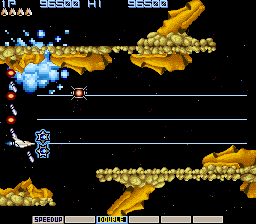
The Konami Code originated when Kazuhisa Hashimoto was porting Gradius from the arcade to the Famicom (NES) in 1986. Finding the game too difficult to test effectively, he inserted a cheat sequence into the controller handler — Up, Up, Down, Down, Left, Right, Left, Right, B, A — that granted the player all power-ups from the start. He intended to remove it before shipping. He didn’t.
Two years later, Contra adopted the same sequence to grant players 30 lives instead of the default three. With Contra’s enormous popularity, the code became a shared cultural touchstone: passed between friends in schoolyards, printed in gaming magazines, referenced in film and television. By 2020, the code had appeared in over 100 games across virtually every major publisher.
Kazuhisa Hashimoto died on 25 February 2020. Tributes from across the gaming community referenced the code — the most famous accident in the history of game development.
Try it: press ↑↑↓↓←→←→BA on your keyboard.
NES Era Documentary
A Brief History of Konami — from Osaka jukebox repairs to NES dominance and the Konami Code.
Konami Kukeiha Club Best Vol.1 (1997) — the complete anthology from the internal music team that scored Contra, Gradius, and Castlevania.
Contra — The Flagship Title
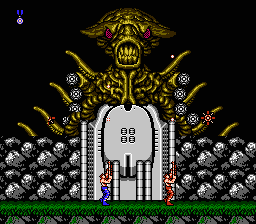
Released in arcades in 1987 and on NES in 1988, Contra defined the run-and-gun genre. Its two-player co-operative mode, tight controls, and punishing difficulty made it the game that every NES owner had to have — and the one that popularised the Konami Code for an entire generation.
The NES port was a technical achievement: cramming the arcade’s multiple environments (jungle, base, waterfall, alien lair) onto a 256-kilobyte cartridge, while retaining the two-player simultaneous mode and adding a horizontal-scrolling jungle stage not present in the arcade original.
“Two players, one screen, aliens everywhere. Contra was the NES at its most cooperative and most chaotic.”
— Nintendo Power magazine, Vol. 2, 1988