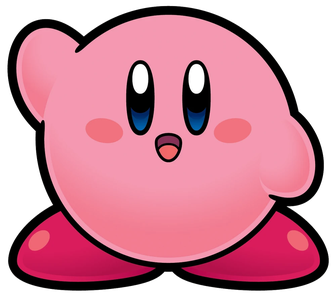
A Hero Born From a Placeholder
Kirby began as a rough blob drawn by a teenage developer to test game mechanics. It became one of Nintendo's most enduring characters - a symbol of accessible, joyful game design.
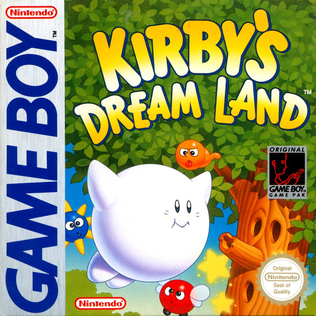
Masahiro Sakurai created Kirby's Dream Land in 1992 at the age of 19, working at HAL Laboratory as one of Nintendo's closest development partners. The design philosophy was radical in its simplicity: a game that anyone could pick up and enjoy, without the brutal difficulty spikes of contemporary NES titles. Kirby’s signature round shape and permanent smile were deliberate choices - a character who communicates welcome, not menace.
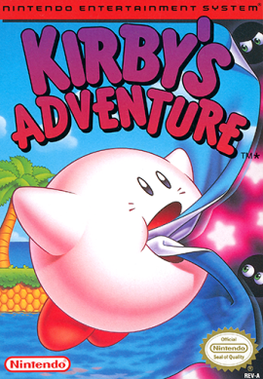
Where the original Dream Land introduced the inhale mechanic, Kirby's Adventure on NES (1993) introduced the copy ability system: 24 distinct powers that Kirby could absorb from enemies by swallowing them. Fire. Ice. Sword. Beam. The premise was simple enough to explain in ten seconds, deep enough to master over dozens of hours. It is, to this day, one of the most elegant mechanical designs in platformer history.
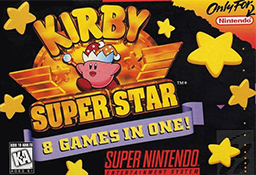
The series reached its SNES apex with Kirby Super Star (1996) - eight complete games in one cartridge, a Helper system that reimagined two-player co-op, and production values that pushed the Super Famicom hardware to its limits. It remains the definitive Kirby game: ambitious in scope, generous in execution, and technically exceptional.
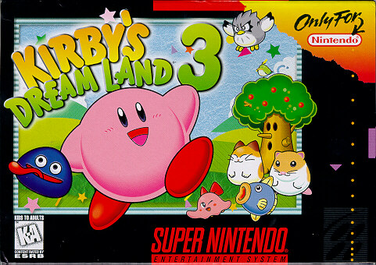
Kirby in Action
Dream Land Trivia
Essential Kirby
🎮 Full Game Library
Six games across Game Boy, NES, and SNES - box art, platform badges, and copy ability highlights for every entry.
✨ Copy Abilities
All 31 copy abilities from Kirby’s Adventure and Kirby Super Star - icons, descriptions, and source enemies.
⭐ Kirby Super Star
Deep-dive into the eight-game SNES anthology - every mode, the Helper co-op system, and why it remains the definitive entry.
👤 The Creators
Masahiro Sakurai and Jun Ishikawa - the director who created a franchise at 19 and the composer who gave it its sound.
About This Fan Page
A fan tribute to Nintendo’s Kirby series covering the Game Boy and SNES era (1992–1997). All game content, characters, and trademarks belong to Nintendo Co., Ltd. and HAL Laboratory, Inc. This site is non-commercial and generates no revenue.