Game Library · 1992–1997

Classic Kirby Games

Six games across three platforms — each one a distinct vision of what Kirby could be, from accessible action platformer to golf-puzzle hybrid to anthology masterpiece.

6 games
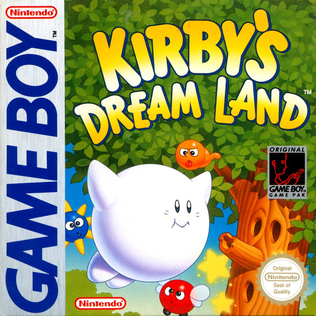
Kirby's Dream Land (1992) Game Boy box art

Kirby’s Dream Land

Game Boy 1992

The debut of Kirby — designed by 19-year-old Masahiro Sakurai as an accessible action platformer that anyone could enjoy. King Dedede has stolen all the food from Dream Land; Kirby must reclaim it across five worlds. Introduced the inhale mechanic: Kirby swallows enemies and spits them as star projectiles. Developed in approximately six months and became one of the Game Boy’s best-selling titles.

Key mechanic introduced: Inhale — draw in enemies and spit them as stars. Copy ability system not yet present. Extra Game mode unlocked after completion.
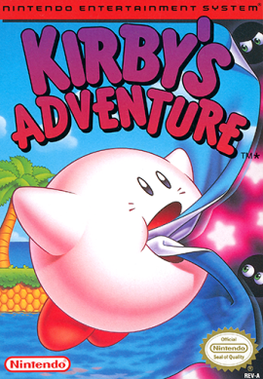
Kirby's Adventure (1993) NES box art

Kirby’s Adventure

NES 1993

The defining Kirby game. Introduced 24 copy abilities — the mechanic that would characterise the series for decades. Seven worlds of platforming with mid-bosses, sub-games, and a twist ending that reframed the entire premise. Technically stunning for a 1993 NES game: HAL pushed the hardware with parallax scrolling, palette cycling, and one of the finest NES soundtracks ever composed.

Copy abilities introduced: Fire, Ice, Sword, Beam, Hammer, Cutter, Needle, Parasol, Bomb, Crash, Mike, and 13 more — 24 total at launch.

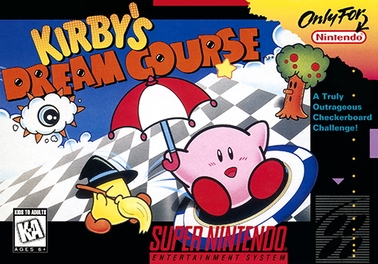
Kirby's Dream Course (1994) SNES box art

Kirby’s Dream Course

SNES 1994

A golf-inspired puzzle game where Kirby is used as the ball. Players set trajectory and power to send Kirby across isometric courses, using copy abilities to interact with terrain and clear enemies. More puzzle than sport — success requires thinking several moves ahead. Two-player competitive mode adds a sharp strategic dimension. Known in Japan as Kirby Bowl.

Copy abilities as tools: Abilities change trajectory and interact with terrain rather than functioning as combat moves. 8 courses of 8 stages each, plus Extra Mode.

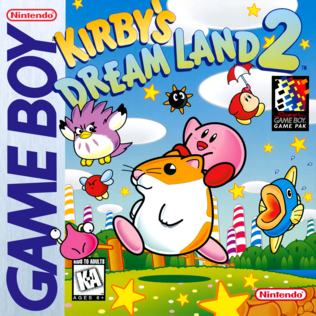
Kirby's Dream Land 2 (1995) Game Boy box art

Kirby’s Dream Land 2

Game Boy 1995

The sequel to Dream Land brought copy abilities to the Game Boy alongside three animal friends — Rick the Hamster, Kine the Sunfish, and Coo the Owl — each of whom modifies how Kirby’s copied powers behave when ridden. Seven abilities multiplied by three animal friends produces 21 unique power variants. Introduced the Rainbow Sword and the Rainbow Drop collection mechanic required for the true ending.

Animal friend system: Rick (hamster), Kine (sunfish), Coo (owl). Each transforms how copy abilities work — 21 total ability-friend combinations.

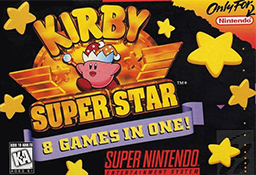
Kirby Super Star (1996) SNES North American box art

Kirby Super Star

SNES 1996

The anthology masterpiece. Eight complete game modes in one cartridge: Spring Breeze, Dyna Blade, The Great Cave Offensive, Gourmet Race, Milky Way Wishes, Megaton Punch, Samurai Kirby, and The Arena. The Helper system lets Kirby materialise a copy-ability companion for genuine two-player co-op. Consistently ranked among the finest SNES games and the definitive Kirby title.

New abilities introduced: Cook, Fighter, Jet, Plasma, Suplex, Mirror. All abilities expanded with 3–5 move movesets instead of a single action.

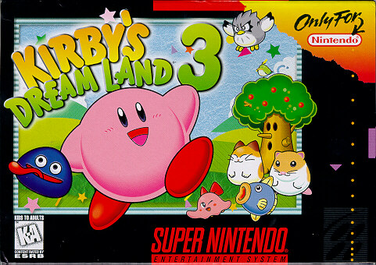
Kirby's Dream Land 3 (1997) SNES box art

Kirby’s Dream Land 3

SNES 1997

A deliberate stylistic counterpoint to Super Star. Where Super Star was fast, varied, and mechanically ambitious, Dream Land 3 is slow, pastoral, and rendered in a distinctive crayon-and-watercolour visual style that makes it look unlike any other SNES game. Gooey — a blob of Dark Matter — joins Kirby as a permanent second character. Six animal friends return from Dream Land 2, with Nago the cat added new. Friendship sub-quests in every stage required for the true ending.

Animal friends expanded: Rick, Kine, Coo, ChuChu, Pitch, Nago, plus Gooey as a permanent companion. True ending requires completing friendship quests in all stages.