People Behind the Crystals
Final Fantasy was never the work of a single person. Four creative figures defined the series during its foundational years — each bringing a discipline that proved essential, each shaping the franchise in ways still felt today.
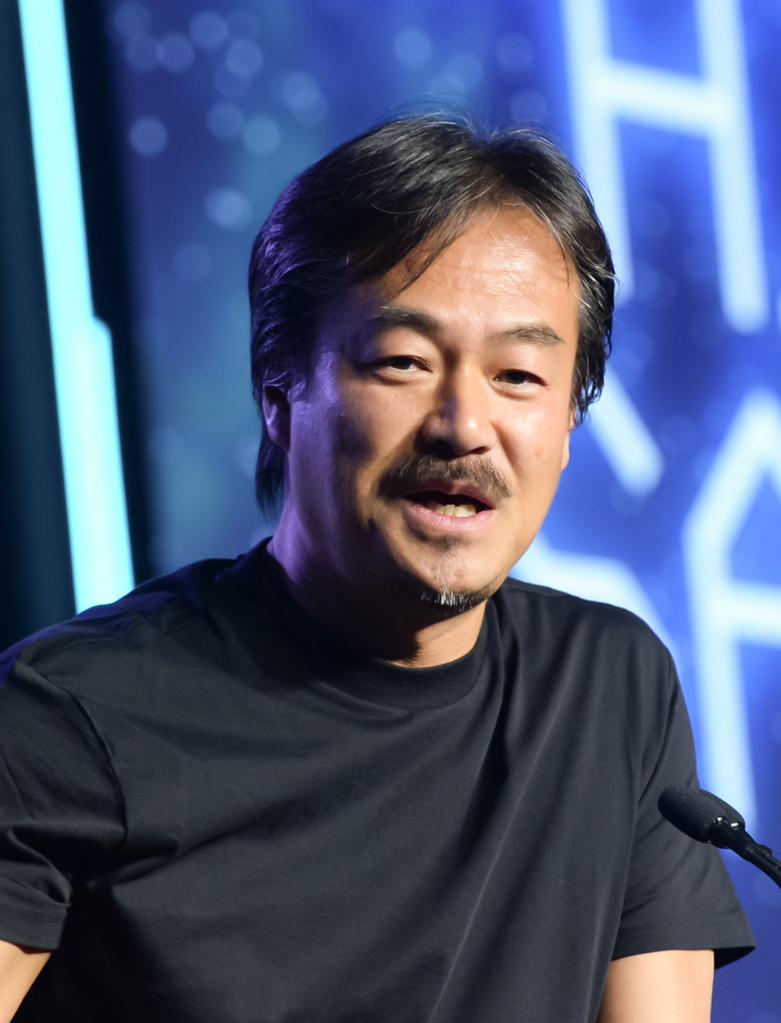
Hironobu Sakaguchi
Creator / Director / Producer — Final Fantasy I–VI
Hironobu Sakaguchi is the creator of Final Fantasy and one of the most consequential figures in RPG history. Born in 1962 in Hitachi, Ibaraki, he joined Square in 1983 as a part-time employee while studying at the University of Tsukuba, and stayed when Square needed his skills full-time. By 1987, Square had produced a series of unsuccessful games and was on the verge of financial collapse.
Sakaguchi proposed Final Fantasy as what he later confirmed was genuinely intended to be his final game. He had planned to leave the games industry if it failed, intending to return to university. It did not fail: Final Fantasy sold over 500,000 copies in Japan and established Square as a viable company.
As director of Final Fantasy I through VI, Sakaguchi established the series' core DNA: lavish production values relative to contemporary games, a commitment to storytelling uncommon in early RPGs, Yoshitaka Amano's distinctive character design, and Nobuo Uematsu's emotionally sophisticated compositions. His particular obsession was scale — each successive Final Fantasy needed to be larger, more emotionally ambitious, and more technically impressive than its predecessor.
Sakaguchi moved to executive producer after FFVI, with Yoshinori Kitase taking the director's role for FFVII. He left Square in 2001 following the catastrophic box office failure of Final Fantasy: The Spirits Within, for which he accepted personal responsibility. He founded Mistwalker in 2004 and continues to make RPGs.
A game should make you feel something. If a player finishes and says ‘that was fun’, I have failed. I want them to say ‘that changed something’.
— Hironobu Sakaguchi
Notable Works
- Final Fantasy (1987) — Creator/Director
- Final Fantasy II (1988) — Director
- Final Fantasy III (1990) — Director
- Final Fantasy IV (1991) — Director/Producer
- Final Fantasy V (1992) — Director/Producer
- Final Fantasy VI (1994) — Producer
- Final Fantasy VII (1997) — Producer
- Final Fantasy: The Spirits Within (2001) — Director
- Lost Odyssey (2007) — Executive Producer
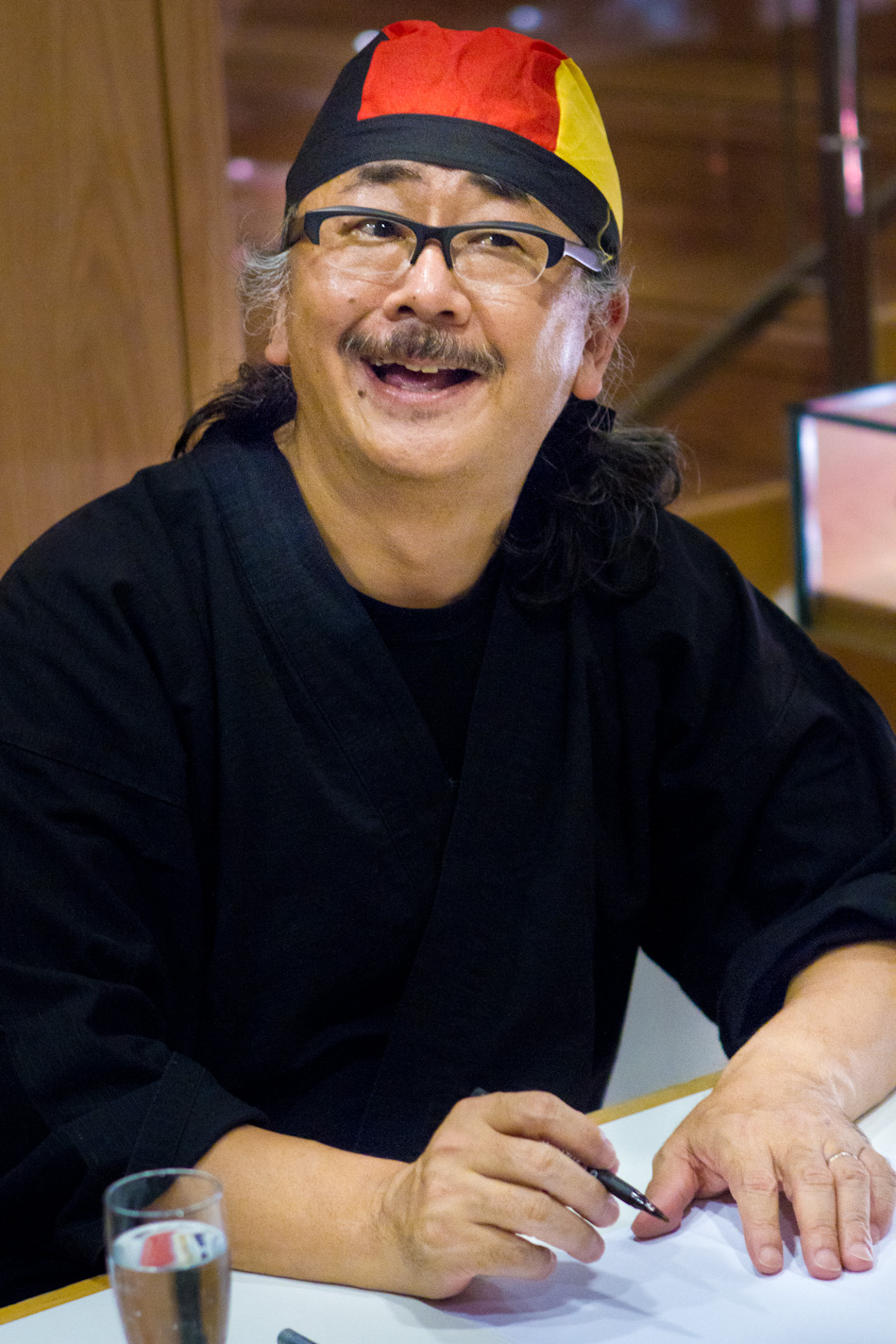
Nobuo Uematsu
Composer — Final Fantasy I–VI (and beyond)
Nobuo Uematsu is the composer of the Final Fantasy series and one of the most celebrated figures in the history of video game music. Born in 1959 in Kochi Prefecture on the island of Shikoku, Uematsu was largely self-taught — he learned piano as a teenager by listening to pop music and playing by ear, never completing formal music training. He joined Square in 1985 and met Hironobu Sakaguchi, with whom he would collaborate for nearly two decades.
Uematsu composed the entirety of the Final Fantasy series through Final Fantasy IX (2000), producing scores of increasing ambition as the hardware allowed more sophisticated audio. His approach to composition was always melodically led: he believed that the primary function of a game score was to make the world feel inhabitable, and that this required memorable themes rather than atmospheric texture.
The Prelude — a simple ascending and descending arpeggio that opens every Final Fantasy — is Uematsu's most ubiquitous creation. For the SNES era, working with the Sony SPC700 sound chip, his achievement on FFIV, FFV, and FFVI is to have composed music that consistently exceeds what the hardware seems capable of suggesting. The ‘Battle on the Big Bridge’ in FFV, the ‘Aria di Mezzo Carattere’ and the 17-minute ‘Dancing Mad’ in FFVI are fully realised musical ideas that hold up against orchestral arrangements.
Uematsu left Square Enix in 2004 and founded Dog Ear Records. His orchestral concert series — ‘Distant Worlds: Music from Final Fantasy’ — has sold out venues worldwide.
The Prelude is the simplest thing I have ever written. It is also the most important. Every Final Fantasy begins with those notes, and after 35 years I still hear from people who cry when they hear them.
— Nobuo Uematsu
The opera scene was the most frightening thing I ever attempted. I had never written for voice — there was no voice, the machine couldn't do it — so I had to write something that suggested it. I am still not sure how I did it.
— Nobuo Uematsu
Notable Works
- Final Fantasy I–IX (1987–2000) — Full score for all nine games
- Chrono Trigger (1995) — Co-composer
- Final Fantasy XI (2002) — Score
- Lost Odyssey (2007) — Score
- Distant Worlds: Music from Final Fantasy — Ongoing concert series
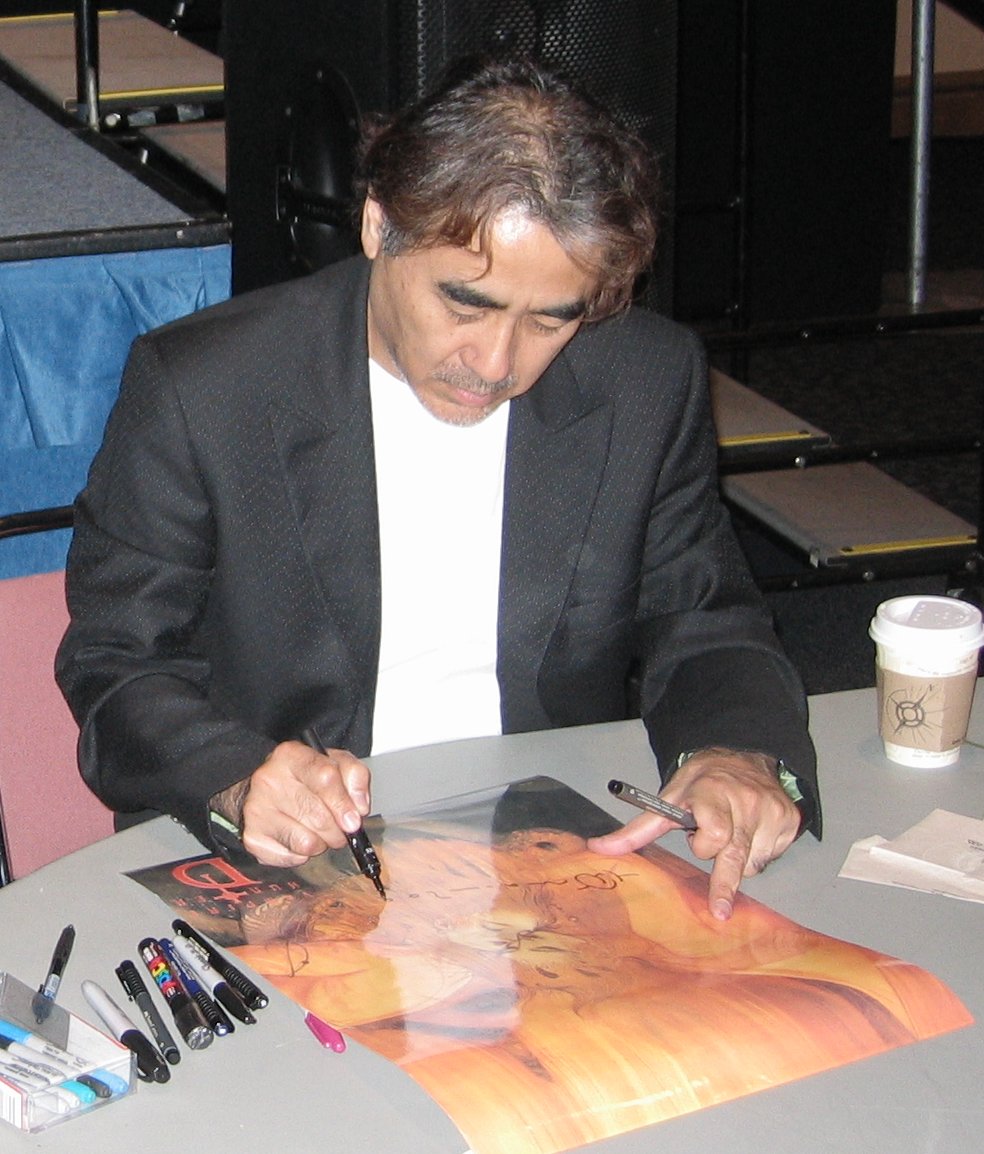
Yoshitaka Amano
Character Designer / Image Illustrator — Final Fantasy I–VI
Yoshitaka Amano is the visual architect of the Final Fantasy universe — the artist whose character designs, concept paintings, and logo illustrations gave the series its distinctive aesthetic identity from 1987 through 1994 and beyond. Born in 1952 in Shizuoka, Amano began his career at Tatsunoko Production at age 15, designing characters for anime series including Gatchaman, Casshern, and Tekkaman. He spent 14 years at Tatsunoko developing a style characterised by elongated limbs, ethereal translucency, watercolour texture, and a quality of simultaneous fragility and power.
Amano left Tatsunoko in 1982 to work as a freelance illustrator and became one of Japan's leading commercial artists before Hironobu Sakaguchi hired him to design the characters and world of Final Fantasy in 1987. He worked primarily on image illustrations — the promotional paintings and in-box artwork that defined how the characters looked in the player's imagination — rather than the in-game pixel art.
The gap between Amano's ethereal illustrations and the chunky NES sprites created a productive tension: the games felt like they were reaching toward something grander than the hardware could achieve. His illustrations were the gap between what the game was and what it wanted to be.
For FFVI, Amano designed all 14 playable characters and produced the game's key art including the iconic image of Terra Branford surrounded by Magitek armor. His fine art has been exhibited worldwide.
I draw people who are in between — between power and fragility, between human and something else. Final Fantasy lives in that space.
— Yoshitaka Amano
Notable Works
- Gatchaman — Character designs for classic anime (Tatsunoko, 1972)
- Final Fantasy I–VI (1987–1994) — Character design and image illustration
- Final Fantasy IX (2000) — Return as character designer
- Final Fantasy XIV: A Realm Reborn (2013) — Key visual illustration
- Vampire Hunter D — Novel cover illustrations (1983–present)
Hiroyuki Ito
Game Designer / Co-Director — Final Fantasy IV–VI
Hiroyuki Ito is the designer of the Active Time Battle system — the mechanic that defined Final Fantasy combat for a decade — and one of the series' most quietly influential contributors. Joining Square in the late 1980s, Ito came to Hironobu Sakaguchi's attention as a systems designer with an unusual capacity for balancing mechanical depth against player intuition.
Ito's most significant contribution is the Active Time Battle (ATB) system, which he designed for Final Fantasy IV (1991). The ATB system introduced time bars to the traditional turn-based RPG: each character and enemy has a fill rate, and when their bar fills they can act — but the bars fill continuously, not waiting for the player to take their turn. The result is a system that retains the strategic deliberation of turn-based combat while adding real urgency. Square filed a patent on the system in 1991.
For Final Fantasy V (1992), Ito expanded and deepened the job system concept from FFIII, adding Ability Points, cross-job ability retention, and the Blue Mage job — creating a system of such combinatorial depth that players still discover novel builds today.
Ito co-directed Final Fantasy VI with Yoshinori Kitase and later directed Final Fantasy IX (2000) and Final Fantasy XII (2006).
Turn-based RPGs give the player all the time in the world. That sounds generous, but it is actually a problem — time without pressure is not dramatic. ATB was about creating pressure without removing thought.
— Hiroyuki Ito
The job system in V came from watching players in III find one combination they liked and never change. I wanted a system that punished that — that rewarded experimentation rather than settling.
— Hiroyuki Ito
Notable Works
- Final Fantasy IV (1991) — Battle System Designer (ATB)
- Final Fantasy V (1992) — Battle System Designer, Job System
- Final Fantasy VI (1994) — Co-Director, Battle System Designer
- Final Fantasy IX (2000) — Director
- Final Fantasy XII (2006) — Director
- Final Fantasy XIV: A Realm Reborn (2013) — Contributor