From the Brink to the Summit
The story of Final Fantasy is, before it is anything else, a story about survival. In 1987, Square was a company running out of time. A string of unsuccessful game releases had left it in financial peril, and several of its developers had already departed. Hironobu Sakaguchi, then 25, proposed what he believed would be one last effort — a Japanese role-playing game modelled on Dragon Quest and the early home computer RPGs he admired.
Had it failed, Square would almost certainly have closed. As it is, the game sold over 400,000 copies in Japan in its first year and established a franchise that would eventually encompass over sixteen mainline entries, sell hundreds of millions of units worldwide, and reshape how the world thinks about what a video game can achieve narratively and musically.
This is the history of the first six games: how they were made, what they achieved, and what they mean.
Square's Origins
Square was founded in 1983 as a software division within Den-Yu-Sha, a power line construction company whose owner, Masafumi Miyamoto, wanted to enter the booming personal computer software market. The company's early output — games for the NEC PC-88 and other Japanese home computers — was undistinguished. Hironobu Sakaguchi joined as a part-time employee in 1983, while still attending the University of Tsukuba, and stayed when Square needed his work full-time.
Between 1984 and 1987, Square released a number of games for the Famicom (NES) and Japanese home computers, including King's Knight (1986), 3-D WorldRunner (1987), and several others. None achieved meaningful commercial success. By late 1987, the company was reportedly unable to make payroll, and staff were leaving. The games division of Square was facing dissolution.
Sakaguchi's proposal for a fantasy role-playing game was approved partly because there was little left to lose. The project was given a small team — approximately twenty people — and a tight deadline. Sakaguchi named it Final Fantasy with a dual meaning: it was his personal final project in games, and it was the company's final attempt at commercial viability.
I wanted to quit games if Final Fantasy failed. I had planned to go back to university. When it succeeded, I had to keep making them — and I realised I didn't want to stop.
— Hironobu Sakaguchi

NES Era: The Foundation
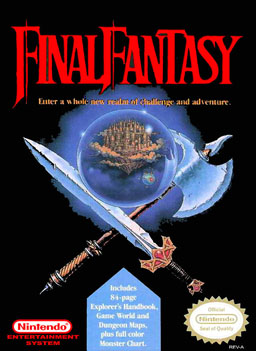
Final Fantasy (1987) launched the series with a premise both archetypal and structurally surprising. Four Light Warriors — blank-slate characters named by the player — must restore four elemental crystals to defeat the forces of darkness. The execution owed clear debts to Dragon Quest and Dungeons & Dragons, but Yoshitaka Amano's distinctive illustrations, Nobuo Uematsu's 16-track score, and Sakaguchi's insistence on building a complete world with history and mythology gave it a texture unlike anything else on the Famicom.
Final Fantasy II (1988) made a radical departure: it abandoned the class system entirely in favour of usage-based stat growth. Use swords and your sword skill improves; take hits and your HP increases; cast magic and your spell levels rise. The system was experimental, somewhat exploitable, and never returned in this form — but the ambition it represented was crucial. FFII also introduced named protagonists, character deaths, and a villain who achieves his goals at the story's midpoint.
Final Fantasy III (1990) combined the best elements of both predecessors: the classic Light Warriors structure of the original with an expanded and deepened Job system. Players could change their party's jobs freely — 23 jobs in total — and the game introduced summon magic to the series in its earliest form. It was the best-selling Famicom game of 1990 in Japan. Neither FFII nor FFIII were localised for Western markets, leaving a numbering gap that would confuse players for years.
SNES Mastery
The Super Nintendo changed everything. The SNES's larger cartridge capacity, superior sound hardware (the Sony SPC700 chip gave Uematsu a genuine synthesiser), and Mode 7 graphics effects allowed Square to realise ambitions the NES had been too limited to accommodate. Final Fantasy IV (1991) was the demonstration of what was now possible.
FFIV introduced the Active Time Battle system designed by Hiroyuki Ito: time bars that fill continuously during combat, adding urgency and pressure to every fight. It also delivered the series' most narratively sophisticated story to date — Cecil Harvey's arc from dark knight to paladin, the recurring betrayals of Kain Highwind, the tragedy of Rydia's destroyed village — all told with a directness and emotional weight that no prior JRPG had achieved.
Final Fantasy V (1992) refined the job system to a state of near-perfection. The ability to carry skills learned in one job across to another created almost limitless character customisation. The game was considered too complex for Western audiences and was never officially released outside Japan on the SNES — a decision Square later acknowledged was wrong. Western fans who discovered it through imports or emulation frequently rate it as the best mechanical JRPG on the platform.
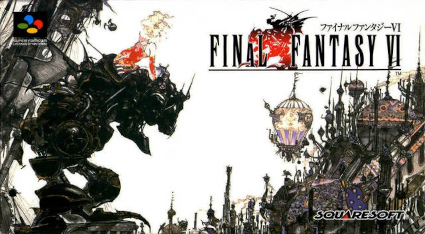
Final Fantasy VI (1994) is the series at its absolute peak. An ensemble cast of 14 playable characters, a villain who destroys the world at the game's halfway point, a post-apocalyptic second half, and the extraordinary opera house sequence — a fully scripted operatic scene that consumed one-third of the game's cartridge memory — combined to produce what is widely regarded as the greatest 16-bit RPG ever made.
Each Final Fantasy has to be the best thing I've ever made. The moment I accept ‘good enough’, it stops being Final Fantasy.
— Hironobu Sakaguchi
What the Six Games Established
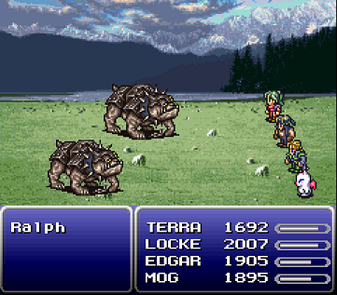
The six games covered on this site established the template for Japanese role-playing games in ways that still define the genre. The Active Time Battle system shaped combat design for a decade. The ensemble character structure of FFVI influenced every subsequent story-driven RPG. Uematsu's compositional approach — melodically led, emotionally direct, technically innovative for the hardware — established game music as a serious artistic form.
The three SNES titles also demonstrated something beyond mechanical craft: that games could carry genuine emotional weight, could build worlds that felt inhabited rather than merely navigable, could create characters whose fates players cared about. This was not a small achievement. In 1991, it was a genuinely new idea for the medium.
Square continued producing Final Fantasy titles through the PlayStation era and beyond, with FFVII (1997) bringing the series to a new global audience. But the foundations were built in these six games, across two platforms, between 1987 and 1994 — by a team of extraordinary designers working under extraordinary pressure, making something they hoped would be good enough to keep a failing company alive.
It was considerably more than good enough.
The opera scene in VI used a third of our memory. I was told it was impossible. I said we would find a way. That's always been the answer — find a way.
— Hironobu Sakaguchi