The Three Masterpieces
Between 1991 and 1994, Square released three role-playing games for the Super Nintendo that redefined what the genre could achieve. Final Fantasy IV introduced emotional storytelling to the JRPG. Final Fantasy V built the deepest job system in the series. Final Fantasy VI shattered every expectation about narrative, structure, and ambition. Together they form one of the most remarkable creative runs in gaming history.
These are extended articles covering the development, gameplay, technical achievement, critical reception, and legacy of each game. For box art, platform details, and brief descriptions, see the Games catalogue. For the people who made them, visit the Creators profiles.
The Emotional Revolution
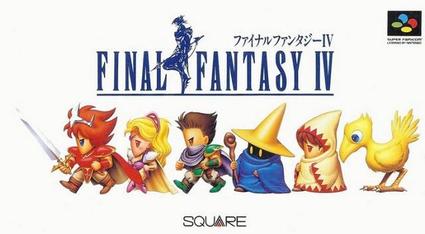
Released in July 1991 in Japan, Final Fantasy IV was the first game in the series to give its protagonist a conscience. Cecil Harvey is a Dark Knight — a soldier whose weapon draws from his own life force — who opens the game carrying out orders he knows to be wrong. He burns a village. He steals a crystal from a water-sprite colony. When the king of Baron strips him of command, the game begins in earnest: a journey from complicity to redemption that no console RPG had yet attempted.
The game was released as “Final Fantasy II” in North America — the localised titles masking three games that never crossed the Pacific (FF II and FF III), leaving North American players with a numbered gap they would not understand for years. Whatever its name, FFIV established a new contract between player and story: the game expected its audience to feel, not merely to win.
Twelve Months, a New Combat System, a SNES Launch Window
Final Fantasy IV was directed by Takashi Tokita and produced by Hironobu Sakaguchi, developed in under twelve months to serve as a Super Nintendo launch-window title. Sakaguchi's mandate was direct: use the new hardware to tell a story that felt cinematic. The NES trilogy had built a world; FFIV would give it characters worth grieving over.
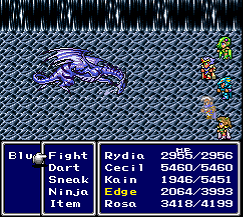
Hiroyuki Ito, fresh from his design work on FFIII's job system, was tasked with rethinking combat for the SNES. His answer was the Active Time Battle system — a clock-driven mechanic in which each character's action gauge fills at its own rate, determined by the character's Speed stat. The player cannot simply queue actions and wait; they must respond to a battle that continues evolving. Ito designed ATB specifically to eliminate the sense that turn-based RPG combat was a solved puzzle waiting for the player to confirm their answers. For more on Ito's design career, see his creator profile.
I had always felt that turn-based battles lacked tension. With ATB, the pressure of real time was always present, even in a menu-driven system. The goal was to make players feel they had to act — not just plan.
— Hiroyuki Ito, designer of the Active Time Battle system
Fixed Party, Active Timers, Characters Who Die
Unlike its predecessors, FFIV uses a fixed party system: characters join and leave per the story's demands, and the player does not choose who fights. Cecil, his childhood friend Kain Highwind, the white mage Rosa Joanna Farrell, and others rotate through the party as the narrative requires — and their exits are sometimes permanent. Characters die. The player must adapt to an evolving roster rather than a customised team.
Combat uses the ATB system in full: five characters share a screen with ATB gauges visible at all times. A warrior with high Speed might act three times before a heavy tank acts once. Status effects, elemental weaknesses, and the choice of when to deploy a Summon — which takes several seconds to resolve while the battle continues — create genuine tension. The game's difficulty curve is punishing by modern standards; several boss fights are genuine obstacles rather than formalities.
Cecil's transformation from Dark Knight to Paladin is the game's central mechanical metaphor: the Dark Knight's skills drain his own HP to damage enemies, while the Paladin's skills protect allies at no cost. The change in how he plays mirrors the change in who he is.
Mode 7 Airships and Forty-Six Uematsu Compositions
FFIV was designed to demonstrate what the Super Nintendo's hardware could do. Mode 7 rotation powers the airship sequences — the world map tilts as the Enterprise and Red Wings soar across the sky, giving a sense of three-dimensional movement the NES could not suggest. The SNES's tile-based renderer produces dungeon interiors of unprecedented visual complexity: the Tower of Babel, Mt. Ordeals, and the Lunar Subterrane are elaborate multi-layered environments whose depth surpassed anything previously seen on a home console.
The SPC700 sound chip allowed Nobuo Uematsu to compose at an orchestral register impossible on the NES. FFIV's soundtrack — Baron Castle's soaring march, the Paladin's Cecil theme, the Rydia summon fanfares — demonstrated what console game music could sound like when not constrained by three channels and limited samples. The game ships with 46 distinct musical pieces, each tailored to its dramatic context.
Famitsu 34, Nintendo Power 4.5, Entry Point for a Generation
Famitsu awarded FFIV a score of 34 out of 40 in 1991 — a strong result that demonstrated immediate critical recognition. The game was praised for its emotional story and the novelty of the ATB system. Nintendo Power scored it 4.5 out of 5 in North America and described it as “the finest RPG available for any home console” — an assessment that held for several years. Contemporary reviewers consistently noted that FFIV's story told them things about its characters they had not expected to care about.
The game sold over 1.4 million copies in Japan alone. In North America, as “Final Fantasy II,” it became a critical entry point for a generation of RPG players who had not encountered Dragon Quest or the NES Final Fantasy titles. The emotional vocabulary it established — loss, redemption, sacrifice — became the JRPG genre's emotional vocabulary.
ATB for Fifteen Years and Ports for Three Decades
The Active Time Battle system Hiroyuki Ito designed for FFIV was adopted in every mainline Final Fantasy from IV through XI — a fifteen-year run that shaped JRPG combat design across the industry. Every RPG that followed had to position itself relative to ATB's pressure-management approach.
FFIV has received more ports and remakes than any other game in the series: the original SNES version, a PlayStation port, a Game Boy Advance adaptation, a full 3D remake for Nintendo DS in 2008 with new voice acting and rendered environments, iOS and Android versions, a Steam PC release, and a Pixel Remaster in 2021. Cecil Harvey and Kain Highwind appear in Final Fantasy spin-off titles and crossover games. See the full Games catalogue for release information across all platforms.
The Job System's Peak
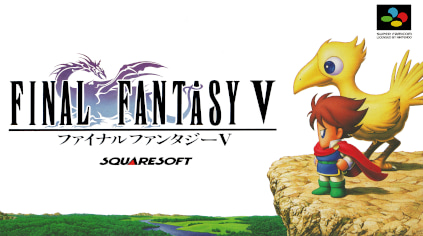
Released in December 1992, Final Fantasy V has long been the overlooked middle chapter of the SNES trilogy — wedged between FFIV's emotional revolution and FFVI's overwhelming ambition. The game reached North American players only in 1999, five years after release, via the PlayStation compilation. This delay ensured that English-speaking audiences encountered it already overshadowed by its successor.
The overlooked reputation is unjust. FFV contains what many analysts consider the finest job system in the series — a fully customisable class architecture of twenty-two job classes, each with learnable abilities that can be transferred between classes, creating combinations of striking flexibility and depth. For players who engage with it fully, FFV is inexhaustible.
Hiroyuki Ito’s First Solo Credit
FFV was the first solo directing credit for Hiroyuki Ito — the designer of the Active Time Battle system and co-director of FFIV. Sakaguchi's brief was specific: after FFIV's story-heavy approach, he wanted a Final Fantasy that was, in his words, more focused on the game itself. The job system — an expanded version of FFIII's class system — would be FFV's emotional core rather than its narrative.
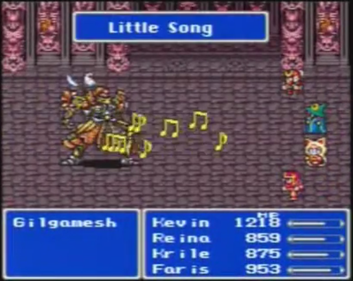
The team built twenty-two job classes, each with a distinct visual design, ability pool, and playstyle. The mechanic of earning Ability Points through combat and spending them to carry abilities between classes required careful balance testing — the team needed to ensure that no single combination of abilities was so dominant that it eliminated the incentive to experiment. Gilgamesh, FFV's recurring antagonist-turned-comic-foil, was created as a character who could punctuate the game's lighter tone with absurdity and warmth.
With FFV, we wanted players to feel that the game was theirs to shape. The job system was designed so that no two people would necessarily play the same way. That freedom was the point.
— Hiroyuki Ito, director of Final Fantasy V
Twenty-Two Jobs, Every Ability Transferable
The job system allows each of FFV's four characters to switch freely between twenty-two job classes: Knight, Monk, White Mage, Black Mage, Time Mage, Summoner, Red Mage, Blue Mage, Berserker, Mystic Knight, Beastmaster, Geomancer, Ranger, Dancer, Bard, Dragoon, Ninja, Samurai, Chemist, Mime, Freelancer, and Bare. Each job earns AP through combat; once enough AP accumulates in a job, specific abilities unlock and become available to assign when in any other class.
The emergent complexity is the game's reward: a Blue Mage who has mastered enough Knight abilities can become a physical fighter who also casts spells learned from defeated enemies. A Chemist who has invested in Time Mage abilities can combine herbal items with acceleration spells. A Mime automatically copies the previous party member's action — but which actions that Mime has access to depends entirely on what other jobs they have mastered.
Blue Magic — the ability to learn monster techniques by being struck by them in combat — rewards attentiveness rather than grinding. Missing a Blue Magic opportunity in a boss fight may close off specific abilities permanently. The system never fully explains itself; discovery is part of the design.
Four Characters, Twenty-Two Jobs, One SNES Save File
The data management required by FFV's job system was substantial for the SNES's hardware. Four characters, each tracking AP accumulation and ability assignments across twenty-two job classes, represented a state management task the NES could not have approached. The save file itself grew considerably larger than FFIV's to accommodate job state.
Uematsu's FFV score is, by many accounts, his most adventurous to that point in the series. “The Decisive Battle” — the game's recurring boss theme — has a brassy, almost orchestral fanfare quality that the SPC700 chip produces at the edge of its capability. “Clash on the Big Bridge,” the theme for recurring antagonist Gilgamesh, became one of the series' most reprised compositions, appearing in FFVI, FFVIII, FFXI, FFXII, and FFXIV.
Famitsu 32 in Japan, Five Years Late in English
Famitsu scored FFV at 32 out of 40 in Japan — a positive result that was nonetheless overshadowed by the feverish reception FFIV had received. Japanese reviewers praised the job system's depth while noting the lighter story compared to FFIV. North American players did not receive an official English release until the PlayStation compilation in 1999 — by which point FFVI and FFVII had dominated the conversation for years.
The delayed English release coloured English-speaking critical opinion: reviewers in 1999 encountered a 1992 game against the benchmark of FFVII and FFVIII, an unfavourable comparison for a game whose strengths were mechanical rather than cinematic. In Japan, where FFV was experienced at the time of release, its reception was considerably warmer.
Blue Mage and Clash on the Big Bridge for Thirty Years
FFV's job system is the direct ancestor of FFX-2's dressphere system, FFXI's job and subjob architecture, and FFXIV's job structure — a game that has continued through expansions into the 2020s. The Blue Mage job, introduced in FFV, returned in FFXI, FFXIV, and multiple spin-off titles. The Chemist's item-combination mechanic influenced inventories and crafting systems throughout the JRPG genre.
FFV received a Game Boy Advance port in 2006 with four additional job classes and new content, appeared on the PlayStation Network via the PS1 compilation, and received a Pixel Remaster in 2021 that updated the graphics and audio while preserving the original's design. The full platform history is in the Games catalogue.
The Masterpiece
Final Fantasy VI is widely regarded as the pinnacle of 16-bit RPG design and among the greatest games ever made. Released in April 1994 in Japan (as “Final Fantasy III” in North America that October), it follows an ensemble cast of fourteen playable characters through a steampunk-inflected world where magic has been suppressed and an insane imperial general named Kefka is ascending to godhood.
The game is extraordinary in several ways: it has no single protagonist (Terra Branford and Celes Chere share the narrative weight), its villain actually wins at the halfway point — destroying the world — and the second half of the game asks the player to reassemble the scattered cast and find meaning after catastrophe.
Directed by Yoshinori Kitase and co-directed by Hiroyuki Ito, FFVI was developed over fourteen months by a team of roughly fifty people. Kitase's theatrical background influenced the game's scene-by-scene structure. Producer Hironobu Sakaguchi approved the opera house sequence consuming one-third of the game's total memory over internal objections — a decision that defined the game's legacy. For more on the creators behind it, see the People profiles.
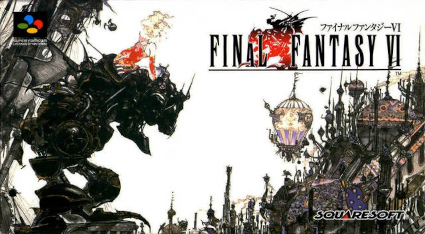
Fourteen Months, Fifty People
Development began in late 1992, immediately after FFIV had demonstrated that the SNES could carry a dramatically rich RPG. Kitase had joined Square from a film background and brought a director's eye for staging: FFVI is structured as a series of scenes rather than locations, each composed to a dramatic beat. The Magitek factory sequence, the burning of Figaro Castle, Cyan watching his family die from Kefka's poison — each is choreographed as a setpiece rather than incidental gameplay.
The ensemble cast — fourteen playable characters with distinct skills — required a design solution: if any character can be absent from the party, no character can be mechanically indispensable. Hiroyuki Ito's answer was the Esper system: every character can equip a bound magical creature, learning spells and gaining stat bonuses through levelling. Each character's unique combat ability defines their role; the Esper system ensures they can all contribute to any battle regardless of configuration.
Fourteen Characters, Zero Restrictions
FFVI uses the Active Time Battle system from FFIV and FFV, but its character ability architecture is the game's mechanical signature. Every character has a unique command slot in combat: Edgar's Tools include chainsaw, drill, autocrossbow, and flash — clockwork weapons purchased through the game's item economy. Sabin's Blitz requires physical button sequences that mimic fighting game inputs, making his power feel earned. Cyan's Swordtech charges during combat, requiring the player to release at the right moment. Gau's Rage mimics monster abilities learned on the Veldt.
No character is mandatory. The Esper magic system ensures all can access spells, preventing any role from becoming irreducible. The player can clear the game with wildly different party compositions — and in the World of Ruin, discovering which characters the player has found and equipped meaningfully shapes the final tower assault. The game adapts to what the player has done rather than requiring a canonical solution.
Shadow the mercenary may leave the party without warning, and whether he survives the Floating Continent sequence depends entirely on player choice during a timed escape. Umaro the Yeti refuses direct commands, fighting entirely on his own terms. These design choices underline the game's assertion that its characters have interiority — they are not tools.
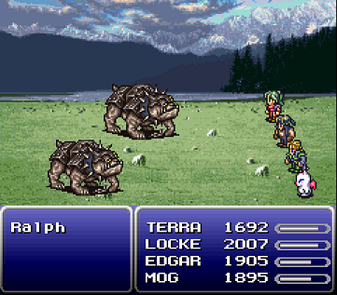
Fourteen Playable Characters
FFVI's fourteen-character roster is its most ambitious structural choice. No single character is compulsory — the Esper magic system ensures all can access spells, preventing any role from being indispensable. Shadow the mercenary may leave the party without warning. Umaro the Yeti fights entirely on his own terms, refusing direct commands. The party is an ensemble in every sense of the word.
Terra Branford
Primary protagonist — born with natural magic, enslaved by the Empire via slave crown. The emotional centre of the World of Balance.
Celes Chere
Co-protagonist — Imperial general turned rebel, bearer of the opera subplot. Her attempted suicide opens the World of Ruin.
Locke Cole
Thief (he prefers ‘treasure hunter’) — traumatised by the loss of his first love Rachel. Devoted to protecting those he cares for.
Edgar Roni Figaro
King of Figaro — a genius engineer-king who uses machinery as weapons. Charming facade concealing genuine grief over his father's death.
Sabin Rene Figaro
Edgar's twin brother — abdicated the throne to train as a martial artist. Uses Blitzes, physical techniques executed by button sequences.
Cyan Garamonde
Doma knight — witnessed Kefka poison his kingdom's water supply, killing his family before him. His grief defines the game's emotional register.
Shadow
Mercenary ninja — available as an ally, will leave the party without warning. His backstory is delivered through nightmares the player may or may not see.
Setzer Gabbiani
Gambler — owns the Blackjack, the party's airship. Haunted by the death of the airship racer Daryl. Uses slots and dice as weapons.
Gau
Feral child of the Veldt — abandoned as an infant, he can mimic monster abilities learned through encounters on the wild plains.
Relm Arrowny
Child painter — can sketch monster portraits mid-combat to copy their abilities. Strago's granddaughter, possessing a will that exceeds her age.
Strago Magus
Blue Mage elder — Relm's grandfather and collector of Lore magic, learned from enemies. Old but determined to see the journey through.
Mog
Moogle — the only moogle fully integrated into a main party in Final Fantasy history. Uses Dances learned in different terrains.
Gogo
Mimic — identity unknown, found in the belly of Zone Eater. Can mimic any ability used by a party member. Origin deliberately unexplained.
Umaro
Yeti — the only entirely uncontrollable party member in the game. Fights on his own terms, ignoring commands. His loyalty to Mog is absolute.
Aria di Mezzo Carattere
The opera house sequence is the most celebrated moment in 16-bit gaming history. Maria, the star of the opera being performed in Jidoor, looks identical to party member Celes. The impresario allows Celes to take her place, and the player controls Celes on stage, performing the aria ‘Aria di Mezzo Carattere’ — a love song from a woman waiting for a lost companion.
The sequence requires the player to recall three stanzas of lyrics and select the correct lines; wrong choices cause the scene to replay. The music, composed by Nobuo Uematsu in a deliberately simplified vocal style (the SPC700 chip could not produce human voice), suggests operatic structure through melodic phrasing and rhythmic restraint. It consumed one-third of the entire game's memory.
What makes the sequence extraordinary is not its technical achievement but its dramatic function. The opera is not a cutscene — the player is performing it, making choices, bearing responsibility for the performance. When Celes sings “I'm the darkness, you're the stars / Our love is brighter than the sun,” the player is, in some sense, singing it.
The opera scene used a third of our memory. I was told it was impossible. I said we would find a way. That's always been the answer — find a way.
— Hironobu Sakaguchi
Kefka Palazzo
Kefka is the only Final Fantasy main villain to successfully achieve his goal within the game's narrative. He does not fail at the last moment. He is not redeemed. He destroys the world. At the game's halfway point, standing atop the Floating Continent, Kefka moves the Warring Triad — three statues that maintain the balance of the world — and everything collapses. The oceans shift. Continents fracture. The World of Balance becomes the World of Ruin.
What follows in the second half of the game is not a race to stop him — it is already too late for that. The party must instead find reason to continue at all, reassemble across a broken world, and confront a man who has achieved his purpose and now presides over a ruined existence from a tower of light at the world's centre.
Kefka's design — garish clown makeup on a military officer — was inspired by the Joker. His cackling, petulant cruelty contrasted with the stoic gravitas of FFIV's Golbez, making him more unsettling than any dignified antagonist could be. He does not want power or vengeance. He wants nihilism. He wants to demonstrate that nothing matters — and he does demonstrate it.
The World of Ruin
The World of Ruin is Final Fantasy VI's most radical structural decision. When Kefka moves the Warring Triad, the game's carefully constructed linear narrative dissolves. The player wakes up as Celes alone on a small island, the only surviving party member she can find being Cid — who may or may not survive depending on player choices. The world is broken. The rest of the party is scattered across a remapped globe.
What follows is, by the standards of 1994, an open-world game. The player acquires an airship and must systematically locate and recruit the remaining party members — each of whom has survived the apocalypse in their own way, with their own grief. Cyan haunted by the dream-creature Wrexsoul. Shadow hiding in a collapsing cave. Locke still searching for a way to resurrect Rachel. Terra losing the will to fight in the ruined town of Mobliz.
The World of Ruin is not about victory. It is about choosing to persist. Each character must make a choice to rejoin the party — and that choice, given what they have all survived, is the game's genuine emotional resolution. When the party reaches Kefka's Tower, they are not heroes riding to triumph. They are people who decided, against all reason, that something was worth fighting for.
Dancing Mad took me longer than any other piece. It had to feel like the end of the world — and the end of the game — and a musical summary of everything that had come before. I wrote it, threw it away, wrote it again.
— Nobuo Uematsu
Pushing the SNES to its Limits
FFVI operates at the edge of what the Super Nintendo's hardware can sustain. The Magitek factory sequence deploys dozens of animated sprites simultaneously; the airship battles manage multiple moving units across large backgrounds; the sequence where the ghost train travels through the dark requires the SNES's sprite hardware to sustain a moving background, a moving foreground train, and active character animations concurrently. Hironobu Sakaguchi's team had worked with the hardware for three years by this point and knew exactly how far it could be pushed.
The opera house sequence consumed one-third of the game's total cartridge memory — roughly 1MB of a 3MB cart dedicated to a single scene. To achieve the operatic vocal effect, Uematsu composed ‘Aria di Mezzo Carattere’ in a style that mimicked singing through melodic phrasing and rhythmic structure; the SPC700 chip cannot reproduce a human voice, so the music had to suggest one. The result is the most emotionally effective piece of game music the SPC700 chip ever produced - an operatic aria from hardware that could not sing.
The SPC700's handling of “Dancing Mad” — the four-movement, seventeen-minute final boss theme — is the chip's most demanding task in the series. The piece cycles through orchestral passages, pipe organ sequences, and choral sections, each requiring the chip to layer samples it was not originally designed to sustain at this complexity and length.
From Masterpiece to Canon
Final Fantasy VI received near-universal critical acclaim on release. Famitsu scored it 38 out of 40 in Japan — one of the publication's highest scores to that point. Electronic Gaming Monthly gave it 10 out of 10 in its US review, one of the magazine's rarest scores, and described the World of Ruin as “unlike anything we've seen in a console game.” Nintendo Power awarded it 4.975 out of 5 and named it the finest RPG on any console. GameFan named it Game of the Year for 1994.
Contemporary reviewers consistently noted that FFVI's story operated at a register they had not encountered in a video game. Characters were not merely data points but people with grief, guilt, and personal stakes. The World of Ruin's opening — Celes alone on an island, Cid potentially dying, the world broken — was described in several reviews as genuinely affecting rather than narratively convenient.
The game's influence on the JRPG genre is second only to the original Final Fantasy. The ensemble cast structure that FFVI pioneered informed Chrono Trigger (1995, developed by many of the same team members), and became the template for ensemble RPGs throughout the late 1990s and 2000s. The open second half — in which the player must actively reconstruct a shattered world rather than follow a linear path — influenced open-world design in RPGs broadly.
FFVI has received ports and remasters spanning three decades: PlayStation (1999), Game Boy Advance (2006, with new Espers and a bonus dungeon), iOS and Android (2014, with updated graphics), Steam PC (2015), and a Pixel Remaster in 2022 that restored the original's sprite work with updated resolution and audio. It appears consistently in “greatest games ever made” lists across multiple decades. The full release history is in the Games catalogue.