Three landmark titles from Factor 5's LucasArts era - each covered from hook to legacy. Development context, gameplay, technical achievement, period reception, and the shape of their influence. Cross-references to the catalogue, people, and music pages appear throughout.
Star Wars: Rogue Squadron (N64, 1998)
Developer Factor 5 (lead); LucasArts (co-developer) Publisher Nintendo of America (N64); LucasArts (PC) Platform Nintendo 64; PC (Windows) - see PC entry Release December 1998 Director Julian Eggebrecht - see people
Eighteen Months Ahead of Everyone Else
| Developer | Factor 5 (lead); LucasArts (co-developer) |
| Publisher | Nintendo of America (N64); LucasArts (PC) |
| Platform | Nintendo 64; PC (Windows) - see PC entry |
| Release | December 1998 |
| Director | Julian Eggebrecht - see people |
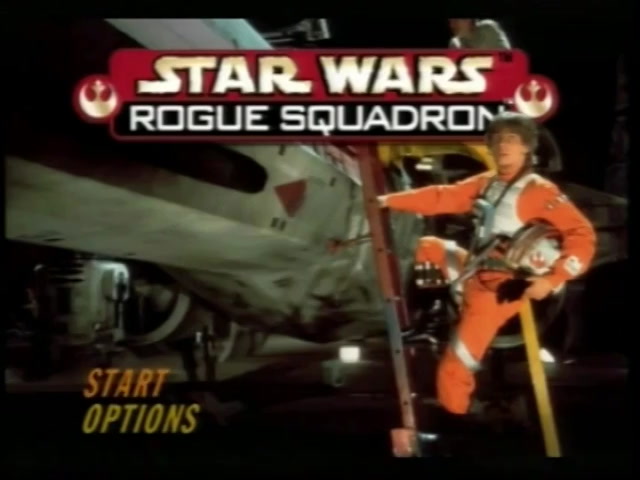
Star Wars: Rogue Squadron arrived in late 1998 at the precise intersection of two things: LucasArts' need for a Star Wars game that reproduced the experience of flying in the films, and Factor 5's possession of N64 development hardware that most studios wouldn't see for another year and a half. The result was a mission-based flight combat game that made the N64 Expansion Pak worth the investment and established Factor 5 as the go-to studio for Star Wars interactive experiences.
Factor 5's relationship with LucasArts had started four years earlier with Indiana Jones' Greatest Adventures on SNES (1994). That partnership gave the studio early access to N64 development hardware through Nintendo's developer program - access that arrived significantly ahead of the general developer kit distribution. Julian Eggebrecht has discussed in multiple interviews how this advantage shaped what Factor 5 could build.
"Getting early hardware through LucasArts changed everything. We had time to actually understand the N64's architecture - to figure out what the RCP could do that nobody expected, and to design our renderer around those strengths rather than fighting them."
Julian Eggebrecht, Time Extension interview (Factor 5 - N64 platform history)
The studio's objective was specific: make the N64 produce something that felt like the original trilogy's space combat. The Expansion Pak was integral to that aim. Factor 5 built Rogue Squadron to require the Expansion Pak for its enhanced graphics mode - not as an optional upgrade but as the primary target. The base N64 configuration was the fallback; the Expansion Pak hardware was where they designed to.
Flying Is the Point
Rogue Squadron is a mission-based vehicle combat game. Each mission places the player in a specific Star Wars theater of war - the plains of Tatooine, the snow fields of Hoth, the forest moon of Endor - with a primary objective and a set of secondary objectives that determine the mission rating. Completing the primary objective clears the mission. Completing the secondary objectives under time with minimal losses earns a bronze, silver, or gold medal.
The flight model is the central design decision. Factor 5 built it to feel physical without requiring flight simulation literacy. Every craft handles distinctly - the A-wing is agile and demanding, the Y-wing is slow and dependable, the X-wing sits in the middle as the versatile default. None requires a manual before the first mission, but familiarity with each craft's behavior is what separates medal runs from cleared missions.
The cockpit camera, the lock-on targeting system, and the way terrain scales at draw distance all serve the same goal: keep the player in the moment and in the fight, not managing a spreadsheet of fuel states and thrust vectors. Rogue Squadron is a game about how flying feels, not about how flying works. That decision is the reason it holds up.
The Expansion Pak as Canvas
The N64's Reality Co-Processor - a combined geometry engine, rasterizer, and digital signal processor - rewarded studios with deep hardware knowledge and punished those working against its architecture. Factor 5's early access gave them time to develop that knowledge systematically.
The result was texture quality and draw distances that placed Rogue Squadron at the far end of what the N64 could show in 1998. The Expansion Pak's additional 4 MB of RDRAM let Factor 5 use a 640x480 framebuffer in enhanced mode - double the base N64 resolution of 320x240 - and carry higher-resolution texture maps for cockpits, terrain, and craft models. Terrain streamed at distance without the draw-in artifacts common in contemporaneous titles. The dogfighting environments felt genuinely large.
Critics Were Waiting for This
Period reviews were among the strongest any N64 title received. IGN gave 9.5/10, writing that Rogue Squadron was "the game that Star Wars fans have been waiting for since the N64 launched." GameSpot gave 8.6/10, praising the technical achievement and the quality of the dogfighting sequences. N64 Magazine (UK) awarded 93%.
The critical consensus was that Factor 5 had delivered exactly what the premise promised - no more, no less - with a level of technical execution that elevated the platform. Complaints were minor: the mission variety narrowed in the final third, and the PC version offered a different but not clearly superior experience. The core game - the N64 version in Expansion Pak mode - was treated as a definitive statement about what the platform could do.
Full period scores and excerpts at reviews - Rogue Squadron. Music notes at music - dynamic audio systems.
The Template That Made the Trilogy
Rogue Squadron established the formula that Rogue Leader and Rebel Strike would refine: mission structure, flight model philosophy, medal system, Star Wars setting fidelity. It also established Factor 5 as the definitive Star Wars game developers outside LucasArts itself - a reputation they held until the partnership ended with Rebel Strike in 2003.
Its commercial success - strong enough to justify two GameCube sequels and the studio's move to San Rafael - is less interesting than its design success. Rogue Squadron showed that an accessible flight game, built on deep hardware knowledge, could satisfy the audience that had been waiting for Star Wars games to match the films visually. That combination of accessibility and technical ambition is what Rogue Leader would amplify.
Star Wars Rogue Squadron II: Rogue Leader (GameCube, 2001)
| Developer | Factor 5 |
| Publisher | Nintendo / LucasArts |
| Platform | Nintendo GameCube - see catalogue entry |
| Release | November 18, 2001 (GameCube launch - North America) |
| Director | Julian Eggebrecht - see people |
| Audio Director | Rudolph Stember - see people |
Day One on Hardware Nobody Had Finished Building
Rogue Leader shipped on November 18, 2001 - day one of the GameCube's North American launch. Factor 5 had committed to this schedule before the GameCube hardware was finalized, which meant developing a launch title on hardware specs that were still changing, to a deadline set by Nintendo's production calendar rather than their own readiness. The circumstances that make Rogue Leader remarkable are inseparable from that context: that a title of this visual and technical quality shipped as a launch game, under a hard external deadline, on new hardware they were still learning, is the central fact of the game's history.
Julian Eggebrecht and Armin Mausolf documented the production in "Postmortem: Star Wars Rogue Leader: Rogue Squadron II," published in Game Developer Magazine following GDC 2002. It is one of the most detailed primary sources on Factor 5's working methods and on the specific challenges of GameCube launch-window development. Mausolf and Eggebrecht discussed how the team managed the combination of hardware discovery and ship pressure - a production environment that required committing to technical decisions before all the implications were understood.
"The GameCube's 1T-SRAM was the critical piece. The memory bandwidth it provided let us keep texture data in flight in ways that weren't practical on other hardware. Once we understood what that gave us architecturally, the renderer came together - but we were still making those discoveries weeks before the launch date."
Julian Eggebrecht, GDC 2002 postmortem (Eggebrecht / Mausolf, Game Developer Magazine)
The GameCube's architecture was substantially different from the N64's. Factor 5's renderer had to be rebuilt from scratch. The key technical discovery was the GameCube's 1T-SRAM: a high-bandwidth memory design that offered significantly better texture throughput than the PS2 or Xbox provided, allowing Factor 5 to maintain visual quality at frame rates the flight game required.
Every Mission a Setpiece
Rogue Leader refines the Rogue Squadron template across every dimension. The mission structure is more varied. The Death Star trench run, which opens the game, is the most technically demanding interpretation of that sequence any game had produced. The Battle of Hoth, the Endor engagement, and the final Death Star II run are each treated as architectural problems - how do you recreate the feel of that specific sequence from the film, with the player in the cockpit?
The flight model retains Rogue Squadron's accessibility while adding a larger craft roster and more demanding enemy AI. The medal system is expanded: gold medals require completing missions with high accuracy, under time, with all secondary objectives fulfilled. The game has a wide accessible floor and a demanding ceiling. Most players can finish the campaign; finishing it with gold medals on every mission is another order of difficulty.
The cooperative potential of the medal system - two people at the same screen, one piloting, one advising - is part of what made Rebel Strike's eventual co-op mode feel like a natural extension. Rogue Leader was already a game that rewarded shared engagement.
What 640x480 and 16x Anisotropic Filtering Looked Like in 2001
Rogue Leader's visual standard at launch drew commentary everywhere. GameSpot's reviewer described it as "one of the best-looking games available on any platform" - a statement published the day of GameCube launch, when reviewers had access to the full software library. That assessment held for months after launch; few GameCube titles in the following year matched what Factor 5 shipped on day one.
The specifics: Rogue Leader rendered at 640x480 resolution with 16x anisotropic filtering applied to textures. The particle systems for laser fire, engine trails, and explosion effects were dense enough to affect the visual character of combat substantially - at the scale of the Death Star trench run, dozens of particle effects operated simultaneously without frame rate impact. The MusyX audio pipeline (see music - MusyX) handled real-time audio mixing including the Dolby Pro Logic II encoding. See music - Dolby Pro Logic II for technical detail.
A Rare Triple Nine and the Best Launch Title
IGN: 9.3/10 - Rogue Leader described as the best launch title available for the GameCube in North America. GameSpot: 9.3/10. Electronic Gaming Monthly gave three consecutive 9/10 scores from its three reviewers - a result EGM achieved for very few titles in the magazine's history. The critical consensus was essentially unanimous: Rogue Leader was the technical showpiece of the GameCube launch and one of the finest Star Wars games built.
Full period scores and excerpts at reviews - Rogue Leader. GDC 2002 postmortem access details at resources - GDC 2002. Full catalogue entry at catalogue - Rogue Leader.
The Benchmark Nobody Caught Up To
Rogue Leader is widely considered Factor 5's finest work. Its place in conversations about the best launch titles in console history is secure - it belongs alongside Halo (Xbox, 2001) and Super Mario 64 (N64, 1996) as games that set the visual and design register for their respective platforms in their opening weeks. Unlike most launch titles, it held that position: few GameCube games in its first two years equalled what Rogue Leader had demonstrated on day one.
The GDC 2002 postmortem remains a reference document for how to approach new console hardware under a fixed external deadline. For the Factor 5 story, Rogue Leader is the peak - the point at which all of the studio's accumulated technical knowledge, its LucasArts relationship, and its specific expertise in flight game design came together on hardware that rewarded exactly what they knew how to do.
Star Wars Rogue Squadron III: Rebel Strike (GameCube, 2003)
| Developer | Factor 5 |
| Publisher | LucasArts |
| Platform | Nintendo GameCube - see catalogue entry |
| Release | October 2003 |
| New feature | Two-player co-op; on-foot third-person sections |
| Bonus content | Full Rogue Leader included as two-player bonus |
Two Games in One Box, One of Them Complicated
Rebel Strike is a game with two distinct personalities. The flight sections continue the Rogue Squadron trilogy at the technical and design level Rogue Leader set - Factor 5's accumulated GameCube expertise is visible in every environmental detail, particle effect, and enemy AI routine. The on-foot third-person combat sections, introduced to the series for the first time, are where the game becomes a more complicated conversation.
The on-foot sections were Factor 5 expanding into a genre they hadn't built before. Moving Luke Skywalker from a cockpit to a ground environment introduced entirely different design problems - camera handling, melee combat, level structure. The production schedule for a GameCube trilogy conclusion didn't leave time to develop and refine a new genre alongside the flight game that was already at a high standard.
The co-op mode, by contrast, was the more coherent creative ambition.
One Pilot, One Gunner, Both in the Room
Rebel Strike's co-operative mode splits the cockpit responsibilities between two players: one pilots, one manages gunnery. The missions were redesigned to support this split - enemy patterns, objective timing, and camera framing all work differently when one player is controlling thrust and yaw while another is tracking targets. It's a structurally sound design that justifies the game's existence independent of whether the on-foot sections worked.
"The co-op idea was always part of what we wanted to do with the series. The split cockpit - one person flying, one managing the guns - made sense for the fiction and made sense for how people actually sit down to play together. Rogue Leader was always a game that felt like it wanted a co-pilot."
Julian Eggebrecht, The Retro Hour EP261 (Turrican and Factor 5 history)
The full cooperative mode extends to a complete two-player version of Rogue Leader, included as a bonus within Rebel Strike. This means Rebel Strike shipped containing two full games - the Rebel Strike campaign (solo and co-op) and a split-screen co-op Rogue Leader. The bonus Rogue Leader required a new split-screen rendering path that wasn't in the original 2001 game; Factor 5 built it specifically for the Rebel Strike release.
Where the Flight Sections Ended Up
The on-foot sections in Rebel Strike use a third-person action framework: lock-on targeting, basic melee, linear level progression. The camera handling in confined indoor spaces is imprecise. Combat encounters in these sections are less readable than the cockpit-based gameplay the series had built its fluency on. The levels themselves are more constrained than the open flight environments.
The flight sections are the equal of anything in Rogue Leader. The expanded craft roster, the refined environmental detail, and the mission variety maintain the standard Factor 5 had set in 2001. Specific missions - the Endor speeder bike pursuit, the Battle of Yavin sequences, the final Death Star II run - are as technically accomplished as any in the trilogy.
Flight Praised, Ground Criticised, Co-Op Noted
GameSpot: 8.1/10. IGN: 8.0/10. Both praised the flight sections and the co-op addition; both criticised the on-foot sections directly. The critical consensus positioned Rebel Strike as a strong but uneven conclusion to the trilogy - the weakest of the three by headline metrics, but still among the better titles on the GameCube and a more interesting game than a straight reading of the scores suggests.
Retrospective assessment has generally maintained this view. The on-foot sections are treated as a creative overreach that doesn't diminish the trilogy's overall standing. The co-op mode has been noted as a local multiplayer design idea that preceded mainstream adoption of that pattern on home consoles. The bonus Rogue Leader reframes what Rebel Strike is: a definitive trilogy package as much as a standalone game.
Period reviews Catalogue entry MusyX audio
End of a Partnership, Beginning of a Detour
Rebel Strike was the last title of Factor 5's LucasArts partnership. After 2003 the studio pivoted to Sony and PlayStation 3 hardware, beginning the development of Lair - a dragon flight combat game that would ship in 2007 to mixed-to-negative reviews, primarily for its mandatory SIXAXIS motion controls. The comparison between Rogue Leader's critical reception and Lair's is as sharp a contrast as the studio's history offers.
The Rogue Squadron IP has remained dormant since 2003. The trilogy has not received an official re-release or remaster; the three games are playable only on original hardware or through emulation. Factor 5 Inc. closed in 2009 following the collapse of publisher Brash Entertainment, which had been funding the cancelled Superman game "Blue Steel." Factor 5 GmbH was liquidated in 2011.
Julian Eggebrecht reacquired the Factor 5 intellectual property in 2017 and produced the Turrican revival releases in 2021 and 2022. See history - PS3 pivot and Lair for the full studio trajectory. See modern releases for the Turrican revival.