The Jungle Hero
Donkey Kong Country arrived in November 1994 and immediately rewrote expectations for what a 16-bit console could display. Developed by Rare in Twycross, Leicestershire, using SGI workstations that cost over £100,000 each, the game used pre-rendered 3D models compressed into SNES sprites - a technique Rare called Advanced Computer Modelling. The result looked like nothing else on the platform.
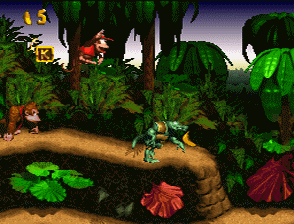
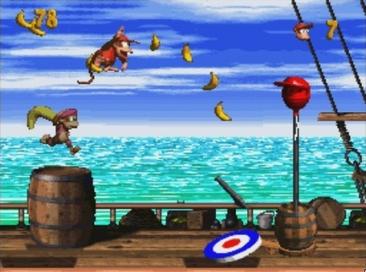
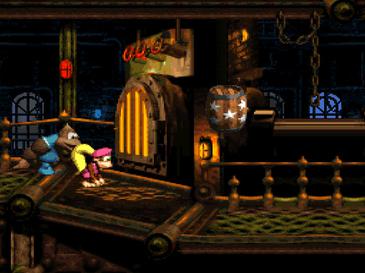
"We wanted to show that the SNES could do something people thought was impossible. The SGI was our secret weapon - nobody else in the industry was using it that way." - Tim Stamper, Rare co-founder, on the ACM development process
The Trilogy
Three SNES entries, each building on the last. DKC1 invented the look. DKC2 perfected the formula. DKC3 pushed the hardware to its limit before the industry moved on to 3D.
Donkey Kong Country (1994) invented the look: 40 levels of ACM-rendered jungle platforming that sold 9 million copies and made Nintendo believe in Rare. Donkey Kong Country 2: Diddy's Kong Quest (1995) perfected the formula - a darker pirate world with Dixie's helicopter spin, Stickerbush Symphony, and a 102% completion system that represented the SNES platformer at its ceiling. Donkey Kong Country 3: Dixie Kong's Double Trouble (1996) closed the trilogy on the hardware's limit - Dixie and Kiddy in the Northern Kremisphere, Eveline Fischer's experimental score alongside David Wise, and the most structurally complex overworld the series produced.
Three games, three distinct tonal registers: warm tropical adventure, dark pirate theatrics, and cold mountain wilderness. Each built on the last. Full box art, platform listings, and release details are in the Games catalogue.
David Wise & the SNES Sound
The DKC soundtrack redefined what SNES music could be. David Wise used the SPC700 sound chip's sample playback to incorporate processed Roland Sound Canvas recordings - creating ambient, atmospheric pieces rather than traditional game melodies.
Aquatic Ambience - DKC1 OST
Stickerbush Symphony - DKC2 OST
What's Inside
History
Rare's ACM breakthrough, the SGI pipeline, Nintendo's decision to publish, and how three games shaped the SNES library.
Read History →Animal Buddies
Rambi, Enguarde, Squawks, Winky, Rattly, Expresso, Clapper, Glimmer - every animal buddy profiled with abilities and trivia.
Meet the Buddies →Key People
Tim and Chris Stamper, David Wise, Gregg Mayles, and Eveline Fischer - the creators behind the trilogy.
Meet the People →