Three games. Three deep dives.
Hook, development, gameplay, achievement, reception, and legacy - for each.
1994 - SNES
Donkey Kong Country
The game that rewrote what a 16-bit console could display.
The Hook
Donkey Kong Country arrived in November 1994 and immediately created a problem for every other SNES game
in existence: it looked like something the hardware could not run. Rare used pre-rendered 3D models
compressed into SNES sprite sheets to produce a jungle platformer with depth, shadow, and surface texture
that no 16-bit game had achieved. The technique was called Advanced Computer Modelling. The result looked
like a console generation ahead of its time.
Forty levels across eight worlds. Donkey Kong and Diddy Kong as a tag-team pair. Animal buddies.
David Wise's ambient score. A then-unprecedented 9 million copies sold. DKC1 did not just revive
the Donkey Kong franchise - it established Rare as one of the most capable game studios in the world
and demonstrated that a Western developer could produce a Nintendo-quality title on Nintendo hardware.
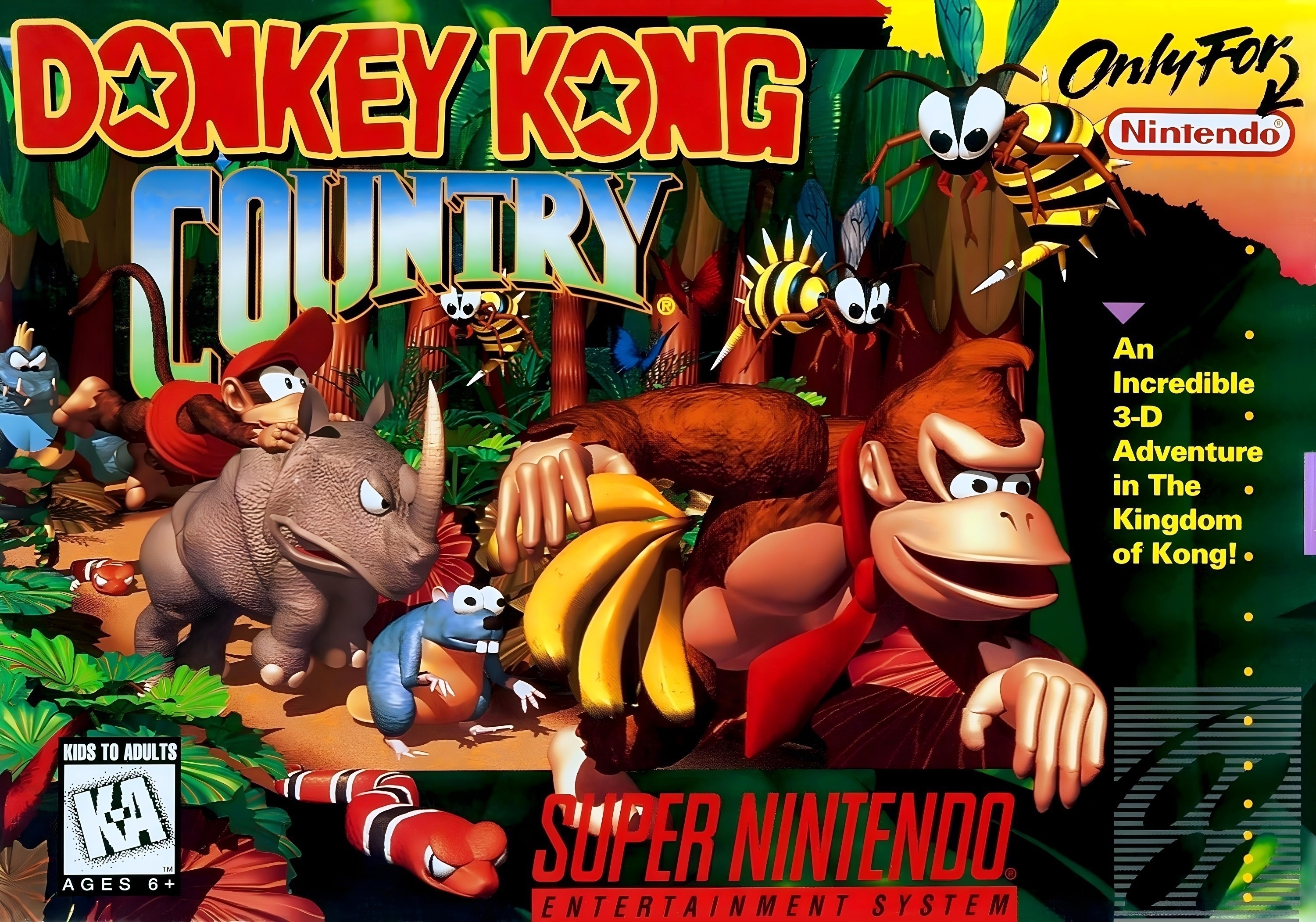
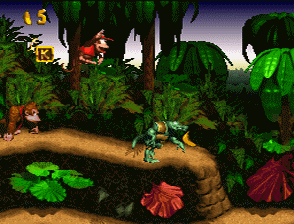
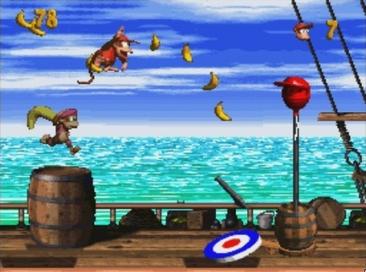
Donkey Kong Country - SNES box art, 1994DKC1 gameplay - the ACM graphics that stunned the industry
The SGI Workstations That Changed Everything
The story of DKC1's development begins with a purchasing decision: Rare acquired Silicon Graphics (SGI)
workstations in the early 1990s. These machines - the same hardware Industrial Light and Magic used for
Jurassic Park's visual effects - cost over £100,000 each and were entirely outside what a game studio
of Rare's size would normally operate. Tim and Chris Stamper had seen what SGI rendering could produce
and understood that if they could get the output onto SNES hardware, they would have something no
competitor could match.
The challenge was compression. The SNES had 512KB of VRAM. A 3D-rendered character at usable resolution
occupied far more data than the hardware could hold. Rare's team spent considerable development time
solving the compression problem - reducing rendered frames to sprite sheets the SNES could display
without degrading below a quality threshold that would betray the source. The result was not pixel art
that approximated 3D; it was actual 3D rendering that had been systematically reduced to fit the hardware.
Nintendo saw the demo in 1993. The reaction was reportedly astonishment - the hardware had already been
certified by Nintendo's own engineers, and what Rare had achieved was not supposed to be possible within
those constraints. Nintendo agreed to publish and committed significant marketing resources to the launch,
including a television campaign that emphasised the visual quality. Pre-orders exceeded one million units
before the game shipped. See the History page for the full account of
Rare's relationship with Nintendo and the studio's earlier development.
"We wanted to show that the SNES could do something people thought was impossible. The SGI was our secret weapon - nobody else in the industry was using it that way."
- Tim Stamper, Rare co-founder, on the ACM development process
Tag Team, Animal Buddies, Forty Levels
DKC1 introduces the tag-team mechanic that defines the trilogy: Donkey Kong and Diddy Kong share a life,
with a hit swapping the active character rather than ending the attempt. DK is heavier and slower with
a more powerful roll attack; Diddy is faster, lighter, and has a distinct jump arc that experienced
players exploit for tighter platforming. Losing both characters ends the life.
Animal buddies appear in dedicated level sections and fundamentally alter movement: Rambi the rhino
charges through enemies; Enguarde the swordfish gives superior underwater mobility; Expresso the ostrich
allows gliding across gaps; Winky the frog provides high jumps; Squawks the parrot carries a flashlight
through dark cave sections. Each buddy changes what the player can reach and how they approach obstacles.
Collectibles layer depth over the core platforming: KONG letters (one set per level, spelling K-O-N-G),
banana coins, bonus stage barrels hidden in level environments, and DK TVs in later worlds. The collectible
design rewards exploration without requiring it - the main path through each level is accessible on its
own terms, with the secrets available to players who slow down and look. Visit the
Games page for the full catalogue entry with level and world breakdown.
A Pre-Rendered Film Pipeline on a 16-Bit Cartridge
The ACM pipeline was the defining technical achievement of DKC1, but it was not the only one. The game
ran at a consistent frame rate despite the visual complexity of the pre-rendered sprites - no other SNES
platformer of the era matched the combination of visual fidelity and performance. The compression
algorithms Rare developed to fit the sprite data into SNES memory were not publicly documented and
were effectively proprietary technology.
The soundtrack was a separate technical achievement. David Wise used the SPC700 sound chip's sample
playback capability in a way that most composers did not: rather than building tracks from the chip's
synthesised voices, he used it as a sample player for pre-recorded Roland Sound Canvas material,
then processed and layered the results into tracks with ambient depth and emotional range that the
SNES was not generally thought capable of supporting. The music was an argument for what the hardware
could do - parallel to the visual argument made by the ACM graphics.
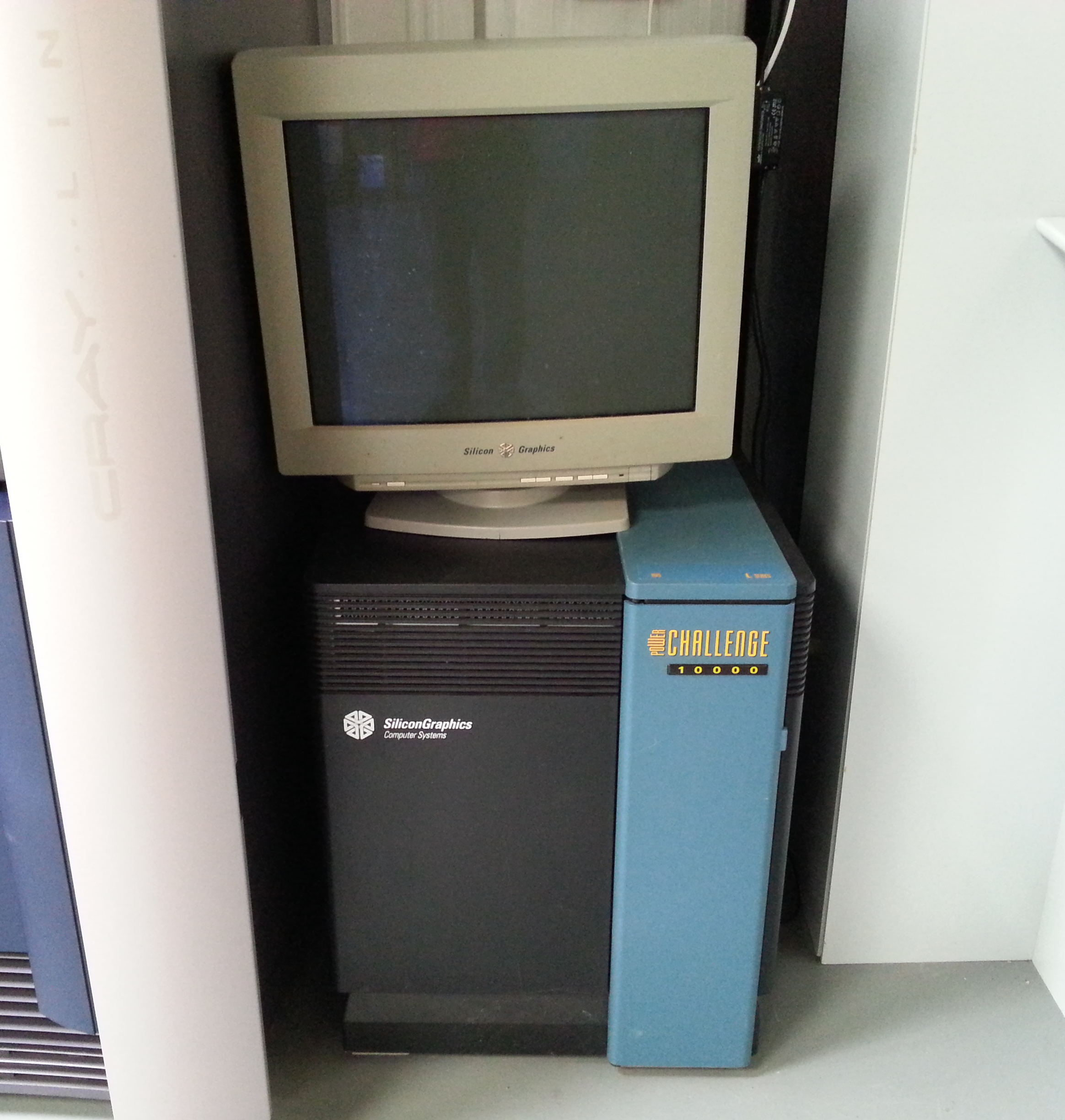
An SGI workstation - Rare's £100,000+ graphics pipeline that made DKC1 possible
Nintendo Power’s First Perfect Score
DKC1 received the highest review scores of any SNES release in 1994. Nintendo Power awarded it their
first perfect score. Electronic Gaming Monthly gave it 9.5/10. Super Play in the UK - the specialist
SNES magazine with a reputation for severity - called it a quantum leap for 16-bit visuals. The critical
consensus was not simply that DKC1 looked remarkable; reviewers noted that the gameplay itself was
compelling - the level variety, the tag-team mechanic, and the animal buddy system were recognized as
genuine design achievements rather than packaging for impressive graphics.
Commercially, DKC1 sold 9 million copies worldwide and became the second best-selling SNES game of all time,
behind only Super Mario Bros. The pre-order numbers had been exceptional; the sustained sales after launch
proved the quality was not just a marketing effect. Nintendo's investment in Rare was vindicated and
the relationship deepened into the full first-party arrangement that would sustain through the N64 era.
The ACM Look That Dominated the Mid-1990s
DKC1 established Rare as Nintendo's most important external developer and revitalized the Donkey Kong
franchise that had been dormant since the arcade era. The ACM technique influenced game development
broadly through the mid-1990s - studios that could not afford SGI workstations attempted to approximate
the pre-rendered look through other means, and the visual style became a dominant aesthetic until 3D
rendering moved to real-time in the following console generation.
The game received Game Boy Color and Game Boy Advance ports. It appeared on Virtual Console for Wii
and later on SNES Online through Nintendo Switch. David Wise's soundtrack has been performed at
Video Games Live and other concert series. The franchise Rare built on DKC1's success continued:
two direct sequels on SNES, then Retro Studios' Donkey Kong Country Returns (2010) and Donkey Kong
Country: Tropical Freeze (2014), which brought David Wise back to compose.
The creators are profiled on the People page. The full trilogy catalogue
with box art and platform details is on the Games page.
1995 - SNES
Donkey Kong Country 2: Diddy's Kong Quest
The finest game in the trilogy - and perhaps the finest SNES platformer.
The Hook
Donkey Kong Country 2: Diddy's Kong Quest arrived in November 1995 as a sequel that surpassed the original
in almost every measurable respect. Where DKC1 had proven what the ACM pipeline could produce visually,
DKC2 asked what it could produce atmospherically. The answer was a pirate world of extraordinary variety:
rusted galleons, bramble-choked fortresses, lava-world factories, murky swamps, and a haunted pirate
pirate amusement park unlike anything else in Nintendo's platformer catalogue.
Diddy Kong - the secondary character from DKC1 - is promoted to lead protagonist. Donkey Kong has been
kidnapped by Kaptain K. Rool and held on Crocodile Isle. Diddy and his girlfriend Dixie Kong must fight
through the Kremling pirate world to rescue him. The game sold 5.3 million copies despite launching
near the end of the SNES lifecycle and is consistently ranked among the greatest platformers ever made.
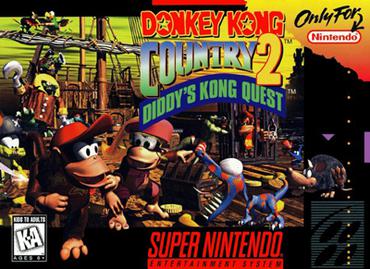
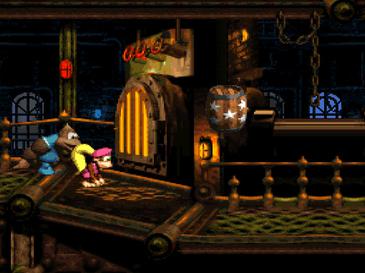
Donkey Kong Country 2: Diddy's Kong Quest - SNES box art, 1995DKC2 gameplay - the pirate aesthetic that defined the sequel's tone
Gregg Mayles Chose Pirates to Make DKC2 Feel Different
DKC2 went into production almost immediately after DKC1's success. Gregg Mayles, who designed many
of DKC1's levels, took the lead designer role. The pirate world was his choice - deliberately different
from DKC1's tropical jungle to ensure the sequel felt tonally distinct. Where the jungle setting was warm
and vibrant, the pirate world allowed for darker, more theatrical environments: the industrial percussion
of mine-cart levels, the genuine horror-inflection of ghost worlds, the lava-heat of furnace stages.
The team could reuse and expand the ACM pipeline and engine from DKC1, which concentrated development
effort on content and level design quality. The result was a game with greater world variety than DKC1
and a more complex collectible system. DKC2 shipped in November 1995 - almost exactly one year after
DKC1 - in a compressed development cycle that the established pipeline made feasible.
"The pirate theme gave us so much more creative latitude than I expected. By the time we finished Gloomy Gulch, we had a haunted pirate amusement park in a Nintendo game. That felt genuinely surprising."
- Gregg Mayles, lead designer of DKC2, in retrospective interviews
Dixie's Helicopter Spin and 102%
DKC2's most significant mechanical addition is Dixie Kong's helicopter spin. Holding the jump button
while airborne causes Dixie to spin her ponytail like a rotor, dramatically slowing descent and extending
airborne time. This creates a fundamentally different movement vocabulary from DKC1: difficult jumps can
be made safer by spinning at the apex, allowing mid-flight correction. Rare designed levels around the
spin from the ground up, creating challenges that reward players who understand when to spin and when
to commit to a clean jump.
The collectible system is more complex than DKC1. Kremcoins are earned in bonus stages and spent to
access the Lost World - the secret world requiring 75 Kremcoins to enter. DK Coins, one per level,
are often placed in locations requiring the helicopter spin or an animal buddy and contribute to
a 102% completion total. The layered collectible design ensures that players who explore the bonus
content have access to progressively harder material.
Gangplank Galleon
World 1 - 4 Stages
The pirate ship starting world - rusted decks, mast climbs, and cannon barrels. Boss: Krow.
Crocodile Cauldron
World 2 - 4 Stages
The lava world - molten rock, superheated water, Clapper the Seal cooling hazards. Boss: Hot Head.
Krem Quay
World 3 - 4 Stages
A murky swamp world - atmospheric aquatic levels, Enguarde stages, the hauntingly quiet Bramble Scramble. Boss: Kudgel.
Krazy Kremland
World 4 - 4 Stages
The pirate amusement park - rollercoaster mine-cart stages and Hornet Hole's swarm enemies. Boss: Kreepy Krow.
Gloomy Gulch
World 5 - 4 Stages
The ghost world - spectral ropes, ghost enemies, Haunted Hall mine-cart stage. Boss: Kreepy Krow returns.
K. Rool's Keep
World 6 - 5 Stages
The Kremling fortress - freezing snow stages and Screech's Sprint. Boss: Kaptain K. Rool (first encounter).
The Flying Krock
World 7 - 1 Stage
The airborne fortress - a single extended stage leading to the true final confrontation with Kaptain K. Rool.
Lost World
Secret - 5 Stages
Five hidden stages unlocked by 75 Kremcoins - the most difficult levels in the trilogy. Required for 102%.
Stickerbush Symphony and the 102% Architecture
DKC2's central structural achievement is the 102% completion system - a multi-layered collectible
architecture that tracked Kremcoins, DK Coins, KONG letters, and bonus stage completions across
40 levels within the SNES's limited save file capacity. The Lost World, locked behind a Kremcoin
paywall, was a new structural layer: a meta-game of challenge content requiring mastery of the
bonus stage system before access was granted.
The pirate world setting produced a more varied visual range than DKC1's jungle biome. The ACM pipeline
was used to render industrial textures, spectral effects, aquatic murk, lava glow, and carnival scenery
within the same sprite compression framework. The Kremling crew designs - sailors, engineers, soldiers,
pirates - maintained the pre-rendered quality across a broader character roster than DKC1.
The soundtrack represented Wise's full command of the ambient approach he had developed for DKC1.
Each world received a distinct sonic identity: the industrial percussion of Mining Melancholy,
the foggy dreariness of In a Snow-Bound Land, the melancholy grandeur of Stickerbush Symphony.
The music was not background; it was environment.
Stickerbush Symphony
The bramble-world stage theme - Wise's most celebrated composition and one of gaming's most beloved pieces of music.
DKC2 - Full OST
The complete DKC2 original soundtrack - Mining Melancholy, Stickerbush Symphony, Disco Train, and more.
"Stickerbush Symphony came from a particular state of mind. I was in a reflective place and I think that came through in the piece. It's probably the most personal music I wrote for any game."
- David Wise, on composing Stickerbush Symphony for DKC2
Near-Perfect Scores at the End of the SNES Era
DKC2 received some of the highest review scores in SNES history. Super Play, Nintendo Official Magazine,
Computer and Video Games, and GameFan all awarded it near-perfect or perfect scores. The critical
consensus recognized DKC2 as not merely an improvement on DKC1 but as the format - SNES 2D platformer -
at its ceiling. The combination of visual quality, level variety, Wise's soundtrack, and the 102%
completion system was described as representing what the platform could achieve when a studio of
Rare's capability was operating without constraints.
Commercially, the 5.3 million copies sold despite the late-SNES timing demonstrated that exceptional
quality could sustain sales even as the market prepared for the next hardware generation. Players who
had shifted attention to the Saturn or were anticipating the N64 still bought DKC2 based on DKC1's
reputation and the word of mouth from early reviews.
"Dixie's helicopter spin was designed to give her a distinct gameplay identity. We wanted players to feel that using Dixie was a genuine choice, not just a palette swap."
- Design notes attributed to the DKC2 development team, as reported in retrospective interviews
Three Decades in Top-Ten Platformer Lists
DKC2 has maintained its reputation as one of the greatest platformers ever made across three decades.
In platform rankings compiled by gaming publications and fan polls, it consistently appears in top-ten
lists. Stickerbush Symphony appears in fan polls of the most beloved game music - often in the top five.
The game's combination of visual design, level design, soundtrack, and difficulty calibration represents
Rare at their peak.
The game received Game Boy Advance and Virtual Console versions. It is available through Nintendo Switch
Online's SNES library. David Wise's compositions from DKC2 have been performed at concerts, sampled
in contemporary music, and cited by composers as formative influences. Stickerbush Symphony in particular
has taken on a life independent of the game itself - it has become cultural shorthand for a specific
quality of ambient melancholy in game music.
1996 - SNES
Donkey Kong Country 3: Dixie Kong's Double Trouble
The ambitious finale - released the same month as the Nintendo 64.
The Hook
Donkey Kong Country 3: Dixie Kong's Double Trouble arrived in November 1996 with the industry's
attention almost entirely elsewhere. Super Mario 64 and the Nintendo 64 were launching in North America
and Europe that same month, and the conversation in gaming had moved decisively to 3D. DKC3 faced an
impossible commercial situation: it was a late-era SNES game releasing into a console transition.
The game itself is among the most technically accomplished 2D platformers on the hardware. Dixie Kong
leads, now paired with Kiddy Kong - a large toddler whose size allows him to skip across water surfaces
and throw Dixie upward for extended jumps. The Northern Kremisphere replaces the tropical and pirate
settings of the earlier games with mountain lakes, factories, waterfalls, and snow-covered forests.
Baron K. Roolenstein - King K. Rool's mad scientist persona - is the villain. The game introduced
85 Banana Birds to collect for the true ending, and the Brothers Bear network: a series of bear NPCs
spread across the world who trade items in a quest-like progression layer.
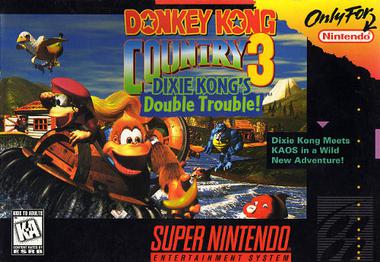
Donkey Kong Country 3: Dixie Kong's Double Trouble - SNES box art, 1996DKC3 gameplay - the Northern Kremisphere's mountain and lake environments
Finishing the Trilogy While the N64 Launched
The DKC3 team knew the Nintendo 64 was coming. Rather than halting work on the SNES game to redirect
to next-generation hardware, Rare committed to completing the trilogy. Gregg Mayles continued as lead
designer, with the Northern Kremisphere's more open world map reflecting an ambition to give DKC3
a structural identity distinct from its predecessors.
The most notable production development was the soundtrack. Eveline Novakovic Fischer joined David Wise
as co-composer, bringing a different sensibility to the score. Where Wise's approach was rooted in
ambient texture and emotional sweep, Fischer's contributions introduced a more experimental, occasionally
dissonant quality. The result was a soundtrack more varied in character than either DKC1 or DKC2,
with specific tracks - particularly the water world themes - carrying an elegiac tone appropriate
to a trilogy conclusion.
"Working on DKC3 was a very different experience from the earlier games. The N64 was coming, and there was a question of what 16-bit games were even for anymore. We made the best SNES game we could anyway."
- Attributed to Rare developers, as discussed in retrospective coverage of the DKC trilogy
Kiddy's Water Skip and the Brothers Bear Chain
Dixie's helicopter spin returns from DKC2 as the primary movement tool. Kiddy Kong adds a new mechanic:
his bulk allows him to skip across open water surfaces - a short hop that keeps him moving over lakes
and rivers that would stop Dixie. Kiddy can also throw Dixie upward to reach elevated platforms inaccessible
by normal jumping. The pair's combined mobility makes DKC3's movement vocabulary the broadest in the trilogy.
The world map is the most open of the three games. A boat allows navigation between areas of the Northern
Kremisphere, with locked sections requiring items obtained through the Brothers Bear network. The Bears -
spread across the map - each request a specific item in exchange for another, creating a trading chain
that unlocks access to new areas and ultimately contributes to the 103% completion total alongside
DK Coins, KONG letters, Banana Birds, and bonus stage completions.
The animal buddies roster includes Ellie the Elephant (water manipulation), Squitter the Spider
(web platforms), Squawks the Parrot, Parry the Parallel Bird, and Enguarde the Swordfish returning
from earlier entries. Each buddy brings a distinct movement option that levels are built around.
ACM at Its Hardware Limit
DKC3 pushed the ACM pipeline to its visual limit on SNES hardware. The Northern Kremisphere environments -
mountain forests, glacial lakes, industrial waterfalls, snowfields - required rendering surface textures
that differed substantially from the tropical and pirate environments of the earlier games. The sprite
work maintained the quality standard set by DKC1 and DKC2 while extending it to a broader environmental
range.
The world map with interactive navigation - the boat, the Brothers Bear locations, the Banana Bird caves -
was the most structurally complex overworld in the trilogy. The 103% completion system tracked more
collectible categories across a larger and more interconnected world than either predecessor, within
the same SNES save file constraints. The design ambition exceeded what the hardware was conventionally
expected to support.
The Brothers Bear network - a chain of NPCs each with a distinct personality and item requirement -
was a structural innovation for a 2D platformer of the era. The trading system added a quest-layer
on top of the platforming without requiring explicit guidance, rewarding players who explored
systematically and talked to every character they encountered.
Launching Against Super Mario 64
DKC3 was well-reviewed but scored somewhat below DKC2's exceptional marks in most publications.
Nintendo Official Magazine gave it 90%. Super Play was more measured, noting reviewer fatigue with
the DKC format. The timing - releasing against Super Mario 64 - was commercially damaging: the game
sold approximately 3.5 million copies, fewer than either predecessor, with many players having already
moved on to N64 hardware by the time DKC3 reached shelves.
The critical response to the soundtrack was more mixed than DKC2's universal praise for Wise - the
experimental quality of some Fischer compositions was not universally appreciated on release, though
subsequent reassessment has been considerably warmer. The game's structural complexity - the Brothers
Bear chain, the Banana Bird system, the open world navigation - was recognised as ambitious; some
reviewers found it complicated rather than deep.
Fourteen Years Before Retro Studios Picked It Up
DKC3 completed the SNES trilogy and marked the end of Rare's 16-bit era. The studio moved to N64
and produced a remarkable sequence of titles: GoldenEye 007 (1997), Banjo-Kazooie (1998),
Donkey Kong 64 (1999), Perfect Dark (2000). The DKC franchise itself was dormant for fourteen years
before Retro Studios - with David Wise returning to compose - produced Donkey Kong Country Returns
in 2010 and Donkey Kong Country: Tropical Freeze in 2014.
Critical reassessment of DKC3 has been more generous than the original reviews. The soundtrack -
particularly Fischer's compositions - has developed a dedicated following. The Brothers Bear network
is recognised as a structural innovation ahead of its time. The game is available through Nintendo
Switch Online's SNES library.
The people behind DKC3 are profiled on the People page, including Eveline
Fischer. The complete trilogy catalogue with all platform details and box art is on the
Games page.
"Aquatic Ambience was about trying to capture what being underwater feels like - that muffled, distant, floating sensation. I used the Roland Sound Canvas samples as raw material and processed them until they felt like water."
- David Wise, on his compositional process for the DKC series