Key Creators
Chrono Trigger was made by four people whose contributions were irreplaceable. Hironobu Sakaguchi assembled the project and drove its systemic ambitions. Yuji Horii wrote the scenario and built the time travel logic that holds the game together. Akira Toriyama designed every character and defined the visual language of each era. Yasunori Mitsuda composed 54 of the game’s 64 tracks from a hospital bed. This is their story.
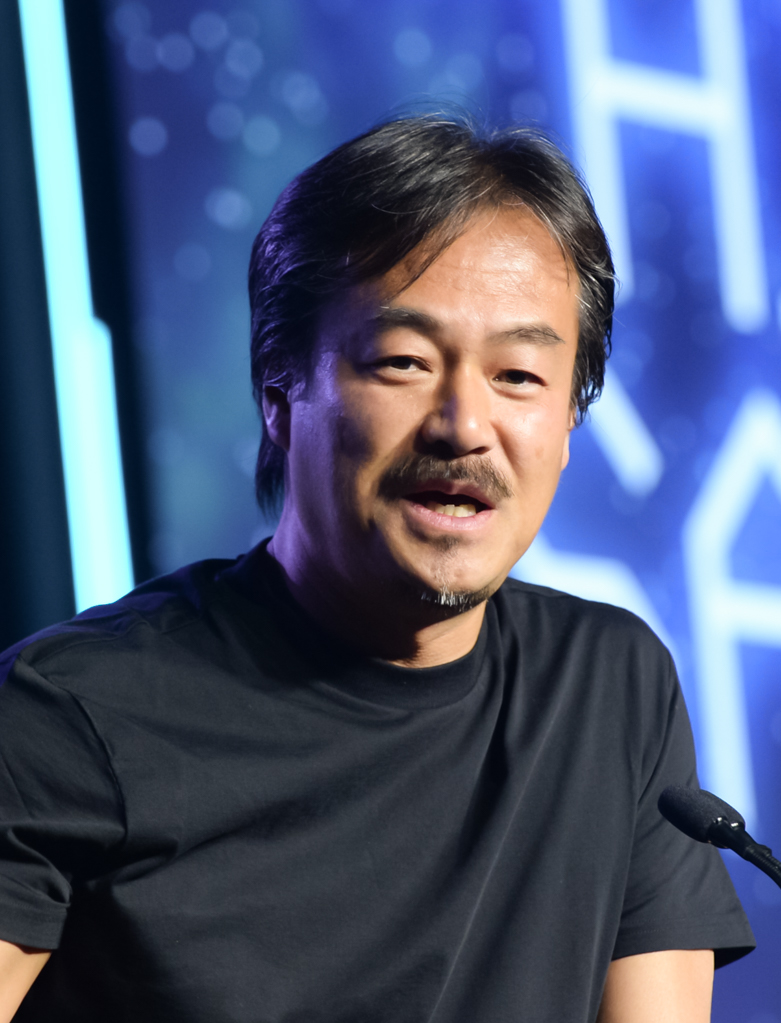
Hironobu Sakaguchi
Executive Producer - born 1962, Hitachi, Japan
Hironobu Sakaguchi is the creator of the Final Fantasy series and the executive producer of Chrono Trigger - the man who assembled the Dream Team. By 1992, Sakaguchi had already saved Square from bankruptcy with the original Final Fantasy and directed or produced every entry through Final Fantasy VI. He was, by any measure, the most powerful creative figure in Japanese RPG development.
The genesis of Chrono Trigger came from a meeting between Sakaguchi, Dragon Quest creator Yuji Horii, and Dragon Ball artist Akira Toriyama - a gathering of three of Japan’s most commercially successful creators that became the foundation of the Dream Project. Sakaguchi served as executive producer and drove the project’s ambition: visible enemies eliminating random battles, New Game+ for multiple playthroughs, and thirteen distinct endings driven by player choice.
His willingness to give Yasunori Mitsuda the composing credit for Chrono Trigger - essentially launching Mitsuda’s independent career - reflects Sakaguchi’s consistent pattern of nurturing talent over hierarchy. Uematsu, Mitsuda’s mentor, stepped in to help when hospitalisation left some tracks unfinished, and Sakaguchi managed this handoff with the understanding that the best result for the game mattered more than precedent.
I wanted the player to feel that their choices mattered - not just at the end, but throughout. Thirteen endings was not a gimmick. It was a statement about what games could be.
-Hironobu Sakaguchi
Notable Works
- Final Fantasy (1987) - Creator / Director
- Final Fantasy IV (1991) - Director / Producer
- Final Fantasy VI (1994) - Producer
- Chrono Trigger (1995) - Executive Producer
- Final Fantasy VII (1997) - Producer
- Blue Dragon (2006) - Executive Producer (Mistwalker)
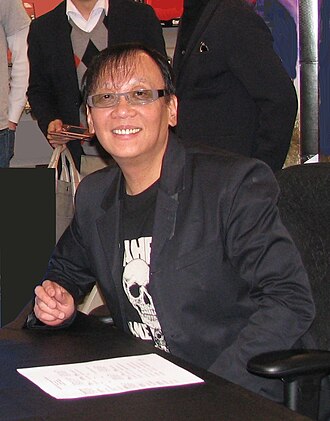
Yuji Horii
Scenario Director - born 1954, Awaji Island, Japan
Yuji Horii is the creator of Dragon Quest and the principal scenario designer of Chrono Trigger - arguably the two most important JRPG franchises ever made, shaped by the same mind. Dragon Quest (1986) essentially invented the JRPG template: towns, world maps, turn-based combat, character progression, and story delivered through NPC dialogue.
Horii brought to Chrono Trigger his unique skill in scenario construction - the ability to design branching stories that feel authored rather than algorithmic, and to build emotional investment quickly. His experience with Dragon Quest IV’s multiple protagonists directly informed Chrono Trigger’s party structure: each character has a distinct arc, and the game accommodates multiple perspectives without losing narrative coherence.
The time travel narrative bears Horii’s stamp most visibly in its internal logic. The paradoxes are consistent, the consequences of interference are felt across multiple eras, and the game’s central theme - that the future is not fixed - is expressed through mechanics rather than dialogue. Horii also championed visible enemies on field maps, reflecting his belief that games should welcome players of all skill levels.
Crono not speaking was my choice. I wanted the player to project themselves into the character completely. Marle and Lucca and Frog all have enough personality for the entire party.
-Yuji Horii
Notable Works
- Dragon Quest (1986) - Creator / Designer
- Dragon Quest III (1988) - Designer
- Dragon Quest IV (1990) - Designer
- Chrono Trigger (1995) - Scenario Director
- Dragon Quest VIII (2004) - Designer
- Dragon Quest XI (2017) - Designer
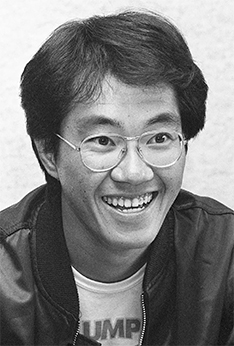
Akira Toriyama
Character Designer - 1955–2024, Nagoya, Japan
Akira Toriyama was one of Japan’s most beloved artists - creator of Dragon Ball and Dr. Slump - and the character designer of both Dragon Quest and Chrono Trigger. He passed away on 1 March 2024 at the age of 68, leaving behind work that had shaped the visual imagination of multiple generations worldwide.
The seven playable characters of Chrono Trigger represent Toriyama at his most versatile: Crono (the archetypal hero, spiky-haired and energetic), Marle (the princess with hidden toughness), Lucca (the bespectacled inventor - one of gaming’s earliest significant female scientist characters), Robo (a robot with unexpected warmth), Frog (a dignified amphibian knight), Ayla (the prehistoric warrior), and Magus (the brooding dark wizard). Each design communicates personality at a glance - a Toriyama signature.
His creature designs include Lavos itself - one of the most memorable final boss designs in RPG history - and the variety of enemies across six time periods, each visually coherent with their era. Prehistoric enemies are dinosaurian; Zeal creatures are ornate; future robots are cleanly mechanical. Toriyama maintained visual logic across 65 million years of in-game history.
Notable Works
- Dr. Slump (manga, 1980–1984) - Creator
- Dragon Ball (manga, 1984–1995) - Creator
- Dragon Quest (1986–ongoing) - Character designer
- Chrono Trigger (1995) - Character designer
- Dragon Ball Super (2015–2024) - Creator
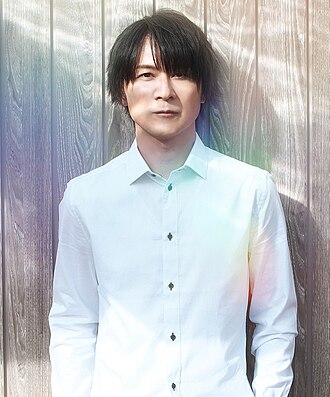
Yasunori Mitsuda
Composer - born 1972, Tokushima Prefecture, Japan
Yasunori Mitsuda composed the score for Chrono Trigger - his first major compositional work and one that immediately established him as one of video game music’s most significant figures. He joined Square in 1992 as a sound programmer and told Sakaguchi directly that he would quit if not allowed to compose. Sakaguchi agreed and gave him Chrono Trigger.
Mitsuda was 22 years old, working on his first major assignment, under pressure that combined the intensity of a high-profile project with his desperate need to prove himself. He worked through chronic overwork and eventually collapsed, hospitalised with stomach ulcers partway through the project. From his hospital bed, he continued composing. He completed 54 of the game’s 64 tracks; Nobuo Uematsu completed the remaining ten.
The score is remarkable for its range and emotional depth. Each time period has a distinct musical identity: Celtic-inflected folk for the medieval era, ambient minimalism for Zeal, tribal percussion for the Prehistoric age, desolate sparse electronic tones for the ruined Future. ‘Schala’s Theme’ is considered one of the finest short-form melodic compositions in game music history. ‘Corridors of Time’ achieves an ambient quality unusual in SNES music. The score’s diversity - spanning six eras with culturally distinct musical aesthetics - would be impressive under any conditions. That it was composed by a first-timer from a hospital bed makes it extraordinary.
Every era needed to sound different - to feel like a genuinely different time and place. I spent a long time researching what music from each period might have sounded like, and then I made something that felt true to that without being archaeologically accurate.
-Yasunori Mitsuda
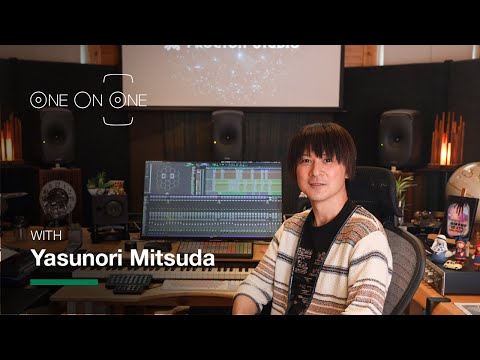
Yasunori Mitsuda - Composer Interview
Notable Works
- Chrono Trigger (1995) - Score (54 of 64 tracks)
- Xenogears (1998) - Full score
- Chrono Cross (1999) - Full score
- Xenosaga Episode I (2002) - Score
- Xenoblade Chronicles 2 (2017) - Score (with others)