The Dream Project
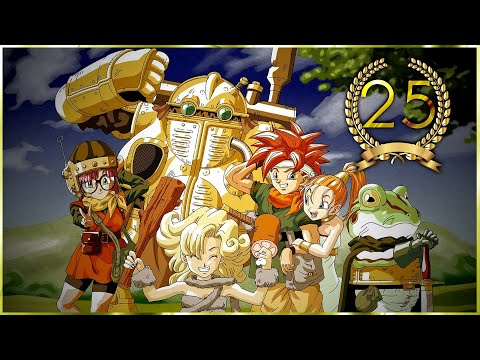
Chrono Trigger was made by three of Japan’s most celebrated creators working together for the first time - a collaboration so unlikely it was called the Dream Project before anyone had decided what it would make. The game that emerged from their two-year collaboration is still, three decades later, widely regarded as the finest JRPG ever made. This is the story of how it happened.
The Dream Team Forms
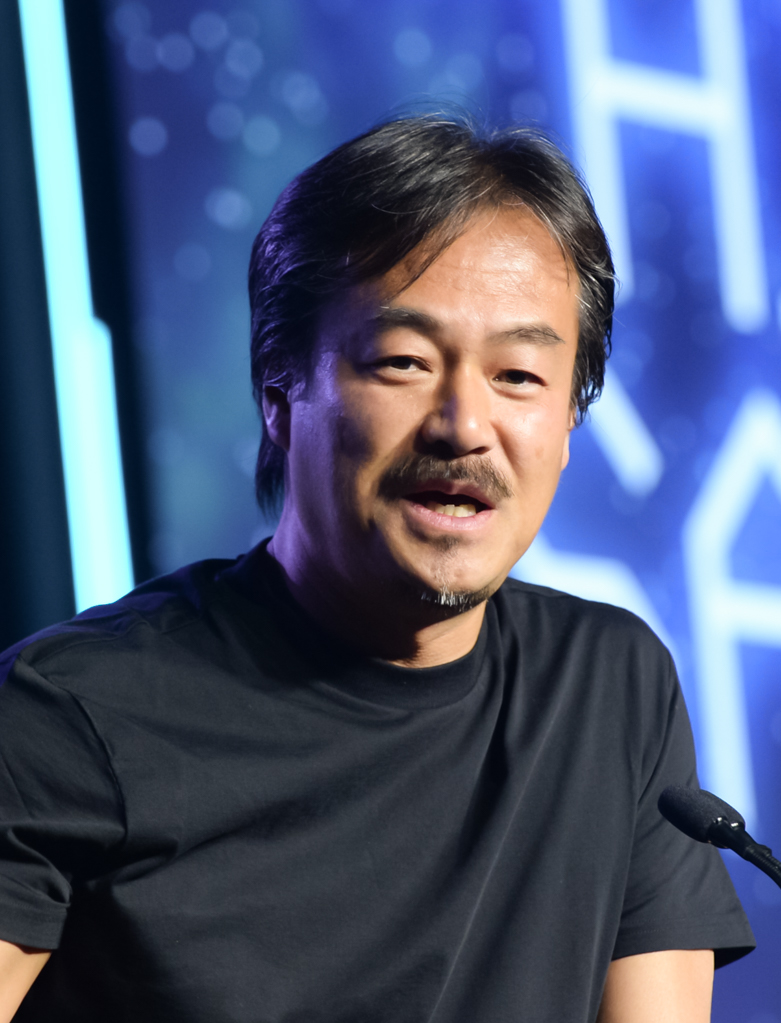
The genesis of Chrono Trigger was, like many great things, partly accidental. In 1992, a gathering at Square brought together Hironobu Sakaguchi - executive producer of the Final Fantasy series and the man who had saved Square from bankruptcy in 1987 - with Yuji Horii, creator of Dragon Quest and the architect of the JRPG template, and Akira Toriyama, the manga artist whose Dragon Ball had made him one of Japan’s most commercially successful illustrators.
The three men had worked together in adjacent fields - Toriyama had designed characters for Dragon Quest since 1986 - but had never made a single game together. The conversation that led to Chrono Trigger has been described differently by each participant, but its essence was simple: what kind of game would each of them most want to play, if they could make anything at all?
The answer combined their strengths. Horii would write the scenario - a time travel story with branching consequences. Toriyama would design the characters and the visual language of each era. Sakaguchi would produce and drive the design ambition. The project was internally called the Dream Project, a name that reflected both its extraordinary pedigree and its genuine aspiration.
The three of us - Horii, Toriyama, and myself - sat down to make something that none of us could make alone. That was the Dream Project. It was genuinely collaborative in a way game development almost never is.
-Hironobu Sakaguchi
Two Years of Production
Development on Chrono Trigger began in earnest in 1993 and continued for approximately two years before the game’s Japanese release on 11 March 1995. The team was larger than a typical Square project - roughly 35 people - and the scope was equally ambitious: six distinct time periods, each requiring its own visual identity, enemy designs, music, and narrative coherence.
The design philosophy was set by the Dream Team at the outset. Random encounters - the invisible enemies that plagued most JRPGs of the era - were eliminated: monsters were visible on field maps and could be avoided by skilled navigation. The Active Time Battle system, developed originally for Final Fantasy IV, was adapted and refined. And the ending system was built to deliver thirteen distinct conclusions depending on when and how the player defeated the final boss.
The time travel logic required extraordinary care. Horii designed the scenario such that actions in any era would have visible consequences in others: a forest planted in 600 AD appears as an ancient growth in 1000 AD. A character introduced as a child in 600 AD reappears as an elderly mentor in 1000 AD. The consistency of the causal chain was tested across every timeline, and the final scenario is remarkably tight for such a complex structure.
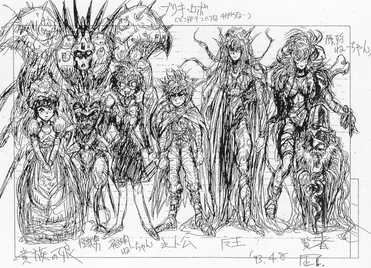
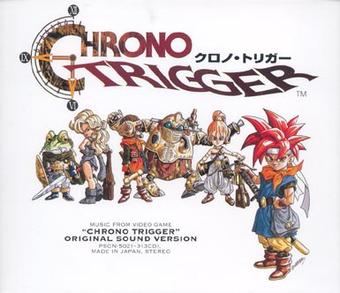
Toriyama’s character work went beyond illustration. He defined the visual grammar of each time period - prehistoric creatures built on dinosaurian forms, the magical Zeal kingdom using ornate and elevated designs, the post-apocalyptic future rendered with mechanical bleakness - ensuring that the game felt visually coherent across its six settings despite their enormous differences.
Time travel is a difficult subject for storytelling because paradox is always waiting to destroy your story. We spent a long time making sure the logic held - that if you changed something in one era, you could trace the consequence in another.
-Yuji Horii
25 Years Later
Mitsuda’s Story
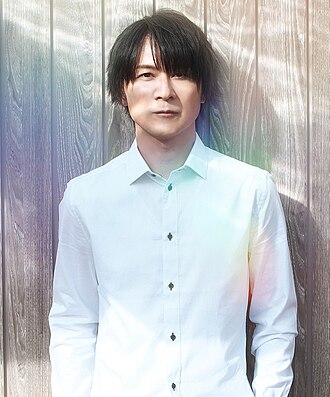
Yasunori Mitsuda joined Square in 1992 as a sound programmer - a technical role with no compositional responsibility. He was 20 years old, unhappy, and increasingly determined to compose rather than implement other people’s music. He confronted Sakaguchi directly, reportedly telling him he would quit if not allowed to compose. Sakaguchi agreed, and gave him Chrono Trigger.
What followed was extraordinary by any standard. Mitsuda was 22 years old, working on his first major assignment, under pressure that combined the natural intensity of a high-profile project with his desperate need to prove himself. He worked through chronic overwork - missing sleep for extended periods, driving himself past any reasonable limit. He eventually collapsed and was hospitalised with stomach ulcers.
From his hospital bed, he continued composing. He completed 54 of the game’s 64 tracks. The remaining ten - including ‘Boss Battle 2’, ‘Battle with Magus’, and ‘The Final Battle’ - were completed by Nobuo Uematsu, Mitsuda’s mentor and the composer of every Final Fantasy to that point. Uematsu stepped in as a colleague, not a replacement; the transition between their contributions is seamless.
The score Mitsuda produced is remarkable for its range and emotional specificity. ‘Schala’s Theme’ is considered one of the finest short-form melodic compositions in game music history. ‘Corridors of Time’ achieves a hypnotic ambient quality unusual in SNES game music. ‘Frog’s Theme’ is a fully realised heroic march. The prehistoric percussion of ‘Burn! Bobonga!’ suggests genuine ethnographic imagination. That this was composed by a first-timer working from a hospital bed makes it one of the most extraordinary creative achievements in the medium.
I told Sakaguchi-san I would die before I submitted bad music. I nearly meant it literally. I was hospitalised. But I was composing in the hospital. The music mattered more than the warning signs.
-Yasunori Mitsuda
What Chrono Trigger Established
Chrono Trigger was released on 11 March 1995 in Japan and 22 August 1995 in North America. It sold over 2.65 million copies on the SNES and has since been ported to PlayStation, Nintendo DS, iOS, Android, and PC. It received near-universal critical acclaim on release and has maintained that reputation: in virtually every critical ranking of the greatest games ever made, it appears near or at the top of the JRPG category.
Its innovations were multiple and lasting. New Game+ became a standard expectation for RPGs - players had the right to revisit a completed game with their progress intact. The multiple-endings system demonstrated that a JRPG could accommodate genuine player agency at the narrative level. The elimination of random encounters shifted how the genre thought about exploration and pacing. The ATB system reached a level of refinement in Chrono Trigger that it rarely matched in subsequent implementations.
The game also launched Mitsuda’s career as one of the most respected composers in game music. His subsequent works - Xenogears, Chrono Cross - built on the foundation laid by Chrono Trigger’s score, and he has spoken in almost every interview about how the Chrono Trigger assignment shaped his understanding of what game music can do.
Toriyama, Horii, and Sakaguchi never collaborated on another project together. Chrono Trigger remains the only work of the Dream Project. That makes it something rare: a perfect object that could not be repeated.
Schala’s Theme came to me when I was at my lowest point. Sometimes suffering produces something, and I am not sure I would trade that.
-Yasunori Mitsuda