From Cracktros to Code Poetry

Four decades of the C64 demoscene, from the first animated signatures on pirated games to the technically audacious productions still appearing at European demoparties today.

1982-1983

When Signatures Became Art

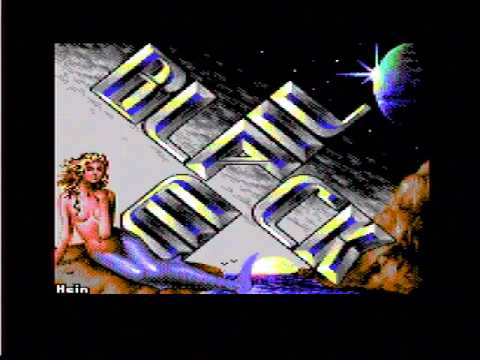
The Commodore 64 arrived in stores in August 1982. Within months, groups distributing copied software in Europe had started appending short animated screens to the programs they cracked. These "cracktros" - introductions attached to cracked software - were functional calling cards: a scrolling text message naming the group, some colour cycling on the border, occasionally a music routine. They were not intended as art. They were signatures.

The context was an active software copying culture, particularly strong in West Germany, Sweden, and the Netherlands. Games arrived on floppy disks costing substantial sums; groups that removed copy protection and distributed alternatives built reputations through both the speed of their releases and the visual style of their screens. The cracktro was advertising and bragging rights simultaneously.

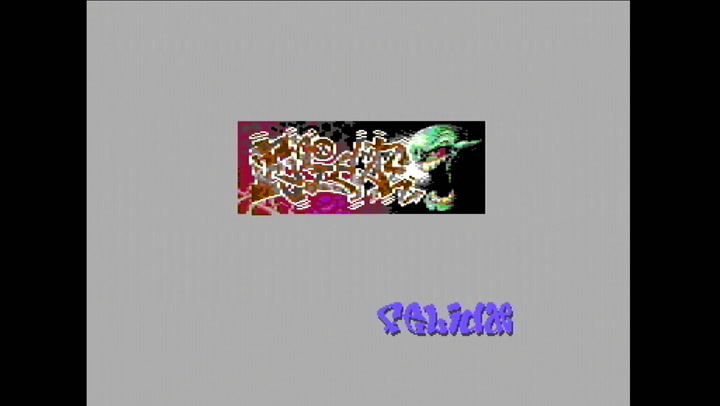
Groups like 1001 Crew from Germany were among the earliest to develop recognisable screen aesthetics. Their scrolling text and colour bar routines were primitive by later standards but established the format that would evolve into full demo productions. The key discovery of this period was that the C64's VIC-II chip could be manipulated at cycle-level precision to produce effects its designers had not documented: coloured borders, smooth hardware scrolling, and raster-timed colour changes that swept the screen in real time.
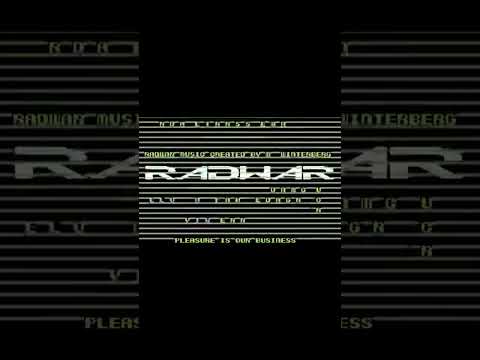
1982-1983 Cracktro era
Early C64 cracktro screens established the format of animated group signatures before standalone demos existed as a category.
1984-1985

The First Screens That Existed for Themselves

By 1984, some groups had begun releasing screens that were not attached to cracked software at all. These were distributed as programs in their own right, passed around on disk alongside cracked games but not dependent on them. The distinction mattered: a screen existing only to demonstrate what the group could do with the hardware was a different proposition from a signature embedded in a pirated release.

The technical ambitions of this period pushed past the basic scrolling text format. Groups competed on the smoothness of their hardware scrollers, the complexity of their colour effects, and the quality of their SID music. The SID chip - the Sound Interface Device designed by Bob Yannes - had three voices with programmable waveforms, filters, and an envelope generator. Composers in the demo scene learned to sequence it without music software, writing routines that directly poked values into the chip's registers in time with the visual raster effects running simultaneously on the VIC-II.

This two-processor coordination - juggling VIC-II raster timing and SID register writes in a machine with no dedicated audio hardware - defined C64 demo programming from the beginning. Every cycle counted. The 6510 ran at approximately 1MHz, and the VIC-II generated a PAL interrupt signal 312 times per second. Demo coders learned to write code that completed specific operations within exact cycle windows to avoid visual glitches. Groups that mastered this produced smooth, professional-looking screens; groups that had not produced screens with tearing artifacts and dropped frames.

1984-1985 First standalone demos
The first C64 screens released as productions in their own right, rather than cracktro attachments, appeared from 1984 onward.
1986-1992

Golden Era: The Hardware Pushed to Its Limits

The period from 1986 to 1992 produced the densest concentration of technical advances in C64 demo history. Groups grew larger, more specialised, and more competitive. Coders, graphicians, and musicians developed distinct roles within group hierarchies. The productions grew longer, more complex, and more visually ambitious.

The key technical innovations of this period were not random discoveries. They were systematic explorations of documented chip behaviour pushed beyond its intended parameters. Flexible Line Distance (FLD) allowed coders to stretch individual raster lines horizontally by manipulating the hardware's line counter, producing wavy and elastic visual effects without pixel manipulation. Sprite multiplexing allowed the eight hardware sprites to be repositioned mid-frame using raster interrupts, creating the illusion of dozens or hundreds of objects on screen simultaneously. Full Screen Multicolour (FLI) exploited the VIC-II's attribute memory architecture to produce high-resolution colour images that should have been impossible given the chip's documented colour restrictions.

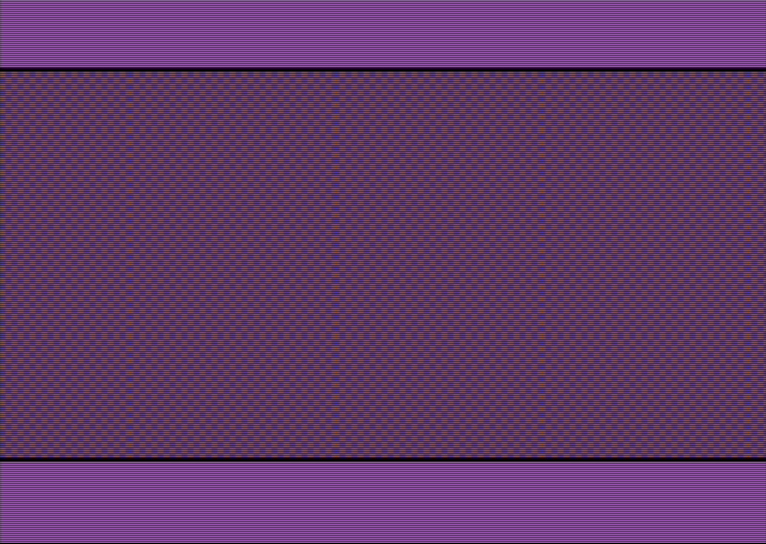
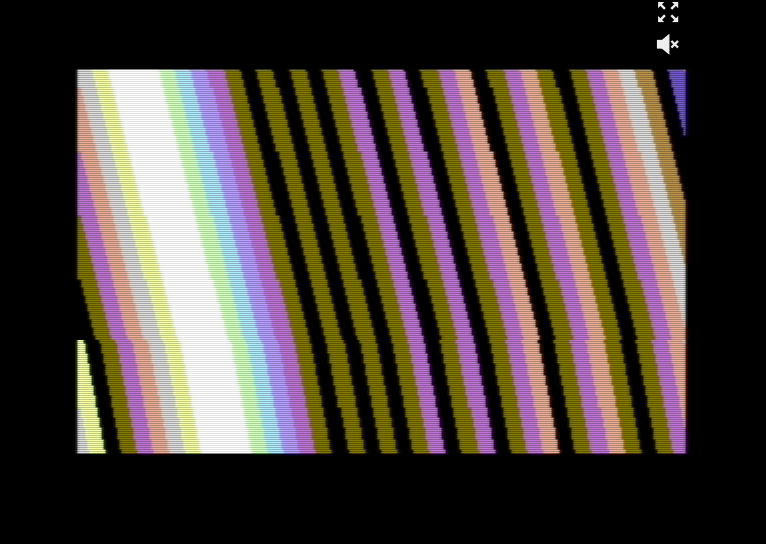
Dutch Breeze by Blackmail (1991) synthesised many of these techniques into a cohesive production with a distinct visual language: layered raster colour fields, smooth hardware scrollers, and a SID score that sat cleanly under the visual effects without competing for processor time. It competed at The Party in Denmark and circulated widely through the European BBS network. Read the full analysis on the Flagship Demos page.

You are not fighting the hardware; you are negotiating with it. Every limitation turns into a technique if you understand why it is a limitation.

Crossbow (Christian Schneider), Oxyron - widely attributed across C64 scene interviews and diskmag features from the early 1990s

Demoparties formalized the competitive dimension. The Party in Denmark (running from 1991), The Gathering in Norway, and smaller national events gave groups venues where productions were judged by audience vote. The competition structure pushed groups to save their best material for major releases at specific parties - a discipline that concentrated creative effort and raised quality across the board.

Dutch Breeze by Blackmail 1991 - C64 demo with raster colour bars and smooth scrollers on real hardware
Dutch Breeze by Blackmail (1991) - one of the defining productions of the golden era, captured here on real C64 hardware.
Early 1990s

The PC Arrives and the Scene Splinters

The shift began around 1992 and accelerated through 1994 and 1995. PC hardware - first with VGA graphics and Sound Blaster cards, then with accelerated 3D chips - offered raw capabilities that the C64 could not match. The frame rate of a C64 raster effect was 50Hz on PAL hardware, fixed, determined by the television standard. A PC could calculate and draw at whatever rate its CPU allowed, then accelerating toward real-time 3D. The competitive landscape changed.

Many of the major C64 groups dissolved or shifted their focus entirely to the PC. Some members moved into commercial game development. The BBS network that had distributed C64 productions was increasingly being replaced by internet access, which also accelerated the distribution of PC demos. The C64 did not disappear from the scene overnight, but by 1995 it was clearly a minority platform at events that had been dominated by it three years earlier.

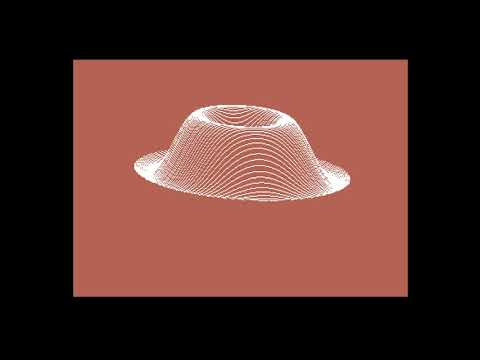
Mathematica by Reflex (1995) came from this transition period. The production used mathematical rendering techniques - parametric surfaces, tunnel effects - that demonstrated C64 coders had found new directions even as the platform aged. Groups that stayed with C64 after 1993 were making a deliberate choice, not following a default.

When everyone moved to PC we had a choice: follow the new hardware or go deeper into the old one. Going deeper was more interesting. There is always more to find inside something you know well.

Lft (Linus Akesson), Kryo, from technical talk at Revision demoparty 2017 accompanying the release of A Mind Is Born
Mathematica by Reflex 1995 - early scene with mathematical rendering on real C64 hardware
Mathematica by Reflex (1995) - produced during the PC transition, using mathematical effects as a different direction from the hardware-push focus of the golden era.
2000s

The Hardware Proved the Doubters Wrong

The revival of serious C64 demo activity in the early 2000s was driven partly by nostalgia and partly by a genuine question: had the hardware been fully explored? The answer, it turned out, was no. Groups returning to the C64 after years on PC brought with them programming discipline and technical knowledge that had not existed in the golden era. They applied this to the old hardware and found it had more to give.

Edge of Disgrace by Booze Design (2008) was the production that defined this era. Its FLI paintings used a technique that required cycle-exact timing to execute: the VIC-II's attribute memory had to be swapped mid-line, during the specific clock cycles where the chip was not reading it, to produce per-pixel colour information at a resolution the chip did not officially support. The result looked like a painting rendered at far higher colour depth than the C64's architecture should have allowed. Each frame required extensive cycle counting to produce, and the group maintained this across minutes of running time.

The production placed first at Breakpoint 2008 and immediately changed the benchmark for what serious C64 demo work meant. Groups that had been producing competent but conventional productions were confronted with something genuinely unexpected from hardware that was then 26 years old. Read the full analysis on the Flagship Demos page.

Edge of Disgrace by Booze Design 2008 - main cover screenshot showing FLI colour painting technique
Edge of Disgrace by Booze Design (2008) - its FLI painting technique produced colour depth that the VIC-II chip was not designed to deliver.
2010s-Present

Forty Years In: The Scene That Would Not Stop

The decade after Edge of Disgrace saw C64 demo production continue at a level that would have been difficult to predict. Groups active in the 2010s included veterans from the 1980s and 1990s alongside new members who had learned the platform entirely in the modern era, often with access to documentation and tools that did not exist when their predecessors were working.

Comaland by Censor Design and Oxyron (2014) achieved what many considered the highest quality bar in C64 demo history to that point. The joint production between two long-running Swedish groups demonstrated that collaborative work between groups with different technical specialisms could produce results neither could achieve independently. Censor Design's SID composition tradition and Oxyron's low-level programming expertise combined in a production that runs over ten minutes with no repetition or filler.

A Mind Is Born by Lft (2017) approached the problem from a different direction entirely. The production - a complete visual and audio demo - fits in 256 bytes of machine code. The entire synthesizer, music, and animation system runs within those 256 instructions. Lft documented every byte of its construction on his website, producing one of the most detailed publicly available accounts of how C64 demo code actually works at the instruction level.

The current active scene is documented on the Modern Scene page. Groups including Booze Design, Censor Design, Onslaught, and Genesis Project have released productions within the last three years. Annual demoparties at Revision (Germany) and Datastorm (Sweden) continue to run C64 competitions with genuinely contested results.

Comaland by Censor Design and Oxyron 2014 - main cover screenshot showing layered raster colour effects
Comaland by Censor Design and Oxyron (2014) - produced thirty years after the first standalone C64 demos, widely cited as the scene's highest technical achievement.

The Sound Interface Device

Understanding the C64 demo scene means understanding the SID chip. This technical overview explains how it works and why it produced a sound culture that outlasted the hardware's commercial life.