Before Activision, game designers were invisible. After, their faces were in the manuals,
their names on the box, and their fan mail filled two boxes a day.
The Founding Programmers
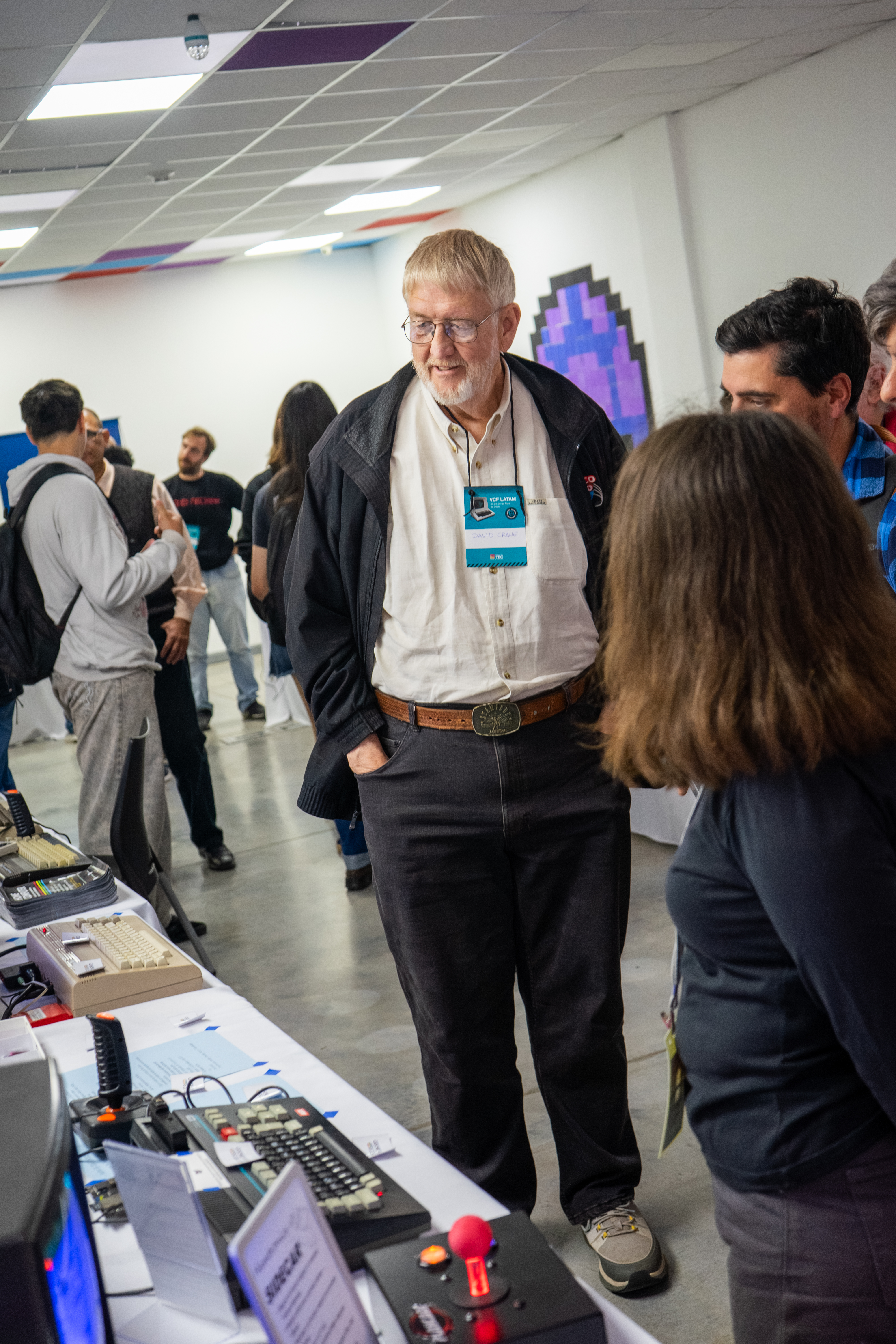
David Crane - co-founder, lead designer of Pitfall!, Grand Prix, Dragster, Freeway, Fishing Derby
David Crane
Co-founder & Lead Designer
Dragster (1980)Fishing Derby (1980)Freeway (1981)Laser Blast (1981)Grand Prix (1981)Pitfall! (1982)Pitfall II (1984)
David Crane joined Atari in the mid-1970s after studying electronics engineering.
By 1979, he had determined that his titles alone had generated over $20 million for Atari
against a $20,000 annual salary. He walked out in August 1979 and co-founded Activision.
Crane’s most famous achievement is Pitfall! (1982), but the game’s origin is a
technical feat: a “little running man” animation he had perfected two years earlier,
searching for the right game to justify it. When he found the concept in 15 minutes and
spent 1,000 hours building it, the result was one of the best-selling games of the 2600 era.
For Pitfall II (1984), Crane designed a custom co-processor - the DPC (Display
Processor Chip) - to overcome the TIA’s audio and graphics limitations. “DPC”
stands for David Patrick Crane. The chip expanded what was possible on the hardware for
which it was built.
Carol Shaw holding a gold River Raid cartridge - River Raid achieved nearly 1 million 2600 copies by January 1984
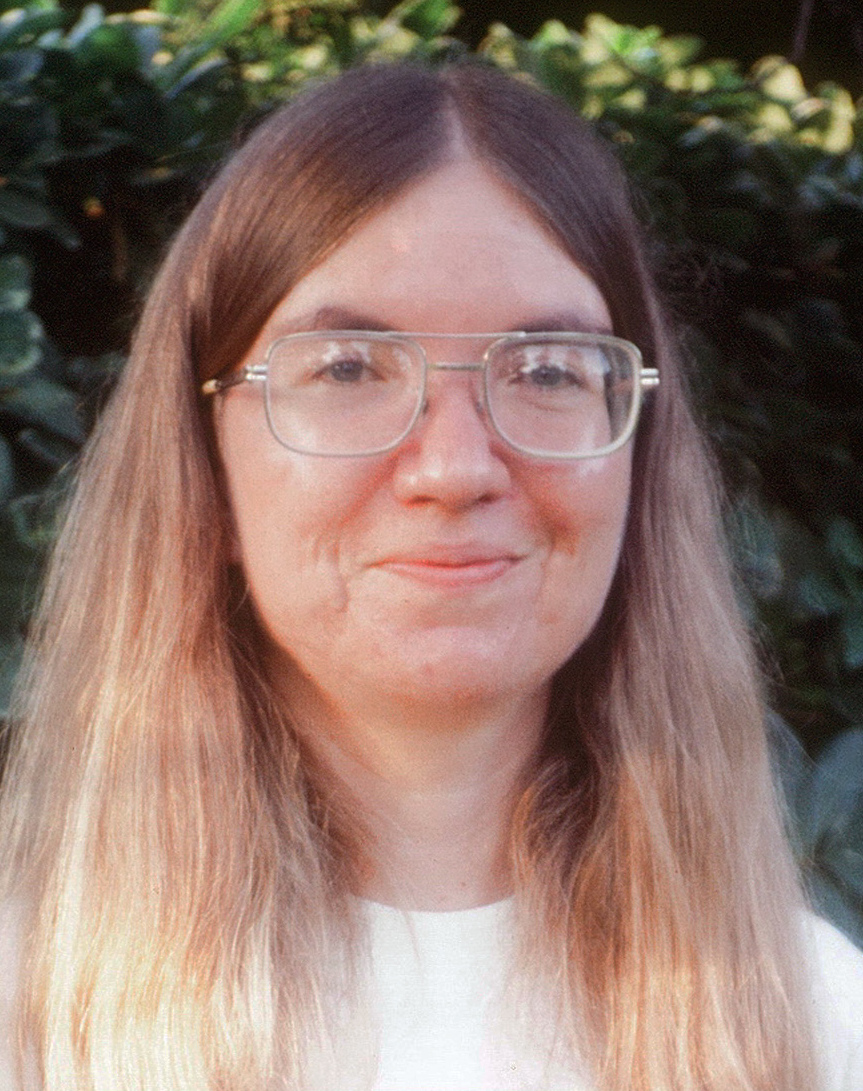
Carol Shaw
Designer & Programmer
River Raid (1982)3D Tic-Tac-Toe (Atari, 1978)Video Checkers (Atari, 1980)
Carol Shaw (born 1955) is one of the earliest female video game programmers to work in
the commercial industry. She earned a Bachelor’s and Master’s degree in Electrical
Engineering and Computer Science from UC Berkeley, graduating in 1978 - directly into
a job at Atari as a Microprocessor Software Engineer.
After leaving Atari in 1980 and a brief spell at Tandem Computers, Shaw was recruited to
Activision. She completed River Raid in 1982 - a vertical-scrolling shooter using a
polynomial algorithm to generate an infinite river with islands, enemies, fuel depots, and bridges,
all procedurally, with no defined end state.
Colleague Mike Albaugh described Shaw as “simply the best programmer of the 6502 and
probably one of the best programmers period.” She received a bonus equal to her annual
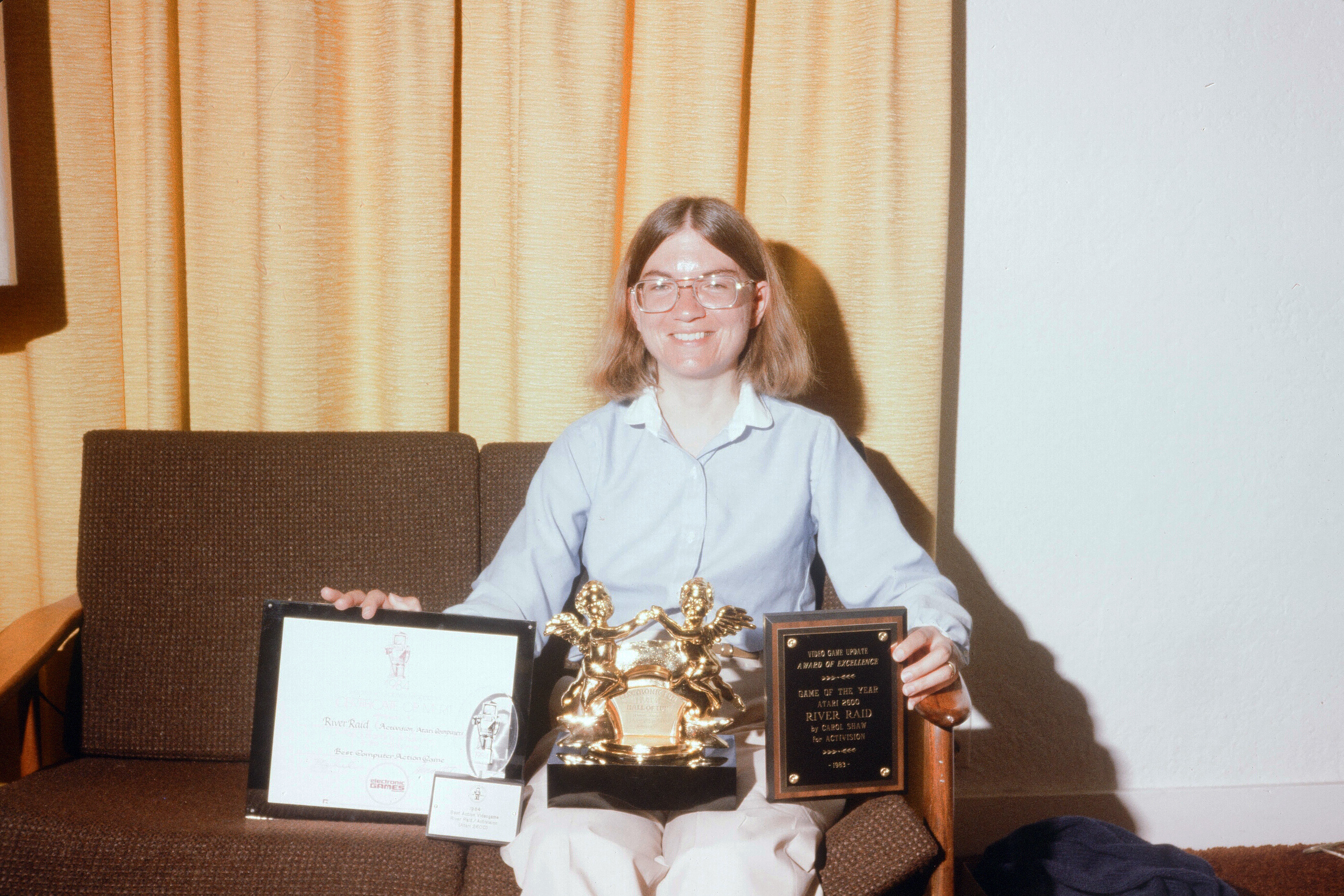
salary for River Raid’s performance. In 2017, she received the
Industry Icon Award at The Game Awards.
Carol Shaw with her video game awards, including the 2017 Game Awards Industry Icon Award.
Alan Miller
Co-founder & Programmer
Checkers (1980)Tennis (1981)Ice Hockey (1981)Starmaster (1982)Robot Tank (1983)Oink! (1982)
Alan Miller was one of the four founding programmers who walked out of Atari in 1979.
His Activision 2600 credits are among the best-documented of the era: Checkers, Tennis,
Ice Hockey, Starmaster, and Robot Tank - all confirmed in the Robot Tank instruction manual’s
tip page and multiple interviews. Note: Alan Miller and Larry Miller (Enduro, Spider Fighter)
are two different people; this confusion is understandable but consequential for accurate attribution.
After the video game crash, Miller and Bob Whitehead departed Activision in 1984 to found
Accolade, which published titles including Hardball!, Jack Nicklaus Golf,
and Test Drive.
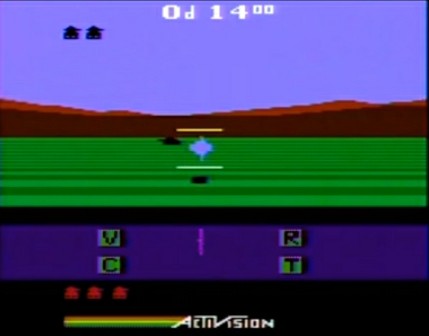
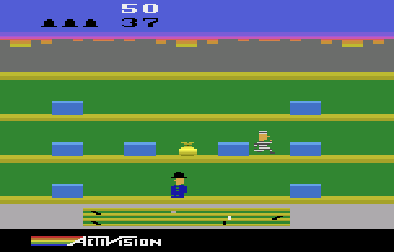
Robot Tank (1983) - the instruction manual explicitly credits Alan MillerKeystone Kapers (1983) - Garry Kitchen’s debut, different from Alan Miller’s portfolio
Bob Whitehead’s Boxing was one of Activision’s four launch titles, demonstrating fluid
character animation that stood out from contemporary 2600 output. His Chopper Command (1982)
set the standard for the helicopter-gunship genre on the platform. Enduro (1983) - often
attributed to Whitehead in secondary sources but now confirmed as Larry Miller’s work -
featured a genuine day/night cycle and changing weather conditions.
Whitehead and Alan Miller left Activision in 1984 to co-found Accolade. His last confirmed
Activision 2600 title is Private Eye (1984), an adventure game across four detective cases.
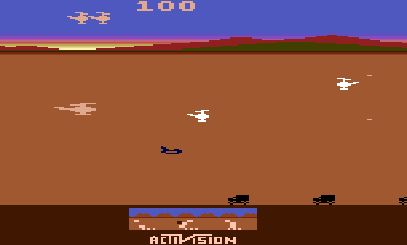
Chopper Command (1982) - Bob Whitehead’s helicopter gunship game
Larry Kaplan
Co-founder & Programmer
Bridge (1980)Kaboom! (1981) - lead
Larry Kaplan was the fourth founding programmer and served as a technical advisor during
the founding period. His two confirmed Activision 2600 titles are Bridge (1980) and Kaboom! (1981).
Kaboom! became Activision’s first title to sell over one million units - with David Crane
contributing the Mad Bomber sprite and the bucket graphics as a secondary credit.
Kaplan left Activision shortly after Kaboom!’s release, eventually returning to Atari.
He is credited in multiple primary sources as one of the core members of the “Gang of Four”
who confronted Ray Kassar in May 1979.
Leadership & Later Designers
Jim Levy
Co-founder & CEO (1979–c.1984)
Jim Levy came from the music industry - Bantam Books and Verve Records - where creative talent
routinely received credits and royalties. The founding programmers’ attorney introduced Levy
to the group because his background gave him the perfect frame for their argument: treat game
designers the way record labels treat musicians.
Levy designed the Activision logo himself and coined the company name - combining “active”
and “television.” He secured the initial venture funding from Sutter Hill Ventures and
navigated the Atari lawsuit. Under his leadership, Activision grew from five people in a
garage to a $157 million company. He was replaced by Bruce Davis following internal conflicts
during the post-crash restructuring, and the company declined sharply afterwards.
Steve Cartwright designed exactly five Atari 2600 games for Activision - a fact he confirmed
in his Atari Compendium interview: Barnstorming, Megamania, Seaquest, Plaque Attack, and Frostbite.
He described Frostbite as “the best of the five, as it was the last one I did for the 2600.”
Megamania won “Most Humorous Home Arcade Game” at the 4th Annual Arkie Awards in 1983.
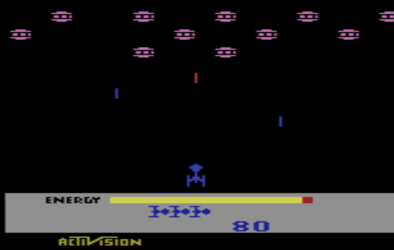
Megamania (1982) - Steve Cartwright’s wave-based shooter, winner of the 1983 Arkie Award for Most Humorous Home Arcade Game
Garry Kitchen and his brother Dan Kitchen joined Activision and worked from a New Jersey
satellite office. Garry’s credits are Keystone Kapers and Pressure Cooker - both confirmed
on his official website (garrykitchen.com). Dan Kitchen programmed Crackpots - a title
commonly but incorrectly attributed to Garry. This is one of the best-documented attribution
corrections in the 2600 catalogue.
Garry Kitchen later founded Absolute Entertainment, which published A Boy and His Blob
(NES) and other titles in the late 1980s and early 1990s.