How four unhappy programmers, one music-industry executive, and a $20 million lawsuit
created the legal foundation of the entire modern games industry.
The Atari Revolt
By the late 1970s, Atari was the dominant force in home gaming, but its treatment of internal
programmers had become a quiet crisis. Warner Communications had acquired Atari in 1976 and
installed Ray Kassar - a former textile executive - as CEO. The company paid its programmers
flat salaries with no royalties, no screen credits, and no acknowledgement of individual
contributions. This was deliberate: Atari feared rivals would identify and poach talented designers.
The flashpoint came in early 1979. Atari’s marketing department circulated an internal memo
listing the previous year’s best-selling cartridges. It had an unintended consequence:
the programmers could now calculate exactly how much revenue their games had generated.
David Crane discovered his titles alone had brought in over $20 million -
against a $20,000 annual salary. Four programmers - Crane, Alan Miller, Larry Kaplan, and
Bob Whitehead - calculated they had collectively generated approximately 60% of
Atari’s $100 million in cartridge sales from a development staff of thirty-five,
yet each earned between $20,000 and $30,000 per year.
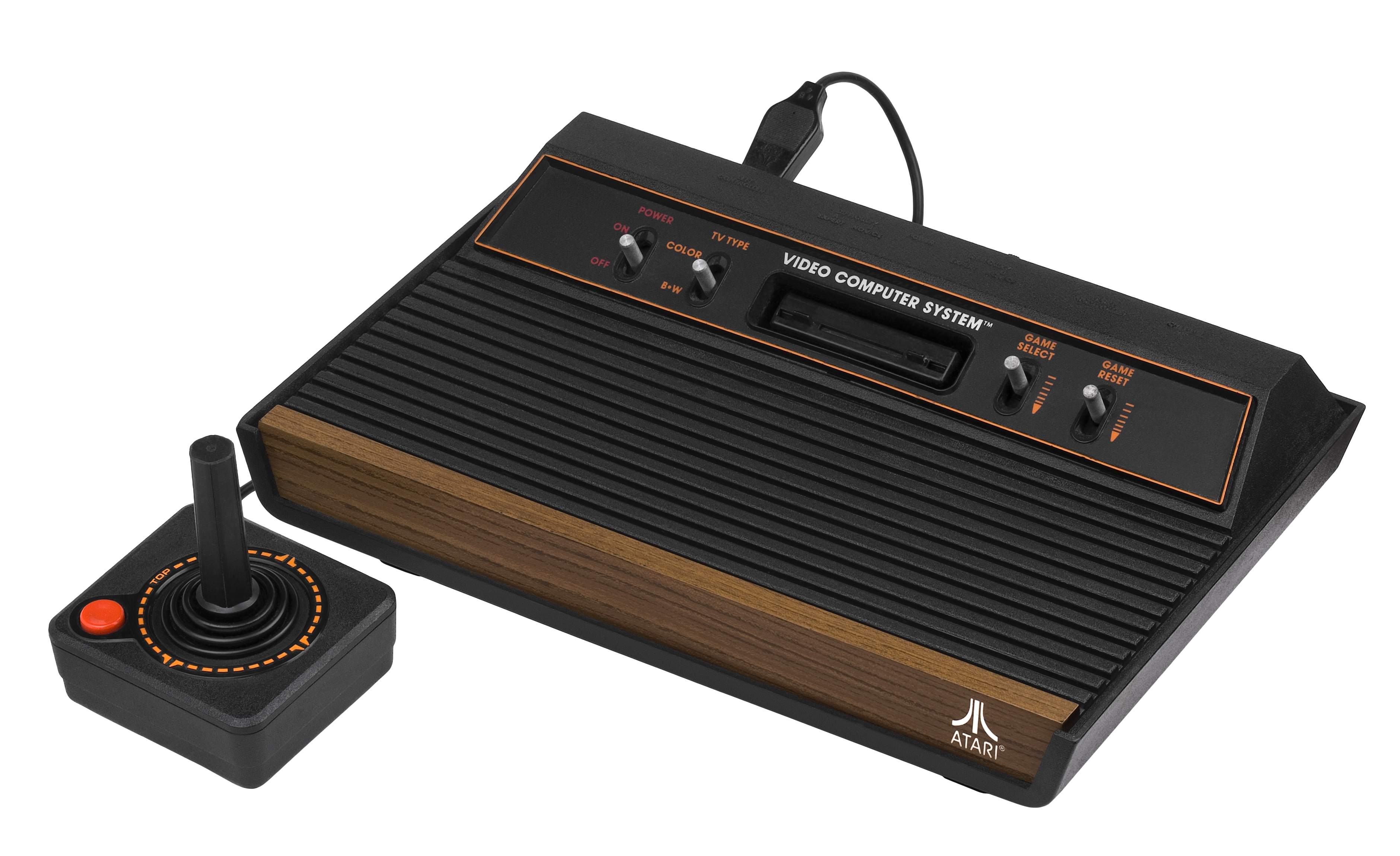
The Atari 2600 “Woody” - the platform Activision would come to dominate. Activision’s founding programmers had built a significant portion of the 2600 library before they quit.
The group of four - known internally as the “Gang of Four” - requested a
meeting with CEO Kassar in May 1979. They came with documented proof of their contributions and proposed
that Atari treat game designers the way record labels treat musicians: with royalties and public credit.
Kassar’s response has become one of gaming’s most infamous quotes.
“You are no more important to Atari than the person on the assembly line who puts the cartridges in the box.”
— Ray Kassar, CEO of Atari (attributed), to the founding Activision programmers, May 1979
Founding: October 1, 1979
Activision was formally incorporated on October 1, 1979, in Sunnyvale, California,
under the temporary name “Computer Arts, Inc.” The name “Activision” was Jim Levy’s
suggestion - combining “active” and “television.”
Levy designed the company’s distinctive “Flying V” logo himself. It appeared in a
standardised 32-pixel, 8-line space at the bottom of every Activision game screen - a visible,
on-screen assertion of the company’s identity that Atari could not prevent.
Levy secured approximately $1 million in venture capital from Sutter Hill Ventures. The five
founders had a clear philosophy: game designers would receive screen credit,
royalties on sales, prominent billing in instruction manuals, and their
photos on cartridge packaging. For the first time in the industry, a game’s
creator would be publicly known.
Development began in David Crane’s garage. The company’s first four games -
Dragster, Fishing Derby, Checkers, and Boxing -
debuted at the Summer Consumer Electronics Show in June 1980 and shipped in July 1980
to immediate critical and commercial interest.
The Activision logo, designed by CEO Jim Levy. Every cartridge bore the founders’ photos in the instruction manual - an unheard-of concession to developer credit.
“I sat down with a blank sheet of paper and drew a little running man, looked at it, and said,
‘Well, he’s running, so let’s give him a path to run on… let’s put the path through a jungle…’
In literally 10 minutes, or 15 minutes max, I had the design document. About 1,000 hours of programming later,
the game was complete.”
— David Crane, on the creation of Pitfall!, GDC 2011 Classic Game Postmortem
The Atari Lawsuit (1980–1981)
Atari had anticipated third-party competition and moved aggressively. Before filing suit, Atari
ran full-page magazine advertisements portraying Activision’s founders as criminals who had
stolen trade secrets, and threatened retailers - warning them that Atari would refuse to sell
them Atari products if they also stocked Activision titles.
By late 1980, Atari filed a formal lawsuit against Activision alleging conspiracy to
appropriate company trade secrets, violation of non-disclosure agreements, patent rights
issues, and ROM circumvention - the claim being that Activision had reverse-engineered the 2600
hardware without authorisation. The suit sought $20 million in damages.
To develop cartridges physically compatible with the 2600, Activision had hired Howard Mullin -
the same plastics expert who had worked on Atari’s cartridges - and former Fairchild engineers
Ron Smith and Nick Talesfore to design Activision’s cartridges in a way that carefully bypassed
Atari’s patents. Activision also tapped Jerry Lawson - inventor of the Fairchild Channel F and
its removable cartridge system - as a potential expert witness to demonstrate that the 2600 could
be reverse-engineered without access to Atari’s proprietary materials.
The lawsuit was settled in December 1981, with Activision agreeing to pay Atari
royalties under a “technology license” agreement. This settlement was a watershed moment.
It established the legal precedent that third-party software developers could produce games
for a console platform, provided they licensed from the hardware manufacturer.
Within months, dozens of companies entered the 2600 market. By the end of 1982, approximately
24 companies were publishing for the 2600, and the total number of available 2600
games grew from under 100 to over 400 in a single year. Companies born in the post-settlement era
include Electronic Arts, LucasArts, MicroProse, Interplay, and Origin Systems - the entire
third-party game development industry traces its legal legitimacy to the Activision vs. Atari settlement.
The Hidden Story Behind Activision’s Rise to Fame
Historically Gaming covers the full Activision founding and early history, including the legal battle with Atari.
The Cartridge Golden Age (1981–1983)
Following the settlement, Activision entered its most productive period. Annual revenues reached
approximately $65 million by 1981 - a 1,000% increase over the prior year - driven by
Kaboom!, which became Activision’s first title to sell over one million units.
In 1982, David Crane released Pitfall!, which spent 64 consecutive weeks at
the top of Billboard’s video game chart and sold 1 million copies in its first year. Carol Shaw
shipped River Raid, which would become the second best-selling Atari 2600 game of 1983.
Activision reached approximately 60 employees generating roughly $60 million in revenue -
approximately $1 million per employee.
By 1983, Activision went public on NASDAQ under ticker AVSN with pre-IPO revenues
estimated at approximately $157 million in total sales - described at the time as the fastest-growing
venture-capital-backed company in American business history. Designers were receiving an estimated
12,000 fan letters per week.
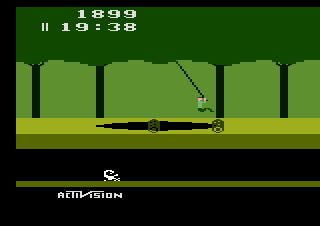
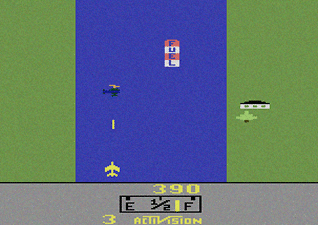
Pitfall! (1982) - 64 consecutive weeks at #1 on Billboard’s video game chartRiver Raid (1982) - Carol Shaw’s infinite procedural shooter, banned in West Germany for 18 years
The Patch Program (c. 1981–1984)
One of Activision’s most innovative ideas was the Activision Patch Program -
a player reward initiative that predated every modern achievement and reward system by two decades.
Players who reached a qualifying score photographed their TV screen, mailed the photo to Activision’s
California headquarters, and received a custom embroidered sew-on patch and a personalised
congratulatory letter.
The program ran across 33 qualifying games and 43 patches, spanning the Atari 2600,
Atari 5200, ColecoVision, and Mattel Intellivision. Clubs had names: the Explorer’s Club
(Pitfall!), the River Raiders (River Raid), the Activision Bucket Brigade (Kaboom!).
The letters were often written in character - the Pitfall! patch letter was penned as Pitfall Harry himself.
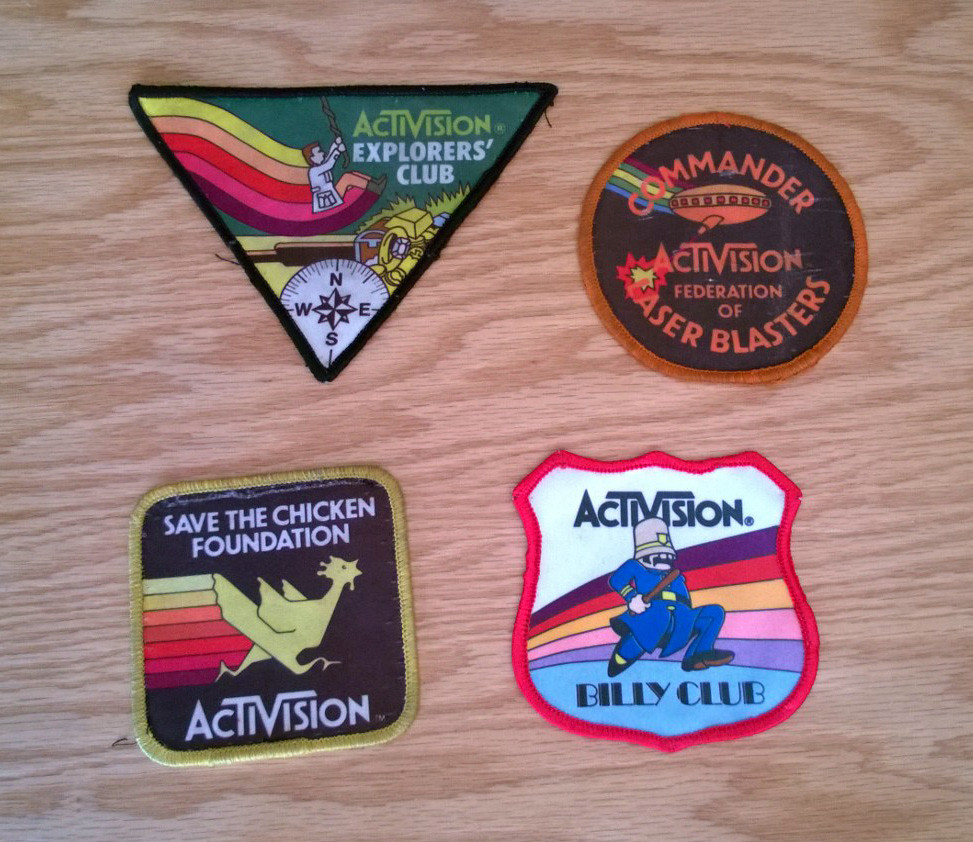
Four Activision high-score patches: Explorer’s Club (Pitfall!), Commander Federation of Laser Blasters, Save the Chicken Foundation (Freeway), Billy Club (Keystone Kapers).
The Crash and Beyond (1983–1986)
The video game market crash of 1983 hit Activision hard. Quarterly revenues collapsed from
$50 million in mid-1983 to approximately $6–7 million by end of 1984.
Staff shrank from approximately 400 to 95 employees. Bob Whitehead and Alan Miller departed in 1984,
eventually founding Accolade. Larry Kaplan had already returned to Atari.
Facing the crash, Activision diversified onto home computers - Commodore 64, Apple II, Atari 8-bit.
In June 1986, Activision acquired text-adventure pioneer Infocom.
Following internal conflicts, the board replaced Jim Levy with Bruce Davis. By 1988,
the struggling company renamed itself Mediagenic and pivoted toward business software.
The Activision name and the company’s future were only rescued in 1992 when
Robert Kotick’s BHK Corporation acquired Mediagenic, reclaimed the Activision name, and rebuilt
around titles such as Return to Zork (1994). The company that would eventually become one of
the largest game publishers in the world had its roots in four programmers walking out of Atari on a
summer day in 1979.