Eight Characters Who Changed Fighting Game Music
Shimomura's last Capcom work became one of the most recognisable game soundtracks in history.
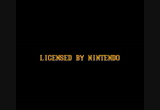
Street Fighter II: The World Warrior arrived on the SNES in June 1992 in Japan and July 1992 in North America. It was one of the most anticipated home console releases of the era - the arcade version had dominated coin-op venues since 1991, and players who had fed quarters into SF2 cabinets for a year wanted to play it at home. What they got was not just a port but a reimagining of the audio, and that reimagining is Shimomura's work.
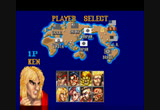
The game casts eight fighters from eight countries across a world tournament. Ryu from Japan. Ken from the United States. Chun-Li from China. Blanka from Brazil. Dhalsim from India. Guile from the United States. Zangief from Russia. E. Honda from Japan. Each fighter has a home stage that reflects their nationality, and each stage has a theme that is supposed to encode their personality, fighting style, and cultural origin into a one-to-two minute loop.
Shimomura composed the majority of the character themes for the SNES version. The arcade original used three composers - Shimomura, Isao Abe, and Syun Nishigaki - working on Capcom's CPS-1 hardware with a Yamaha YM2151 FM synthesiser. The SNES port required a different approach: the Sony SPC700 chip uses 8-channel ADPCM sample-based audio, producing a warmer, softer timbre than the arcade's hard FM synthesis. The SNES versions are not just conversions - they are new arrangements, and in many cases fans consider them the definitive renditions.
Eight Seconds to Hook You
Street Fighter II is a two-dimensional one-on-one fighting game using a six-button attack layout: three punches and three kicks at three speed levels each. Players select a fighter, fight through seven opponents in Arcade mode, then face the four Grand Masters - Balrog, Vega, Sagat, and M. Bison. Every fight takes place on the opponent's home stage, meaning the music plays for as long as the round lasts and then loops.
The gameplay constraint shapes everything about the music. A theme that draws attention to its own structure or builds toward a climax that never arrives becomes actively irritating when heard 30, 40, 50 times across a single session. Shimomura's solutions are compositionally rigorous: every theme has a clear melodic hook in the first four bars, a rhythmic pulse that drives combat without competing with button-reading, and a loop point disguised well enough that the repetition does not grate. These are extremely difficult things to do simultaneously, particularly when the theme also has to encode a specific national character.
Ryu's Theme opens in a minor pentatonic mode signalling East Asian musical tradition before transitioning to a driving rock rhythm. The combination codes Ryu as rooted in Japanese martial tradition but energised by something universal. Chun-Li's Theme is the most harmonically sophisticated - a Chinese-inflected pentatonic melody developing into something more dramatic. It carries both the elegance of her fighting style and the grief driving her (she is hunting her father's killer). Blanka's Theme is percussion-heavy, rooted in Latin rhythmic patterns, immediately exotic and primal. Guile's Theme stands apart from all of them.
See the Music page for a full compositional analysis of the character themes. The key choice in Guile's theme is the minor key - unusual for an American military hero, and responsible for the theme's distinctive undertone of suppressed grief that has made it so enduringly usable in contexts far beyond the game.
The Chip Nintendo Wouldn't Sell to Capcom
The arcade CPS-1 board used the Yamaha YM2151 OPL FM synthesiser alongside an OKI MSM6295 ADPCM sampler - hardware that produced the hard, percussive, slightly metallic sound of early-1990s arcade cabinets. When Capcom ported SF2 to SNES, they had to build the score from scratch on the Sony SPC700, a chip with eight voices of 16-bit ADPCM audio that excelled at rich sampled textures and complex chord voicings but could not replicate the FM synthesis timbre.
The SNES version uses sampled instruments - real piano, sampled guitar, drum kits constructed from individual hits - rather than FM oscillators. This gives the SNES character themes a warmth and presence the arcade version lacks, at the cost of the sharper attack transients that FM synthesis produces. Shimomura's compositions are musically identical in structure; the timbral difference is entirely a function of the hardware. The debate over which is superior continues in fighting game music communities.
The game sold approximately 6.3 million copies on SNES, making it one of the platform's best-selling titles and the best-selling third-party SNES game at the time. For Shimomura, it was the work that established her name - even if her name did not appear prominently in Western marketing materials. The credit went to "Capcom" as a company. It took the game music community decades of research to document precisely which character themes each of the three SF2 composers wrote.
“Each character in Street Fighter II is a person with a history, a country, a reason for fighting. I tried to compose each theme as if I were writing a portrait of that person in music - not just their fighting style, but their inner life.”
Yoko Shimomura, Drammatica: The Very Best of Yoko Shimomura liner notes, 2007
Critics Missed the Music, but Players Didn't
Period reviews of Street Fighter II SNES concentrated on the accuracy of the port: did the SNES version faithfully reproduce the arcade's visuals, controls, and character roster? The consensus was yes - EGM and Nintendo Power both praised the home conversion as among the most faithful yet achieved for an arcade fighter. Music received positive notes but limited analysis. Game journalism of 1992 did not yet have the vocabulary or page space for compositional critique.
What period reviews could not have captured was the long-term recognition. The SF2 SNES character themes became the canonical versions for millions of players who first heard Shimomura's compositions in their living rooms, not in arcades. When subsequent SF releases and crossover games remixed the classic themes, they overwhelmingly remixed the SNES versions rather than the CPS-1 originals.
What Capcom Built On This
Street Fighter II's SNES soundtrack influenced every fighting game score that followed it. The approach of using music to encode nationality and personality - of giving each character a sonic identity that maps onto their visual and narrative identity - has been replicated in fighting games ever since. Mortal Kombat, Tekken, SoulCalibur, and the entire Versus genre owe a structural debt to the model Shimomura established at Capcom.
In 2016, when Capcom released Street Fighter V, they invited Shimomura to compose the main theme - a full-circle moment 24 years after Street Fighter II. The choice acknowledged that no one had more claim to the series' musical identity than the composer who had defined it in 1992. Her other legacy is the meme, which is not nothing: Guile's Theme is one of the few pieces of game music that has crossed into mainstream internet culture and become known to people who have never played Street Fighter.
Street Fighter II: The World Warrior (SNES, 1992): Complete Original Soundtrack. Composers: Yoko Shimomura, Isao Abe, Syun Nishigaki.
Eight Worlds, One Composer, Zero Compromises
Japan-only for 28 years, Live A Live is Shimomura's most formally ambitious SNES work.
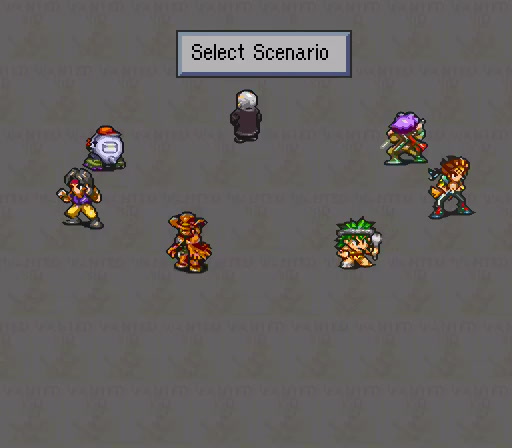
Live A Live (released in Japan on September 2, 1994) is an anthology RPG that follows eight separate protagonists across eight distinct historical and science-fiction settings: Prehistoric times, Imperial China, the Wild West, Present Day Japan, the Near Future, the Distant Future, Medieval Japan, and a final chapter that draws all timelines together. Each chapter is a complete short game with its own gameplay style, visual aesthetic, and musical vocabulary.
Shimomura is the sole composer across all eight chapters. That she managed to write convincingly in eight distinct national and historical musical idioms while maintaining compositional coherence across the whole is the most impressive single achievement of her SNES career. This is not a matter of picking a different instrument set per chapter - each chapter requires an entirely different harmonic language, rhythmic approach, and orchestration strategy.
An Anthology of Anthologies
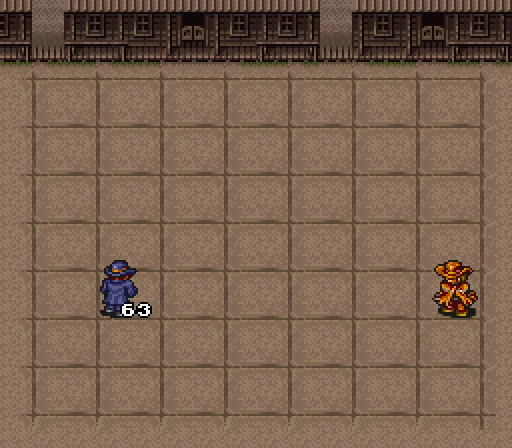
Live A Live plays differently in each chapter, which is itself unprecedented for a 1994 SNES RPG. The Prehistoric chapter has no text - every interaction is communicated through action and sound. The Wild West chapter is structured around a timed showdown. The Present Day chapter follows a martial artist training students. The Near Future chapter is a survival horror scenario set on a spacecraft where crew members are murdered one by one.
Each chapter's gameplay identity directly shapes its music. The Prehistoric chapter uses tribal percussion, wordless vocalisation (rendered in SNES sample audio), and rhythmic repetition that creates a sense of ritual and physical necessity. The Wild West chapter uses banjo-adjacent timbres, sparse harmonic textures, and long melodic phrases that suggest open space and loneliness. The Near Future spacecraft chapter is all ambient industrial tension - sustained pads, irregular rhythmic pulses, silence used as an instrument.
Eight Musical Languages on One SNES Chip
The technical achievement of Live A Live's soundtrack is composing convincingly in eight distinct musical traditions using the same SNES SPC700 hardware. The Distant Future's ambient industrial score uses sustained, slowly evolving textures that suggest empty space and mechanical systems. The Medieval Japan chapter's battle music uses Japanese-influenced melodic writing and ensemble textures quite different from the Prehistoric chapter's tribal percussion, even though both draw on Japanese musical heritage.
The centrepiece of the medieval chapter is "Megalomania" - the final boss battle theme that became a cult favourite among game music fans long before the game received a Western release. "Megalomania" is operatic in scope for SNES hardware: a full-throated melodic climax that builds from a slow introduction to maximum intensity. It became an early demonstration that the SNES SPC700, in Shimomura's hands, was capable of scoring genuine emotional crescendos.
Known in Japan, Hidden From the World
Live A Live received positive Japanese reviews on its September 1994 release. Famitsu covered it positively; the game sold respectably in Japan, though not at the level of Square's Final Fantasy or Dragon Quest titles. Its ambition was recognised, but it was an experimental release - not a flagship.
No Western publisher licensed the game. It remained Japan-only through the 1990s, 2000s, and 2010s. In 1998, a fan translation group called RPGe completed an English patch, making Live A Live accessible to English-speaking players for the first time. The fan translation spread through emulation communities and built the Western fanbase that would eventually persuade Square Enix to commission a proper HD-2D remake.
“With Live A Live, I had to become eight different composers. Each chapter needed its own musical world - the prehistoric rhythm, the Wild West frontier sound, the medieval Japanese intensity. I had to enter each historical world and find the music that belonged there.”
Yoko Shimomura, Square Enix developer interview for Live A Live HD-2D Remake, 2022
The Blueprint Everyone Who Missed It Later Copied
Live A Live's legacy is split between Japan and the West. In Japan, it has been a respected cult classic since its 1994 release - a title that game composers and developers cite as a formative example of music serving narrative. In the West, it was effectively unknown until the RPGe fan translation and then invisible to the mainstream until 2022.
The 2022 HD-2D Remake changed this permanently. Western critics who reviewed the game without prior knowledge of the 1994 original were consistently surprised by the compositional ambition of a game from 30 years earlier. The music received specific praise across English-language gaming publications in a way that was impossible in 1994. Shimomura's SNES compositions - now re-recorded with live players - were judged not as relics of 1994 hardware but as the original blueprints for something genuinely ambitious.
Where Two Musical Worlds Became One
Shimomura was handed Nintendo's most iconic franchise, then told to compose alongside the man who created its sound.
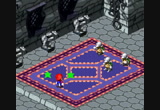
Super Mario RPG: Legend of the Seven Stars (SNES, March 1996 Japan; May 1996 North America) occupies a singular position in Shimomura's discography. It is the only Mario game developed by Square, a collaboration between two of the most commercially powerful names in Japanese gaming in the mid-1990s. For Shimomura, it was the first project where she had to compose not just for a new world but for a franchise with an established sonic identity - one whose sounds were synonymous with Koji Kondo, Nintendo's most celebrated in-house composer.
Kondo and Shimomura are both credited as composers on Super Mario RPG. The precise division of compositional duties has not been exhaustively documented in English-language primary sources, but community analysis and developer accounts suggest Shimomura composed the majority of new themes specific to the RPG's mechanics and story - the battle themes, overworld pieces, and the character-specific compositions - while Kondo contributed arrangements of established Mario franchise motifs and exercised overall music direction.
Chess at 16 Frames Per Second
Super Mario RPG is a turn-based RPG with a crucial addition: Action Commands. Every attack and every incoming hit can be modified by a timed button press. Land a jump precisely and it does more damage. Press the button at the right moment during an enemy's attack and you reduce the damage you take. This mechanic keeps the player active during battles that would otherwise be purely menu-driven, and it shapes the music's role profoundly.
Battle music in a fully menu-driven RPG can be slower, more atmospheric - the player has unlimited time to make decisions. Battle music in Super Mario RPG needs to support the Action Command timing: it must be rhythmically clear enough that a player can tap a button in response to something happening on screen. Shimomura's battle themes are energetic and precisely rhythmic - Forest Maze in particular has become one of the most celebrated pieces in the game precisely because it manages to be compositionally interesting while maintaining the rhythmic drive the Action Command system requires.
Two Composers, One Nintendo Franchise
The technical achievement of Super Mario RPG is not primarily musical - it is visual. Square used the SNES's Mode 7 and pre-rendered 3D graphics techniques to produce an isometric 3D-style game on hardware that could not natively run 3D. The game was released in March 1996, one month before the Nintendo 64, and represents the absolute technical ceiling of what Square could extract from the SNES.
The musical achievement is the collaboration. Shimomura composing for a Nintendo franchise while Kondo - the composer most associated with Nintendo's audio identity - contributed directly to the same score is an unusual situation with no clear precedent. The result is a soundtrack that sounds unified: the Shimomura-composed pieces feel native to the Mario universe without feeling like imitation Kondo, because Shimomura did not try to imitate Kondo. She scored the RPG elements as an RPG composer and left the Mario-specific material to Kondo's guidance.
“Composing for Super Mario RPG meant entering Koji Kondo's world. I had to make music that felt at home in the Mushroom Kingdom while bringing my own voice to the RPG elements. Working alongside someone like Kondo was both inspiring and challenging in equal measure.”
Yoko Shimomura, Nintendo developer feature, Super Mario RPG remaster, 2023
A Slow Burn to Classic Status
Super Mario RPG received critical acclaim on both its Japanese and North American releases. Nintendo Power gave it extensive, enthusiastic coverage; EGM reviewers scored it highly and praised the score as exceptional. For the period, it was considered one of the finest RPGs available on SNES and one of the strongest titles of the platform's final year.
What reviewers could not anticipate was the game's specific afterlife. Super Mario RPG's score - particularly Forest Maze and the Star Road themes - entered the JRPG musical canon and has remained there. When Nintendo released the 2023 remaster for Nintendo Switch, the original music (updated for modern playback but structurally unchanged) received praise from critics who had grown up with the SNES original and from younger players encountering it for the first time.
The Franchise It Launched
Super Mario RPG did not spawn sequels in the conventional sense, but it launched the Mario RPG genre. Paper Mario (2000) and the Mario & Luigi series, which began in 2003, are both direct descendants of Super Mario RPG's design philosophy: turn-based combat in the Mario universe with action-command refinements. Shimomura composed the entire Mario & Luigi series as a freelance composer, a direct continuation of the Super Mario RPG work.
The 2023 Nintendo Switch remaster proved that the game's reputation was not merely nostalgic. Critical reception for the remaster matched or exceeded the original, with Shimomura's score singled out in reviews as a highlight of the remaster's production. See also: Super Mario RPG in the Catalogue · Super Mario RPG soundtrack video
Dearly Beloved and What Came After
Shimomura's international breakthrough arrived in a package nobody expected: a Square action RPG built inside Disney worlds.
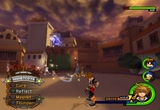
Kingdom Hearts (PlayStation 2, March 2002 Japan; September 2002 North America) was, on paper, an absurd premise: a Square action RPG built around Disney properties, starring a teenage protagonist named Sora alongside Donald Duck and Goofy, directed by Tetsuya Nomura. It could have been a licensed product cynically executed. Instead, it became one of the most beloved action RPGs of the PlayStation 2 era, and its score by Shimomura became one of the most discussed video game soundtracks of the 2000s.
Shimomura had left Square the same year Kingdom Hearts launched, transitioning to freelance work. Kingdom Hearts was her final Square project and her most commercially successful to date by a significant margin. The series has continued for over two decades, with Shimomura composing across nearly every entry - but the original game and its score are where her international profile was established.
The First Note Does All the Work
Kingdom Hearts is a real-time action RPG. Sora attacks, blocks, and casts magic in direct response to player inputs; the combat is immediate, physical, and faster than conventional turn-based JRPG battles. Boss fights require both strategic planning (which party members, which skills, which items) and physical execution (dodging, guarding, targeting). The score has to support both the quiet exploration of Disney worlds and the high-stakes boss encounters against Organisation XIII and Heartless commanders.
The game begins not with action but with "Dearly Beloved" - a solo piano piece that plays over the title screen and serves as the emotional key to everything that follows. Before Sora appears, before Donald or Goofy or any Disney character, "Dearly Beloved" establishes the emotional register of the game: intimate, yearning, aware of loss. It is one of the most effective opening statements in the history of game music, and it was the result of a deliberate compositional decision.
Writing for Worlds That Already Had Sound
The technical challenge of Kingdom Hearts is composing for a game that contains Disney worlds. Agrabah is Aladdin's world; Traverse Town is Square's invented world; the End of the World is the game's original final location. Agrabah already has a sonic identity from the 1992 animated film - audiences have expectations. Shimomura had to produce music that felt native to each Disney world, complemented the Disney aesthetic, and still sounded coherently like her - not like someone imitating a film score.
Her solution was to use the Disney worlds' visual aesthetics as compositional prompts while not attempting to recreate the original Alan Menken or Howard Ashman compositions. Agrabah's music evokes desert heat and Arabian nights through instrumentation rather than quoting the film. Atlantica is underwater and dreamlike in its harmonic language. The original Square locations have a heavier, more chromatic musical vocabulary that signals narrative danger and emotional weight distinct from the lighter Disney material.
“Dearly Beloved was the most important piece I wrote for Kingdom Hearts. I wanted the player to feel something profound the moment they started the game - before they had seen anything, before they knew the story. Music can do that if you let it lead.”
Yoko Shimomura, GDC 2013 talk: The Music of Kingdom Hearts
A Game Nobody Expected, a Score Nobody Forgot
Kingdom Hearts received strong reviews on both its Japanese and North American releases. Critics praised the combat system, the ambition of the Disney collaboration, and the score as a standout production element. The game reached an audience that had never followed Shimomura's Capcom or Square work - players who knew Disney and who were encountering her compositions without prior context.
Those players bought the game, finished it, and remembered the music. Kingdom Hearts became a franchise precisely because its audience was emotionally invested in a way that commercially successful sequels can exploit. Shimomura's score was central to that investment. The title screen piano piece, the world exploration themes, the boss battle orchestrations - they created the emotional framework that the story populated.
Still Unmatched as a Series Score
Kingdom Hearts as a franchise is now over twenty years old. Shimomura has composed every major entry, each time returning to "Dearly Beloved" and each time evolving it slightly while anchoring it to the series' established emotional voice. The accumulation of themes across fifteen-plus entries has created one of the largest and most internally coherent score libraries in franchise gaming history.
The original 2002 game remains the starting point. Everything the franchise became - musically, emotionally, commercially - is latent in that title screen piano piece and the score that follows it. Shimomura's work on Kingdom Hearts is not just her international breakthrough; it is the piece of work through which most of the world came to understand what she was capable of doing.
See also: Kingdom Hearts in the Catalogue · Kingdom Hearts Dearly Beloved video · Tetsuya Nomura - director context
Kingdom Hearts (PlayStation 2, 2002): "Dearly Beloved," the title screen theme. Composed by Yoko Shimomura.