Interviews & Quotes
Words from the creators who built the Wing Commander universe - designers, composers, and writers speaking about their craft and their legacy.
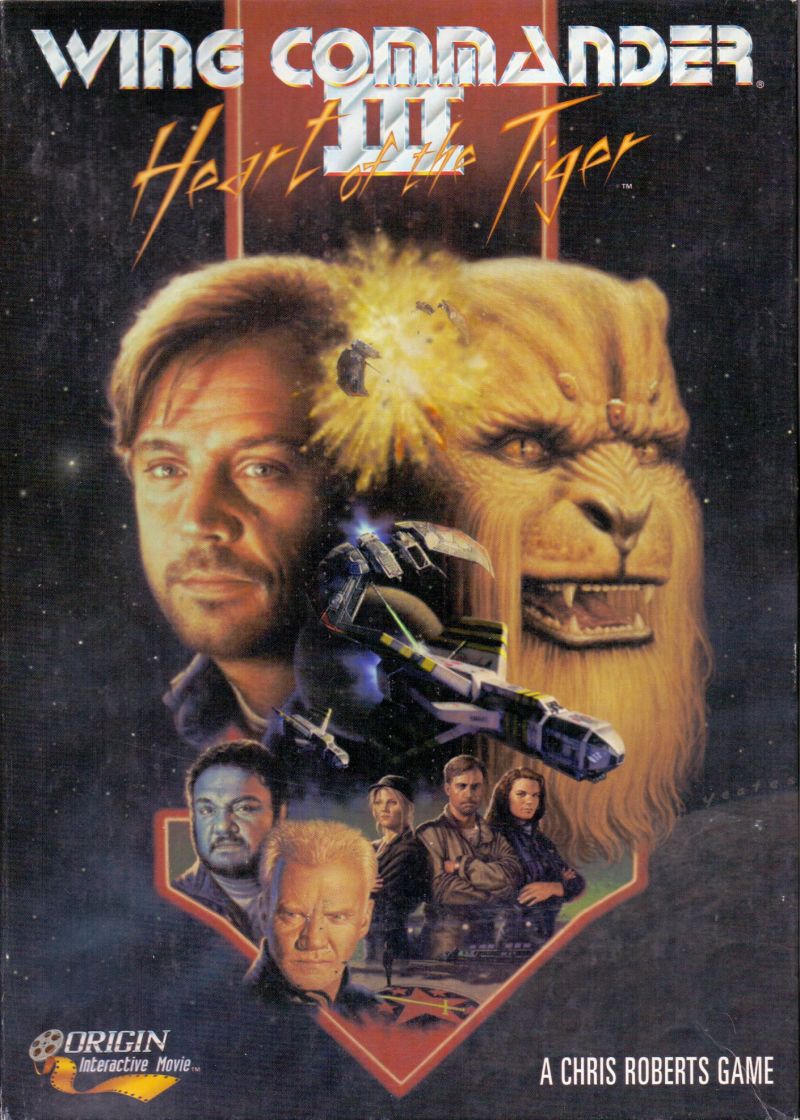
Chris Roberts - On Wing Commander's Design Philosophy
Source: Wing Commander CIC / various conference interviews
Roberts has spoken extensively about designing Wing Commander as a "Star Wars simulator" - a space combat game that felt like participating in a space opera movie. He wanted players to feel they were Wing Commanders, not just controlling a ship. The branching mission tree was designed so players felt their decisions had consequences, even when the overall story arc was predetermined.
“I wanted to create the feeling of being Luke Skywalker in a dogfight. Not just flying a ship, but being a pilot in a war that mattered.”
— Chris Roberts, Wing Commander CIC interview
“The mission tree was our way of giving players agency without the impossible cost of fully branching narratives. Lose too many missions and you’d find yourself on a losing path — but you’d still be there, fighting.”
— Chris Roberts
Roberts has spoken extensively about designing Wing Commander as a "Star Wars simulator" - a space combat game that felt like participating in a space opera movie. He wanted players to feel they were Wing Commanders, not just controlling a ship. The branching mission tree was designed so players felt their decisions had consequences, even when the overall story arc was predetermined.
“I wanted to create the feeling of being Luke Skywalker in a dogfight. Not just flying a ship, but being a pilot in a war that mattered.”
— Chris Roberts, Wing Commander CIC interview
“The mission tree was our way of giving players agency without the impossible cost of fully branching narratives. Lose too many missions and you’d find yourself on a losing path — but you’d still be there, fighting.”
— Chris Roberts
Chris Roberts - On Wing Commander III's Hollywood Production
Source: Various interviews and GDC talksWhen Roberts conceived Wing Commander III, he wanted to use Hollywood talent to achieve a level of cinematic realism no PC game had attempted. He cast Mark Hamill as Christopher Blair after seeing Hamill’s range beyond Luke Skywalker. The production was filmed in Austin on purpose-built sets, blurring the line between game and film in a way that had never been done before.
“Mark Hamill brought genuine emotional depth to Blair. He wasn’t just acting for a game — he was performing as if it were a feature film. That commitment elevated every scene.”
— Chris Roberts on the Wing Commander III production
“Malcolm McDowell understood Tolwyn completely. He made the Admiral feel like a genuine antagonist — morally complex rather than simply evil.”
— Chris Roberts
George Oldziey - On Composing for Wing Commander III
Source: Wing Commander CIC fan site interviews; VGMPF documentationOldziey joined Origin Systems specifically to compose for Wing Commander III. His brief was to create music that could adapt dynamically to combat — rising and falling with the intensity of each dogfight. He designed an adaptive music system that transitioned smoothly between themes. The orchestral album he later recorded represents his love for the music he created during this period.
“The challenge with adaptive music is that it can’t be static. When you’re in the cockpit and the music swells as a Kilrathi fighter locks onto you — that moment has to feel earned.”
— George Oldziey, Wing Commander CIC interview
“I composed the Wing Commander III score knowing it would be heard through PC speakers and Sound Blasters. When I recorded it with a full orchestra years later, I finally heard what I’d always imagined it should sound like.”
— George Oldziey
Origin Systems - On “We Create Worlds”
Source: Origin Systems corporate materials; various interviewsThe Origin Systems tagline “We Create Worlds” was not merely a marketing slogan — it reflected the studio’s genuine philosophy. Origin built detailed, internally consistent universes that existed beyond the boundaries of individual games. Wing Commander had its own military history, ship designs, alien culture, and political structure that Richard Garriott, Chris Roberts, and the team developed with care.
“We Create Worlds was our promise to players. Every Origin game was meant to transport you somewhere real, somewhere that felt like it existed before the game started and would continue after you stopped playing.”
— Richard Garriott, Origin Systems founder
“The Kilrathi weren’t just enemies. They had their own culture, their own honour system, their own politics. That’s what made Wing Commander feel like a war rather than a shooting gallery.”
— Ellen Guon Beeman, Wing Commander writer
Wing Commander Film (1999) - A Different Kind of Adaptation
Source: Wikipedia; various reviewsChris Roberts directed a live-action Wing Commander film released in 1999, based on the game series. The film starred Freddie Prinze Jr. as Blair and Matthew Lillard as Maniac. Critical reception was generally negative, and the film was a box-office disappointment. Roberts has acknowledged that balancing the film’s production with other projects was challenging.
Despite the film’s failure, it remains a notable moment as one of the few direct game-to-film adaptations made by the game’s original creator. The production attempted to bring the Wing Commander universe to mainstream audiences, and its design choices — particularly the visual aesthetic of the Kilrathi — diverged significantly from the games, which contributed to mixed reception from the existing fan base.
For more on the actors who shaped Wing Commander’s characters, including Hamill and McDowell in the games, see the developer interview blocks above. For video documentation of the game series itself, visit the Video Archive.