The Music of Sunsoft
Naoki Kodaka's NES soundtracks — Batman, Journey to Silius, Blaster Master — are among the finest chiptune compositions ever produced. Here's what made them technically and artistically exceptional.
Listen In-Browser — NSF Player
Kodaka’s NES soundtracks via Game_Music_Emu WASM — NES 2A03 chip emulation direct in the browser.
Loading NES audio engine…
NES 2A03 emulation via Game_Music_Emu WASM
Naoki Kodaka - Composer
Naoki Kodaka (小高直樹) served as Sunsoft's primary composer during the NES golden era, composing the soundtracks for all six of the studio's most celebrated titles between 1988 and 1991. His approach to the NES 2A03 sound chip combined classical compositional technique (counterpoint, formal structure, harmonic progression) with an instinct for melodic identity that made every game's score immediately recognisable.
The key elements of Kodaka's 2A03 technique are discussed in depth on the flagship Batman NES page. In summary: triangle-channel bass, two-voice pulse counterpoint, restrained noise channel percussion, and careful tempo-based dynamic variation within looped material.

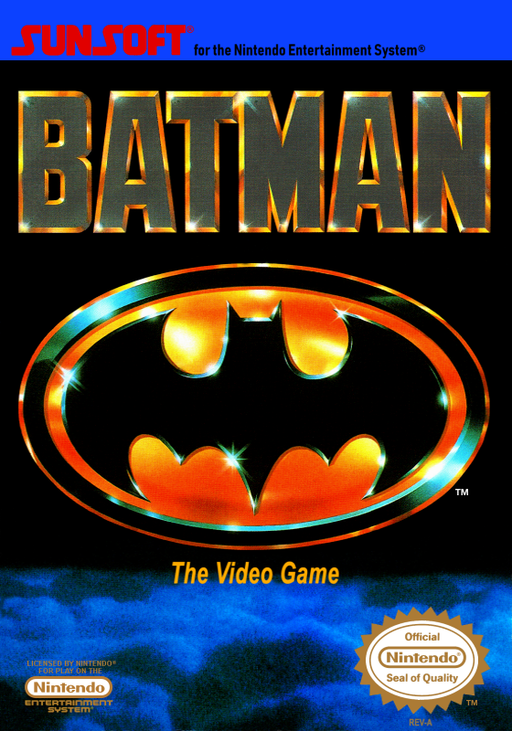
Batman: The Video Game - NES, 1989
The Batman NES soundtrack is Kodaka's most-cited work. Five stage themes of extraordinary character, each capturing a distinct aspect of Gotham City's environment. The score runs to approximately nine minutes of looped material but rewards repeated listening with layers of compositional detail not immediately apparent.
Batman: The Video Game - Complete Soundtrack
All stage themes, boss music, and ending. Composer: Naoki Kodaka. Total runtime: ~9 minutes.
Batman NES - Track Listing
- Title Theme (0:37) - Minor-key flourish establishing Gotham's nocturnal character
- Opening / Credit Roll (0:47)
- Demo (0:23)
- Stage 1 / Stage 5 Theme (1:08) - Shared between Gotham Streets and Gotham Cathedral
- Stage 2 Theme (1:00) - Axis Chemical Plant; menacing and industrial
- Stage 3 Theme (1:03) - Gotham Sewers; underground dread
- Stage 4 Theme (2:02) - Mysterious Laboratory; longest and most complex
- Boss Theme (1:10)
- Ending Theme (0:40)
- Death Jingle (0:03)
- Game Over (0:39)
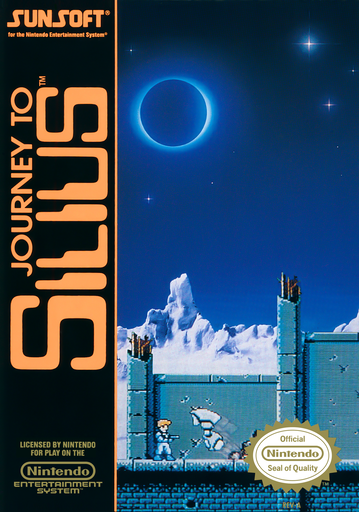
Journey to Silius - NES, 1990
Many in the retro gaming community argue Journey to Silius (1990) is Kodaka's finest NES score. Originally composed as a Terminator 2 tie-in soundtrack, the music brings a hard-rock energy and rhythmic intensity unusual for NES hardware. The stage themes feel driven, propulsive — as if designed to accompany a pursuit sequence, which of course they were.
The fact that the music works perfectly with a completely different narrative (the Silius story, replacing the T2 context) is a testament to its quality as pure instrumental composition. Great music transcends its original context.
Journey to Silius - Complete Soundtrack
Kodaka's hard-rock NES score - originally composed for a Terminator 2 game, released with a re-skinned story.
Blaster Master - NES, 1988
Blaster Master was Kodaka's first major NES assignment (alongside co-composer Nobuyuki Hara) and already demonstrated the qualities that would define his later work: area-specific themes with distinct character, sophisticated use of the triangle channel, and melodic ideas that lodge in memory after a single hearing. The Area 1 theme is frequently cited as one of the finest NES opening themes.
Blaster Master - Complete Soundtrack
Composed by Naoki Kodaka and Nobuyuki Hara. The Area 1 theme remains one of the most celebrated NES opening pieces.
The 2A03 Sound Chip
The Ricoh 2A03 (RP2A03) is the NES's combined CPU and audio processing unit. Its five audio channels define the sonic palette available to all NES composers:
- Pulse 1 & Pulse 2 (Square waves): Two square-wave channels, each with adjustable duty cycle and pitch. Used for melodic lines and counterpoint. Kodaka typically assigns the primary melody to Pulse 1 and a counter-melody to Pulse 2.
- Triangle: A triangle wave channel with fixed volume (no amplitude control). Kodaka consistently assigns this to the bass register - a deeply resonant walking bass that anchors the harmony.
- Noise: A pseudo-random noise channel used for percussion and sound effects. Kodaka's Batman score uses this with unusual restraint, keeping percussion subtle to preserve melodic clarity.
- DMC (Delta Modulation Channel): A low-fidelity sampled audio channel. Typically used for drums and voice samples; Kodaka rarely relies on this for the melodic material in his Sunsoft scores.