Why Streets of Rage 2 Is Still the Benchmark
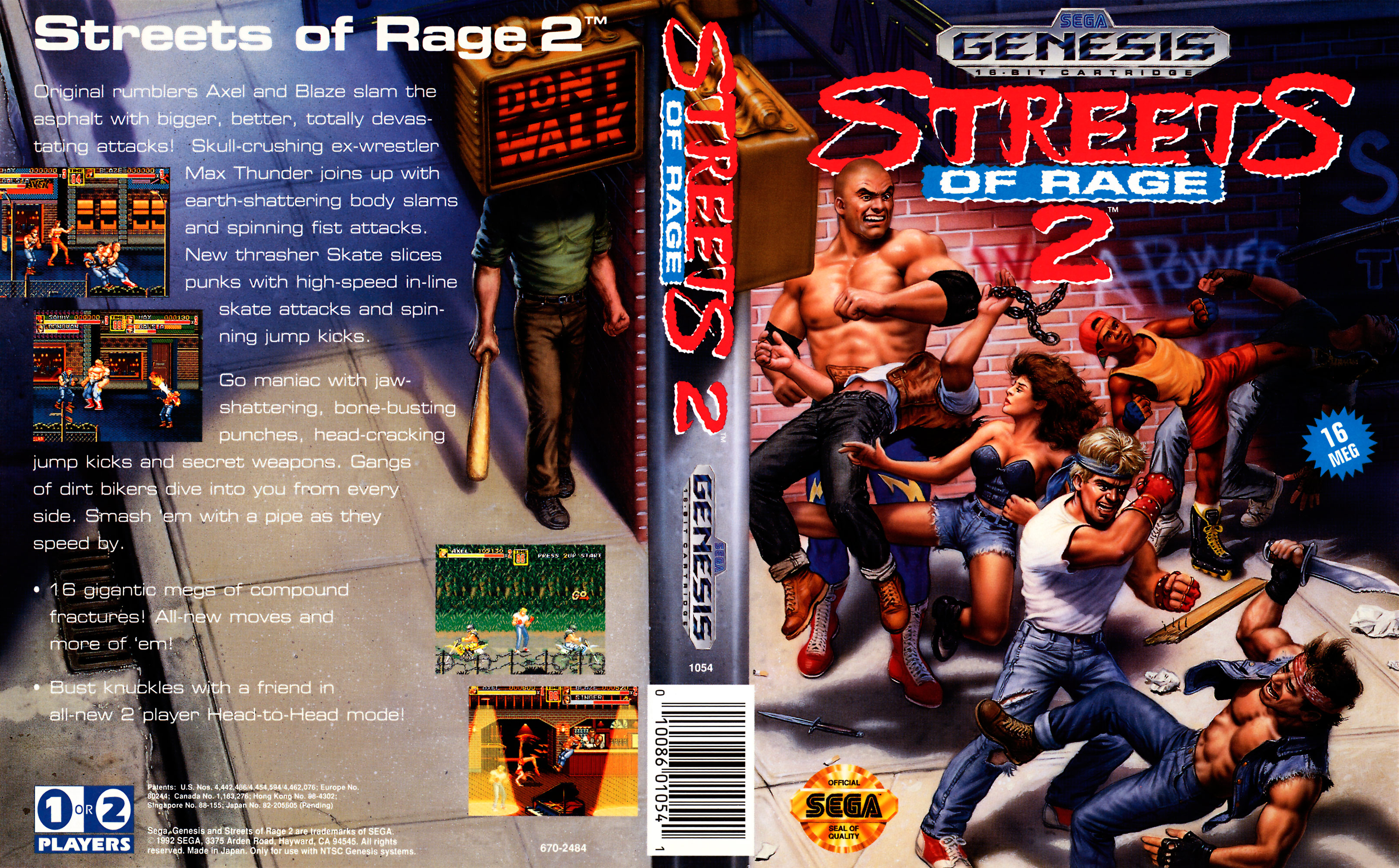
Streets of Rage 2 arrived in December 1992 in Japan and early 1993 in the West, and immediately hit a ceiling no other beat 'em up had reached. Ancient Inc. took Sega AM7's solid first instalment and rebuilt everything: four characters instead of three, eight stages with distinct visual identities, and a soundtrack so far ahead of its context that critics ran out of adequate words for it. Thirty years later, nothing has definitively replaced it in the genre.
The four-character roster gave genuine mechanical choice. The eight stages each carried a distinct atmosphere and visual language. Yuzo Koshiro's soundtrack was, simply, the finest music written for FM synthesis hardware. That combination - tight controls, ambitious design, extraordinary music - made critics reach for game-of-the-year language from the first review.
Ancient Built It From Scratch in Fourteen Months
Streets of Rage 1 was a Sega internal project, developed by the AM7 team. For the sequel, Sega handed the franchise to Ancient Inc., the company that Yuzo Koshiro and his sister Ayano Koshiro had co-founded in 1990. Ancient had already earned a reputation for technical precision: their work on ActRaiser, Revenge of Shinobi, and Ys I & II had demonstrated they could lead major projects. SoR2 was their chance to own an entire franchise instalment.
The team expanded the three-character roster to four, adding Max Thunder - a professional wrestler whose power-trading design forced players to make a real choice about speed versus damage. Ayano Koshiro oversaw game design, ensuring the difficulty curve rewarded mastery without punishing first-time players through the early stages. The expanded enemy roster - eight distinct enemy archetypes across the eight stages - gave the game a complexity that the original could not match.
On the music side, Yuzo Koshiro had written his own sequencer software in C on an NEC PC-88, which gave him granular access to the Mega Drive's Yamaha YM2612 FM synthesis chip that no commercial music tool of the era could match. He was listening to Detroit techno and Chicago house records, and his goal was to translate that energy directly into the game - not to write "video game music" but to write music that could stand alongside what he was hearing in clubs.
"I wanted to make music that could stand alongside club tracks of the time. The Mega Drive's FM chip was capable of far more than people realised - you just needed to know how to program it." Yuzo Koshiro, Retro Gamer magazine interview
Four Fighters, One Corrupt City, No Easy Exits
The mechanical core is walk-and-brawl: scroll through each stage, reduce every enemy's health to zero to advance, reach the boss. That description makes it sound simple. The execution is not. Streets of Rage 2 replaced the first game's police-car special attack - a single free screen-clear - with character-specific specials that consume a portion of the player's health bar. The trade-off matters: using a special to clear a difficult crowd might cost more health than simply taking the hits. Managing that decision is the game's central skill.
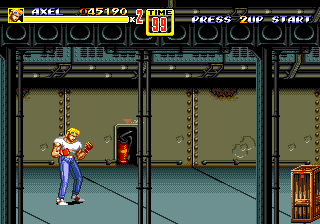
Axel Stone is the balanced fighter: his Grand Upper rising uppercut covers enormous range and launches enemies into a juggle state. Blaze Fielding is the speed character - faster attacks and precise hitboxes that reward players willing to learn her rhythm and punish windows. Max Thunder is the power option: his Spinning Pile Driver is the most damaging move in the game, but his slow movement means every crowd encounter is a positioning problem. Eddie "Skate" Hunter uses roller skates to compensate for his smaller frame with chain grabs and movement speed that enemies' AI struggles to track cleanly.
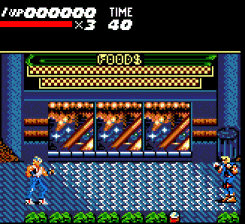
Two-player co-op transforms the game. Characters can combo off each other: one player launches an enemy, the second hits it airborne with a different move, and the first follows up for a three-hit juggle that neither player could execute alone. The game never explains this system. Players discover it by accident - and immediately want to repeat it. That discovery loop is one reason Streets of Rage 2 became a local multiplayer institution in a way that single-player-focused contemporaries did not.
The FM Chip Could Do This All Along
Koshiro's custom music driver did something specific that made the SoR2 soundtrack technically unprecedented for Mega Drive software: it gave him sub-millisecond timing control over individual FM oscillator parameters. Standard sequencing tools worked at a coarser resolution and could not achieve the complex polyrhythmic textures he was after. By writing the driver himself, he unlocked a layer of the YM2612 chip that most composers never accessed. This is audible in the complex layered textures of tracks like "Dreamer" and "Go Straight" - patterns that contemporaries on the same hardware could not replicate.
The visual achievements were equally deliberate. Sprite counts per screen exceeded the first game significantly, with detailed animation frames for each fighter and a wider range of enemy types on screen simultaneously. The jungle stage's parallax scrolling and the skyscraper's layered backgrounds showed what the Mega Drive's VDP could achieve with a team that understood the hardware at a low level. PCM samples for percussive hits and voice clips were mixed alongside FM synthesis channels, adding texture that pure FM synthesis could not provide.
"Streets of Rage 2 was the culmination of everything I'd learned about FM synthesis. I was listening to a lot of techno and house music at the time, and I wanted to bring that energy to the game." Yuzo Koshiro, Famitsu retrospective interview
Gameplay & Soundtrack
Streets of Rage 2 gameplay with Yuzo Koshiro's complete soundtrack - hear how the techno and house compositions integrate with the game's pacing across all eight stages.
Eight Stages, Eight Distinct Worlds
A Soundtrack That Was Already Playing in Clubs
Koshiro absorbed the energy of late-1980s and early-1990s Detroit techno, Chicago house, and UK rave music and translated it into FM synthesis with precision that no commercially available tool could have achieved. The result did not sound like a "video game soundtrack" by the standards of 1992. "Go Straight" sounded like something from a record shop. "Never Return Alive" sounded like a club track. That was entirely intentional.
Selected Tracks
-
01
Go Straight
Stage 1 - The game's signature track. A breakbeat-influenced groove that announced SoR2's sonic ambitions from the opening moment. Remixed and DJ'd more than any other track in the series.
-
02
Dreamer
Stage 2 - Atmospheric and melodic, one of Koshiro's most emotionally precise FM synthesis compositions. The contrast with the urban night setting is deliberate.
-
03
Jungle Base
Stage 3 - Propulsive tribal percussion over an acid bassline. The track that most directly shows how Koshiro absorbed rave music from Chicago and Detroit into Mega Drive hardware.
-
06
Never Return Alive
Stage 5 - Pure techno. No melody, just relentless rhythm - a perfect match for the warehouse stage's industrial brutality and escalating difficulty.
-
11
The Last Soul (Boss Theme)
The menacing boss battle track. A dark, grinding composition that signals each escalation in Mr. X's forces throughout the campaign.
Streets of Rage 2 - Complete Original Soundtrack by Yuzo Koshiro and Motohiro Kawashima. See the People page for full composer profiles.
Critics Ran Out of Superlatives in 1993
The reviews were unanimous. Mean Machines Sega awarded 96% and placed it at the top of its annual charts. Mega magazine scored 92% and singled out the soundtrack as the finest music on the Mega Drive. Electronic Gaming Monthly gave it scores in the low-to-mid 90s. Multiple publications ran it at Game of the Year 1992 or 1993 depending on Western release timing. What stood out across all the coverage was that reviewers wrote about the music separately - as something worth commenting on outside of any game context.
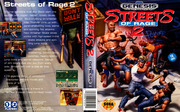
Commercially, the game sold over 800,000 copies in Japan and matched the original's Western success. For a title that was broadly considered the best Mega Drive release of its year, it reached the audience it warranted. The commercial result secured Ancient's position as an independent studio capable of leading - not just contributing to - major franchise entries.
Thirty Years Is Not Enough to Replace It
The beat 'em up genre effectively froze after Streets of Rage 2. The formula it established - four distinct characters with mechanical trade-offs, co-op synergy, life-costing specials, eight varied stages - became the template that successors attempted to match and rarely did. Final Fight got sequels. Double Dragon continued. Neither produced a title that generated the same critical and cultural weight. Streets of Rage 2 sat at the top of the genre for close to three decades.
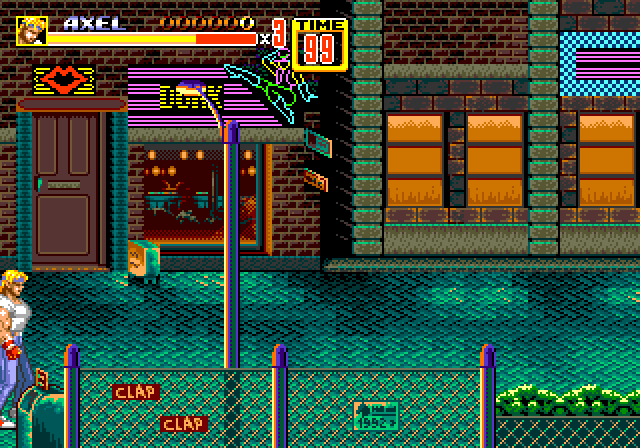
Streets of Rage 4 (2020), developed by DotEmu, Lizardcube, and Guard Crush, was the first entry in 26 years and the first to attempt a genuine sequel rather than a remaster. The developers brought Koshiro, Kawashima, and Keiji Yamagishi back alongside new composers. It sold over two million copies, proving the franchise's reach had not diminished. "Go Straight" has been remixed and sampled more than any other track in the series' history, appearing in DJ sets, retrospectives, and academic work on the crossover between game music and electronic dance culture.
For the deep dive on Yuzo Koshiro, Ayano Koshiro, and the other creators behind the series, see the People page. For the complete three-game catalogue with box art and platform details, see Games.