The Metroid Trilogy
Nintendo R&D1 · Yoshio Sakamoto · Hiroji Kiyotake · Gunpei Yokoi
Between 1986 and 1994, Nintendo R&D1 published three games under the Metroid name across three different platforms. Each one advanced a single connected argument: that exploration, atmosphere, and player agency could do what scripted storytelling could not. The trilogy gave the games industry a genre name, a template for non-linear world design, and an emotional climax that no player who followed the series from the beginning will have forgotten. These are the full stories of how those three games were made, what they asked of the people who played them, and what they left behind.
See also: full game catalogue · creator profiles · series history
Metroid (1986)
Directed by Yoshio Sakamoto & Hiroji Kiyotake · Supervised by Gunpei Yokoi · Score by Hirokazu Tanaka
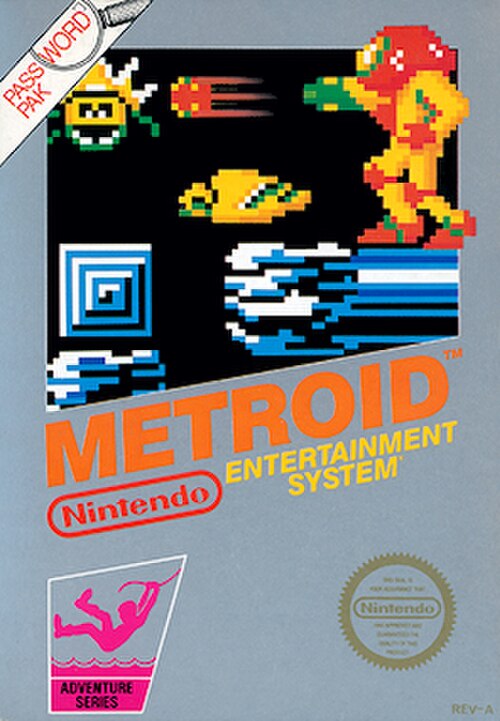
In 1986, Nintendo published a Famicom Disk System game that told players almost nothing. No map. No objective marker. No waypoints. Just Samus Aran, a Power Suit, and planet Zebes — a labyrinthine world of interconnected corridors whose sealed doors could only be opened by abilities the game had not yet given you. It was a challenge to the entire Nintendo design philosophy of that moment: this was not Super Mario Bros., where the direction was always right. This was a game that said: find your own way.
Metroid was produced at Nintendo R&D1 under the supervision of Gunpei Yokoi, the division’s director and the inventor of the Game & Watch. Yoshio Sakamoto and Hiroji Kiyotake, both junior designers at the time, were given the lead on a game concept unlike anything Nintendo had shipped before. The result introduced power-up-gated non-linear exploration to console gaming — a structure that would take its name from this very game and influence the industry for the next four decades.
Two Designers, One Planet, and a Touch of Alien
Sakamoto and Kiyotake drew their aesthetic from H.R. Giger’s work on the 1979 film Alien: organic architecture, biomechanical textures, corridors that felt like the inside of a living thing rather than a constructed environment. The choice was deliberate and documented — Zebes was meant to feel hostile in a way that Mario’s Mushroom Kingdom never could. The enemy designs, the darkness of the cavern environments, and the isolation of the protagonist all fed the same intention: this was a game about being alone in a genuinely dangerous place.
Gunpei Yokoi’s influence on the project was primarily structural. His division operated on the principle of “lateral thinking with withered technology” — finding applications for established hardware that had not been tried rather than chasing cutting-edge capability. The Famicom Disk System’s extra storage was used not for larger sprites or more colours but for a larger world map, enabling Zebes’s labyrinthine layout that would have been impossible on a standard NES cartridge of that era.
Hirokazu Tanaka, who later composed the score for Tetris and Mother, wrote the music using the Famicom’s five audio channels plus the Disk System’s wavetable channel. The result — sparse, arpeggiated, deliberately dissonant in places — reinforced the atmosphere of deep alien space in a way no prior Nintendo score had attempted. See the People page for profiles of the core creators.
We wanted the player to reach the best ending and discover that the bounty hunter they had guided through this dangerous alien world was a woman. In 1986, female protagonists in action games were essentially non-existent. That surprise was designed to change how players thought about the whole adventure they had just completed.
— Yoshio Sakamoto, GDC 2010 retrospective
Sealed Doors and the Promises They Made
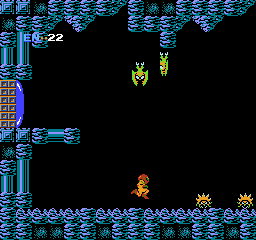
Metroid’s gameplay loop was unlike anything available on a Nintendo home console in 1986. Samus began with only her Power Beam and her Power Suit. Every door shutter that did not open to standard shots was a statement: you cannot go here yet. The Morph Ball, the Bombs, the Ice Beam, the Wave Beam, the High Jump Boots, the Space Jump — each acquisition expanded Samus’s movement options and unlocked portions of Zebes that had previously been inaccessible.
The game tracked progress through a 24-character password system rather than battery-backed save RAM, a design choice that became famous for enabling both creative memorisation (the JUSTIN BAILEY password among them) and the frustration of losing progress to transcription errors. Despite its limitations, the password system encoded Samus’s entire game state: health, missiles, energy tanks, and collected power-ups.
The game offered multiple endings based on completion time, a feature with no precedent in a Nintendo action game. Players who finished in under an hour saw Samus remove her helmet, revealing a woman — the reveal that Sakamoto described as the game’s most deliberate design choice.
Twenty-Four Characters That Remembered a Whole World
On the NES, battery-backed SRAM save files were the exception rather than the rule in 1986 — and the Famicom Disk System version of Metroid could save to disk directly. The North American NES cartridge, which had no disk drive equivalent, required the password system. Engineers compressed Samus’s entire game state — health level, missile count, energy tanks, power-ups collected, Kraid and Ridley defeated or not — into an alphanumeric string of 24 characters. That compression scheme was itself a technical achievement for an 8-bit cartridge.
The multi-ending structure tied to completion time was a design choice that required deliberate pacing in the game’s layout: a player who knew Zebes well enough to finish under an hour had mastered the power-up routing, the enemy patterns, and the boss weaknesses to a degree the game was designed to reward. Those multiple endings became a template for the series — every Metroid game that followed offered some form of time-based completion reward.
Slow Start, Long Memory
Metroid sold strongly in Japan and received coverage in Nintendo Power Vol. 1 (1988) that introduced many North American players to the series. Critical reception was positive, with reviewers noting the atmospheric exploration and non-linear structure as departures from the Nintendo standard. The game was not, however, an immediate cultural phenomenon in the West on the scale of Super Mario Bros. or The Legend of Zelda.
Its reputation built over time. Players who completed Metroid carried a specific kind of knowledge: they had memorised Zebes, developed a routing instinct that the game never explicitly taught, and experienced a narrative revelation — Samus’s identity — that stayed with them. That slow-burn quality, where the game rewards a second or third playthrough more than a first, became a defining characteristic of the series.
The Name on Every Exploration Game Since
When Koji Igarashi designed Castlevania: Symphony of the Night (1997) — a game built on power-up-gated exploration of an interconnected castle map — critics reached for a compound word to describe what it was doing: a “Metroidvania.” The portmanteau combined the two series that had most definitively established the genre. The Metroid half of that word traces directly to the 1986 Famicom game.
Titles like Hollow Knight (2017), Ori and the Blind Forest (2015), Axiom Verge (2015), and dozens of others operate on structural principles Sakamoto and Kiyotake established on eight-bit hardware. The genre they named has never stopped growing. The first Metroid is not the most technically impressive or the most emotionally affecting entry in its own trilogy — but it is the one that drew the map everyone else has been building on.
Continue to Super Metroid (1994) for the trilogy’s culmination, or see the full catalogue for all entries.
Metroid II: Return of Samus (1991)
Developed by Nintendo R&D1 · Score by Ryoji Yoshitomi
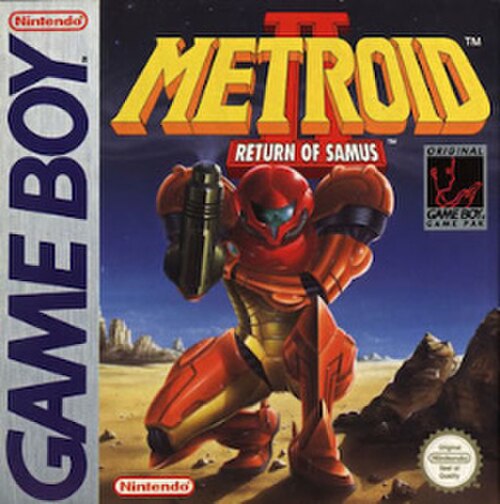
Five years after Zebes, Nintendo sent Samus somewhere worse. SR388 is the Metroids’ home planet, a cavern system of progressively deeper biological hostility, and the assignment is unambiguous: every Metroid form on the planet must be eliminated. Metroid II: Return of Samus is the only mainline Metroid game built entirely around a body count — an eradication mission that ends with the hatching of the last surviving Metroid egg, whose occupant imprints on Samus as its mother.
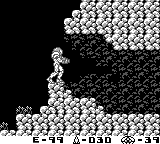
The game shipped in November 1991 exclusively for the Game Boy, placing one of Nintendo’s most atmospheric franchises on its most technically limited hardware. The monochrome 2.6-inch screen offered no backlight, a resolution of 160 by 144 pixels, and four-channel audio. Ryoji Yoshitomi composed a score that made those constraints feel like aesthetic choices rather than hardware limits — and the design team created a game that used its small screen to intensify rather than diminish Samus’s isolation.
Game Boy’s Darkest Assignment
The Game Boy was Gunpei Yokoi’s hardware. His “lateral thinking with withered technology” philosophy — the principle that established, inexpensive, reliable components used imaginatively could outperform technically superior hardware — was the design brief for the entire platform. A monochrome screen with good battery life and a durable plastic shell was worth more to a child on a long car journey than a colour display that needed replacing every two hours. The Game Boy sold 118 million units over its lifetime.
Assigning Metroid to the Game Boy was a calculated choice. The franchise’s reputation was for atmosphere, isolation, and precision exploration — qualities that a small portable screen could actually amplify if the level design was handled correctly. The team narrowed the visual field intentionally: SR388’s caverns were drawn to fill the Game Boy’s resolution, so the sense of enclosure that had come from Zebes’s corridor architecture was reproduced through sheer screen-edge proximity.
Ryoji Yoshitomi’s soundtrack worked within the Game Boy’s four audio channels to produce music that felt more claustrophobic than its NES predecessor. The compositions used sparse, repeating motifs that matched the monotony of SR388’s deep cave structure — a deliberate tonal choice that made the silence between tracks feel meaningful.
The value is not in the advanced technology. It is in finding what old, inexpensive, reliable technology can do that nobody has thought to try. That is what I call lateral thinking with withered technology.
— Gunpei Yokoi, cited in F. Gorges & I. Yamazaki, The History of Nintendo, Vol. 1 (2009)
Thirty-Nine Down, One to Go
Where the original Metroid left the player to discover their own objectives through exploration, Metroid II gave Samus a counter. A seismic readout in the corner of the screen displayed how many Metroids remained on SR388. Every Metroid killed reduced the count. The number going to zero was the win condition. It was the clearest objective the series had ever had — and it worked in opposition to the atmosphere the game was building.
SR388 is structured in descending rings, each unlocked as the Metroids in the ring above are eliminated. The natural acid pools that rise and fall across the map replace the door-shutter mechanic of the original — areas become accessible when the acid recedes, which happens automatically as Metroids are cleared. The result is a progression system that feels organic rather than gated.
The game introduced two new power-ups: the Spider Ball, allowing Samus in Morph Ball form to grip and traverse walls and ceilings, and the Spring Ball, enabling a jump while in Morph Ball mode. Both became permanent additions to the series’ power-up vocabulary and were carried forward into Super Metroid. The Metroid forms themselves evolved through a chain — Alpha, Gamma, Zeta, and Omega — with the Omega form towering over Samus in a way that made every encounter a different puzzle.
Four Channels and the Weight of a Mission
The Game Boy’s audio hardware gave composers two square-wave channels, one wave channel, and one noise channel. Yoshitomi used this palette to write a score that leaned into repetition and negative space in a way that the richer NES hardware had not demanded. The Area 1 theme, a cycling motif over a walking bass, set an uneasy pace that the game never broke from. The boss encounter music shifted register rather than intensity — a tonal drop that made encounters feel grim rather than exciting.
The Spider Ball represented the most mechanically significant Game Boy-exclusive design decision. To navigate ceilings and irregular rock surfaces in a way the small screen made legible, the team designed the Spider Ball grip to attach to any surface in Morph Ball mode. It expanded SR388’s three-dimensional traversal without requiring the visual real estate that a normal jumping animation would have consumed on the limited display.
The Necessary Middle Chapter
Contemporary reviews of Metroid II acknowledged its atmosphere and the expansion of the Metroid lore, while noting the game’s limitations relative to its predecessor. The monochrome screen and the portability constraint made direct comparison with the NES original awkward. Critics who engaged with the game on its own terms responded to the mission structure’s focused pressure and the increasingly tense encounters with higher Metroid forms.
The game sold well for a Game Boy title of its era, maintaining the series’ commercial standing between its two console-generation bookends. Its reputation was reappraised significantly after Super Metroid shipped and players returned to Metroid II to understand the origin of the baby Metroid that drove that game’s emotional climax.
The Setup That Made Super Metroid’s Ending Land
Metroid II’s place in the trilogy is defined by what it ends on. The baby Metroid imprints on Samus in the game’s closing minutes: a creature whose entire species she has just exterminated, the last one surviving only because it imprinted on her the moment it hatched and did not know to attack. That creature is taken by Ridley at the opening of Super Metroid. Its sacrifice at that game’s climax is the payoff of a narrative thread built across two games and five years.
Players who had completed Metroid II before Super Metroid understood the baby Metroid’s origins in a way that players encountering it for the first time could not. The emotional weight of the trilogy’s ending was designed to be cumulative — and Metroid II is the game that made accumulation possible. The People page has profiles of the key creators across all three games.
Super Metroid (1994)
Directed by Yoshio Sakamoto · Produced by Gunpei Yokoi · Composed by Kenji Yamamoto & Minako Hamano
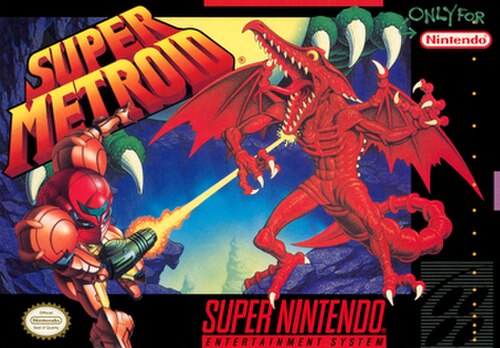
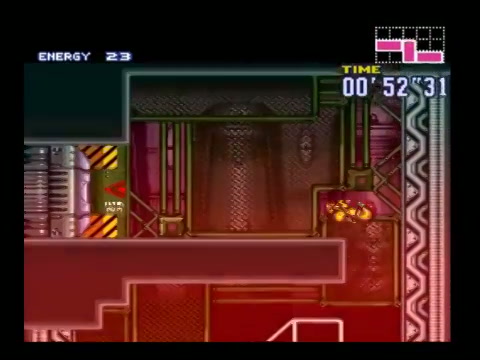
Super Metroid arrived in April 1994 on the Super Nintendo. Picking up directly where Metroid II ended — with the baby Metroid taken by Ridley to Zebes — it placed Samus back in the ruins of her original adventure, now expanded into a seamlessly interconnected world with an in-game map updated in real time. The SNES hardware allowed a visual and atmospheric richness impossible on either predecessor: rain on Zebes, acid pools rising and falling, the eerie silence of deep caverns, and the electric tension of boss encounters designed around reading movement and learning patterns.
Kenji Yamamoto and Minako Hamano’s score elevated every moment — from the ambient dread of Norfair’s lava corridors to the desperate percussion of Tourian’s endgame. The opening ten minutes on Ceres Space Colony established the game’s tone before the first real power-up had been collected: rain on the hull, the baby Metroid behind glass, Ridley arriving through the ceiling, the colony’s self-destruct countdown.
Everything the NES Promised, the SNES Delivered
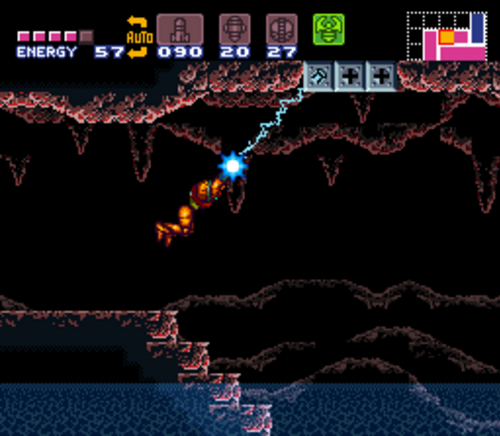
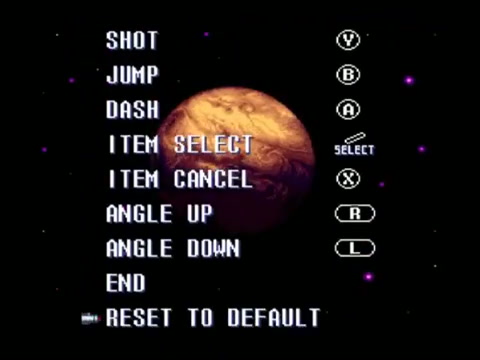
Yoshio Sakamoto and his team began Super Metroid with a clear mandate: to do everything the original had done, but at the scale and fidelity the SNES made possible. The world map — visible in-game and updated in real time — was added so players could track their exploration without graph paper. The Grapple Beam added new vertical traversal options. The X-Ray Scope revealed hidden passages. The control scheme was rebuilt from scratch to feel precise and responsive on the SNES controller.
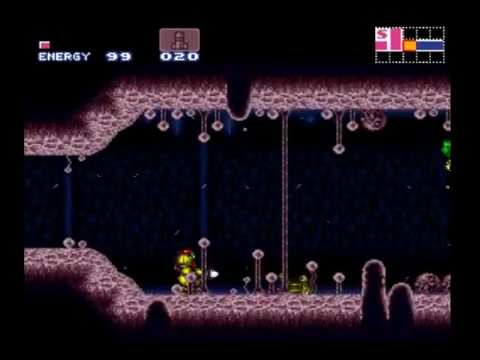
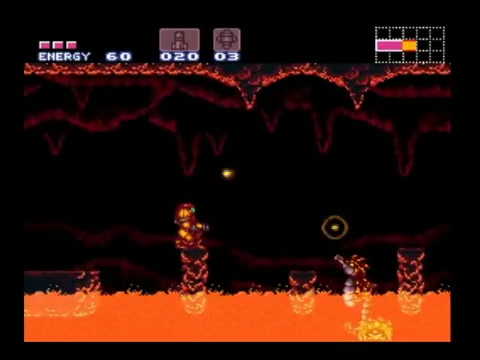
Zebes was redesigned as a multi-zone world: Crateria on the rain-swept surface, Brinstar with its organic plant-growth and two distinct biomes, Norfair descending into superheated lava corridors, Wrecked Ship (a derelict alien craft powered by a captured Phantoon), Maridia underwater, and finally Tourian, the Space Pirate stronghold rebuilt around Mother Brain. Every zone connected to every other. The Kraid shortcut through Crateria, the route from lower Norfair through to Brinstar, the underwater passage from Wrecked Ship to Maridia — Zebes was designed as a single space where new abilities opened routes the player had already passed through.
We put those little animals in the early part of Brinstar to show the player, through example, how to wall-jump. If you watch carefully, you can figure it out yourself - and that discovery feels much more rewarding than simply being told in a manual.
— Yoshio Sakamoto, Iwata Asks: Super Metroid (2010)
The World That Taught Without Telling
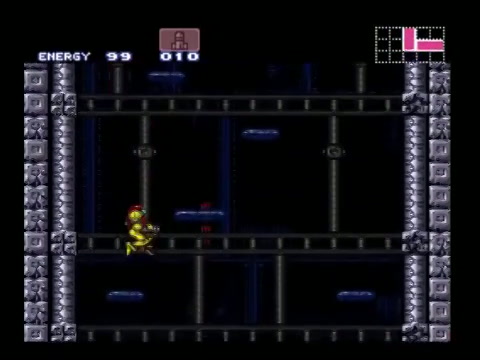
Super Metroid’s design philosophy was embedded in its opening hour. Samus emerged from the Ceres wreckage to a rain-drenched Zebes with only her initial Power Beam. The first rooms of Crateria contained no text prompts, no tutorial popups, no waypoints. The game communicated through the environment: a wall with a slightly different texture that Bomb-jumped into opened a passage; a pair of animals in Brinstar that bounced between walls demonstrated the wall-jump technique that no in-game text ever mentioned.
The actual gameplay loop was the same power-up-gated exploration Sakamoto had pioneered in 1986, now refined to a precision that felt like a different kind of game. The Speed Booster turned running into traversal: hold a straight corridor long enough and the Shinespark charged, which could then be used to bypass barriers or reach items placed specifically for players who had mastered it. The Grapple Beam let Samus swing across gaps in a motion that the SNES controller made tactile. The Morph Ball’s Bomb Jump let skilled players reach areas that the intended progression had locked behind other power-ups.
Zebes’s in-game map tracked every visited room and marked both collected and uncollected items — a system that became the template for every Metroidvania map that followed. Players who saw a room marked as having an uncollected item and could not retrieve it had a reason to come back. The map turned the entire planet into a to-do list that the game never made explicit.
The In-Game Map Was the Invention
Before Super Metroid, players exploring Metroid’s Zebes drew their own maps on graph paper. The series was among the earliest console games complex enough to make that necessary — and player-drawn maps were sold in Nintendo Power alongside strategy guides for other games. Super Metroid’s in-game map solved that problem while creating a new design tool: a map that revealed itself as rooms were visited, marked items as collected or uncollected, and showed the player exactly how much of Zebes remained unexplored.
The map room system — where dedicated rooms in each zone downloaded that zone’s map layout to Samus’s computer — incentivised exploration of entire zones before moving on. It was the first real-time automap in a console action-adventure game and set the standard for every Metroidvania that followed it. Games shipped in 2024 are still implementing Super Metroid’s map logic almost unchanged.
The SNES Mode 7 hardware, which the game used for the planet map screen in the intro sequence, was applied sparingly throughout. The visual richness of Zebes came instead from the SNES’s colour depth and parallax scrolling — eight background layers moving at different speeds gave Norfair’s lava zones the sense of depth that made them feel genuinely vast. The People page profiles Yamamoto and Hamano alongside the design team.
The Four Gates of Zebes
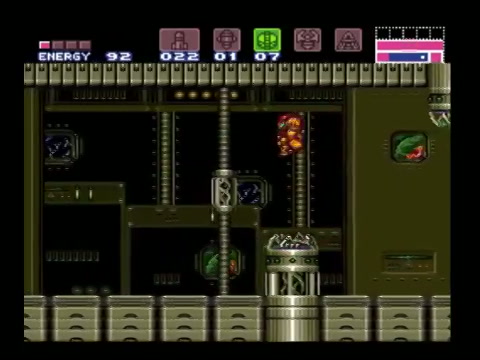
Super Metroid’s bosses were designed around pattern recognition. Each introduced a specific weakness, attack rhythm, or positional requirement that rewarded study over attrition. The four main bosses — Kraid, Phantoon, Draygon, and Ridley — acted as gates to major power-ups, while Tourian’s Metroids and Mother Brain provided the trilogy’s climax.
What the Critics Said in April 1994
Super Metroid’s Japanese release in March 1994 was followed immediately by its North American release in April. The game received a score of 37/40 from Famitsu, high for a console action title at the time. Nintendo Power gave it a 9.0, citing the atmosphere, the scale of Zebes, and the boss design. GameFan scored it 96/100. No major review publication gave it a poor score; the critical consensus at release was that Nintendo R&D1 had produced the series’ best work.
The commercial performance matched the critical reception. Super Metroid shipped 1.42 million copies globally — modest by Nintendo’s platform standard but strong for a single-player atmospheric action game without multiplayer or continuous content updates. The game’s reputation in the years immediately following release was that of a premium single-player experience in a market beginning to move toward faster and louder.
The Baby Metroid and the End of the Trilogy
The narrative thread connecting all three games resolves in Super Metroid’s final sequence. The baby Metroid — hatched at the end of Metroid II and imprinted on Samus as its mother — arrives at the climax of the Mother Brain battle as Samus lies dying under a lethal energy beam.
The baby Metroid drains Mother Brain of her power, then transfers the absorbed energy to Samus — restoring her and granting her the Hyper Beam — before being destroyed by Mother Brain’s final attack. The creature that Samus had raised, that had followed her through SR388, that she had chosen not to kill, sacrifices itself so she can live. Sakamoto designed this sequence specifically for players who had played Metroid II: players who knew the baby from its hatching would feel the loss in a way that players new to the series could not.
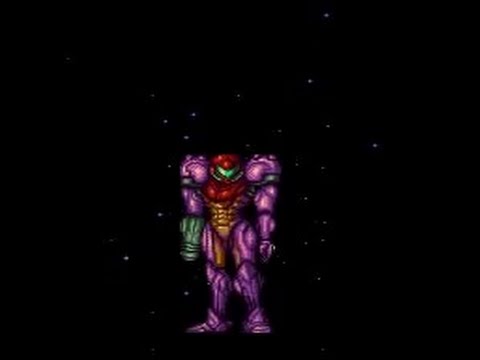
We designed the ending so that players who had followed the baby Metroid from Metroid II would feel the loss more deeply. The emotional payoff of the trilogy was meant to be earned across all three games, not just within Super Metroid alone.
— Yoshio Sakamoto, Iwata Asks: Super Metroid (2010)
The Blueprint That Never Stopped Being Copied
Super Metroid’s commercial performance in 1994 was solid. Its critical standing over the following thirty years became something else entirely. By the time retrospective lists and critical reassessments appeared in the 2000s and 2010s, Super Metroid had become a fixed point: the game that had defined what a certain kind of exploration experience could be, the one that every subsequent Metroidvania measured itself against.
The speedrunning community that formed around it in the mid-1990s — among the earliest dedicated speedrunning communities for any game — turned Super Metroid’s sequence breaks and movement tech into a competitive discipline. Any%, low%, and 100% categories each require different mastery of the game’s systems. The any% world record hovers near 40 minutes for a game that takes a new player eight to twelve hours to complete.
Samus joined the original Super Smash Bros. roster in 1999, introducing the character to a generation who had not played the SNES original. Every Metroid game released after Super Metroid — from Metroid Fusion (2002) to Metroid Dread (2021) — has operated in the conceptual space Super Metroid defined. The in-game map. The environmental teaching. The interconnected world. The emotional cross-game continuity. None of it has been improved on in kind — only extended.
See the full game catalogue for all trilogy entries · creator profiles for the full R&D1 team.
Super Metroid Retrospective