 Keiji Inafune
Keiji Inafune
Character Designer • Co-creator • Producer (Mega Man 2 onwards)
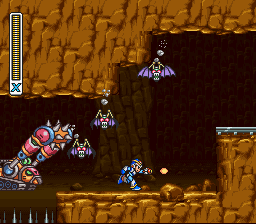
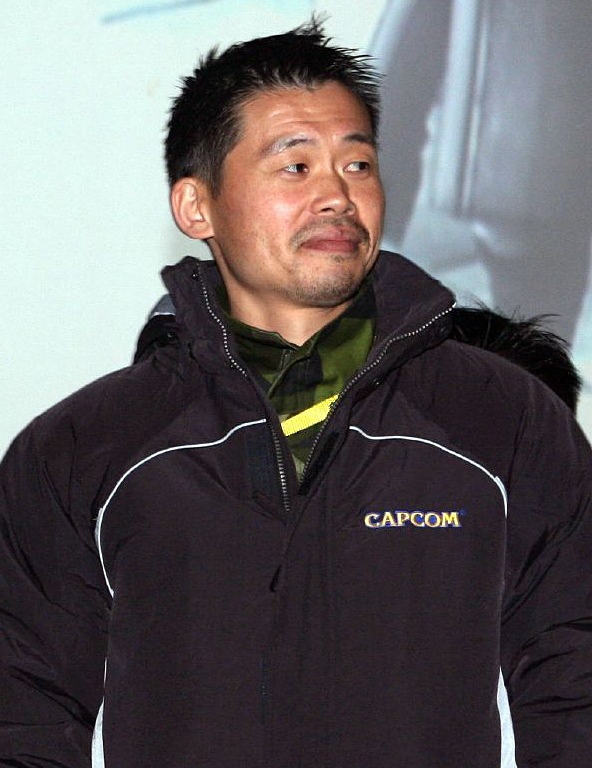
Keiji Inafune (稲船 敬二, born August 21, 1965) joined Capcom in 1987 and began his career drawing sprites and designing characters. His most enduring creation is Mega Man himself - the robot character whose visual identity (blue helmet, arm cannon, white body armour) he designed for the 1987 Famicom debut. Though Akira Kitamura is credited as MM1's director, Inafune's character design was fundamental to the series' visual appeal from the outset.
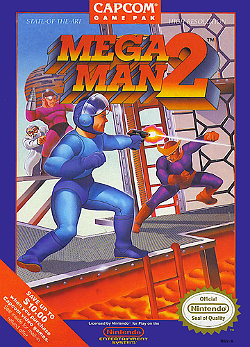
With Mega Man 2, Inafune took on a more expansive producer role, helping to shepherd the skunkworks development that saved the franchise after MM1's modest sales. He continued as series producer through the NES era and into the SNES X sub-series, shaping the overall direction of both the classic and X timelines.
Inafune departed Capcom in October 2010. Post-Capcom, he founded Comcept and led the development of Mighty No. 9, a spiritual successor to Mega Man that released to mixed reviews in 2016 after a troubled crowdfunding campaign.
"Mega Man wasn't just a character to me - he was a statement. Every time he gets knocked down and gets back up, equipped with a new weapon, that's not just game design. That's optimism." — Keiji Inafune, post-Capcom retrospective interview
 Akira Kitamura
Akira Kitamura
Director - Mega Man 1 • Mega Man 3
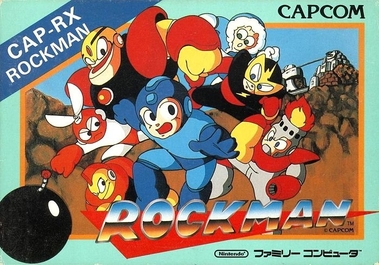
Akira Kitamura directed the original Mega Man (1987) and Mega Man 3 (1990), establishing the foundational design concepts that would define the entire classic series. His core contribution was the robot master selection system - the stage select screen that gave players non-linear access to the game's bosses - and the weapon acquisition mechanic that linked them.
Kitamura's approach to game design was rooted in player agency. Rather than prescribing a route through the game, he structured Mega Man around a web of advantage relationships: defeat Boss A to get Weapon A, which is effective against Boss B. This creates a game that rewards knowledge and experimentation without punishing ignorance - a player unaware of weaknesses can always succeed with the Mega Buster alone.
"We wanted each stage to feel like a different type of challenge - not just a different visual theme, but a different kind of problem for the player to solve. The robot master's weapon should express their personality." — Akira Kitamura, on the design of Mega Man 1
Tokuro Fujiwara
Tokuro Fujiwara
Producer - Mega Man 1 • Mega Man 2
Tokuro Fujiwara produced the first two Mega Man titles and is credited as a key executive advocate for the series at Capcom. An experienced designer who previously directed Ghosts 'n Goblins (1985), Fujiwara provided the senior oversight that allowed Kitamura and Inafune's vision to reach completion within Capcom's development structure.
Fujiwara's role in the Mega Man 2 skunkworks story is nuanced: some accounts suggest he provided implicit backing for the overtime development that produced MM2, while others position the project as proceeding without formal approval until the prototype was presentable. His later career included producing further Capcom action titles before eventually departing the company.
"Ghosts 'n Goblins nearly killed me, and Mega Man gave me hope that a game could be both demanding and joyful. The key was always rewarding the player's effort rather than punishing their failure." — Tokuro Fujiwara, on the difficulty philosophy behind his work
Manami Matsumae
Manami Matsumae
Composer - Mega Man 1 (1987)
Manami Matsumae (松前 真奈美) composed the entire Mega Man 1 OST in 1987, establishing the sonic identity of the series before Tateishi's MM2 became its defining musical moment. Her contributions include the iconic stage select and boss encounter themes, as well as the individual robot master stage music that had to convey each master's personality within the 2A03 chip's constraints.
Matsumae's approach to the 2A03 favoured shorter, punchy melodic loops with strong rhythmic emphasis in the noise channel - creating a tight, arcade-like energy suited to the quick stage-selection and fast action of MM1. Her work on the game's ending credits (a gentle, reflective theme contrasting the urgency of the main game) demonstrated compositional range that went beyond the arcade-action template.
"The NES chip had five channels and the limitations were severe. But limitations are not always obstacles - they focus you. Every note had to earn its place." — Manami Matsumae, on composing within the 2A03 sound hardware
Takashi Tateishi
Takashi Tateishi
Composer - Mega Man 2 (1988) • credited as "Ogeretsu Kun"
Takashi Tateishi composed the entirety of the Mega Man 2 OST - widely regarded as the finest NES soundtrack ever produced. In Japan's Rockman 2, he was credited only by the pseudonym "Ogeretsu Kun," a playful nickname reflecting Capcom's anti-poaching credit policies of the era. Western audiences knew him for decades as an anonymous figure behind one of gaming's most beloved soundtracks.
Tateishi's compositional approach differs markedly from Matsumae's MM1 work. Where Matsumae favoured short, energetic loops, Tateishi employed longer phrase structures and more harmonic development - particularly in the Wily Stage themes. The Wily Stage 1 theme, often simply called "Wily's Castle," uses a driving bass in the triangle channel, a counter-melody in one pulse channel, and a lead melody in the other, creating a sense of orchestral fullness within the chip's five channels.
"I wanted the Wily Castle stages to feel epic, like the player was storming a fortress against impossible odds. The music had to create that feeling without any visuals beyond the NES sprite resolution." — Takashi Tateishi (attributed), on the Wily Stage 1 composition
 Yasuaki Fujita
Yasuaki Fujita
Composer - Mega Man 3 (partial), Mega Man 4, 5, 6
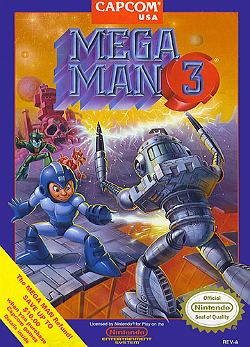
Yasuaki Fujita (known by the pseudonym "Bun Bun") contributed to Mega Man 3's OST alongside Tateishi and became the principal composer for MM4, MM5, and MM6 - sustaining the series' musical identity through the charged Mega Buster era. His task was formidable: following Tateishi's MM2 masterwork while developing a distinct voice that fit the evolving game design.
Fujita's MM4 compositions reflect the changed design: with the charged shot altering combat rhythm, the stage music needed to accommodate longer, more exploratory play sessions. His MM4 themes tend toward longer phrase structures than either Matsumae or Tateishi, with melodic development that rewards the background listening of extended play. The MM6 OST, his final classic NES work, demonstrates mature command of the 2A03's palette.
"Each Mega Man game had a different set of robot masters, a different visual theme - my job was to make the music feel unified with those themes while keeping the series sound people expected." — Yasuaki Fujita, on composing for the late NES Mega Man series
Tomozawa & Takehara
Makoto Tomozawa & Yuko Takehara
Composers - Mega Man X (1993)
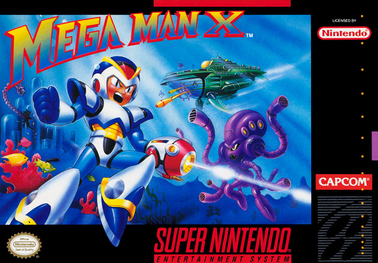
The Mega Man X OST was composed primarily by Makoto Tomozawa and Yuko Takehara, with additional contributions from Setsuo Yamamoto and others. Moving from the 2A03 to the SNES SPC700 sound chip enabled a dramatically expanded sonic palette: sampled instruments, reverb, richer percussion textures, and timbres closer to synthesised rock and electronic music than to the chiptune aesthetic of the NES era.
The X OST reflects the sub-series' tonal shift. Chill Penguin's stage opens in spare, icy tones; Spark Mandrill's stage drives with distorted electric guitar-like timbres; the final stages build to dramatic crescendos impossible on the 2A03's five channels. Tomozawa and Takehara calibrated the music to match X's darker narrative register and expanded action vocabulary.
"The Super Famicom changed everything we could do with game music. Suddenly we had room to breathe. We could create atmosphere, not just melody - and X needed atmosphere." — Attributed to Makoto Tomozawa, on the compositional possibilities of the SNES SPC700