Listen In-Browser — Mega Man 2 NSF
Loading NES audio engine…
Played via Game_Music_Emu WASM — NES 2A03 emulation direct in the browser.
Manami Matsumae
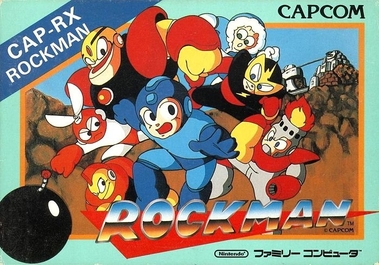
Mega Man 1 (1987) - Series Foundation
Manami Matsumae composed the complete Mega Man 1 OST, establishing the series' sonic identity from the first note. Her approach to the 2A03 was shaped by her background and the demands of an action platformer: each stage theme needed to establish a mood instantly, loop without fatigue, and complement the gameplay's pace without overwhelming it.
Matsumae's MM1 compositions favour energetic, arcade-like rhythms with strong emphasis in the noise channel (percussion) and tight, memorable melodies in the pulse channels. The stage select theme - a short, looping fanfare that plays during boss selection - became one of the most replayed short pieces in the game, setting a template for subsequent entries.
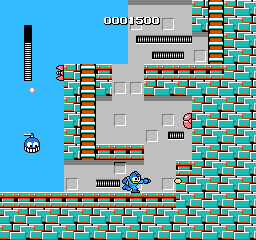
"Every track in Mega Man 1 had to do double duty - create atmosphere and stay out of the player's way. The music needs to support the action, not compete with it." — Manami Matsumae, on composing for action platformers
Takashi Tateishi
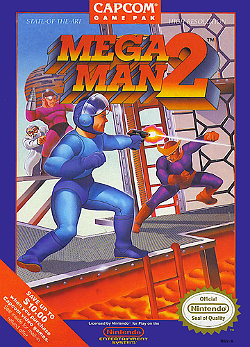
Mega Man 2 (1988) - The Masterwork (credited as "Ogeretsu Kun")
Takashi Tateishi's Mega Man 2 OST is widely regarded as the finest NES soundtrack ever recorded. His approach differed fundamentally from Matsumae's MM1 work: longer phrase structures, more harmonic development, and a compositional ambition that treated the 2A03's five channels as a miniature orchestra rather than a game audio tool.
Each stage theme was calibrated to the robot master's personality and environment. The Wily Stage 1 theme - a driving, harmonically rich composition - became the series' most recognised piece and one of the most iconic video game compositions of any era. Its four-note opening motif is instantly recognisable decades later.
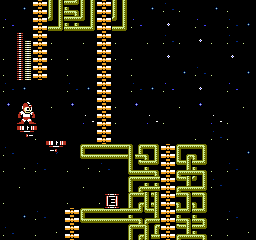
"Wily's Castle needed to feel like a siege. I wanted the player to feel urgency, danger, but also a kind of epic determination. The bass line in the triangle channel was the heart of it - it doesn't stop." — Takashi Tateishi (attributed), on the Wily Stage 1 composition
Yasuaki Fujita
Mega Man 3, 4, 5, 6 (1990–1993)
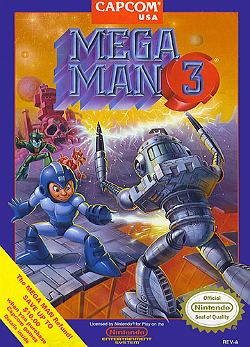
Yasuaki Fujita (credited as "Bun Bun") sustained the series' musical identity across four entries, composing the Mega Man 3 OST in full after original composer Harumi Fujita left mid-project, then continuing through Mega Man 4, 5, and 6. His task was formidable: following Tateishi's MM2 masterwork while developing his own voice that fitted the evolving game design and the longer, more exploratory gameplay of the charged-shot entries.
Fujita's MM4 work introduced longer, more meditative phrase structures suited to extended play sessions. His MM6 compositions, the final classic NES work in the series, demonstrate mature command of the 2A03's palette - finding fresh melodic ideas within constraints that had been worked intensively for six years.
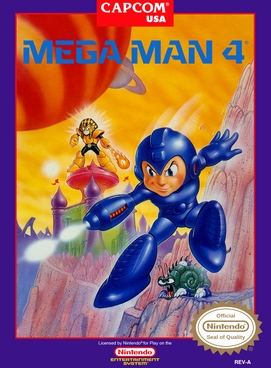
"After MM2, every Mega Man composer was in Tateishi's shadow. My approach was not to compete - but to find what each new game needed in its own right. MM4 needed something different from MM2, and so did MM6." — Yasuaki Fujita, on following Tateishi's MM2 OST
Makoto Tomozawa & Yuko Takehara
Mega Man X (1993) - SNES SPC700 Transition
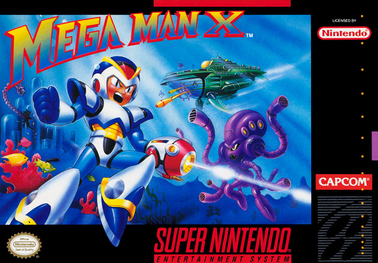
The Mega Man X OST represented a complete sonic break from the NES era. Moving from the 2A03's five fixed-channel chips to the SNES SPC700 - a Sony-designed audio chip with 8 channels and sampled instrument support - enabled Tomozawa and Takehara to create music that felt genuinely orchestral and emotionally complex in ways impossible on the older hardware.
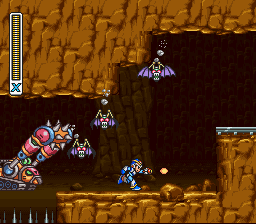
The SPC700's sampled instruments allowed distorted guitar-like timbres, sustained bass tones, and richer percussion. Stage themes could build and develop across longer arcs rather than looping every 16–32 bars. The Chill Penguin stage opens in near-silence; Storm Eagle's theme drives with a syncopated energy that anticipates the sky-level action; Spark Mandrill's stage delivers electric-guitar-adjacent crunch that no NES chip could produce.
"The Super Famicom gave us room to breathe. We could layer sounds, create atmosphere, build tension. X was a darker game than the classic series, and the music needed to reflect that - without losing the forward energy that defines Mega Man." — Attributed to Makoto Tomozawa, on composing for Mega Man X