Flagship

Matthew Smith's two defining works, examined in depth. Hook, development story, how they play, what they achieved technically, how critics and players responded, and where they stand today.

Manic Miner

ZX Spectrum · 1983 · Bug-Byte Software / Software Projects · Designed and programmed by Matthew Smith

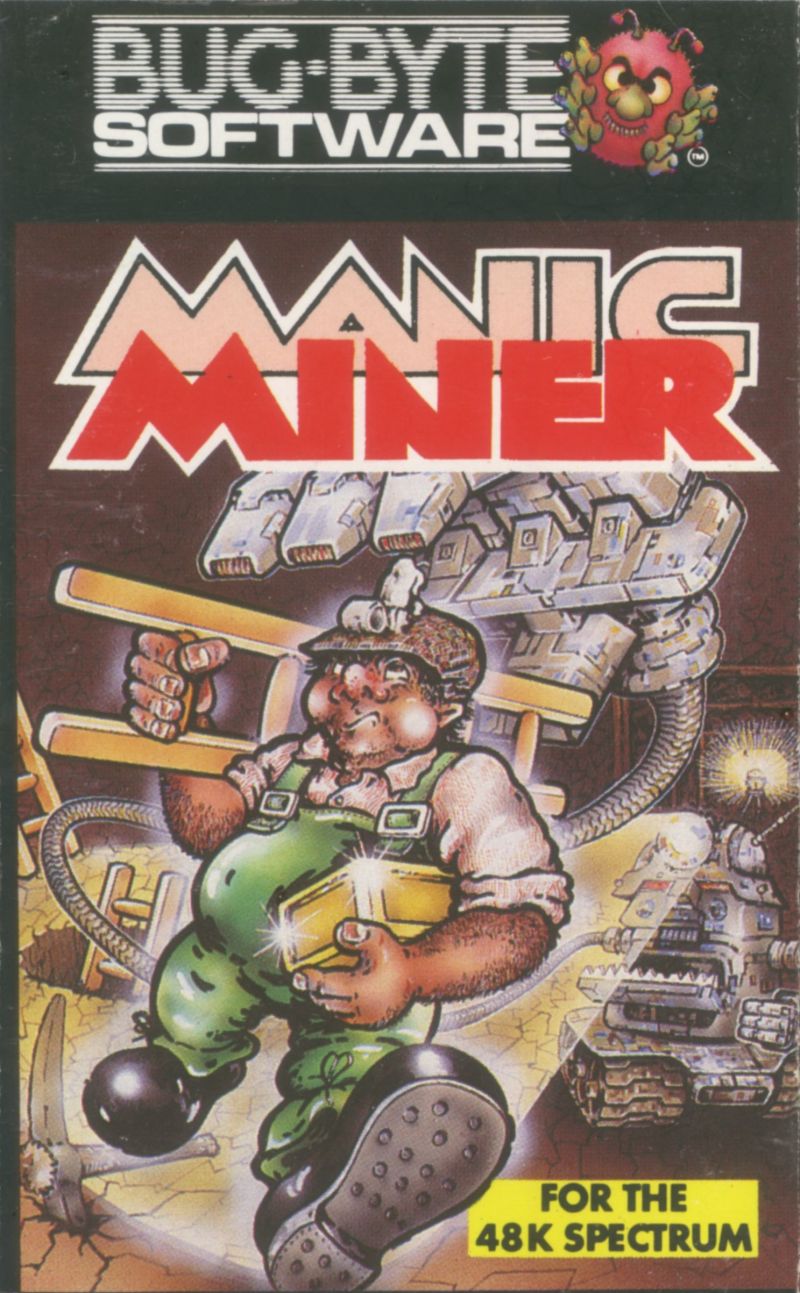
Manic Miner box art, Bug-Byte Software, ZX Spectrum, 1983
Manic Miner - Bug-Byte Software release, ZX Spectrum (1983).

The Game That Proved a Teenager Could Beat the Studios

Manic Miner arrived in 1983 on a machine that had been on the market for less than two years. The ZX Spectrum was already generating a torrent of games - most of them quickly made, technically limited, and quickly forgotten. Manic Miner was different in every way that mattered: twenty hand-designed caverns, a score system, a continuously depleting oxygen counter, and - for the first time on a Spectrum - music playing while you played. Not a jingle at the title screen. In-game music, during actual gameplay. The beep speaker had never been used this way before.

The main character, Miner Willy, has blundered into an abandoned mine full of robotics left by an ancient alien civilisation. To escape, he must collect all the flashing keys in each cavern and reach the exit before the oxygen runs out or a guardian touches him. Twenty caverns stand between him and freedom. It is a game of precision, memorisation, and nerve.
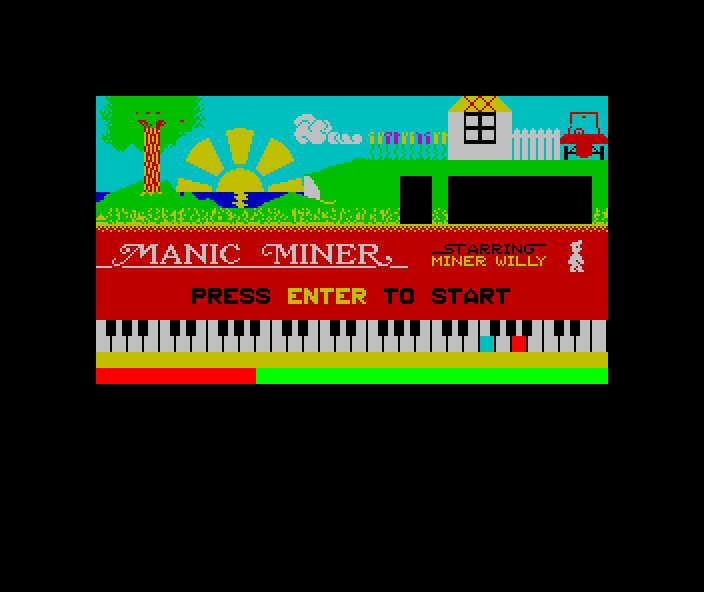
Manic Miner gameplay showing a mid-game cavern, ZX Spectrum
Manic Miner - a mid-game cavern on the ZX Spectrum. The colour attribute blocks give each cavern a distinct visual palette.

Eight Weeks on the Wrong Machine

Matthew Smith wrote Manic Miner in eight weeks, but not on a ZX Spectrum. Bug-Byte had loaned him a Spectrum as part of their freelance deal, but Smith did the bulk of his development work on a Model III Tandy. The ZX Spectrum version was the target platform, but the Tandy was his actual working environment. This cross-platform development at the scale of a single bedroom programmer in 1983 was unusual.

The design was directly inspired by Miner 2049er (1982), an Atari 8-bit title by Bill Hogue. Where Miner 2049er had its miner walking across platforms and painting them (a mechanic Hogue had developed from Pac-Man's pellet collection), Smith stripped this back to something cleaner: collect the flashing keys, reach the exit, do not touch the guardians, do not run out of oxygen. Five rules. Twenty variations.
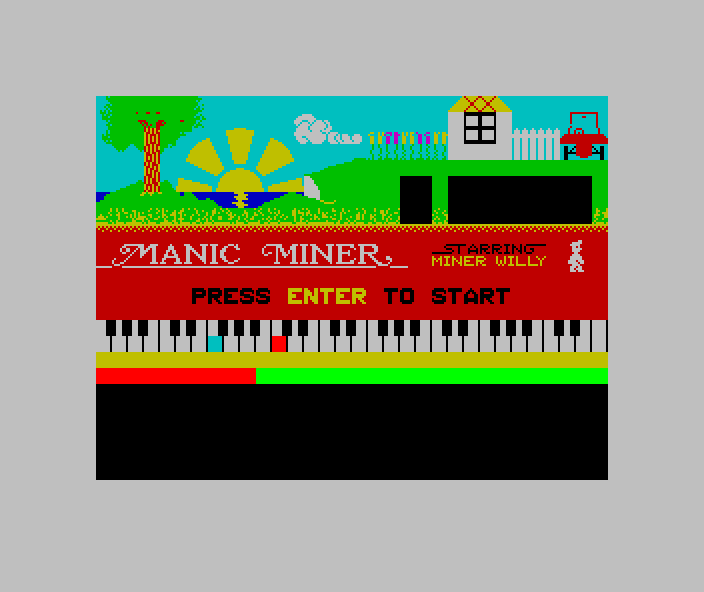
Manic Miner gameplay showing a later cavern with complex enemy paths, ZX Spectrum
Manic Miner - a later cavern with more complex guardian arrangements. By the middle of the game, multiple enemies move on overlapping paths.

Six Seconds to Understand, Twenty Hours to Master

Manic Miner's control system is three keys: left, right, jump. The jump is not variable in height - Willy jumps the same arc every time. This determinism is the game's core mechanic. Everything the player needs to learn is about timing: when to jump, where the arc will land, which guardian is where in its cycle when you make that jump.

Because the jump is fixed and the guardians move at fixed speeds on fixed paths, every cavern has a deterministic solution. There is a correct time to move and a correct time to wait. Finding that solution through trial and error, then executing it under pressure with the oxygen ticking down, is the game's entire experience. It is harder than it looks, and the difficulty is honest - when you die, it is always because you moved at the wrong moment, never because the game misbehaved.

The twenty caverns are hand-designed with genuine variety. Central Cavern introduces the mechanics. The Menagerie introduces vertical movement. Wacky Amoebatrons introduces enemies that move in unpredictable patterns. The Final Barrier is the twenty-second hurdle that separates the dedicated from the casual. Each cavern is colour-coded, visually distinct, and individually named. Manic Miner was the first Spectrum game to give its levels names. This sounds minor. It made each cavern feel like a place.

Number One, Three Awards, a Hundred Thousand Copies

Manic Miner won the Golden Joystick Award for Best Arcade Style Game in 1983. It placed third in Game of the Year at the same ceremony. Big K readers voted it the Most Plundered Concept of the Year in 1984 - meaning it was the game most often imitated by other developers. The C64 version released in early 1984 reached number one in UK charts. Combined Bug-Byte and Software Projects sales exceeded 100,000 copies.

Contemporary critical response was enthusiastic across the board. The Your Sinclair reader top 100 placed it at 25th (and later at 6th in a subsequent poll). ACE magazine named it "the first great home computer platform game" in 1991.

"The first great home computer platform game."

ACE magazine, 1991, in a retrospective feature on landmark platform games
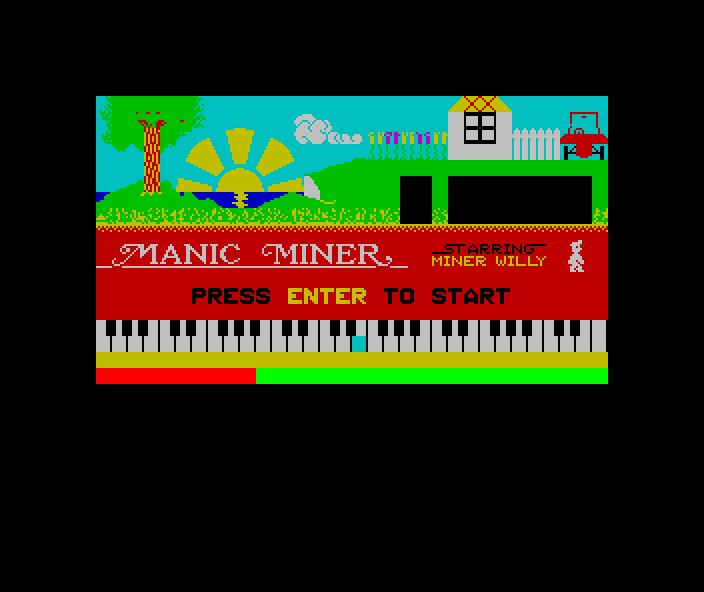
Manic Miner gameplay showing a late-game cavern, ZX Spectrum
Manic Miner - a cavern from the game's second half. The later levels demand precise timing across multiple simultaneous guardian paths.

What the Beep Speaker Wasn't Supposed to Do

The ZX Spectrum's single-channel beep speaker was designed for sound effects and simple audio feedback - not music. Programming it to produce continuous in-game music required Smith to interleave audio generation with the game's main loop, updating the beeper state at a frequency that created the illusion of a sustained note without halting the game's logic. Other programmers had considered this technically impractical at the time.

The 48K Spectrum's memory also imposed strict constraints on what could be stored. Twenty distinct caverns, with their platforms, guardians, keys, and colour attributes, had to fit in the available RAM alongside the game's code. Smith's memory management - fitting twenty complete levels into a machine with 48K of addressable space - was cited by contemporaries as technically impressive work for a solo bedroom programmer of seventeen.
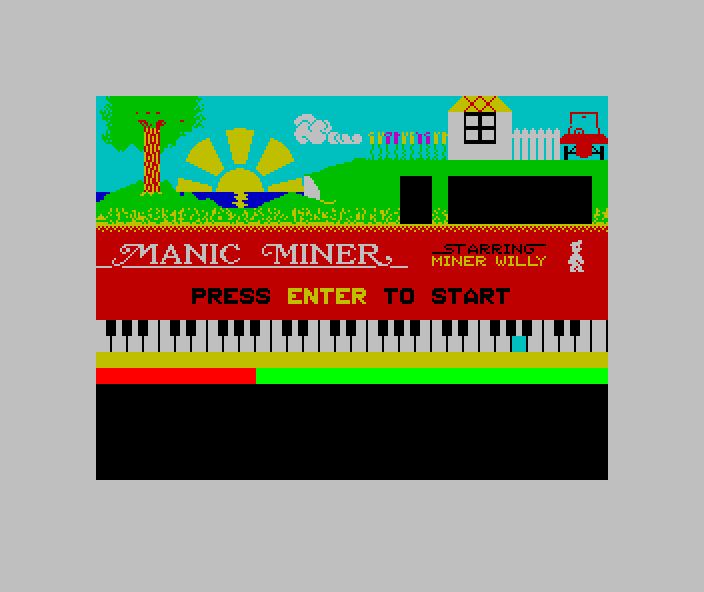
Manic Miner late-game cavern, ZX Spectrum
Manic Miner - one of the game's final caverns. By this point, the oxygen supply is tight and guardian timing allows almost no margin for error.

The Blueprint British Bedroom Coders Followed

Retro Gamer has called Manic Miner one of the most influential platform games of all time. The Black Mirror episode Bandersnatch (2018) was written by Charlie Brooker, a Manic Miner enthusiast, and included visual and thematic references to the game. Manic Miner has been ported to DOS, BBC Micro, Amstrad CPC, Atari 8-bit, Dragon 32, MSX, SAM Coupe, and mobile platforms. HTML5 remakes allow it to be played in a browser today without any emulator software.

Beyond the ports, Manic Miner's template - fixed-arc jump, deterministic guardians, hand-named rooms, oxygen as a pressure mechanic - was followed by dozens of British home computer games in the following three years. The platformer genre on the ZX Spectrum is, in large part, shaped by choices Smith made in eight weeks in 1983.

For how to play Manic Miner today, see Play Today. For the fan remakes and modern community, see Modern Scene. The complete game listing including all ports is at Games.

Watch: 4K Longplay

The complete Manic Miner, ZX Spectrum, played through all twenty caverns at 4K UHD 50fps.

Watch: How Manic Miner Changed Gaming

A 2025 retrospective on Manic Miner's place in the history of platform gaming.

Jet Set Willy

ZX Spectrum · 1984 · Software Projects · Designed and programmed by Matthew Smith

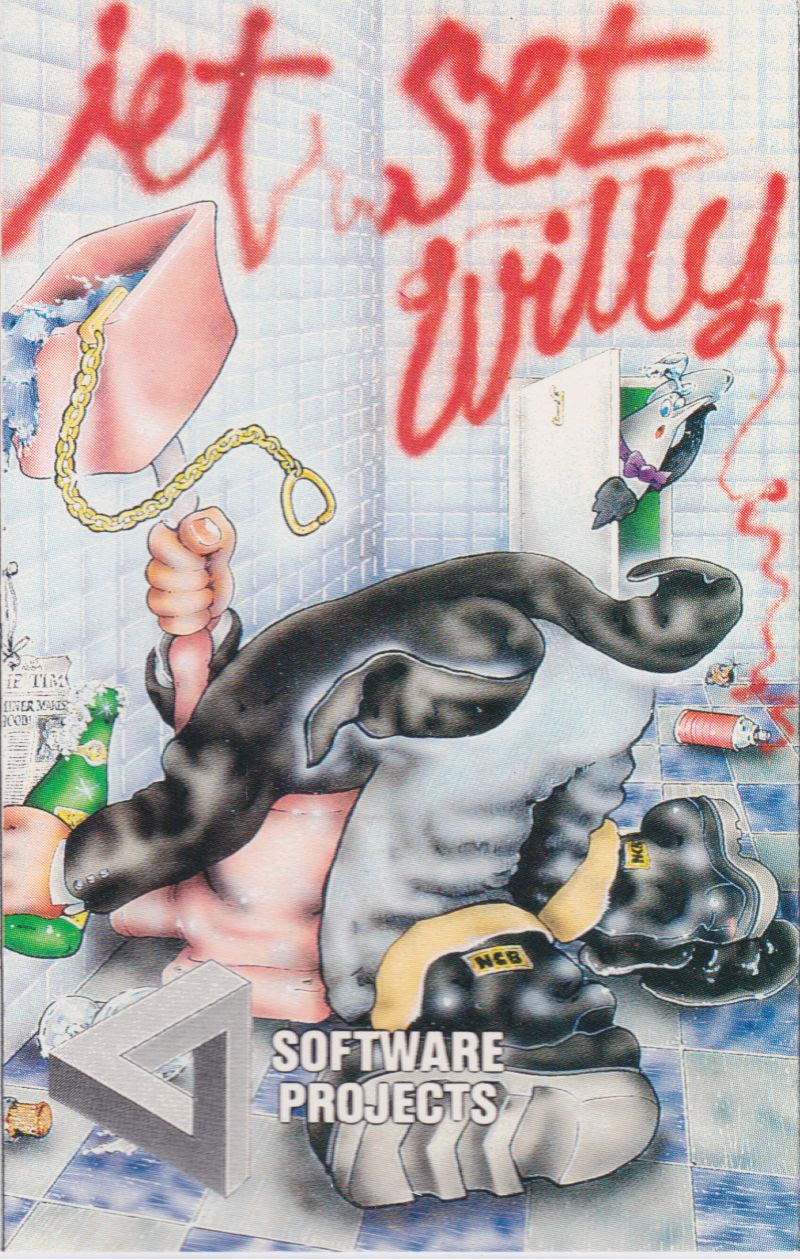
Jet Set Willy box art, Software Projects, ZX Spectrum, 1984
Jet Set Willy - Software Projects release, ZX Spectrum (1984).

Sixty Rooms, No Fixed Order, One Enormous Mess

Jet Set Willy was published in March 1984 and proceeded to spend over three months at the top of UK home computing charts, becoming the best-selling home video game in Britain for the entire year. It was the sequel to Manic Miner in the sense that it featured the same main character - Miner Willy, now improbably wealthy and the owner of a vast mansion. But in design terms, it was not a sequel so much as a complete rethinking of what a Matthew Smith game could be.

Where Manic Miner had twenty caverns arranged in a fixed sequence - complete one to reach the next - Jet Set Willy had sixty rooms that could be explored in any order from the start. The mansion's housekeeper, Maria, would not allow Willy back to bed until he had cleared up after a party. To do this he had to collect objects scattered across sixty interconnected rooms. The order was entirely up to the player. This was not a new idea in game design but it was a new idea for a ZX Spectrum game at this price point, and it was executed with Manic Miner's level of visual distinctiveness applied sixty times over.

Jet Set Willy gameplay showing a room in Willy's mansion, ZX Spectrum
Jet Set Willy - a room in the mansion, ZX Spectrum. Each room has a name, a distinct colour scheme, and its own guardian arrangement.

From Manic Miner's Controls to a House That Wouldn't Fit

Smith described the development of Jet Set Willy as "seven shades of hell." The design challenge was different in kind from Manic Miner: instead of designing twenty self-contained caverns in a sequence, Smith had to design sixty rooms that connected spatially and made logical sense as a navigable environment. The mansion had a geography - rooms had to be adjacent to each other in ways that were consistent. Designing sixty individually distinct spaces that also formed a coherent structure was significantly more complex than designing twenty sequential levels.

The result showed the strain. Several of the sixty rooms were described by players and critics as unfinished or hastily assembled compared to Manic Miner's tighter designs. More critically, the game shipped with a serious bug.

The House That Rewards Exploration and Punishes Carelessness

Jet Set Willy retained Manic Miner's three-key control scheme: left, right, jump. The fixed-arc jump carried over exactly. But the design context was radically different. In Manic Miner, each cavern could be memorised and mastered in isolation. In Jet Set Willy, the player had to hold a mental map of sixty interconnected rooms, understand which objects had been collected and which remained, and navigate a space large enough that even experienced players could become lost.

Individual rooms varied in difficulty. Some were trivial - the object sat on a platform and the guardians posed no serious threat. Others were fiendishly precise - timing requirements as tight as Manic Miner's hardest caverns, compressed into the context of a game that also required sustained navigation across dozens of other rooms. The difficulty was not evenly distributed, which made the game feel sprawling in a way that Manic Miner - tightly paced and progressive - did not.

The game's open structure also introduced a design problem that would later become a genre concern: what keeps the player moving when there is no fixed sequence to follow? Jet Set Willy's answer was partial and imperfect - the object list reduced on collection, but the game did not guide or indicate which areas remained incomplete. Players often finished the game not knowing they had missed items in rooms they had passed through without collecting everything. This was, in hindsight, a significant usability failure, but it was also characteristic of 1984 home computing game design more broadly.

Jet Set Willy gameplay - another room in the mansion, ZX Spectrum
Jet Set Willy - another room in Willy's mansion. The game's sixty rooms span multiple floors of the property and outdoor areas.

"Seven shades of hell."

Matthew Smith, describing the development of Jet Set Willy - cited in Wikipedia and multiple retrospective accounts

Sixty Rooms in 48 Kilobytes

Fitting sixty distinct rooms - each with its own platform layout, guardian definitions, colour attributes, and object placements - into the ZX Spectrum's 48K of addressable memory required a compact room data format. Each room was stored as a compressed description rather than a full tile map, with guardians and objects referenced by index to shared sprite banks. The result was a game that used memory efficiently enough to store a sixty-room environment while leaving enough space for the game's logic and display routines.

The game's colour use across sixty rooms without repetition was also notable. The ZX Spectrum's attribute system meant that each 8x8 pixel block could only display two colours, and the notorious "attribute clash" - where a sprite's colours contaminated the background tiles it overlapped - was a constant visual artefact. Smith used this constraint as a design feature rather than fighting it: each room's colour scheme was chosen to make the attribute clash aesthetically coherent rather than random. The result was rooms with distinct visual identities despite sharing the same technical limitations.

Best-Selling, Bug-Ridden, and Beloved Anyway

Jet Set Willy shipped in March 1984 with what became known as the Attic Bug. Entering the room called "The Attic" corrupted specific memory locations, making the guardians in several subsequently visited rooms behave incorrectly - in practice making those rooms impossible to complete legitimately. The bug meant the game could not be fully completed without either applying a POKE fix or avoiding The Attic entirely.

Software Projects distributed a cassette containing POKE instructions - specific memory address modifications - that players had to load and apply before starting the game. This was a clumsy fix by any measure, requiring a two-stage loading process and explicit technical intervention by the player. Nevertheless, the game's sales were unaffected: it was the UK's best-selling home video game of 1984 and spent over three months at the top of the charts. Players accepted the bug, applied the fix, and bought the game in enormous numbers.

The Rooms Still Being Built in 2026

Jet Set Willy's legacy is less about influence on game design - its open-world structure was not directly copied in the way Manic Miner's platformer template was - and more about the community that formed around it. Level editors for the Miner Willy engine have existed since 1984. As of 2026, JSW Central (jswcentral.org) hosts hundreds of fan-created room sets and complete Jet Set Willy rebuilds. The jswmm.co.uk community forum remains active.

The game has been ported to Commodore 64, Amstrad CPC, BBC Micro, Atari 8-bit, MSX, Acorn Electron, TRS-80 CoCo, and SAM Coupe. HTML5 versions can be played in a browser. The modding and fan creation scene has been continuous since the game's original release - an unbroken forty-year community around a game that its creator called seven shades of hell to make.

For the community and fan projects, see Modern Scene. For how to play JSW today, see Play Today.

Watch: Full Jet Set Willy Walkthrough

A complete walkthrough of Jet Set Willy on the ZX Spectrum.