Co-Founders
Mastertronic was built by four individuals whose complementary skills - marketing, management, operations, and logistics - made the budget revolution possible
Martin Alper
Co-Founder · Marketing & US Operations
Martin Alper was the marketing force behind Mastertronic and one of its most publicly visible figures. His background in the music industry - where impulse-purchase singles at accessible price points were standard - heavily informed Mastertronic's retail strategy. The idea of selling software through Woolworths and W.H. Smith rather than specialist shops drew directly on how music was sold, not how software had traditionally been sold.
In 1986, Alper led the establishment of Mastertronic Inc. in the United States, attempting to replicate the budget model in North America. The US operation focused on the Commodore 64 and the emerging IBM PC market. While the US expansion faced different retail dynamics than the UK (where mass-market retail penetration was particularly strong), Mastertronic Inc. established a foothold in the American budget software space.
Following the Virgin acquisition, Alper remained involved in the video games industry, eventually becoming involved with Virgin Games' US operations. He is remembered in retrospectives as one of the key architects of British budget gaming's golden era.
Frank Herman
Co-Founder · UK Managing Director
Frank Herman served as UK Managing Director for Mastertronic, overseeing the day-to-day operations of what became one of Britain's largest software publishers. Herman's role was to execute the distribution strategy that was Mastertronic's competitive edge: building relationships with Woolworths, W.H. Smith, newsagent chains, and the petrol station forecourt market.
Under Herman's operational management, Mastertronic expanded from a startup to a company shifting millions of units annually. The logistics of getting cassettes onto spinner racks across Britain required distribution relationships and supply chain management that went far beyond what specialist game retailers required.
Herman was also involved in the decision to launch the M.A.D. sub-label - recognising that while £1.99 defined Mastertronic's brand, there was a market segment willing to pay more for higher-quality productions under a distinct premium identity.
Terry Medway
Co-Founder
Terry Medway was one of the four co-founders of Mastertronic, though he is the least documented of the four in publicly available retrospectives and industry interviews. The relatively limited biographical information reflects both the era - the early 1980s UK games industry kept few formal records, and the individuals involved rarely gave interviews - and the fact that Medway did not remain as publicly associated with the industry after the Virgin acquisition as some of his co-founders.
Like all four founders, Medway brought complementary business experience to the partnership. Mastertronic's success was built on the combination of distribution insight, retail relationships, and financial management - and all four founders contributed to the corporate infrastructure that made the £1.99 model viable at scale.
Alan Sharam
Co-Founder · Sales & Logistics Director
Alan Sharam handled sales and logistics for Mastertronic - arguably the most critical operational role given that the company's entire competitive advantage rested on distribution reach. Getting £1.99 cassettes into 5,000 Woolworths stores, WH Smith branches, and independent newsagents required the kind of FMCG (fast-moving consumer goods) logistics thinking that was unusual in the games industry of the early 1980s.
Sharam's background appears to have been in consumer goods distribution - the kind of experience that understood how to manage rack-based impulse sales, replenishment cycles, and returns in a fragmented retail environment. This expertise was directly translated to Mastertronic's retail strategy.
The Sega Master System distribution deal negotiated in 1987 was the logical extension of the distribution infrastructure Sharam helped build - and it was that deal's attractiveness to Virgin that made the acquisition compelling.
Developers & Legacy
The programmers who built Mastertronic's catalogue - and where they went next
The Darling Brothers
David Darling and Richard Darling - the brothers who would found Codemasters in 1986 - began their commercial careers through early work associated with Mastertronic and the budget software ecosystem. Codemasters itself adopted the Mastertronic model of budget pricing, launching their own £1.99 label and building a library of sports and action games that became synonymous with budget British gaming in the late 1980s.
The Codemasters story is the clearest example of Mastertronic's talent incubation legacy. By providing an accessible market for bedroom programmers and small development teams, Mastertronic helped create the pipeline of experienced developers who drove the next wave of British game development.
Rob Hubbard
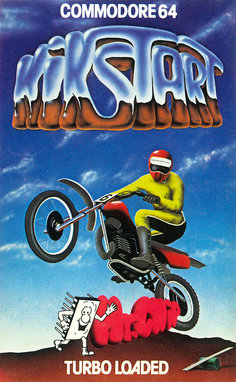
Rob Hubbard composed the celebrated SID chip soundtrack for Kikstart (1985) and other Mastertronic C64 releases. Hubbard became one of the most admired composers in the early C64 scene, pioneering techniques for extracting musical sophistication from the SID chip's limited hardware.
Hubbard's Mastertronic work was part of a prolific period that also included scores for Gremlin Graphics, Ocean, and other publishers. His approach to SID music - using the chip's hardware tricks to create layered, atmospheric pieces - influenced a generation of composers. He has a dedicated tribute site in this network: Rob Hubbard.
David Jones
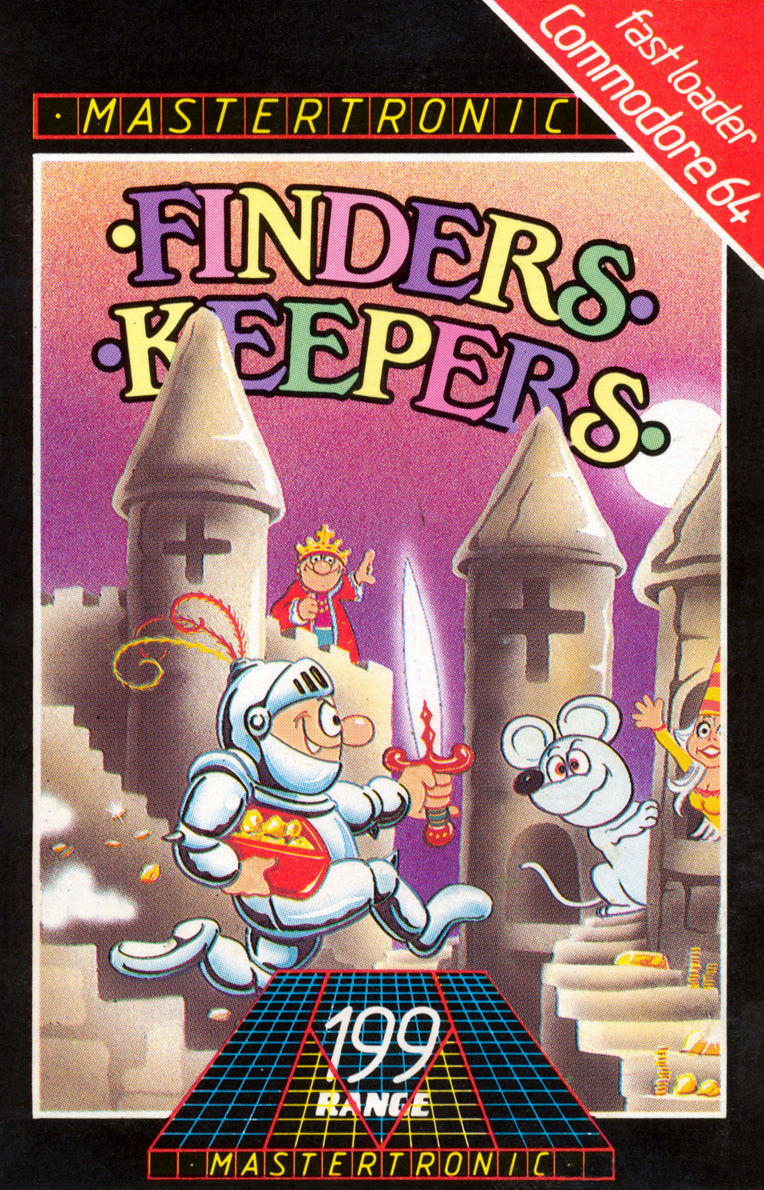
David Jones developed Finders Keepers (1985) and its sequel Knight Tyme (1986) for Mastertronic - two of the more ambitious original titles in the budget publisher's catalogue. Jones' adventure-puzzle formula for those games showed what a budget developer could achieve when the publisher allowed genuine creative ambition.