The programmers, designers, and founders behind Incentive Software and the Freescape engine. For the deep editorial on what they built, see the Flagship and History pages.
Chris Andrew
Lead Programmer — Freescape Engine
The programmer responsible for the Freescape engine, which Chris Andrew developed over approximately fourteen months at Incentive Software starting in 1986. The technical challenge was substantial: implementing full hidden-surface removal on home computers whose CPUs ran at 1-3.5 MHz with no floating-point hardware. Andrew's solution used integer arithmetic, spatial partitioning, and a depth-sorting approach that kept the geometry count manageable while maintaining the illusion of a continuous 3D world.
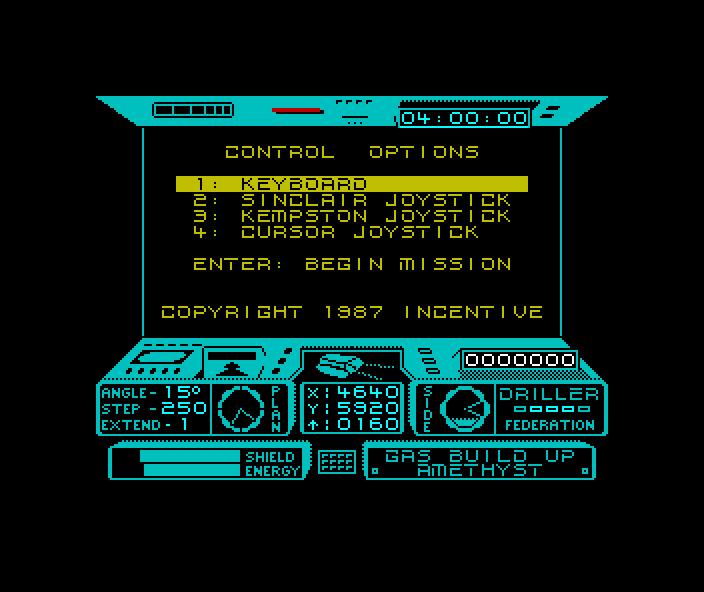
The engine Andrew produced ran on nine different home computer platforms, each requiring careful hand-tuning. The ZX Spectrum version, running on a Z80 at 3.5 MHz with 48K of RAM, was particularly constrained. The Amiga version used the hardware's blitter and custom chips more aggressively. Every conversion had to preserve the geometry and feel of the world while working within radically different hardware limits.
Andrew later contributed to the 3D Construction Kit, which packaged the Freescape engine as a creation tool. His work established the technical foundations of British 3D gaming years before it became commercially dominant.
Mark Rudd
Co-Founder, Incentive Software
One of the founders of Incentive Software, established in Reading in 1983. The early years of the company reflected the broader British games industry of the period: small teams, tight budgets, and a market served primarily through magazine cover-mounts and mail-order distribution. Rudd's direction during this formative period positioned Incentive as a company interested in both games and tools - a philosophy visible in the Graphic Adventure Creator (1985) before Freescape made the studio's reputation.
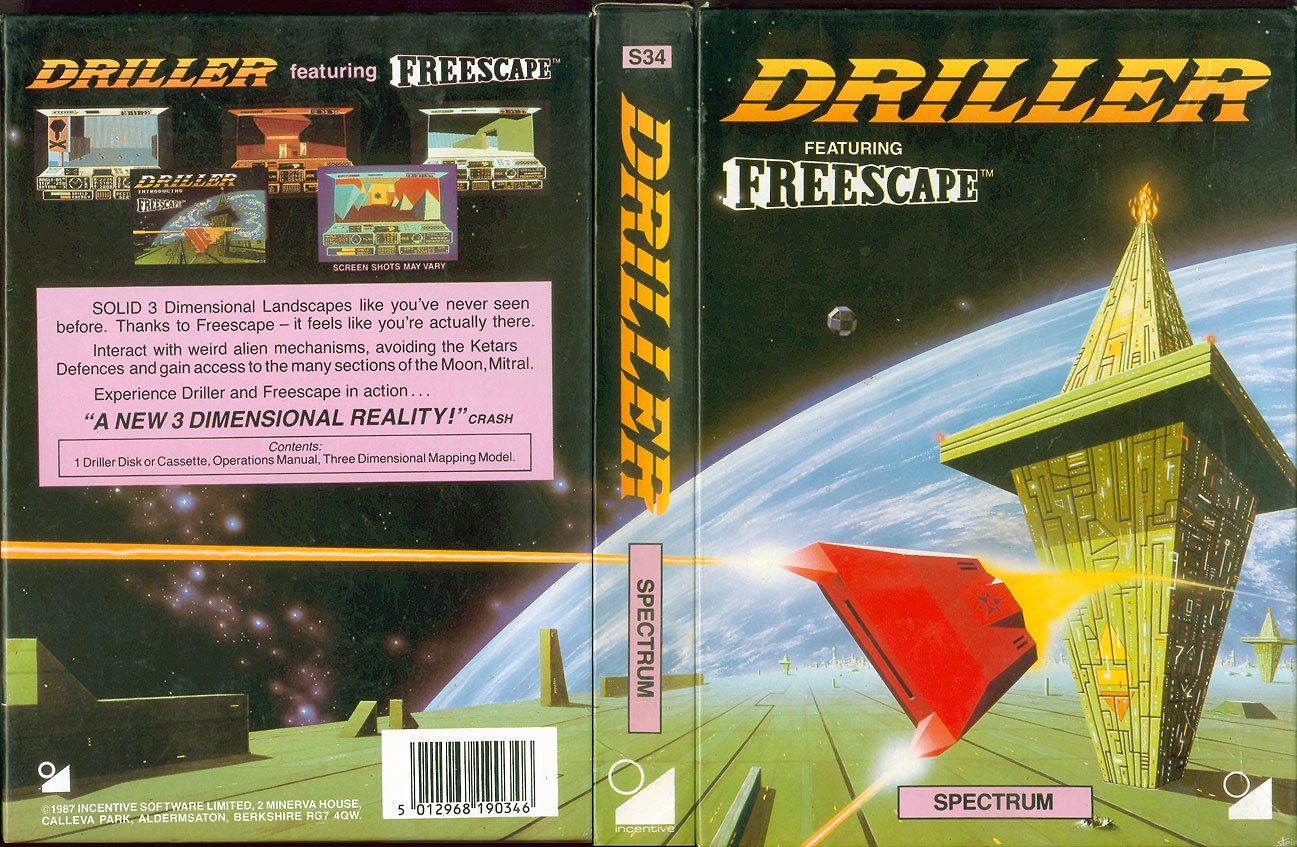
Under Rudd's stewardship, Incentive grew from a cottage operation to the studio capable of producing and multi-platform-porting the Freescape series. The commercial success of Driller (1987) and its successors funded the studio's continued development through the early 1990s and the creation of the 3D Construction Kit.
Sean Ellis
Programmer — Platform Conversions
Sean Ellis worked on conversions of the Freescape titles to multiple platforms, including notable work on the Amiga and Atari ST versions of the games. Converting a 3D engine across radically different architectures - from the Z80-based Spectrum and Amstrad to the 68000-based Amiga and ST - required understanding both the algorithmic logic of the engine and the hardware-specific optimisations available on each target machine.
Ellis went on to work in the games industry beyond Incentive Software, his early experience with 3D engine conversion providing a foundation for the work that defined the following decade of console and PC development.
Dave Parkinson
Designer — Freescape Worlds
Dave Parkinson was involved in the design of the world geometry and puzzle layout for several Freescape titles. Building a Freescape world was a distinctive creative challenge: the geometry was constructed from primitive shapes (cubes, pyramids, wedges) assembled into environments that had to be both visually coherent and functionally navigable. The puzzle design had to work with the spatial constraints of the engine while providing enough variety to sustain player engagement through a full game.
Parkinson's contributions to the design of the Freescape worlds helped establish the vocabulary of 3D puzzle-exploration games that would become a major genre in the following decade.
Jonathon Griffiths
Composer — Freescape Titles
The music for the Freescape games presented an unusual challenge: writing for a 3D game world in which tension and atmosphere needed to be sustained across long play sessions rather than driven by the action-tempo patterns common in arcade games. Griffiths' compositions for the Spectrum and Amiga versions had to work with the very different audio hardware of each platform - the Spectrum's beeper, the AY chip in the 128K version, and the Amiga's four-channel Paula.
The atmospheric compositions that accompanied the Freescape games contributed significantly to their sense of isolated, exploratory dread - a quality that distinguished them from the action-oriented games that dominated the UK charts at the same time.