The People Behind CRL
CRL Group's output came from a small number of creators, some in-house and several under contract. Their individual contributions shaped every significant title the company published.
Clement Chambers
Founder and Managing Director
Clem Chambers founded CRL Group in 1982 at the age of nineteen, redirecting 2,500 pounds of failed computer-rental capital into software publishing. He served as managing director and primary programmer in the company's early years, overseeing the pivot from text adventures to the broader multi-platform catalogue that followed the Electronic Arts distribution deal. After CRL's crisis in 1988 and its eventual closure in 1991, Chambers co-founded On-line PLC and later ADVFN, a financial information platform. His trajectory from teenage bedroom coder to serial entrepreneur mirrors many of his generation's founders.
Pete Cooke
Game Designer - Tau Ceti, Academy
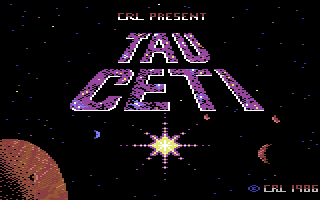
Pete Cooke designed Tau Ceti for the ZX Spectrum, published by CRL Group in 1985. The game's isometric 3D engine - built over fourteen months - featured a day/night shadow system reverse-engineered from techniques Cooke found in other games. He was inspired by Elite's approach to 3D graphics and chose the star name "Tau Ceti" because it sounded right and happened to be a real astronomical candidate for extraterrestrial life. Cooke also designed the sequel, Academy: Tau Ceti II (1987). The C64 conversion of Tau Ceti was handled separately by John Twiddy, who adapted the engine for the different hardware architecture. Cooke's work on the Tau Ceti series represents the technical high-water mark of CRL's output. See the Flagship page for the full Tau Ceti story.
John Twiddy
Programmer - Tau Ceti C64 Conversion
John Twiddy performed the Commodore 64 conversion of Tau Ceti in 1986. The conversion required adapting Pete Cooke's ZX Spectrum engine for a machine with different memory architecture, different colour capabilities, and a different processor speed. The result was faithful enough to earn a 93% score in Zzap!64 and a 10/10 in C&VG - critical marks that matched or exceeded the original Spectrum reviews. Twiddy's work made Tau Ceti accessible to the larger C64 market and cemented the game's reputation across both platforms.
Rod Pike
Developer - Dracula Series
Rod Pike developed Dracula (1986) for CRL Group, a three-part graphic text adventure based on Bram Stoker's novel. The game was adult enough in content that CRL sought a BBFC certificate, making Dracula the first commercially released video game in the United Kingdom to carry an official age classification. Pike worked with Jared Derrett on the graphics. The horror adventure format Pike established for CRL was continued through Frankenstein and Wolfman, cementing the company's identity as British gaming's primary gothic publisher.
Jay Derrett
Musician and Programmer
Jay Derrett served as in-house musician and programmer at CRL Group, composing the SID music for Dracula (1986) and other titles in the horror series. His compositions set the atmospheric tone for CRL's gothic output - the SID chip's ability to approximate orchestral horror was limited, but Derrett extracted enough character from it to complement the text adventure gameplay effectively. The Dracula SID is among the stronger examples of early horror-themed C64 music from the period. Listen on the Music page.
Jared Derrett
Graphics Artist
Jared Derrett (brother of Jay Derrett) provided the graphics for Dracula (1986) and Jack the Ripper (1987). On a machine with 16 colours and 320x200 pixel resolution, his work set visual standards for the horror genre in British games. The graphic adventures he illustrated for CRL were better-looking than most text-adventure titles of the period - the illustrated locations and characters gave them a visual identity that pure text adventures lacked. His contribution to Jack the Ripper's Victorian atmosphere was particularly significant, given the game's status as the first BBFC 18-rated title in gaming history.
Ian Ellery
Production and Operations Manager
Ian Ellery joined CRL Group around 1984 as production and operations manager. His arrival coincided with the company's rapid expansion following the Electronic Arts distribution deal, and he took responsibility for coordinating the in-house development team and managing external studio relationships. The organisation he brought to CRL's production pipeline enabled the company to publish across multiple platforms simultaneously - C64, ZX Spectrum, Amstrad CPC, and MS-DOS - at a scale that would have been chaotic without professional management.
St. Bride's School
External Development Studio
St. Bride's School was an external development studio that produced several graphic adventures for CRL Group, including Jack the Ripper (1987) and Bugsy (1986). The studio brought a consistent approach to the graphic adventure format that complemented CRL's publishing identity. Jack the Ripper, their most significant contribution to CRL's catalogue, became the first video game to receive a BBFC 18 certificate - a fact that generated press coverage well beyond gaming publications and established CRL as the publisher most willing to push content boundaries.