From capsule machines in Osaka to the red cabinet that defined a generation.
1979 - founding → 1983 → pivot to games → arcade dominance → NES era → SNES era.
At a Glance
Timeline
1979
Founding
Kenzo Tsujimoto founds Japan Capsule Computers in Osaka. Initial focus: electromechanical amusement and vending machines.
1983
Pivot to Games
Company renamed Capcom. Begins developing electronic video games. The name combines “Capsule” and “Computers.”
1984
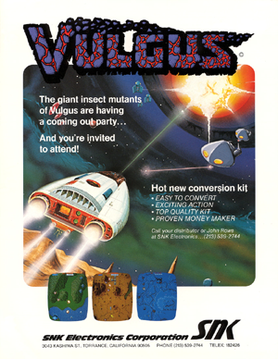
Vulgus
Capcom’s first arcade game - a vertical scrolling shooter. The company establishes its arcade presence.
1985
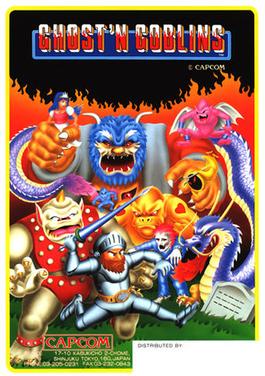
Ghosts ‘n Goblins
Tokuro Fujiwara’s graveyard platformer becomes a global arcade hit. Capcom USA founded to handle North American distribution.
1986
NES Debut
Ghosts ‘n Goblins and 1942 arrive on NES. Capcom begins building its NES catalogue - one of the platform’s most distinguished publishers.
1987
Mega Man & Street Fighter
Mega Man (NES) launches a franchise. Street Fighter (arcade) marks Capcom’s first fighting game, directed by Takashi Nishiyama.
1988
CPS-1 Board
Capcom introduces the CP System arcade board with Forgotten Worlds, enabling higher-quality graphics than competitors.
1989
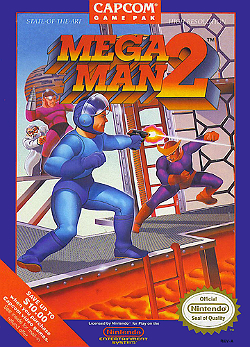
Mega Man 2 & DuckTales
Mega Man 2 releases in North America to overwhelming acclaim. DuckTales (NES) demonstrates Capcom’s mastery of licensed IP.
1991
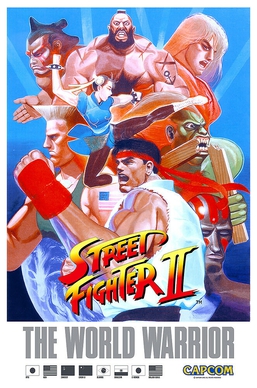
Street Fighter II
Street Fighter II: The World Warrior becomes a global phenomenon, redefining competitive arcade gaming and selling millions of SNES conversions.
1992
SNES Era
Street Fighter II (SNES), Super Ghouls ‘n Ghosts, and Final Fight establish Capcom as a top SNES third-party publisher.
1993
Mega Man X & CPS-2
Mega Man X (SNES) launches a new sub-series. CPS-2 board debuts with Super Street Fighter II Turbo, pushing arcade hardware further.
1994+
Legacy
Resident Evil (1996), Mega Man Legends, Devil May Cry, and beyond. The 8-bit and 16-bit catalogue remains Capcom’s creative bedrock.
1979 – 1983
Founding & Origins
Japan Capsule Computers
Capcom traces its origins to 1979, when Kenzo Tsujimoto
established Japan Capsule Computers Co., Ltd. in Osaka. The company’s initial focus
was electromechanical amusement devices - coin-operated machines, capsule dispensers,
and arcade-adjacent hardware popular in the emerging Japanese amusement industry.
Tsujimoto had a background in sales and distribution, and his early ambitions lay in the
broader amusement market rather than video games specifically. That changed as the video
game industry exploded following the success of Pac-Man and Donkey Kong in the early 1980s.
Vulgus (1984) arcade flyer - Capcom's first arcade game after the pivot.
Pivot: 1983
In 1983, the company shortened its name to Capcom - a portmanteau of
“Capsule Computers” - and committed fully to electronic video game development
and publishing. The pivot was decisive: within a year, Capcom had its first arcade release.
The 1983 pivot came at a critical moment. The North American video game crash of 1983 had
devastated the US market, but in Japan, the Family Computer (Famicom) launched in July 1983
and the arcade industry remained strong. Capcom positioned itself to benefit from both.
1984 – 1987
Arcade Dominance
Vulgus and the First Steps
Capcom’s debut arcade game, Vulgus (1984), was a vertical scrolling
shoot-’em-up. It established Capcom’s technical competence without breaking new ground.
The real breakthrough came the following year.
Ghosts ‘n Goblins (1985), designed by Tokuro Fujiwara,
was Capcom’s first major arcade hit. A graveyard platformer starring the knight Arthur,
it was distinguished by its punishing difficulty, gothic atmosphere, and memorable boss design.
The game spread to arcades worldwide and announced Capcom as a studio to watch.
The NES port (1986) brought Ghosts ‘n Goblins into millions of living rooms. Despite
necessary compromises in hardware fidelity, it captured the arcade game’s essential
spirit - particularly its relentless challenge. Nintendo Power and contemporary magazines
featured it prominently.
Capcom USA and Street Fighter: 1985 – 1987
Capcom USA was founded in 1985 to localise and distribute games for the North American market.
The US subsidiary played a key role in adapting Capcom’s Japanese titles and building
relationships with US retailers.
Street Fighter (1987), directed by Takashi Nishiyama, was Capcom’s first
fighting game. Two characters, six opponents, and a control scheme that presaged what was to come.
It was not yet the phenomenon its sequel would become, but it established the IP and the genre
template that Street Fighter II would perfect four years later.
1986 – 1993
The NES Era
Mega Man: 1987
Mega Man (NES, 1987), directed by Akira Kitamura and featuring character
design by Kitamura and Keiji Inafune, introduced the Blue Bomber. The original
game was a modest success - its non-linear stage selection and weapon acquisition system were
innovations - but it was its sequel that would cement the franchise’s legacy.
The composer, Manami Matsumae (credited as “Chanchacorin Manami”
on the Japanese release), produced one of the NES era’s most inventive soundtracks, working
within the console’s severe hardware constraints to create music with genuine personality.
Mega Man 2 (NES, 1989) - Takashi Tateishi's score and a template for the entire series.
"Mega Man 2 was the team's chance to do everything right. We thought we might not get another. So every Robot Master, every stage, every track had to count."
Keiji Inafune, GDC 2009 retrospective
Mega Man 2 and the CPS-1: 1988 – 1989
Mega Man 2 (NES, released December 1988 in Japan and June 1989 in North America)
is widely considered one of the greatest NES games ever made. Composer Takashi Tateishi
(credited as “Ogeretsu Kun”) produced a soundtrack that has been analysed, covered,
and remixed for decades. Eight Robot Masters, refined controls, and iconic stage design made it
the template for the entire series.
In the arcades, 1988 saw Capcom introduce the CP System (CPS-1) board with
Forgotten Worlds. The hardware delivered graphics quality beyond most contemporaries
and would power Capcom’s most celebrated arcade titles through the early 1990s.
DuckTales (NES, 1989), directed by Tokuro Fujiwara, demonstrated Capcom’s
skill with licensed IP. The “Moon Stage” music became one of the most beloved
pieces of game music from the era.
Final Fight, Mega Man 3–6, and More
Final Fight (CPS-1, 1989) redefined the beat-’em-up genre. Its SNES port
(1991), though missing co-op and one character (Guy) due to cartridge constraints, was a
landmark console release. Chip ‘n Dale Rescue Rangers (1990) and Bionic Commando (1988)
further expanded Capcom’s NES catalogue of critically regarded platform games.
Mega Man 3 through 6 (1990–1993) maintained quality with different composers at the helm
- Yasuaki Fujita for Mega Man 3, Minae Fujii for Mega Man 4, Mari Yamaguchi for Mega Man 5,
and Yuko Takehara for Mega Man 6 (published by Nintendo in North America). Each entry refined
the formula while adding new mechanics.
1991 – 1994
Street Fighter II & the SNES Era
Street Fighter II Japanese arcade flyer (1991) - Yoko Shimomura's iconic character themes.
Street Fighter II: The World Warrior (SNES, 1992) - World of Longplays longplay.
Street Fighter II: A Cultural Event
Street Fighter II: The World Warrior (arcade, March 1991) was not merely a
commercial success - it was a cultural event. The game defined competitive fighting games,
introduced the “combo” mechanic, and created a template copied by dozens of
competitors. Yoko Shimomura composed the main soundtrack, creating character
themes that remain iconic.
The SNES port (June 1992) was unprecedented in its accuracy to the arcade original, selling
over six million copies. Nintendo Power ran it as a cover feature. It demonstrated that
the SNES could deliver an arcade-quality experience and pushed the console to its limits.
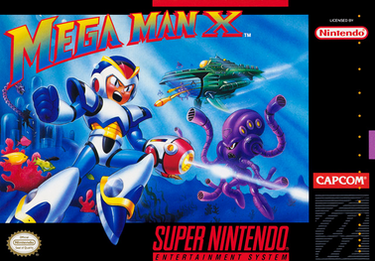
Mega Man X (SNES, 1993) - Keiji Inafune's evolution of the Mega Man formula.
Mega Man X and CPS-2: 1993
Mega Man X (SNES, December 1993 in Japan) launched a new sub-series set in a
darker future, directed by Keiji Inafune. The game’s Mode 7 intro, wall-sliding mechanics,
and more complex upgrade systems represented a clear evolution of the Mega Man formula.
Nintendo Power featured it as a cover game.
The same year, Capcom introduced the CPS-2 board with Super Street Fighter II Turbo,
pushing arcade hardware still further. The CPS-2’s encrypted ROM security made it
considerably harder to pirate than its predecessor - a sign of Capcom’s growing
commercial sophistication.
Super Ghouls ‘n Ghosts
Super Ghouls ‘n Ghosts (SNES, 1992) was a direct sequel to the original
arcade game, again directed by Tokuro Fujiwara. Considered one of the SNES’s most demanding
platform games, it retained the series’ punishing design philosophy while expanding the
sprite and colour capabilities of the 16-bit platform.