Demo screenshots filtered by era and visual technique. These images were captured from real C64 hardware or emulated at authentic resolution. Filter by the technique that interests you, or browse everything in chronological order.
Era
Technique
C64 PAL Frame Captures
Screenshots captured from video recordings of PAL C64 hardware, at approximately 766x544 pixels. The native C64 display is 320x200 pixels; these captures reflect the 4:3 pixel-aspect-corrected output as it appears on a real CRT monitor.
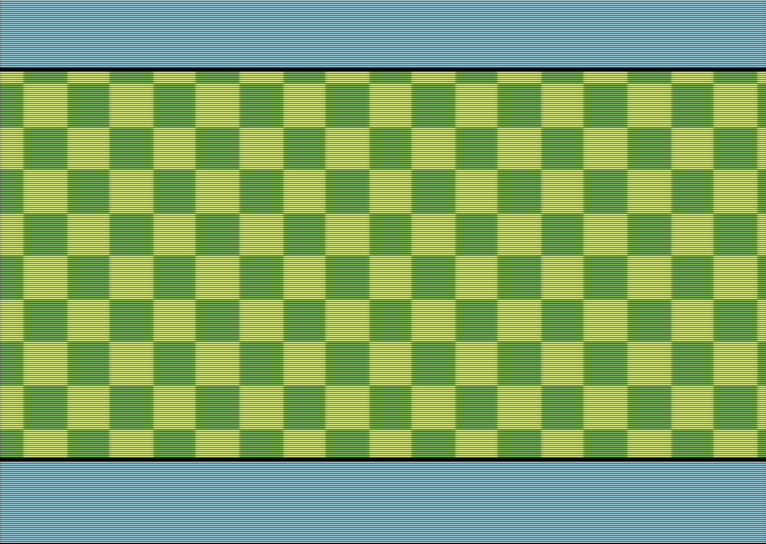
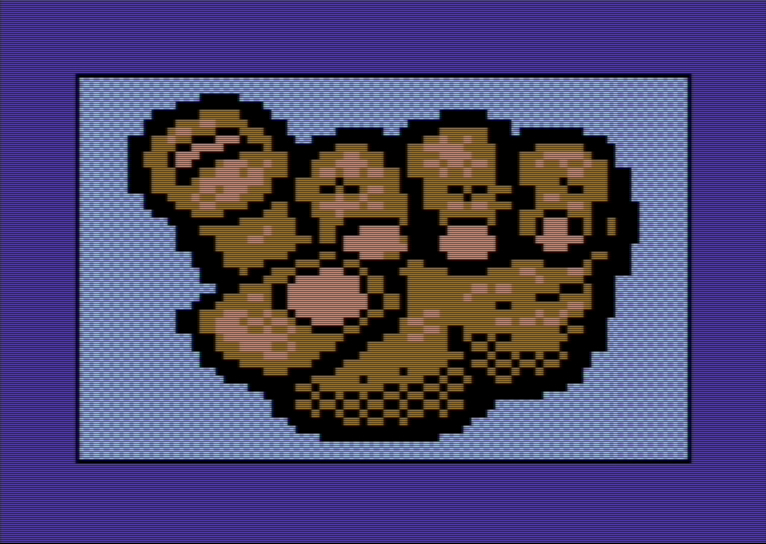
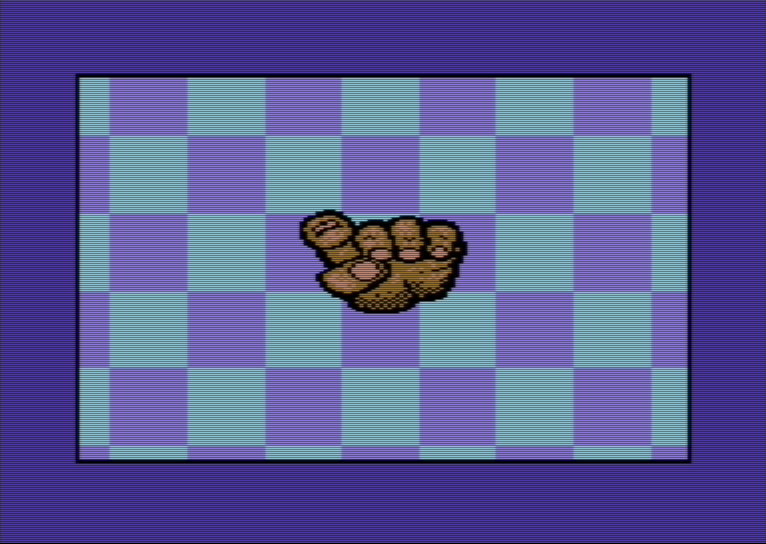
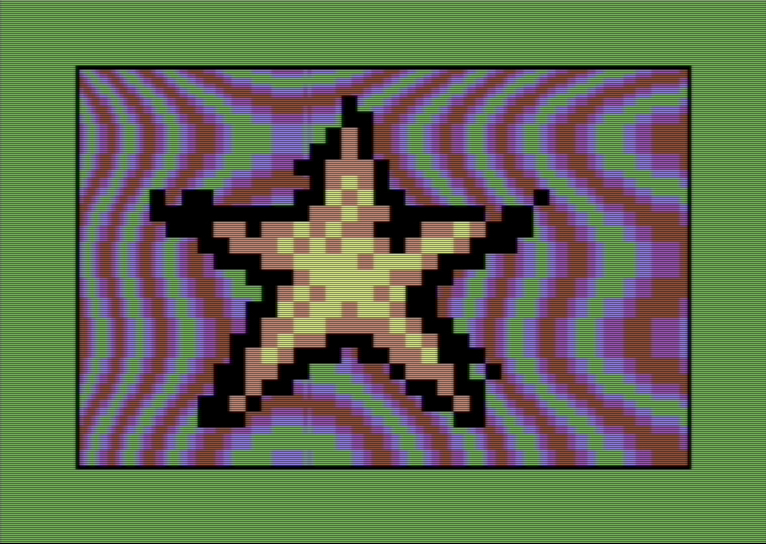
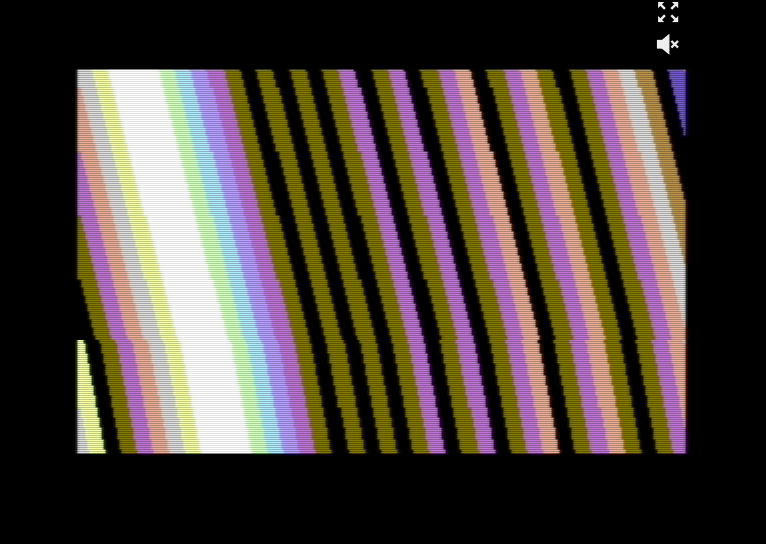
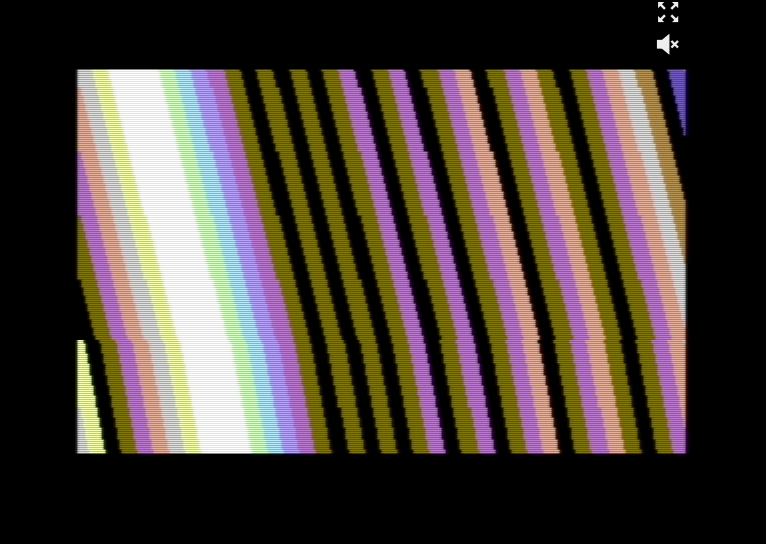
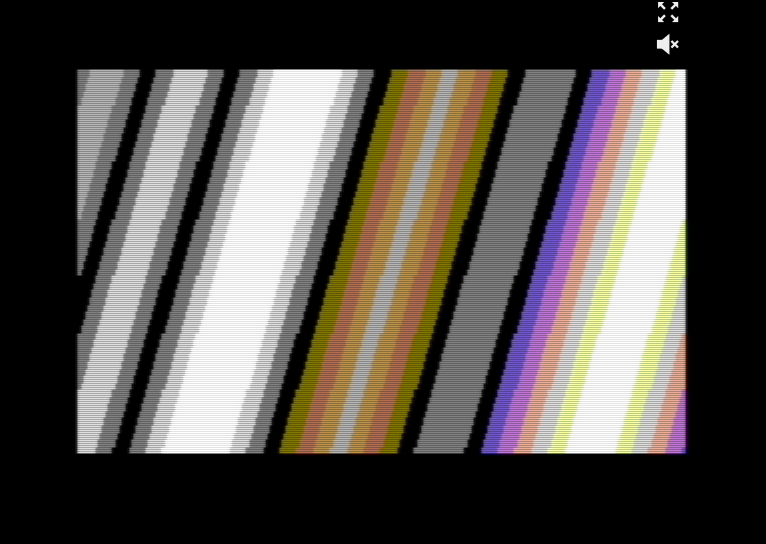
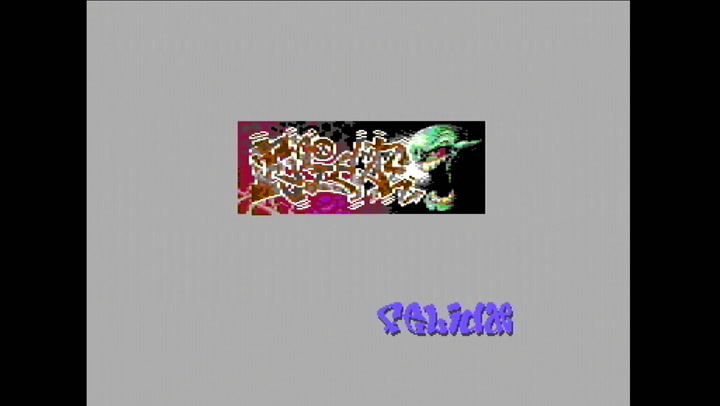
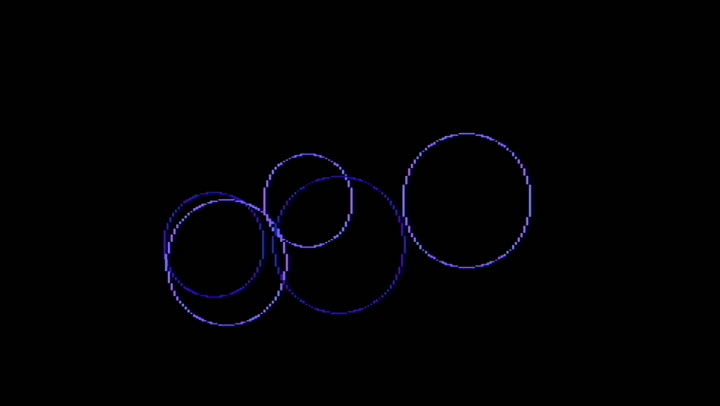
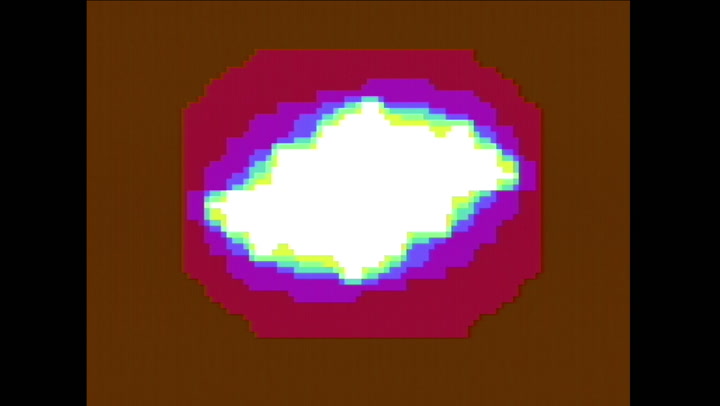
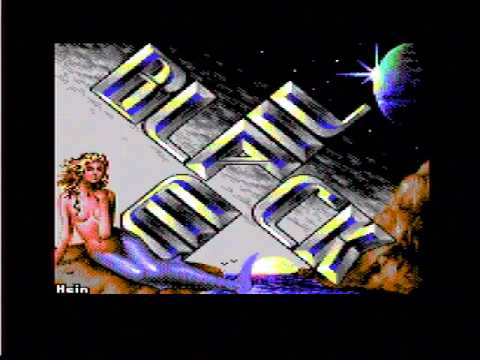
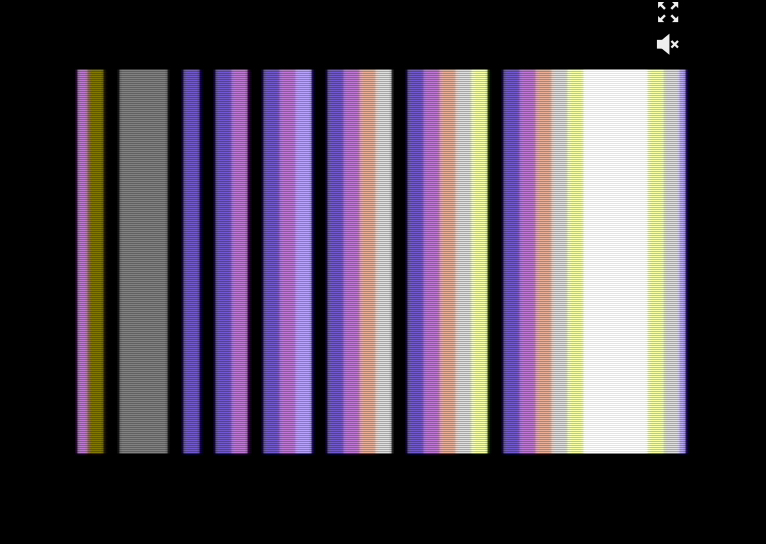
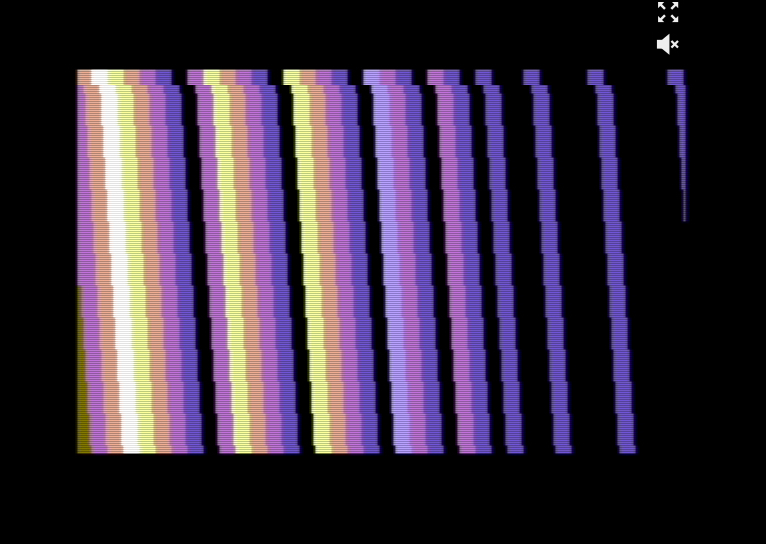
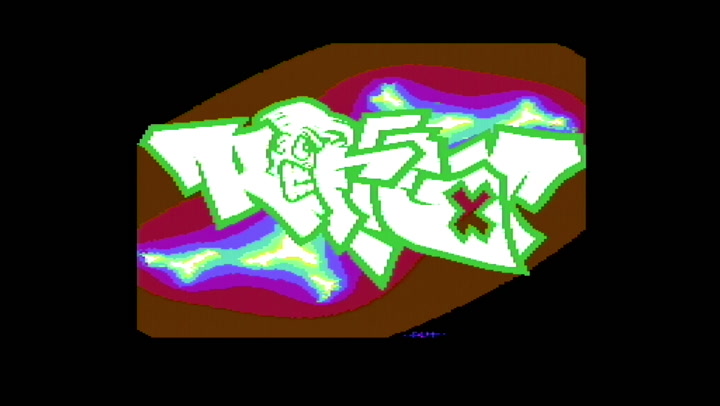
Edge of Disgrace (Booze Design, 2008) - opening raster sky. Colour changes across the full screen height are produced by writing to the VIC-II background colour register on each raster line during a specific cycle window.Edge of Disgrace (Booze Design, 2008) - layered raster bars. Multiple colour fields sit on top of each other, each requiring a separate timed interrupt to change the active colour register before the electron beam reaches that position.Edge of Disgrace (Booze Design, 2008) - sprite multiplexing scene. The VIC-II provides eight hardware sprites; repositioning their Y-coordinates mid-frame via raster interrupt produces the illusion of far more simultaneous sprite objects.Edge of Disgrace (Booze Design, 2008) - FLI colour painting. Full Screen Multicolour (FLI) swaps the attribute memory pointer mid-character-row, giving each 8x1 pixel row its own colour cell rather than sharing colour data across 8x8 character blocks.Edge of Disgrace (Booze Design, 2008) - second FLI section. The technique requires writing updated colour data during the 23-cycle gap between each character row, before the VIC-II reads those values for the next row's display output.Edge of Disgrace (Booze Design, 2008) - final sequence. The closing section layers raster interrupts, sprite multiplexing, and background colour cycling simultaneously, coordinating all three techniques within a single frame's timing budget.Comaland (Censor Design + Oxyron, 2014) - cover image. Layered raster gradients running simultaneously across multiple colour registers, sustained throughout a ten-minute runtime without repetition.Comaland (Censor Design + Oxyron, 2014) - opening sequence. The production's first scene introduces the raster colour language used throughout the entire ten-minute runtime.Comaland (Censor Design + Oxyron, 2014) - mid-demo sprite section. Oxyron's low-level programming expertise is visible in the coordination of multiple animated elements across the screen without visual artifacts.Comaland (Censor Design + Oxyron, 2014) - FLI painting section. Like Edge of Disgrace before it, Comaland uses Full Screen Multicolour to produce colour gradients at a resolution the hardware was not designed to deliver.Mathematica (Reflex, 1995) - opening section. Bitmap-mode rendering of mathematically generated forms, using the C64's high-resolution 320x200 mono bitmap mode as the basis for calculated visual output.Mathematica (Reflex, 1995) - mid-demo section. The production builds visual complexity across its runtime as the underlying mathematical functions produce different outputs through their iteration.Mathematica (Reflex, 1995) - tunnel section. A real-time perspective tunnel calculated on a 1MHz 6510 processor with no floating point unit, computed entirely through fixed-point integer arithmetic.
Video-Sourced Captures
Screenshots sourced from YouTube recordings. These are 16:9 video frames rather than native C64 output captures. They show the demo as it appeared during a recording session.
Dutch Breeze (Blackmail, 1991) - video capture. Raster colour fields and smooth horizontal scrollers represent the core technical vocabulary of the golden era demo format. Recording: cannyfocus on YouTube.Comaland (Censor Design + Oxyron, 2014) - raster scene 10. Raster colour cycling across multiple simultaneous register writes, one of the techniques that gives the production its characteristic colour density.Comaland (Censor Design + Oxyron, 2014) - scene 20. One of the later sections in the ten-minute runtime, maintaining the same visual density as earlier scenes without repetition or simplification.Mathematica (Reflex, 1995) - final section. Bitmap-mode output from the closing section of the production, contrasting with the tunnel section's perspective rendering with a different mathematical form.