Four Demos That Changed the Bar

These are the productions that the C64 scene points to when asked what the platform can do. Each one is a cultural artifact -- a document of what was possible when coders, musicians, and graphicians took the hardware seriously as an artistic medium.

Blackmail / 1991 / Netherlands

Dutch Breeze

The demo that pinned a year to the golden era.
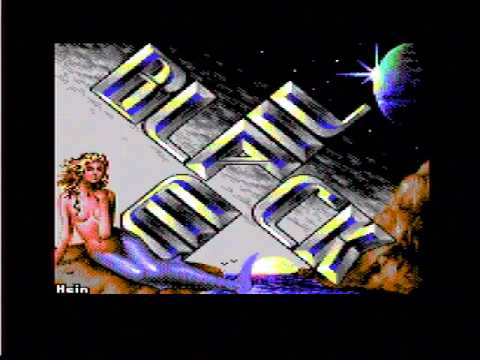
Dutch Breeze by Blackmail -- YouTube recording thumbnail showing the C64 demo title screen with coloured raster effects
Dutch Breeze title sequence as captured on real C64 hardware, 1991. YouTube recording by cannyfocus.
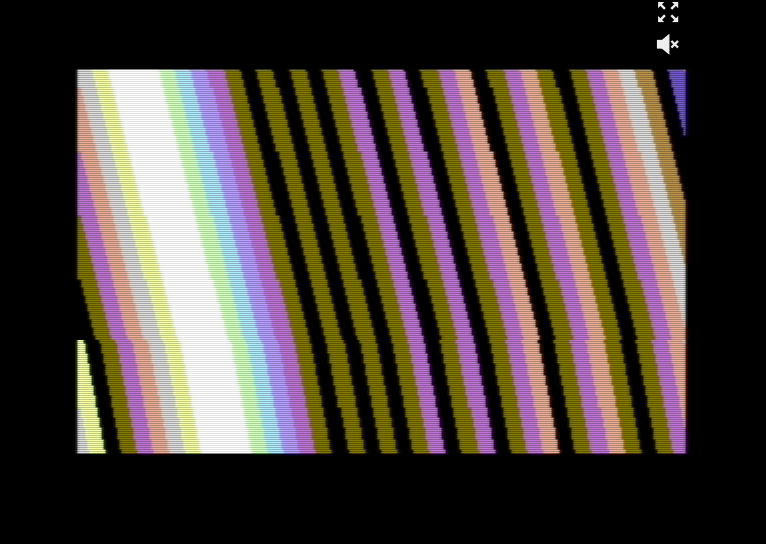
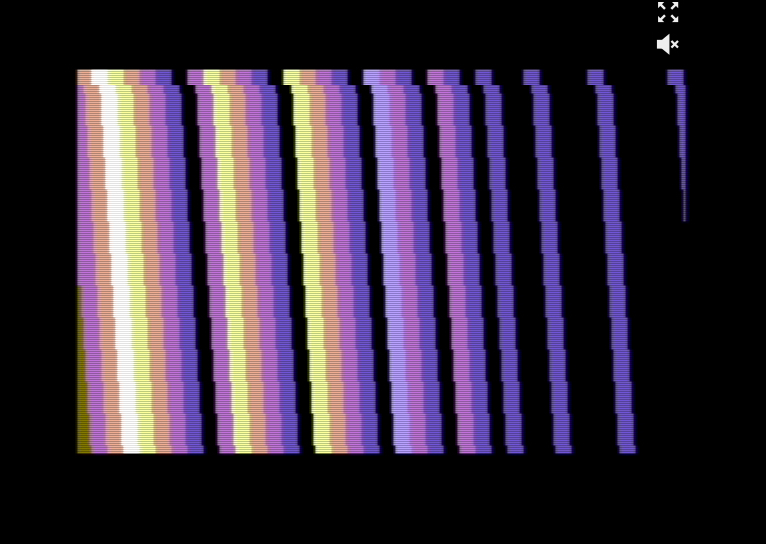
Dutch Breeze mid-demo effect showing C64 raster colour bars and sprite layering, 384x271 screenshot from CSDb
Raster colour section. C64 screenshot sourced from CSDb release listing.
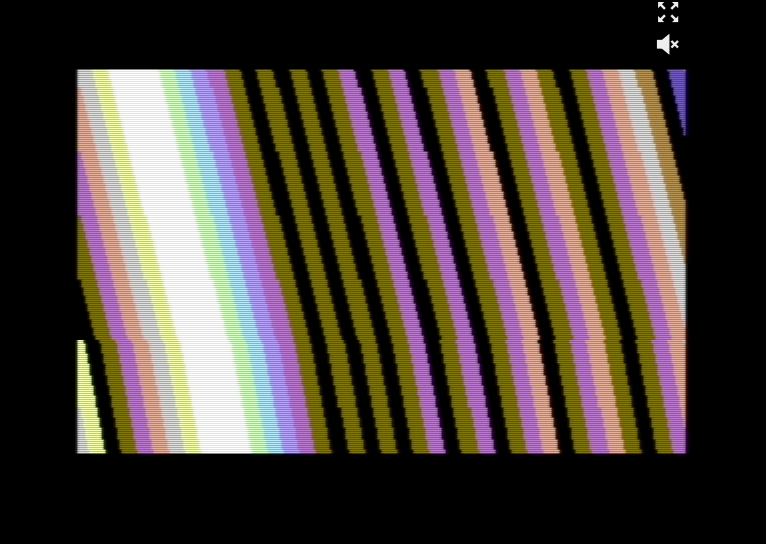
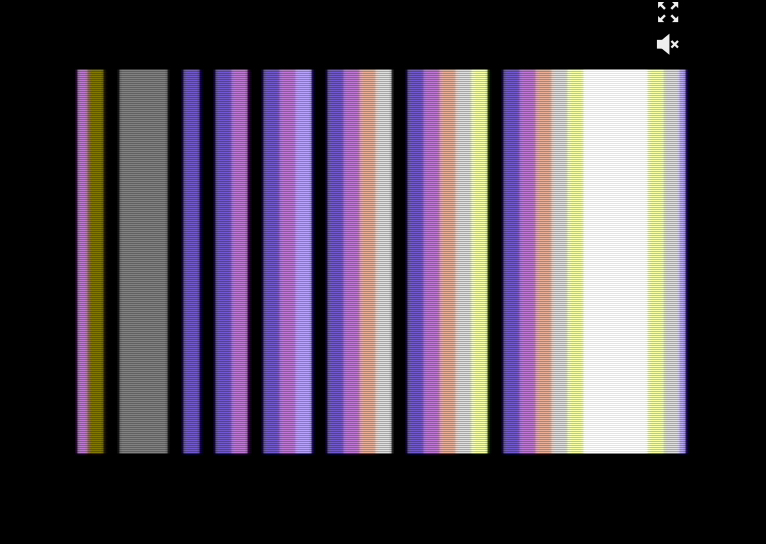
Dutch Breeze by Blackmail 1991 — C64 demo colour raster section from real hardware recording, standard definition frame
Raster colour wash in motion. Real C64 capture by cannyfocus.
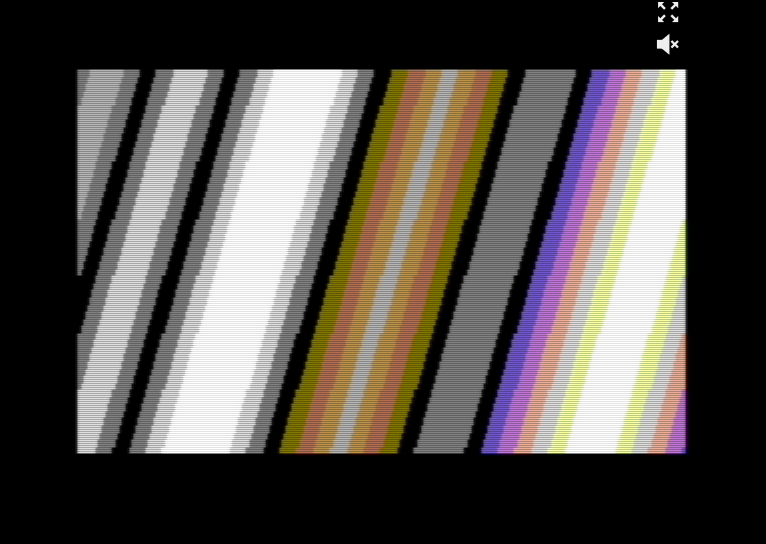
Dutch Breeze Part 2 by Blackmail 1991 — second segment of the demo showing continued raster and scroll technique on real C64 hardware
Second hardware segment. Dutch Breeze Part 2 recorded on real C64.
Dutch Breeze Part 2 closing sequence on real C64 hardware — standard definition frame showing the demo's final raster section
Closing raster sequence. Real C64 hardware output, 1991.

Dutch Breeze on Real Hardware (Part 1)

Recorded by cannyfocus on genuine C64 hardware. The real-hardware capture shows the slight timing variations in raster interrupts that emulators can approximate but not exactly reproduce.

Dutch Breeze on Real Hardware (Part 2)

Continuation of the real-hardware recording. The demo runs long enough to require splitting across two YouTube uploads at this capture quality.

1991 and the Bar Gets Set

Dutch Breeze arrived at a moment when the golden era was at full intensity. The C64's commercial lifespan was winding down -- Amiga had already claimed much of the gaming market -- but sceners were accelerating rather than stopping. Dutch Breeze by Blackmail is a snapshot of what the Dutch scene could produce at that pressure point: a demonstration of raster interrupt choreography, hardware scroller technique, and SID musicianship assembled into a single continuous production.

The demo opens with a raster section that moves coloured bars across the screen with the mathematical precision that the C64's VIC-II chip makes possible when you understand its exact line timing. The bars are not animated by changing sprite data. They are the result of reprogramming the VIC-II border and background colour registers at exact CPU cycle counts on each raster line, so the hardware itself paints the colour. That is the foundation of golden-era demo aesthetics: the hardware does the drawing; the code does the timing.

Inside the Machine: How Blackmail Made Dutch Breeze

Dutch Breeze is built from the techniques that defined the early-1990s C64 production toolkit. Raster interrupts fire at exact scanline positions to reprogram hardware registers. The scroller advances by one character cell per frame and redraws the rightmost column from a text buffer, using the hardware's built-in smooth scroll register to animate the sub-character position. Sprites run as visual signatures and accent elements, multiplexed to exceed the VIC-II's hardware limit of eight on screen simultaneously.

The SID score ties the sections together. A three-voice arrangement plays continuously, with the bass line keeping the tempo locked to the demo's visual pacing. The composition does not change dramatically between sections -- this is golden-era design where the music carries the production's continuity while the code delivers the visual variety.

Raster by Raster: The Technical Picture

The core technique in Dutch Breeze is stable raster interrupt positioning. The 6510 CPU runs at approximately 1 MHz on PAL hardware; each raster line takes exactly 63 CPU cycles. By setting the VIC-II's raster interrupt register to fire at a specific line number, and then counting cycles within the interrupt handler, a coder can write to the colour registers at pixel-exact positions. The result is colour changes mid-screen with no visible tearing -- the hardware draws the colour before the electron beam has moved past that position.

Sprite multiplexing extends the eight-sprite hardware limit by sorting sprites by Y position and reusing the sprite data registers as the beam sweeps down the screen. A multiplexer interrupt fires between sprite groups, reassigns sprite positions and pointers, and lets the hardware draw another set before the previous frame is complete. Dutch Breeze uses this technique in its sprite accent sections where visual elements overlap without flicker.

The combined result -- raster colour timing, hardware scrollers, SID score, sprite multiplexing -- is not a special feature of the hardware. It is a consequence of understanding every cycle the hardware spends drawing a frame and inserting code into the gaps the VIC-II leaves while it is busy with its own rendering pass.

The Score

Dutch Breeze uses the SID chip's three voices in the standard golden-era arrangement: melody, counter-melody, and bass. The filter is engaged on the lower voices to give the bass a warmer, more rounded character against the brighter melody voice. The composition loops over the demo's full runtime without becoming fatiguing -- a significant compositional achievement given the three-voice constraint. The SID score is the emotional anchor of Dutch Breeze; the code delivers the spectacle, but the music is what you remember.

What the Scene Said at the Time

Dutch Breeze circulated at European copy parties and through the postal swapping networks that distributed scene software in the early 1990s. Its reputation built through word of mouth among sceners who had seen it run on real hardware and could recognise the raster timing precision from their own coding attempts. The demo appeared on CSDb's historical listings with consistently high placement among 1991 productions, reflecting a reassessment that became clearer as the historical record solidified in the 2000s.

"The Dutch group's ability to time interrupts to within a cycle or two was what separated their work from everyone else's at that point. Dutch Breeze showed that precision." Scene retrospective on the 1991 golden era -- CSDb user commentary, accessed 2026-06

A Demo That Survived the PC Transition

Dutch Breeze is still shown at retro computing events and C64 demoparty retrospective screenings. The techniques it demonstrates -- raster interrupt timing, sprite multiplexing, hardware scrollers -- are the same techniques that later productions refined and extended. Understanding Dutch Breeze is part of understanding how the C64 demo scene built its knowledge base: each production added to a shared technique library that the next group could reference, extend, and challenge. The demo is on YouTube (recordings foQ3TBQ8kQM and 9lC8TgRTzu0, both on real hardware), in the HVSC SID archive, and indexed at CSDb and Demozoo.

Booze Design / 2008 / Netherlands

Edge of Disgrace

First place at Revision 2008. The C64 demo that the revival turned on.

Edge of Disgrace main cover screenshot showing the opening raster sky gradient scene at 766x544 from Internet Archive
Opening raster sky gradient. The colour banding and smooth gradient required precise interrupt timing per scanline. Frame capture from Internet Archive identifier Edge_of_Disgrace_2008_Booze_Design_Side_A.
Edge of Disgrace opening scene with raster sky gradient showing layered colour bars from dark to light at the top of the C64 display
Opening raster gradient, frame 01.
Edge of Disgrace mid-demo section with saturated coloured raster bars filling the screen in horizontal stripes
Colour raster bar section, frame 05.
Edge of Disgrace sprite-based scene showing hardware sprites arranged in layered groups to create complex visual shapes
Sprite-multiplexed visual section, frame 10.
Edge of Disgrace colour wash effect showing broad horizontal colour areas across the C64 display with raster timing control
Colour wash raster section, frame 15.
Edge of Disgrace late section with mixed raster and sprite elements showing the full display in coordinated colour and sprite output
Combined raster and sprite late section, frame 20.
Edge of Disgrace final sequence showing the closing visual effects and colour treatment before the demo ends
Final sequence, frame 30.

Edge of Disgrace -- Original Recording

Real hardware recording by 8bit Nostalgia channel. This is the version most sceners would have seen in 2008 -- standard frame rate, authentic hardware behaviour.

Edge of Disgrace -- 50 FPS High Quality

50 FPS capture by RetroDemoScene channel. The higher frame rate makes the raster timing and animation visible at a resolution closer to what the hardware produces.

The Opening That Stopped the Scene

When Edge of Disgrace appeared at Revision 2008, it reframed what the C64 was. Not an antique computing platform, not a nostalgia exercise: a machine with a remaining budget of undiscovered technique. The opening raster gradient -- colours shifting from dark at the bottom to saturated at the top with no visible banding -- was not achieved by better hardware. It was achieved by more precise interrupt timing than anyone in the scene had implemented before at that visual density.

The demo runs through a sequence of visual sections that each demonstrate a distinct technique: raster colour cycling, sprite choreography, colour RAM manipulation, FLD-driven scrolling. None of these are new in principle. What Booze Design brought to Edge of Disgrace was a level of craft in each technique -- the precision of the timing, the care of the colour selection, the pacing of the transitions -- that made the result qualitatively different from earlier productions using the same basic building blocks.

Eight Years of Technique, Three Months of Crunch

Booze Design had been active in the C64 revival scene since the early 2000s. By 2008 they had accumulated years of experience with the specific hardware quirks of PAL C64 raster timing. Edge of Disgrace drew on that accumulated knowledge: the techniques in the demo were not invented for it, but they were applied with a precision that only comes from prolonged practice on the same hardware.

The demo was produced for and premiered at Revision 2008, one of the major European demoparties. Competition deadline pressure, combined with the group's technical depth, produced a production that won first place in its category -- one of the few cases in the revival era where the most technically advanced C64 entry was also the most visually polished. That combination, unusual in demo competitions, is what gave Edge of Disgrace its lasting reputation.

FLD, Sprites, and the Colour RAM

Edge of Disgrace demonstrates Flexible Line Distance (FLD) -- a technique where the VIC-II chip's vertical scroll register is written during specific raster windows to stretch or compress the visible screen area. FLD allows coders to scroll the display vertically in ways the hardware was not designed to support, producing smooth movement without the cost of redrawing the entire screen contents on each frame.

The sprite sections use multiplexing to place more than eight sprites on screen simultaneously. A sorting interrupt fires between sprite rows, reassigning the eight hardware sprite slots to different logical sprites as the raster beam descends. The choreography of these assignments -- coordinated with the raster colour changes happening in parallel -- is what gives Edge of Disgrace its visual coherence across sections that use completely different hardware techniques.

The colour RAM -- a 1KB section of memory that maps directly to the character mode foreground colour for each screen position -- is used in the demo's text sections to produce multi-coloured character display. Writing to colour RAM during the screen's vertical blank period allows colour changes that take effect on the next frame without tearing. In Edge of Disgrace, this technique appears in the transitions between sections, where the colour of on-screen characters shifts to bridge the visual character of adjacent scenes.

Goto80 and the Score

The SID soundtrack of Edge of Disgrace is credited to scene musicians working within the demo's visual framework. The score supports the demo's pacing without overwhelming the visual content -- a compositional balance that is harder to achieve on the SID than it might appear, because the three-voice chip in a quiet room can dominate any other output the machine produces. The music in Edge of Disgrace stays present and supportive throughout, with tonal character that shifts to match each visual section's colour palette and movement style. Goto80 (Anders Carlsson), whose SID work spans the revival era, is associated with the demo's musical contribution. Full SID credits are listed at CSDb.

Elektron and the Scene's Verdict

Edge of Disgrace won first place at Revision 2008 and its reputation continued to grow in the decade following. CSDb comments from sceners in the months and years after release consistently cite the raster timing precision and the demo's visual coherence as its primary technical achievements. The demo is a frequent reference point in discussions of post-2000 C64 technique -- the production that demonstrated the revival was capable of output indistinguishable in ambition from the golden era.

"The gradient at the top of the screen -- I had to rewatch it several times to convince myself it was running on a stock C64. The colour precision there is something else." CSDb release comments for Edge of Disgrace (Booze Design, 2008), accessed 2026-06

Still the Reference Point

Sceners discussing the peak of the C64 revival era consistently name Edge of Disgrace. It is the production most often shown at retro computing events when the question is "what can a stock 1982 machine do with the right code?" The Internet Archive hosts a full preservation copy (identifier Edge_of_Disgrace_2008_Booze_Design_Side_A) including a full-run animated screenshot. The demo is indexed at Demozoo and CSDb with complete credit records and user commentary. Watch it on the Videos page, and explore the production's technical context on the History page.

Censor Design + Oxyron / 2014 / Sweden + Germany

Comaland

First place at the X Party 2014. Sweden meets Germany in the most technically precise C64 demo of the modern era.

Comaland cover screenshot showing the opening title sequence with richly coloured layered graphics from Internet Archive
Comaland opening sequence. Frame capture from Internet Archive identifier comaland_100. The colour density visible here requires per-scanline colour RAM writes coordinated with sprite positioning.
Comaland opening visual sequence showing the first graphical scene with layered colour and sprite elements
Opening sequence, frame 00.
Comaland mid-demo graphical scene with animated character and colour detail visible in the C64 display
Mid-demo scene, frame 05.
Comaland scene 10 showing one of the demo's graphical set pieces with colour raster effects
Scene 10 set piece.
Comaland scene 15 showing another distinct graphical section with the characteristic Censor Design colour treatment
Scene 15 -- colour and sprite precision.
Comaland scene 20 showing the late-demo visual material with continued colour density and graphical ambition
Late-demo visual section, frame 20.

Comaland -- Primary Recording

Standard recording by RetroDemoScene. This is the version that circulated widely after X Party 2014 and established the demo's reputation in the broader C64 community.

Comaland 100% -- 50 FPS

50 FPS high-quality capture of the 100% version. The higher frame rate makes the FLI painting and raster colour animation visible at their true resolution.

Two Groups, One Landmark

Comaland is the product of a collaboration between Censor Design -- Sweden's most enduring C64 group -- and Oxyron, the German group known for technical exactness that borders on obsession. The two groups had complementary strengths: Censor Design brought a strong artistic direction and graphic coding tradition; Oxyron brought its reputation for cycle-counted raster precision. The result is a demo where every graphical scene is both visually striking and technically flawless -- an unusual combination in any computing platform's demo scene.

The demo won first place at the X Party in the Netherlands in 2014, one of the last major dedicated C64 demoparties. That context matters: Comaland competed against a concentrated group of experienced sceners who understood exactly what the techniques required to produce it. Winning under those conditions signals broad consensus within the community rather than surprise from non-specialist judges.

Sweden Meets Germany: The Collaboration Story

Censor Design and Oxyron share a history of pushing what the VIC-II chip can produce in terms of per-scanline colour density. Crossbow (Censor Design) and Krill (Oxyron) are the central coding figures in the collaboration, bringing their groups' respective expertise into a single production pipeline. The graphical content -- richly coloured scenes with pixel-precise sprite and character colour timing -- reflects the level of coordination required when two experienced coders merge their techniques rather than compromising to a common denominator.

The 2014 production timeline was shaped by the X Party deadline. Working across country lines required the kind of tooling and code-sharing infrastructure that the scene had developed over two decades of networked collaboration. The result is a demo that runs identically on every PAL C64 tested because both groups had, between them, access to a representative sample of the hardware variants that exist in European collections.

FLI Painting at Extreme Density

The central technique in Comaland's most complex graphical scenes is Flexible Line Interrupt (FLI) colour mode, which extends the C64's standard character mode colour capabilities by firing an interrupt at every raster line and rewriting the VIC-II's character pointer to a different row of the screen RAM on each line. This tricks the hardware into providing eight colours per 8x1 pixel row instead of the standard eight colours per 8x8 character block. The effective colour resolution -- 8 colours per pixel row rather than per character -- allows graphical detail that the VIC-II was not intended to support.

Implementing FLI correctly requires resolving a timing conflict: the VIC-II fetches sprite data during the horizontal blank period, which overlaps with the FLI interrupt window. Managing this conflict without producing sprite glitches or display artefacts -- while also running the sprite multiplexer and the SID sound routine -- requires code that accounts for every cycle the 6510 spends during each raster line. Comaland executes this without visible FLI flicker on any of its graphical scenes, which is the visible proof of the underlying timing precision.

The Soundtrack

The Comaland soundtrack shifts character across the demo's visual sections, with multiple subtune compositions corresponding to different scenes. The SID score provides continuity through the transitions between graphical sections, giving the demo a sense of movement and pacing that would be harder to achieve with a single looping track. The multi-subtune structure is accessible via the SID player on the Music page. Full composer credits are listed at CSDb (internet archive comaland_100, HVSC archive).

What the Voters Said

Comaland's CSDb release page collected technical commentary that recognised the FLI precision as exceptional even by Oxyron standards. The scene's internal vote at X Party 2014 reflected both the graphical quality and the technical difficulty -- sceners competing in the same category understood what the visible output required in terms of cycle counting and debug time. The demo's reputation strengthened in the two years following its release as more sceners had time to examine the code and measure the timing values against their own implementations.

"Oxyron and Censor together -- you knew going in it was going to be precise. But the FLI stability across all those scenes, no glitches, everything locked? That is what winning looks like on C64." CSDb release comments for Comaland (Censor Design and Oxyron, 2014), accessed 2026-06

Where Modern Demo Making Starts

Comaland is where contemporary discussions of C64 demo technique begin. It is cited in scene forums and at demoparties as the current reference point for FLI colour density and multi-section production design. The production is fully preserved on the Internet Archive (identifier comaland_100), indexed at CSDb and Demozoo with complete credits, and available to run in VICE emulator from the disk image. The demo runs correctly on PAL C64 hardware and in VICE with PAL timing enabled. See the Play page for emulator setup guidance.

Reflex / 1995 / Germany

Mathematica

Mathematical effects on C64 hardware, at the edge of the golden era's final wave.

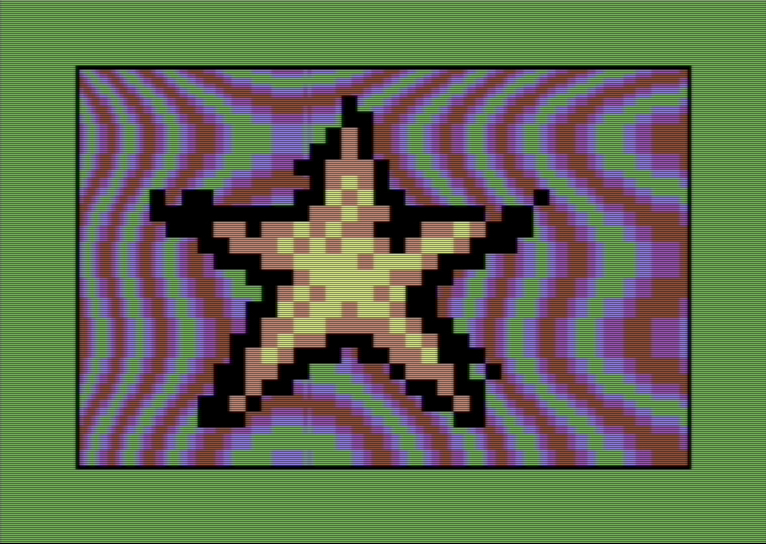
Mathematica by Reflex C64 demo 1995 YouTube recording thumbnail showing mathematical visual effects on the C64 display
Mathematica title and early section. YouTube recording thumbnail by cannyfocus (real hardware recording Wz1WOrsLeAs).
Mathematica early scene video frame capture showing geometric mathematical effects on the C64 display, frame 57
Early scene mathematical effect, frame 57.
Mathematica mid-demo section showing changing mathematical pattern on the C64 display, frame 117
Mid-demo pattern evolution, frame 117.
Mathematica scene showing a further mathematical visual pattern in the C64 display, frame 177
Pattern transition, frame 177.
Mathematica late section showing complex tunnel-like mathematical visual effect rendered on C64 hardware, frame 237
Tunnel-effect section, frame 237.
Mathematica final section showing the tunnel and mathematical output at the end of the demo on C64, frame 297
Late tunnel section, frame 297.

Mathematica on Real C64 Hardware

Real hardware recording by cannyfocus. Mathematica on original C64 hardware at 1995 PAL timing shows the tunnel and mathematical effect routines at their authentic output resolution.

When the Numbers Started Moving

Mathematica by Reflex arrived in 1995 at the tail end of the golden era, when most of the European scene had moved to Amiga or PC. Reflex chose to stay on C64 and push a different direction: rather than the raster interrupt colour choreography that defined the late golden era's aesthetic peak, Mathematica explored mathematical effect generation -- tunnel effects, plasma routines, and generative visual mathematics computed in real time by the 6510 processor.

These are not pre-computed graphics stored in memory. They are functions evaluated per pixel or per character per frame, producing patterns that evolve continuously. Doing this on a 1MHz processor with 64KB of RAM and no floating-point hardware required algorithmic ingenuity -- typically fixed-point arithmetic using precalculated lookup tables to replace division and trigonometry with faster integer operations.

Staying on the Platform in 1995

Reflex assembled Mathematica at a point when most of the European scene had left C64 for Amiga or PC. The group's decision to continue on an 8-bit machine was not nostalgia but discipline: the constraint of the 6510, the 64KB address space, and the character-mode display created a specific category of problem that mathematical routines could solve elegantly. The demo was produced primarily by a small core of coders working within the Dutch and Belgian C64 communities, cross-referencing technique with other groups still active on the platform through scene correspondence and disk trading.

The mathematical approach was partly a reaction to the limits of raster interrupt technique -- by 1995, raster colour effects had been pushed close to their ceiling by productions like Dutch Breeze and Edge of Disgrace's predecessors. Reflex's approach was to move the challenge from timing precision to algorithmic efficiency: instead of squeezing more from the VIC-II's fixed display hardware, they used the CPU to generate novel visual forms that the hardware was not designed to produce at all.

Fixed Point and the 6510

The 6510 CPU has no hardware multiplication instruction and no floating-point unit. Mathematical effects that appear smooth on screen -- sine waves, tunnels, plasma fields -- are computed using integer arithmetic with pre-calculated tables. A sine table stores 256 or 512 values covering one full cycle, indexed by an angle parameter that advances each frame. A tunnel effect maps each on-screen position to a radius and angle in polar coordinates, stored in another lookup table, and uses those values to index into a texture pattern. The C64 can evaluate these per-position in time for a 25fps or 50fps update rate if the routine is optimised to avoid slower instructions.

Mathematica uses character mode as its drawing surface for the mathematical patterns, changing the character data pointed to by each screen position each frame to produce the moving image. This is more CPU-efficient than bitmap mode because the character data is smaller, but it limits the visual resolution to 8x8 pixel blocks. The result is a blocky but distinctly recognisable mathematical aesthetic that has become one of the visual signatures of 1990s C64 demo production.

The Score

Mathematica's SID soundtrack maintains the geometric quality of the visuals -- structured, evolving, built from repeating patterns that shift over the demo's runtime. The three-voice SID arrangement uses the filter to modulate harmonic content in time with the mathematical effect transitions, providing audio reinforcement for the visual changes without distracting from them.

The Scene in 1995

By 1995 the C64 demo scene had contracted significantly. The coders still active on the platform were disproportionately those for whom the hardware constraint itself was the point -- people who found the limited CPU, RAM, and colour palette creatively productive rather than limiting. Mathematica exists in that context: a statement that the mathematical approach to demo effects had not been exhausted on the C64 even as the rest of the scene moved on. CSDb indexes Mathematica with its full credit record; the Internet Archive preserves a video capture of the demo running on real hardware.

"Reflex kept producing on C64 when the obvious move was to Amiga. Mathematica was their answer to why -- the hardware still had unexplored space, and they were going to find it." Internet Archive capture notes for c64-demo-capture-reflex-mathematica-1995; corroborated by CSDb release record, accessed 2026-06

Why Tunnels on a 1MHz Machine Still Matter

Mathematica is cited in discussions of C64 mathematical effect technique as the reference implementation from the 1990s for tunnel and plasma routines on the platform. Its techniques were documented and referenced by later productions in the revival era that returned to mathematical effects with the more refined tooling available after 2000. The demo is accessible via the Internet Archive capture (identifier c64-demo-capture-reflex-mathematica-1995) and via VICE emulator from disk. The real hardware recording (YouTube Wz1WOrsLeAs) is the most accurate visual reference for what the effect output looks like on genuine C64 hardware.