The Builders of Hyrule
Four people whose creative decisions shaped one of the most enduring mythologies in interactive entertainment.
Creator / Producer / Director
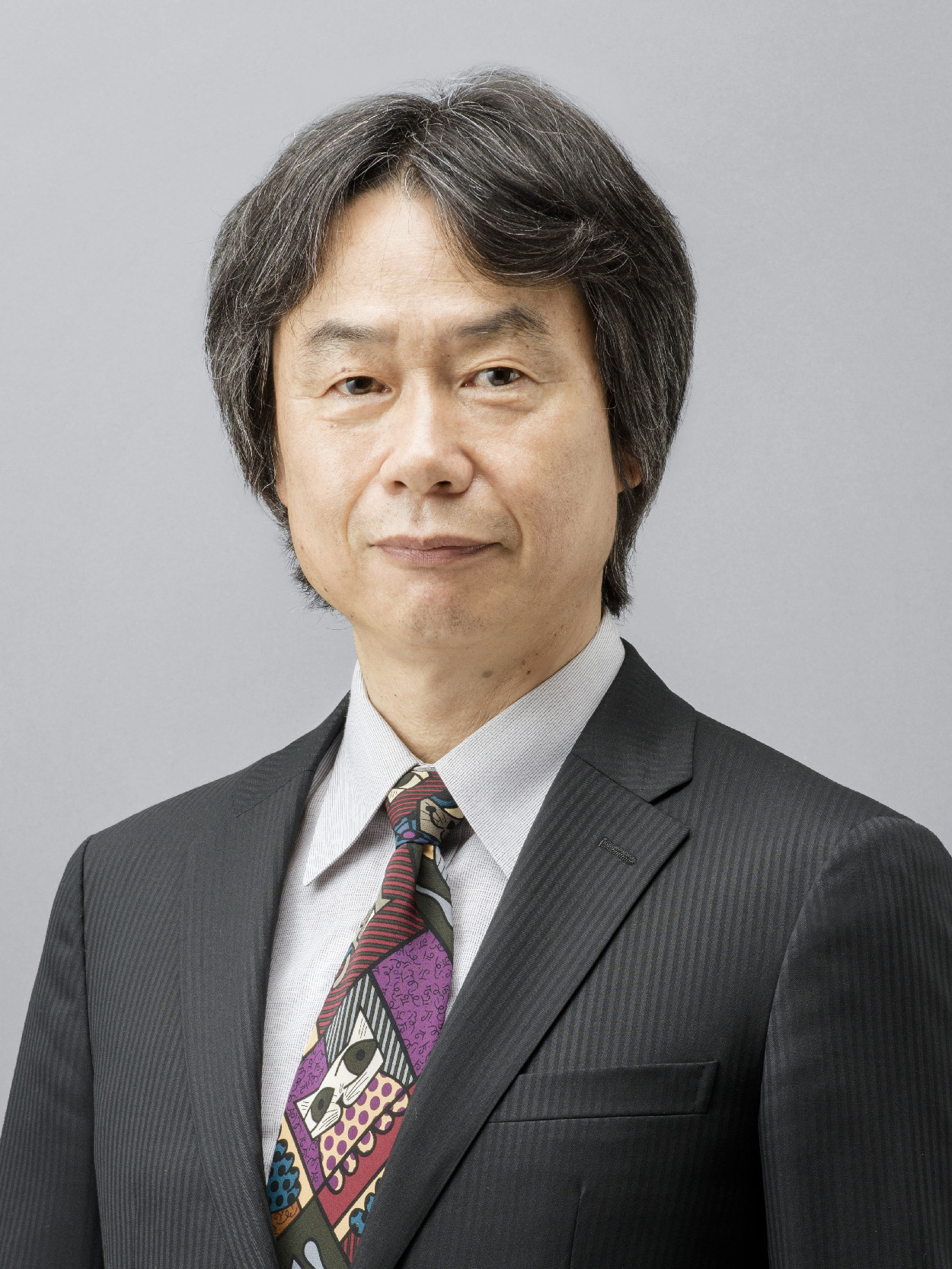
Shigeru Miyamoto
Shigeru Miyamoto is the creator of The Legend of Zelda and one of the most consequential figures in
the history of interactive entertainment. Born in 1952 in Sonobe, a small rural town outside Kyoto,
Miyamoto spent his childhood exploring the surrounding countryside — caves, ponds, farmland, and
forest paths that revealed themselves slowly, rewarding curiosity with discovery. This experience of
spatial exploration became the foundational inspiration for Zelda.
Miyamoto studied industrial design at Kanazawa College of Art and joined Nintendo in 1977 as a staff
artist. His first game design was Donkey Kong (1981), which introduced Mario. When Nintendo commissioned
a game for its Famicom Disk System, Miyamoto proposed a vast explorable world: The Legend of Zelda.
As producer of A Link to the Past and Link's Awakening, Miyamoto provided creative oversight while
director Tezuka handled day-to-day execution. He insisted on the Dark World parallel structure when
early builds threatened to cut it, and greenlit the unofficial Link's Awakening prototype.
“What I remember most is going out and exploring — you’d find a cave, and you’d wonder if you should go in, and you’d feel brave or afraid. I wanted people to feel that.”
“A delayed game is eventually good, but a rushed game is forever bad.”
Key Works
- Donkey Kong (1981) — Creator/Director
- The Legend of Zelda (1986) — Creator/Director/Producer
- Super Mario Bros. (1985) — Creator/Director
- A Link to the Past (1991) — Producer
Interview

Director / Co-Designer
Takashi Tezuka
Takashi Tezuka is the director of A Link to the Past and Link's Awakening, and the principal
architect of Hyrulean lore. Joining Nintendo in 1984, Tezuka was assigned to Miyamoto's team almost
immediately, serving as co-designer on Super Mario Bros. and sub-director on the original Zelda.
Tezuka's contribution to the original Zelda was primarily in dungeon design and story structure.
While Miyamoto conceived the overworld's open exploration, Tezuka shaped the nine dungeons and wrote
the story framework that established Hyrule's mythology.
For A Link to the Past, Tezuka took the director's seat and made the most consequential structural
decision in the series: insisting that the Dark World be retained. The Dark World's design required
immense coordination and became the game's defining achievement.
“Every screen of the overworld should reward the player for exploring it — a secret, a path, something that wasn’t there before. The world should feel inexhaustible even when you know it well.”
“With Link’s Awakening we had the freedom of a small project — nobody expected much, so we could try things that felt too risky for a big release.”
Key Works
- Super Mario Bros. (1985) — Co-Designer
- The Legend of Zelda (1986) — Sub-Director / Story
- A Link to the Past (1991) — Director
- Link's Awakening (1993) — Director
Event Designer / Story Director
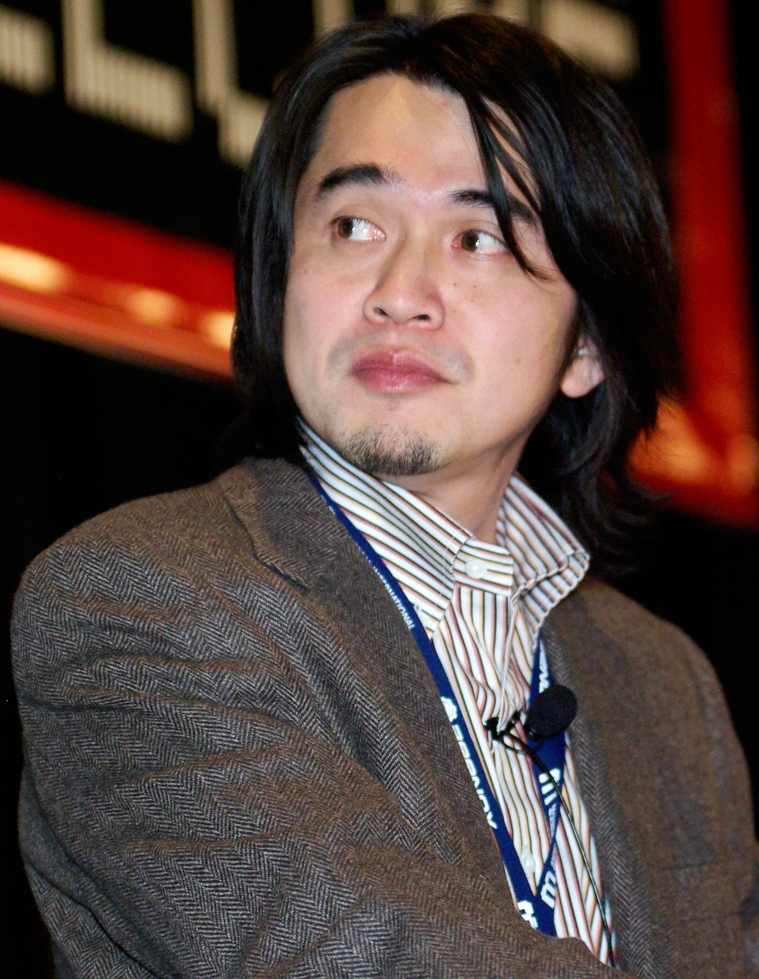
Yoshiaki Koizumi
Yoshiaki Koizumi is one of Nintendo's most creative designers, responsible for some of the most
emotionally affecting moments in the early Zelda games. Joining Nintendo in 1991, Koizumi worked on
A Link to the Past as an event designer — the person responsible for scripted sequences, NPC
conversations, and story beats that give the game its narrative texture.
Koizumi's contributions include the flute boy subplot: in Kakariko Village, a boy plays a flute; in
the Dark World, that boy has become a tree. If the player finds the flute, a bird appears — the boy's
transformation into a seagull a quiet, wordless tragedy the game never explains.
For Link's Awakening, Koizumi developed the story and is widely credited with the game's narrative
direction, particularly Marin's arc and the philosophical resolution of the ending. He later directed
Super Mario Odyssey (2017).
“The flute boy was the moment I understood what games could do that other media could not. You don’t watch someone find out the boy became a tree — you find out, and you decide what to do with that knowledge.”
“With Marin, we wanted the player to miss her. Not understand her fate — miss her. There’s a difference.”
Key Works
- A Link to the Past (1991) — Event Designer
- Link's Awakening (1993) — Story
- Super Mario 64 (1996) — Co-Director
- Super Mario Odyssey (2017) — Director

Composer
Koji Kondo
Koji Kondo is the composer of The Legend of Zelda's music — the sweeping overworld theme, the tense
dungeon atmospherics, and the serene Hyrule Castle theme that have become among the most recognisable
compositions in all of gaming. Joining Nintendo in 1984 as the company's first dedicated composer,
Kondo composed the Zelda I and Zelda II scores simultaneously with the Super Mario Bros. series.
The original overworld theme needed to convey both adventure and mystery: the feeling of a world
waiting to be explored. The result — a brisk, rhythmically confident piece that never fully resolves
— achieves this by circling back rather than landing decisively, mirroring the open-ended nature
of the exploration it accompanies.
A Link to the Past represents Kondo's most ambitious Zelda work. The SNES's Sony SPC700 chip allowed
sampled instruments and multiple audio channels. The Dark World theme — a driving, minor-key
restatement of the Light World overworld theme — is a master class in creating corrupted familiarity
through harmonic inversion.
“Music in a game has to be invisible. If the player notices the music, they’ve been pulled out of the experience. The goal is for the music to become part of the world.”
“The Dark World theme was a challenge: I needed people to feel immediately that something was wrong without understanding why. I used the same melody as the Light World but harmonised it differently.”
Key Compositions
- Overworld Theme (Zelda I) — the defining Zelda motif
- Hyrule Castle Theme (A Link to the Past)
- Dark World Theme (A Link to the Past)
- Kakariko Village (A Link to the Past)
GDC Talk