Origins: Classical Training & the Capcom Hire (1967–1988)
Yoko Shimomura was born in 1967 in Hyogo Prefecture, Japan. From an early age she studied classical piano, eventually graduating from the Osaka College of Music. Her instinct for melody and harmonic structure was formed in that tradition — she was trained to hear music as architecture, not just sound.
After graduating she faced a decision common to conservatory students of her generation: whether to pursue performance, teaching, or something less predictable. The video game industry in 1988 was not yet a prestigious landing place for classically trained musicians, but Capcom — then producing some of the most ambitious SNES soundtracks in the world — was hiring. Shimomura joined their sound team.
The Capcom Era: NES and Early SNES (1988–1991)
Shimomura’s first years at Capcom involved composing for NES/Famicom titles and early SNES projects. She worked across the transition from the 2A03’s five-channel constraints to the SPC700’s eight-channel ADPCM richness — a technical leap that fundamentally changed what composers could express.
Her early SNES work appeared on titles including Final Fight (SNES port, 1991), where she composed several character and stage themes. Final Fight on SNES is a reduced port of the arcade original, but Shimomura’s contributions to the sound team are audible in the character select screen and specific stage music.
Street Fighter II: The World Warrior (1991–1992)
In 1991, Capcom began developing the SNES version of Street Fighter II: The World Warrior. The arcade original had used a Yamaha QSound system for its audio — hardware Capcom could not directly port to the SNES. The SNES version required an entirely new approach to the soundtrack.
Shimomura became the primary composer for the SNES SF2 port. She composed the character stage themes — Guile’s Theme, Ryu’s Theme, Chun-Li’s Theme, Blanka’s Theme, Dhalsim’s Theme, M. Bison’s Theme, and more. Each theme was designed to capture both the fighter’s personality and the atmosphere of their home stage.
The game sold approximately 6.3 million copies on the SNES — one of the platform’s all-time bestsellers. Shimomura’s soundtrack was integral to the experience. The themes are so closely tied to the fighter identities that players who grew up with the game can still identify each character from the first bar alone.
“When I’m composing, I try to think about what kind of music would make the person playing the game feel the most excitement, or the most sadness, or the most connection to the world on screen.”
Yoko Shimomura, various interview sources
The Departure for Square (1993)
Despite the enormous success of Street Fighter II, Shimomura left Capcom in 1993. She has spoken in interviews about her desire to compose music for role-playing games — to work in a genre where music could develop over long narrative arcs, could reflect character growth, and could support emotional storytelling rather than just energising action.
Square hired her. This was a significant move at the time: Square was in its prime creative period, producing Final Fantasy VI, Chrono Trigger, and other genre-defining RPGs. Their hiring of Shimomura signalled an expansion of their compositional talent pool. Hironobu Sakaguchi, the creator of Final Fantasy, became her key collaborator and advocate within the company.
“I wanted to create music that would stay with people. Action games require a certain kind of energy, which I loved doing. But RPGs gave me room to develop themes, to let the music breathe and grow alongside the story.”
Yoko Shimomura, paraphrased from multiple interview sources
Live A Live (1994)
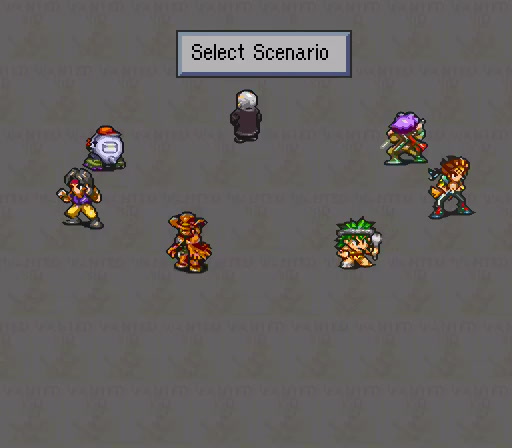
Shimomura’s first major Square project was Live A Live (1994), an unusual RPG anthology that placed players in eight distinct historical periods: prehistoric, feudal Japan, imperial China, the Wild West, 19th-century Japan, near-future, science fiction, and the Middle Ages.
Each period required a completely different musical language. The prehistoric chapter used percussive, rhythm-driven themes. The medieval chapter incorporated orchestral fanfares. The science fiction chapter embraced synthetic, industrial textures. Shimomura composed all eight soundtracks as distinct sonic worlds, demonstrating a range that surprised even those who had followed her Capcom work.
Live A Live was not released in Western markets until 2022, when Nintendo published an HD remake. For 28 years, the game and its extraordinary soundtrack were known only to Japanese players and dedicated fan communities. The 2022 release finally gave the wider world access to what many fans had long considered Shimomura’s most ambitious single work.
Super Mario RPG: Legend of the Seven Stars (1996)
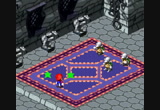
In 1996, Square and Nintendo co-developed Super Mario RPG: Legend of the Seven Stars for the SNES. Shimomura composed the score, working alongside Koji Kondo — Nintendo’s legendary composer and the creator of the Super Mario musical identity.
The collaboration required Shimomura to honour Kondo’s established Mario themes while developing new material for the RPG’s wider cast of characters and story-driven environments. The result — full of lush orchestral textures and memorable leitmotifs — was the first Mario title to feature a fully orchestrated RPG score.
Super Mario RPG was critically acclaimed and became a fan favourite. It was the last major Square-Nintendo collaboration before the companies parted ways over the N64’s cartridge format, with Square committing to PlayStation for the CD storage its FMV-heavy games required.
Parasite Eve & the Late Square Years (1998–2001)
After Super Mario RPG, Shimomura composed for Parasite Eve (1998), Square’s survival horror action RPG. The score was a dramatic departure from her earlier work — dark, cinematic, heavily orchestral with operatic elements. The main theme, “Primal Eyes”, features solo soprano vocals against dense orchestral accompaniment.
Parasite Eve demonstrated that Shimomura could write with the same authority in a horror context as she could in a fighting game arena or an RPG adventure. The score won significant critical recognition and is still considered one of the most sophisticated soundtracks of the PlayStation era.
Kingdom Hearts & the Freelance Era (2002–Present)
In 2002, Shimomura composed Kingdom Hearts — the Square Enix and Disney collaboration that crossed Final Fantasy characters with Disney worlds. The score required her to write themes that could inhabit both the philosophical emotional space of Japanese RPGs and the warm, accessible fantasy of classic Disney animation.
Kingdom Hearts became one of the most beloved JRPG franchises of the PlayStation 2 era, and Shimomura’s music — anchored by the main theme “Dearly Beloved” — was central to its identity. She continued composing for the series through multiple sequels and spin-offs spanning two decades.
Working increasingly as a freelance composer after leaving Square Enix, Shimomura took on a diverse portfolio including Final Fantasy XV (2016) and the Street Fighter V main theme (2016) — a symbolic full-circle return to the franchise that made her name.