Origin Systems Genesis (1983–1989)
Origin Systems was founded in 1983 by Richard Garriott - known to fans as "Lord British" - alongside his brother Robert and their father Owen. The studio established itself in New Hampshire before relocating to Austin, Texas, building its reputation on the Ultima role-playing game series. The company adopted the motto We Create Worlds, a statement of intent that proved literal: Origin was committed to interactive experiences that felt like places rather than products.
In the late 1980s, a young programmer and aspiring director named Chris Roberts joined Origin Systems. Roberts had grown up obsessed with science fiction cinema, particularly Star Wars, and he arrived at Origin with an unusual goal: to make a game that felt like being inside a space opera. Where other designers thought in terms of mechanics, Roberts thought in terms of film. He wanted a script, characters, a branching narrative, and a musical score worthy of a John Williams composition.
By 1989, Roberts had assembled a small team at Origin and begun development on what would become Wing Commander. The ambitions were considerable for the hardware of the era - real-time 3D polygon graphics, cinematic cutscenes, and a flight model that felt visceral rather than abstract. The development team worked under intense pressure, pushing the Intel 286 and early 386 processors to their limits.
“We Create Worlds.”
— Origin Systems corporate tagline
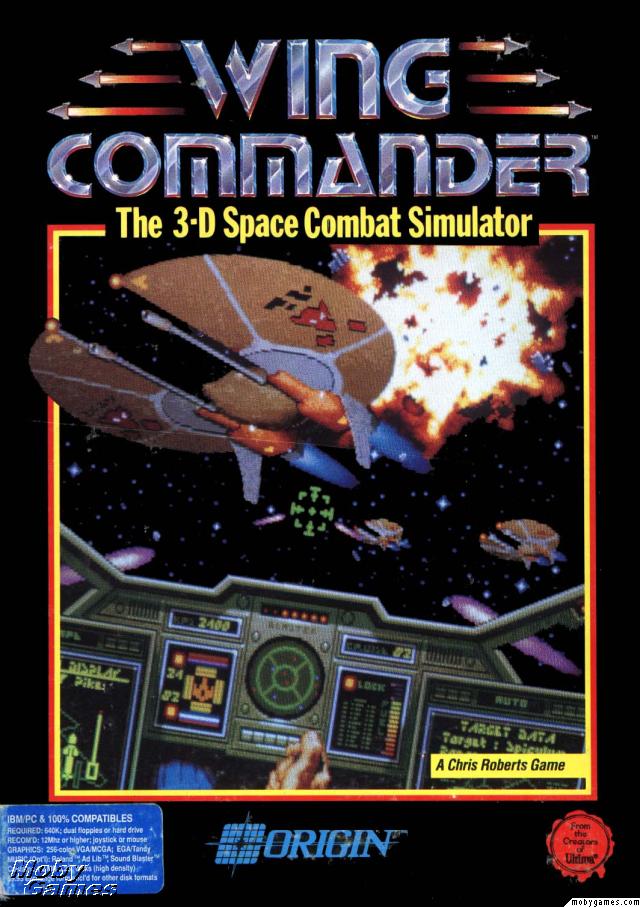
Wing Commander I Launch (1990)
Wing Commander shipped on September 26, 1990, and the reaction from critics and players was immediate. Computer Gaming World awarded it Game of the Year for 1990, a recognition that reflected how far ahead of its peers the title sat. Players were greeted with a cinematic introduction, fully realized characters with named wingmen who could survive or die across missions, and a branching mission tree where losses led to retreat rather than simple game-over screens.
The 3D space combat engine was a revelation. Earlier space games had used flat sprites or simple vector graphics; Wing Commander rendered polygon-based fighters that banked, rolled, and streaked across star fields in genuine three dimensions. The flight model balanced accessibility with enough complexity to reward skilled pilots, and the enemy AI varied enough to keep engagements from feeling scripted.
Origin's Roland MT-32 implementation became legendary among hardware enthusiasts. The studio hired composers to write a full orchestral-style score that exploited the MT-32's synthesis capabilities to a degree no other game had attempted. Players who owned the $200 external synthesizer heard something closer to a film score than a game soundtrack. Wing Commander went on to sell over 500,000 copies, a transformative commercial success that validated Origin's investment and secured the studio's position as a leading PC publisher.

Wing Commander II and EA Acquisition (1991–1992)
Wing Commander II: Vengeance of the Kilrathi arrived in 1991 with significant technical improvements. The story placed returning protagonist Christopher Blair under a cloud of disgrace, branded a traitor after a catastrophic engagement, and reassigned to a backwater posting. The narrative ambition had grown: Wing Commander II featured a more complex plot, stronger character development, and a villain in Admiral Tolwyn whose antagonism shaded into genuine moral complexity.
The most significant innovation was the Speech Accessory Pack - an optional add-on that delivered fully voiced dialogue to a PC game at a time when speech synthesis was either a novelty or prohibitively expensive. Wing Commander II with the Speech Pack was one of the first PC games to offer this level of audio production, making it a benchmark title for the emerging CD-ROM market.
In September 1992, Electronic Arts acquired Origin Systems for approximately $35 million. The deal gave Origin financial resources to pursue increasingly ambitious productions, and EA's distribution network promised access to a far larger market. The acquisition was initially welcomed by Origin's staff, though the cultural friction between a creatively driven studio and a publicly traded publisher would eventually become a source of tension.
“Wing Commander was my attempt to make a Star Wars movie you could play.”
— Chris Roberts, various interviews
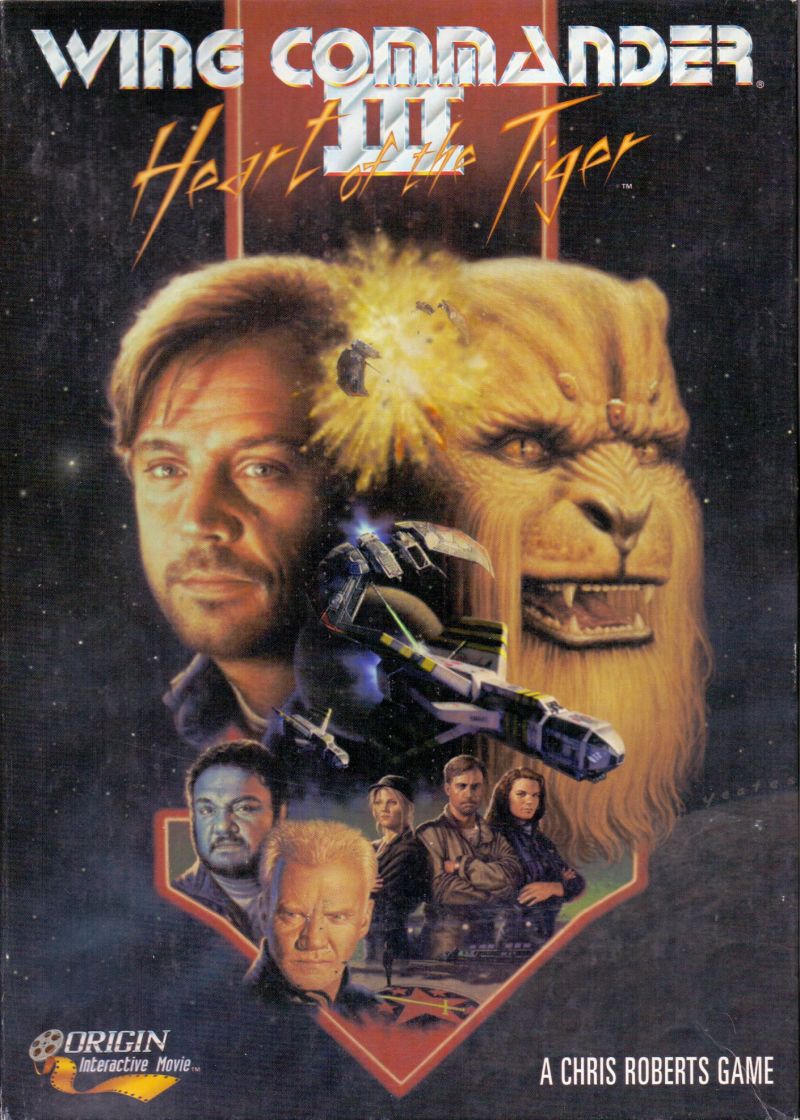
FMV Revolution: Wing Commander III and IV (1994–1996)
Wing Commander III: Heart of the Tiger, released in December 1994, represented a commitment to cinematic production values that no other game had matched. The $4 million budget - extraordinary for a PC title of the era - funded full-motion video sequences shot on genuine Hollywood sets, with a cast that included Mark Hamill as Colonel Christopher Blair, Malcolm McDowell as the Kilrathi Emperor, John Rhys-Davies as Paladin, and Tom Wilson as Maniac. George Oldziey composed a full orchestral score recorded with live musicians.
The game shipped on four CD-ROMs at a time when a single CD-ROM was considered generous. Players moved between FMV briefings, conversations, and the cockpit seamlessly, and their choices in dialogue and mission performance influenced how characters responded. Wing Commander III was not merely a game; it was, as its marketing described it, an interactive movie, and that phrase felt earned rather than aspirational.
Wing Commander IV: The Price of Freedom in 1996 doubled down on the FMV format with a $12 million budget and six discs. The story shifted from alien warfare to Confederation civil conflict, with Blair caught between political factions. The cast returned, and the production quality increased further. However, Chris Roberts departed Origin Systems in 1996 following the completion of Wing Commander IV, citing creative differences with Electronic Arts over the direction of future projects. His departure marked a significant turning point for the series.
“We spent more on Wing Commander III than the average Hollywood B-movie.”
— Chris Roberts on WC3 production
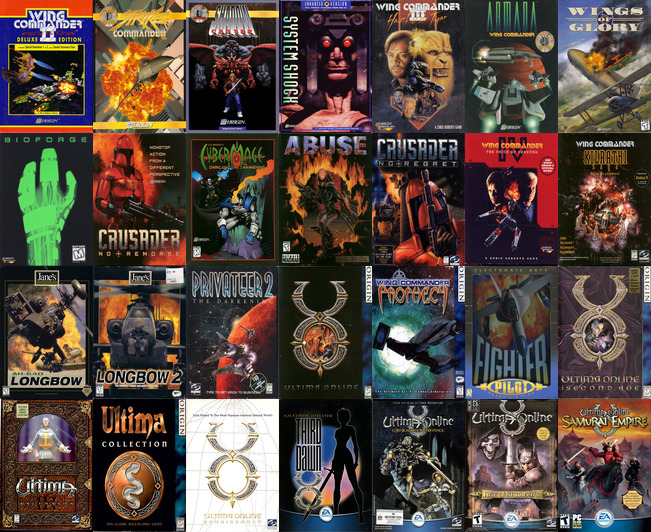
Series End (1997–1999)
Wing Commander: Prophecy launched in 1997 under the direction of producers who had grown up within the Origin Systems team. With Chris Roberts absent, the studio introduced a new protagonist, Lieutenant Casey, and a new alien threat - the Nephilim, an insectoid species that proved a different kind of danger from the Kilrathi. Prophecy retained the FMV sequences and delivered a polished if less ambitious entry. A GBA port followed in 2003, bringing the franchise to handheld hardware for the first time.
Wing Commander: Secret Ops in 1998 was the series' most unconventional release and, in retrospect, one of its most significant. Origin distributed Secret Ops in seven episodic chapters, available for free download online, released weekly. No other AAA studio had attempted episodic digital distribution at this scale; Secret Ops predated Valve's episodic Half-Life experiments by nearly a decade. The game itself was a direct sequel to Prophecy, continuing the Nephilim conflict, but it was the distribution model that captured the attention of the industry press.
Electronic Arts closed the Origin Systems studio in 2004, ending over two decades of operation. The Wing Commander intellectual property passed into EA's catalog, where it has remained dormant since. Chris Roberts went on to found Cloud Imperium Games and began development on Star Citizen in 2012, a spiritual successor that has raised hundreds of millions in crowdfunding while remaining in development. The Wing Commander series, in its eight-year run, produced fourteen titles across seven platforms and influenced the entire space simulation genre that followed it.