From a teenager's BASIC program to the world's first graphical massively multiplayer online game.
Akalabeth and the Beginning (1979–1981)
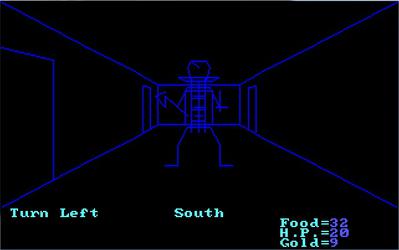
Akalabeth (1980) - the game sold in ziploc bags
Richard Garriott - known online as Lord British - wrote Akalabeth: World of Doom in 1979 while still a high-school student in Houston, Texas. He created it in Apple II BASIC over several months, inspired by Dungeons & Dragons and the work of early computer game pioneers. Initially he sold copies himself, hand-labelled in ziploc bags at a local store.
California Pacific Computer Company discovered Akalabeth and published it commercially in 1980. It sold approximately 30,000 copies - staggering for the era. Garriott was barely eighteen years old and had inadvertently launched one of the most important careers in gaming history.
The experience convinced Garriott to write a proper successor, and in 1981 he released Ultima I: The First Age of Darkness through Sierra On-Line. The world of Sosaria - which would eventually become Britannia - was born.
I wrote Akalabeth in 28 days of intense work. I didn't think it would sell. I thought maybe my friends would play it. The idea that 30,000 people would buy it was completely beyond my imagination.
Richard Garriott, multiple interviews
Origin Systems (1983)
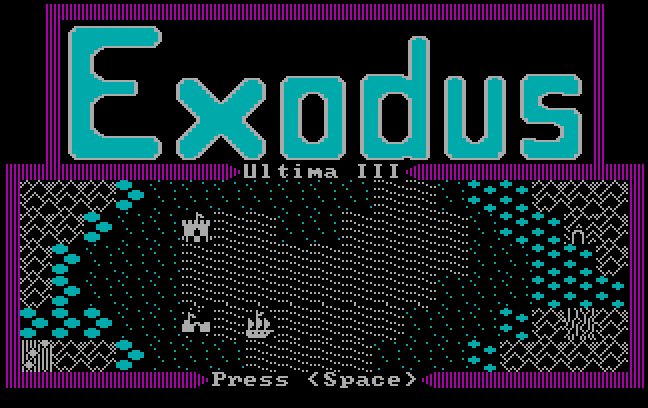
Ultima III: Exodus (1983) - Origin Systems' debut
In 1983, Richard Garriott and his brother Robert founded Origin Systems in New Hampshire (later moving to Austin, Texas), alongside business partners Chuck Bueche and Chuck "Chuckles" Bueche. Their mission statement: "We create worlds." They published Ultima III: Exodus in the same year - the first self-published Ultima title.
Ultima III was a landmark. It introduced the party system (four characters working together), the concept of reagents for spellcasting, and a villain - Exodus - who was not a person but a computer system, a deeply unusual antagonist for 1983. The game engine was a major advance, and Ultima III became the best-selling computer game of 1983.
We never thought of ourselves as making games. We thought of ourselves as creating alternate realities that people could inhabit. The tagline "We create worlds" was completely sincere.
Richard Garriott, GDC 2018
The Origin Story
A documentary retrospective on Origin Systems and the Ultima series.
Origin's Greatest Stumble - Ultima VIII
GVMERS · Retrospective documentary
Garriott on Inventing the RPG
Retro Tea Break · Developer retrospective
The Age of Enlightenment (1985–1990)
Ultima IV - the first game with no villain to defeat
The golden era began with Ultima IV: Quest of the Avatar (1985), a game unlike anything before it. Garriott had grown uncomfortable with the standard RPG victory condition - kill the evil one, take his treasure. He wanted to ask a different question: what if the goal was to become a better person?
Ultima IV introduced the Eight Virtues - Honesty, Compassion, Valour, Justice, Sacrifice, Honour, Spirituality, and Humility - each tied to a city, a dungeon, a character class, and a colour. The player had to demonstrate all eight virtues to achieve Avatarhood. There was no final boss. There was only the mirror.
Ultima V (1988) deepened this further: the new tyrant, the Shadowlords, had corrupted the Virtues themselves, forcing Britannia's inhabitants to live under a warped version of the moral code. Ultima VI (1990) went still further, revealing that the "gargoyles" the player had fought as villains in earlier games were a civilised people with their own language, religion, and valid grievances.
I had been asking myself: what if the goal wasn't to kill something, but to improve yourself? It seemed so obvious once I thought of it. The Avatar wasn't a hero who defeated evil - the Avatar was a person who tried to be good.
Richard Garriott, speaking about Ultima IV's design
EA Acquisition (1992)
Electronic Arts acquired Origin Systems in 1992 for approximately $35 million. At the time, the deal was framed as a partnership - Origin would retain creative autonomy while gaining EA's distribution power. In practice, EA's commercial priorities increasingly shaped Origin's projects.
The immediate post-acquisition years produced Ultima's greatest achievement: Ultima VII: The Black Gate (1992), widely considered the finest game in the series and one of the best RPGs ever made. But the relationship between EA and Origin grew strained as the decade progressed.
Ultima VIII (1994) was rushed to market. Ultima IX (1999) spent years in development hell, revised to use a 3D engine, and released in a technically broken state. EA shut down Origin Systems in 2004, ending one of the great American game development studios.
When EA bought us, the first thing they said was "we're not going to change anything." Within six months, everything had changed.
Richard Garriott, post-Origin interview
Modern Legacy
The Ultima series' influence extends far beyond its direct successors. The moral RPG - games where the player's choices reflect on their character - descends directly from Ultima IV. The living world, with NPC schedules, reactive economies, and consequences for actions, is a Ultima innovation.
Fan projects keep the series alive: Exult reimplements Ultima VII's engine with modern compatibility; Nuvie does the same for Ultima VI. The Ultima Codex maintains the most comprehensive Ultima wiki online. Ultima Online continues to operate as one of the oldest active MMORPGs.
In 2013, Garriott founded Portalarium and began work on Shroud of the Avatar, a spiritual successor to the Ultima series combining online and offline play. Though no longer Ultima in name, it carries the torch of moral RPG design.