Main Series
-
Akalabeth: World of Doom
1980 · California Pacific Computer Company
Apple II
DOS
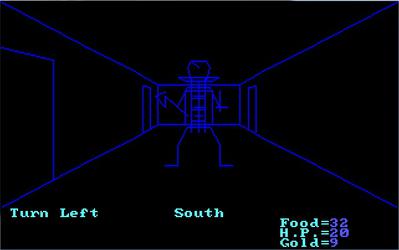
The game that started it all. Written by 18-year-old Richard Garriott in Apple II BASIC, Akalabeth is a proto-Ultima - a dungeon crawler set in a world called Akalabeth. The player serves Lord British, completing quests against monsters in a first-person 3D dungeon. Primitive by any later standard, it nonetheless established Garriott's instinct for world-building.
-
Ultima I: The First Age of Darkness
1981 (Sierra On-Line) · 1986 (Origin remaster)
Apple II
DOS
C64
Amiga
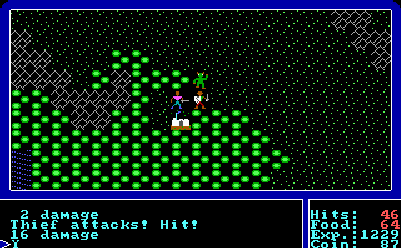
The world of Sosaria in its earliest form. The player must defeat the evil Mondain - a wizard who has created the Gem of Immortality, making himself unkillable. Ultima I is a curious hybrid: part dungeon crawler, part space combat simulator. The famous Sosaria overworld, with its tiled terrain and towns, appears here for the first time.
-
Ultima II: The Revenge of the Enchantress
1982 · Sierra On-Line
Apple II
DOS
C64
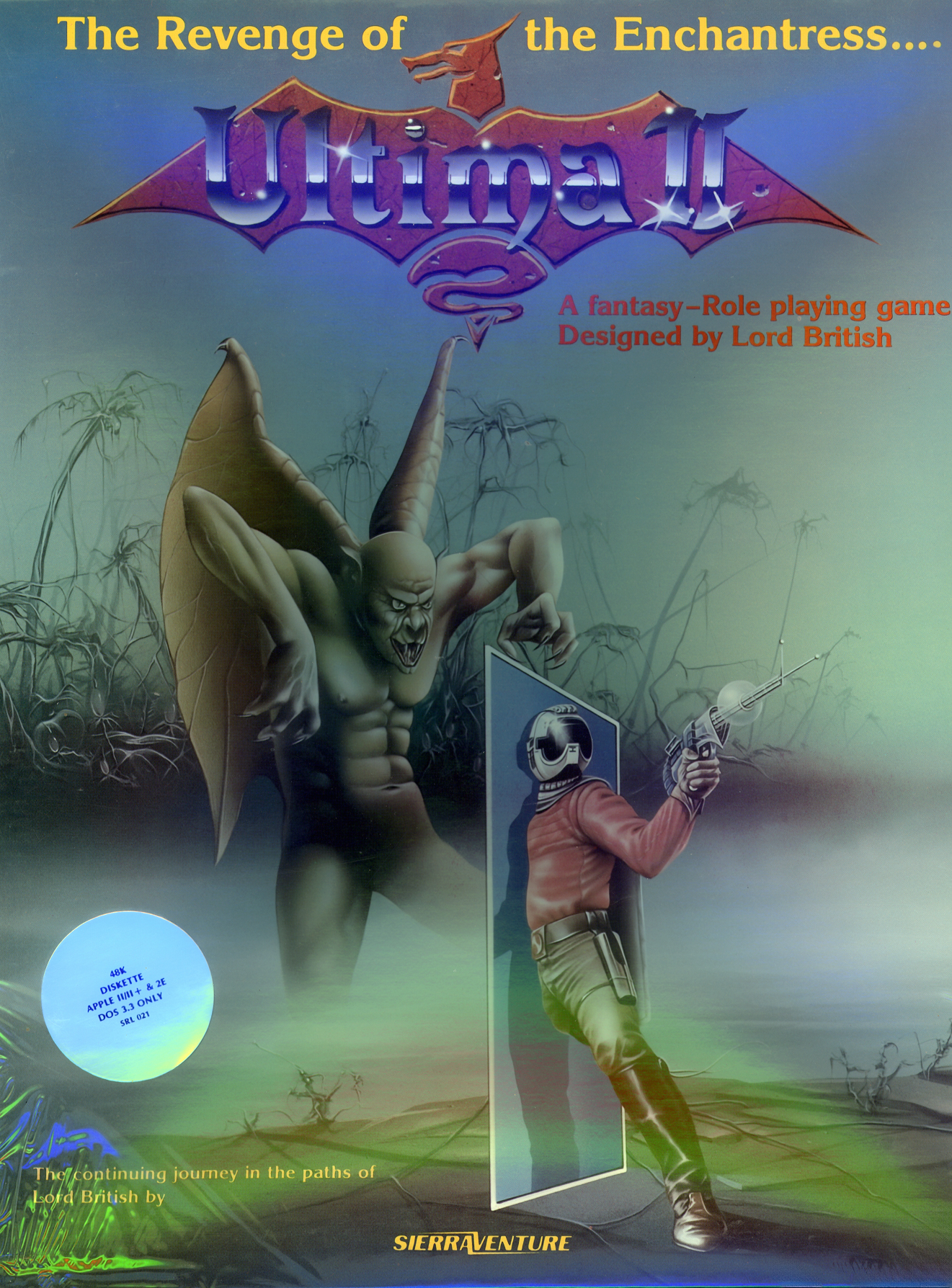
Mondain's apprentice Minax seeks revenge across time itself. Ultima II is the oddest entry in the series - a time-travelling adventure spanning Earth's history from prehistoric times to the distant future. The game visited real-world locations including San Francisco. Notable for including a cloth map in the box - a tradition Ultima would maintain.
-
Ultima III: Exodus
1983 · Origin Systems
Apple II
DOS
C64
Amiga
NES
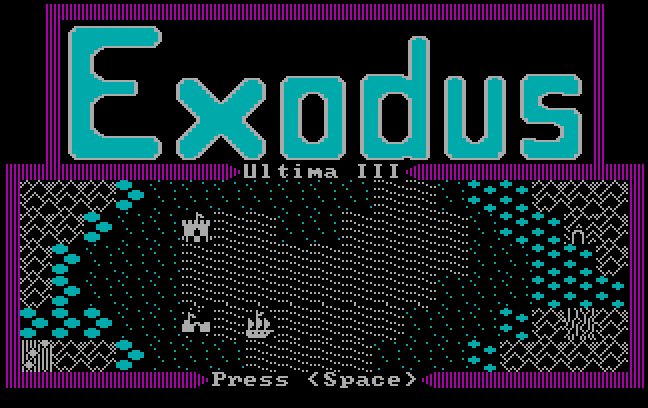
The offspring of Mondain and Minax, Exodus is not a person but a demonic computer system - one of gaming's earliest non-human antagonists. Ultima III introduced the four-character party system and reagent-based magic that would define the series. Considered one of the most influential RPGs ever made, it was the best-selling computer game of 1983.
-
Ultima IV: Quest of the Avatar
1985 · Origin Systems
Apple II
DOS
C64
Amiga
NES
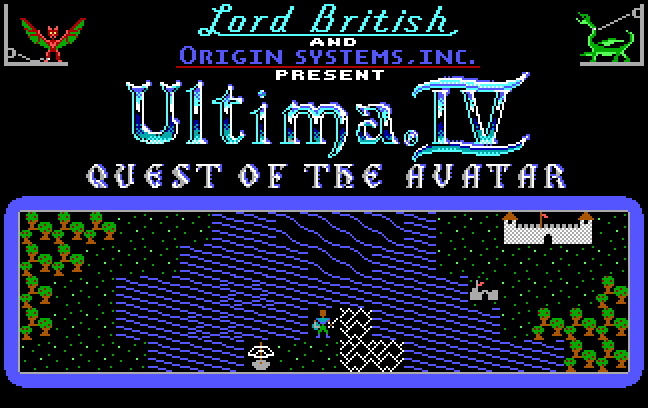
Perhaps the most important RPG ever designed. Ultima IV abandons the villain concept entirely - there is no evil to defeat. Instead, the player must embody the Eight Virtues of the Avatar: Honesty, Compassion, Valour, Justice, Sacrifice, Honour, Spirituality, and Humility. Every choice reflects on the player's moral standing. Available free via GOG.
-
Ultima V: Warriors of Destiny
1988 · Origin Systems
Apple II
DOS
C64
Amiga
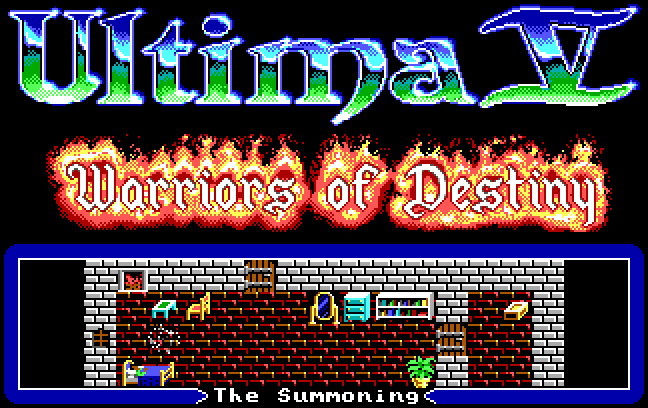
The Shadowlords - embodiments of Cowardice, Falsehood, and Hatred - have corrupted Britannia's king and twisted the Eight Virtues into the Oppression's Codex. The virtues are now used as instruments of tyranny. Ultima V is a story of political corruption and moral inversion, with an underground resistance movement and more complex NPC interactions than any previous entry.
-
Ultima VI: The False Prophet
1990 · Origin Systems
DOS
Amiga
C64
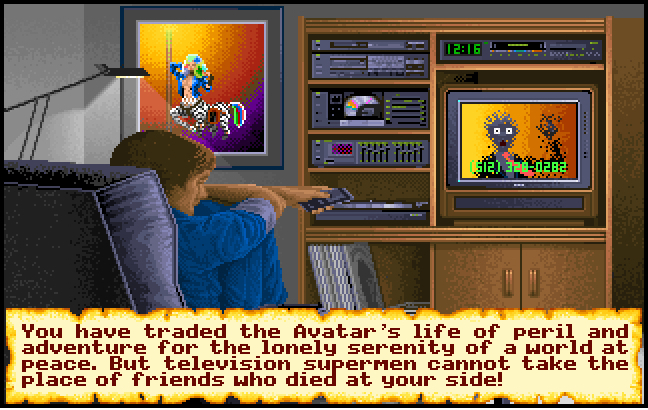
The gargoyles who appeared as monsters in earlier games are revealed to be a civilised people with their own language, religion, and perspective - one that frames the Avatar as a prophesied villain. Ultima VI is a meditation on racism, cultural misunderstanding, and the danger of assumed moral superiority. Its world map was rendered entirely in a new, richer tile engine.
-

Ultima VII: The Black Gate
1992 · Origin Systems
DOS
Amiga
Widely considered the greatest Ultima and one of the greatest RPGs ever made. Britannia is richer than ever - a living world with fully interactive environments, complex NPC schedules, and a sinister cult called the Fellowship infiltrating society. Objects can be picked up, baked into bread, combined, moved. The villain is never defeated by fighting - only by understanding. A masterpiece of systemic design.
-
Ultima VII Part 2: Serpent Isle
1993 · Origin Systems
DOS
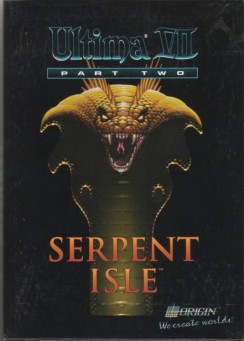
A standalone expansion using the Black Gate engine, set on the isle that was once western Sosaria. The Avatar tracks the Fellowship's Batlin to Serpent Isle, only to find the serpent pillars of Order and Chaos in disarray, threatening the balance of the universe. More story-driven than its predecessor, with a darker tone and more linear narrative.
-
Ultima VIII: Pagan
1994 · Origin Systems
DOS
Windows
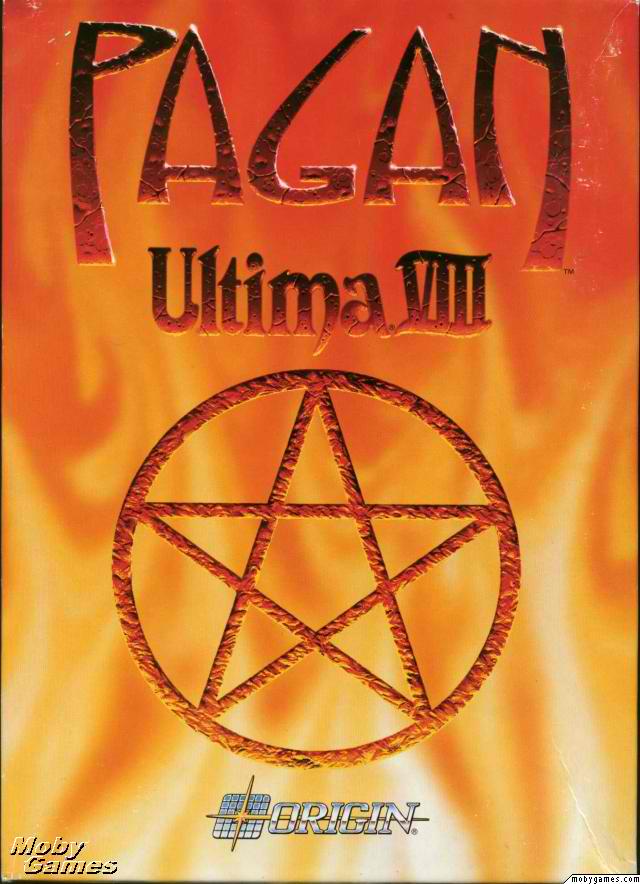
Banished by the Guardian to the world of Pagan, the Avatar must master four pagan magic systems to find a way home. Pagan is darker in tone, featuring an action-oriented interface with jumping puzzles that divided fans. Rushed to market by EA, Ultima VIII shipped missing major features. The original design - far more ambitious - was described in detail by the development team years later.
-
Ultima IX: Ascension
1999 · Origin Systems
Windows
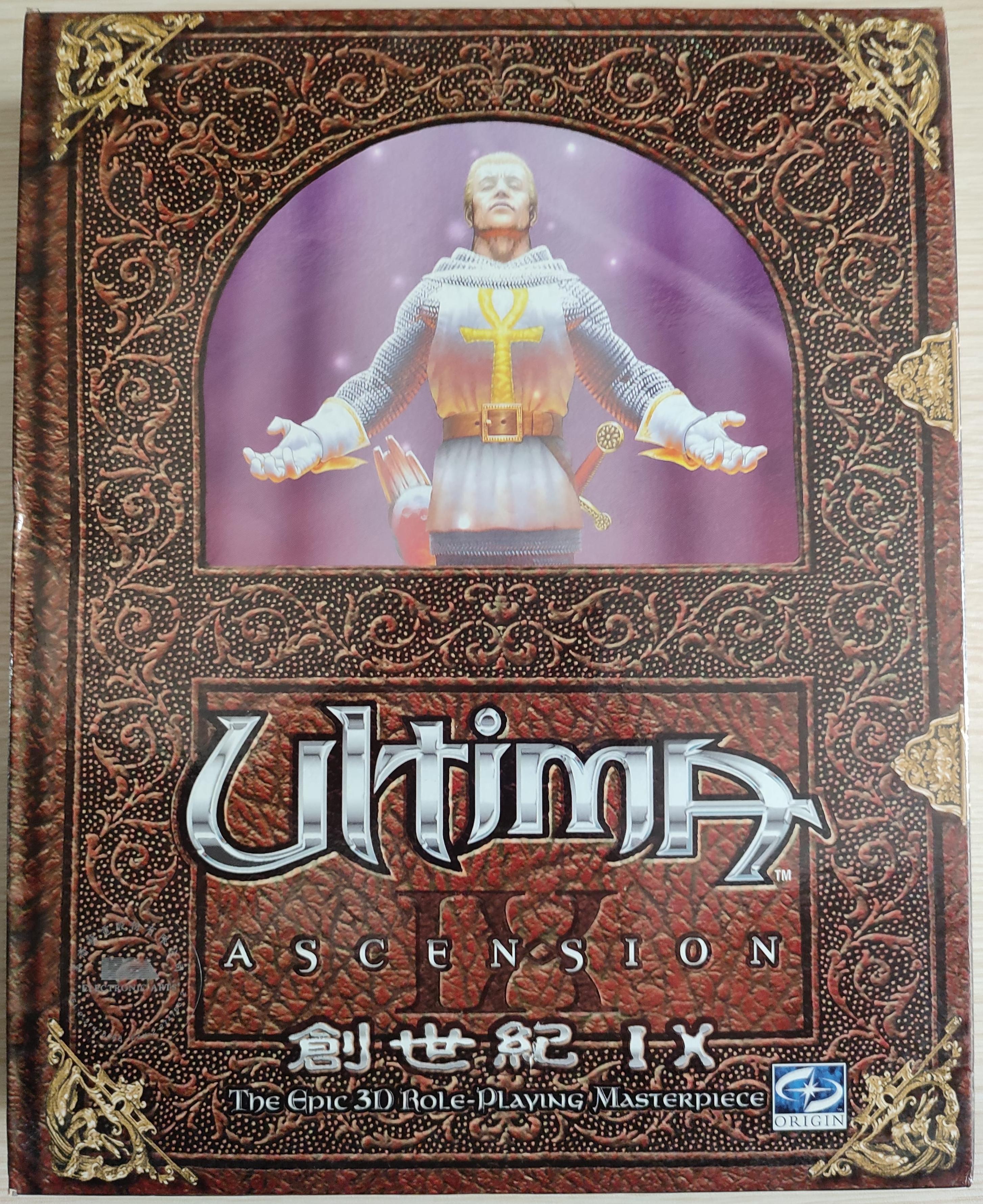
The final chapter: the Guardian has attached columns of corruption to every shrine in Britannia, warping the Virtues and the land itself. The Avatar returns for the last time. Development was troubled - the game was rebuilt twice, and the version shipped in 1999 was critically incomplete. Yet the 3D Britannia it depicts is remarkable, and the story, when it can be reached, is genuinely moving.
-
Ultima Online
1997 · Origin Systems
Windows
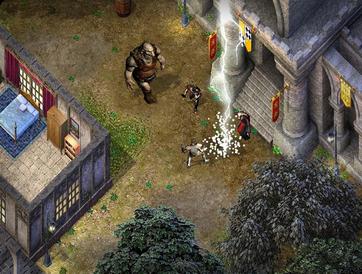
The first graphical massively multiplayer online game to achieve commercial success. Ultima Online (UO) launched in 1997 with 50,000 players; within six months it had 100,000 subscriptions. It predated EverQuest and World of Warcraft and established virtually every convention of the MMO genre. UO continues to operate today on official and free-shard servers.
Akalabeth: World of Doom
1980 · California Pacific Computer Company
The game that started it all. Written by 18-year-old Richard Garriott in Apple II BASIC, Akalabeth is a proto-Ultima - a dungeon crawler set in a world called Akalabeth. The player serves Lord British, completing quests against monsters in a first-person 3D dungeon. Primitive by any later standard, it nonetheless established Garriott's instinct for world-building.
Ultima I: The First Age of Darkness
1981 (Sierra On-Line) · 1986 (Origin remaster)
The world of Sosaria in its earliest form. The player must defeat the evil Mondain - a wizard who has created the Gem of Immortality, making himself unkillable. Ultima I is a curious hybrid: part dungeon crawler, part space combat simulator. The famous Sosaria overworld, with its tiled terrain and towns, appears here for the first time.
Ultima II: The Revenge of the Enchantress
1982 · Sierra On-Line
Mondain's apprentice Minax seeks revenge across time itself. Ultima II is the oddest entry in the series - a time-travelling adventure spanning Earth's history from prehistoric times to the distant future. The game visited real-world locations including San Francisco. Notable for including a cloth map in the box - a tradition Ultima would maintain.
Ultima III: Exodus
1983 · Origin Systems
The offspring of Mondain and Minax, Exodus is not a person but a demonic computer system - one of gaming's earliest non-human antagonists. Ultima III introduced the four-character party system and reagent-based magic that would define the series. Considered one of the most influential RPGs ever made, it was the best-selling computer game of 1983.
Ultima IV: Quest of the Avatar
1985 · Origin Systems
Perhaps the most important RPG ever designed. Ultima IV abandons the villain concept entirely - there is no evil to defeat. Instead, the player must embody the Eight Virtues of the Avatar: Honesty, Compassion, Valour, Justice, Sacrifice, Honour, Spirituality, and Humility. Every choice reflects on the player's moral standing. Available free via GOG.
Ultima V: Warriors of Destiny
1988 · Origin Systems
The Shadowlords - embodiments of Cowardice, Falsehood, and Hatred - have corrupted Britannia's king and twisted the Eight Virtues into the Oppression's Codex. The virtues are now used as instruments of tyranny. Ultima V is a story of political corruption and moral inversion, with an underground resistance movement and more complex NPC interactions than any previous entry.
Ultima VI: The False Prophet
1990 · Origin Systems
The gargoyles who appeared as monsters in earlier games are revealed to be a civilised people with their own language, religion, and perspective - one that frames the Avatar as a prophesied villain. Ultima VI is a meditation on racism, cultural misunderstanding, and the danger of assumed moral superiority. Its world map was rendered entirely in a new, richer tile engine.
Ultima VII: The Black Gate
1992 · Origin Systems
Widely considered the greatest Ultima and one of the greatest RPGs ever made. Britannia is richer than ever - a living world with fully interactive environments, complex NPC schedules, and a sinister cult called the Fellowship infiltrating society. Objects can be picked up, baked into bread, combined, moved. The villain is never defeated by fighting - only by understanding. A masterpiece of systemic design.
Ultima VII Part 2: Serpent Isle
1993 · Origin Systems
A standalone expansion using the Black Gate engine, set on the isle that was once western Sosaria. The Avatar tracks the Fellowship's Batlin to Serpent Isle, only to find the serpent pillars of Order and Chaos in disarray, threatening the balance of the universe. More story-driven than its predecessor, with a darker tone and more linear narrative.
Ultima VIII: Pagan
1994 · Origin Systems
Banished by the Guardian to the world of Pagan, the Avatar must master four pagan magic systems to find a way home. Pagan is darker in tone, featuring an action-oriented interface with jumping puzzles that divided fans. Rushed to market by EA, Ultima VIII shipped missing major features. The original design - far more ambitious - was described in detail by the development team years later.
Ultima IX: Ascension
1999 · Origin Systems
The final chapter: the Guardian has attached columns of corruption to every shrine in Britannia, warping the Virtues and the land itself. The Avatar returns for the last time. Development was troubled - the game was rebuilt twice, and the version shipped in 1999 was critically incomplete. Yet the 3D Britannia it depicts is remarkable, and the story, when it can be reached, is genuinely moving.
Ultima Online
1997 · Origin Systems
The first graphical massively multiplayer online game to achieve commercial success. Ultima Online (UO) launched in 1997 with 50,000 players; within six months it had 100,000 subscriptions. It predated EverQuest and World of Warcraft and established virtually every convention of the MMO genre. UO continues to operate today on official and free-shard servers.