Deep Dives

Flagship Titles

Five Scores That Define the Legacy

Editorial analysis of the five compositions that best illustrate Tim Follin's mastery across different platforms and eras. Cross-referenced with the Music catalogue and Videos.

Flagship titles

NES 1990 - Arcadia / Software Creations

Silver Surfer

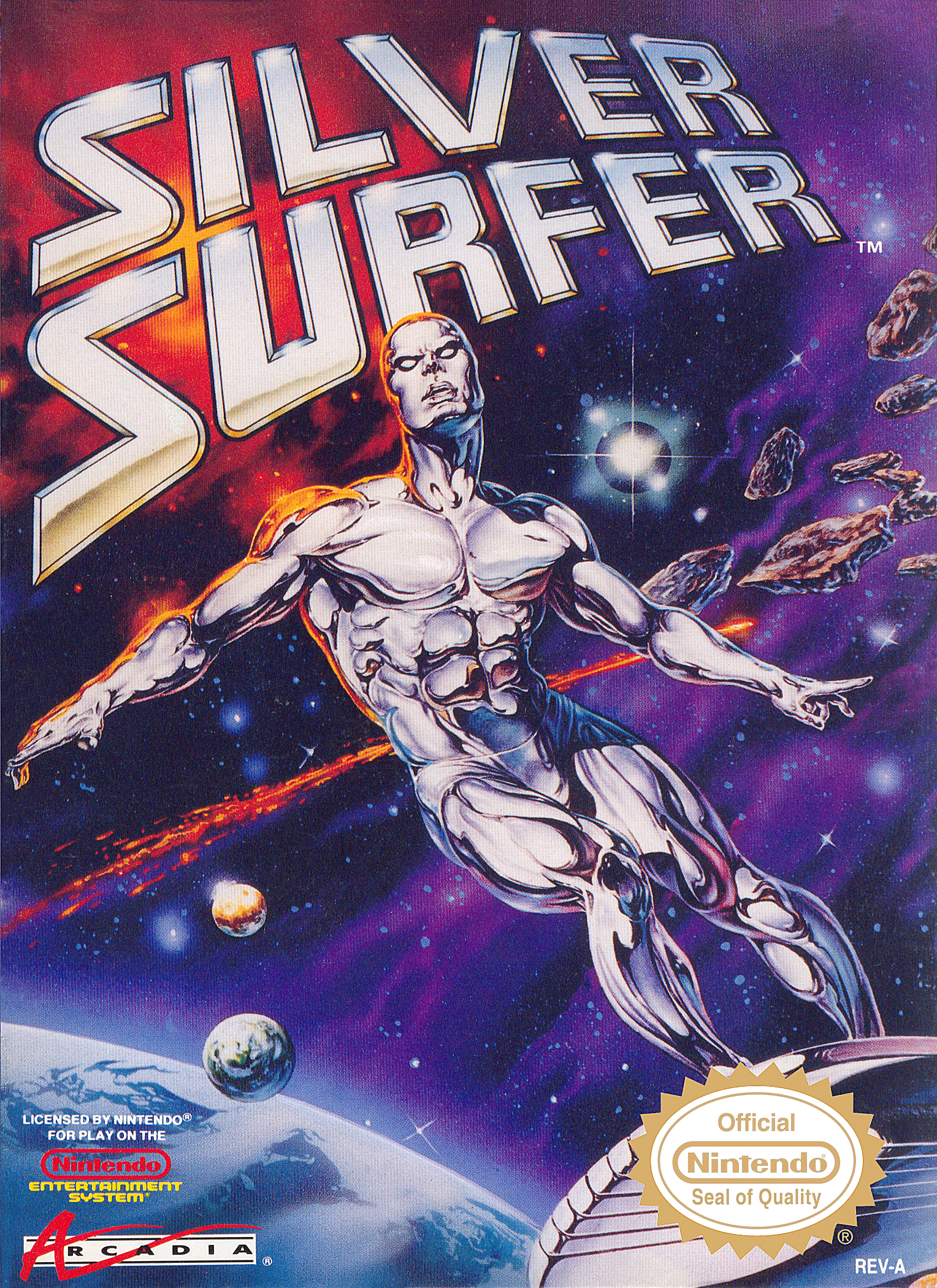
Silver Surfer NES box art front cover
Silver Surfer NES - US box art (1990). Arcadia / Software Creations.

The Music That Outlived the Game

Silver Surfer (NES, 1990) is a notoriously punishing side-scrolling shooter featuring Marvel's cosmic hero. Most players never reached stage two. The game itself is remembered primarily as a curiosity of licensed-property publishing from the early nineties - underpowered visually, unforgiving mechanically, and largely forgotten within years of release.

The soundtrack is something else entirely. Tim Follin's score for Silver Surfer is consistently cited as one of the most technically ambitious pieces of music ever composed for the Nintendo Entertainment System, and the game's reputation today rests almost entirely on it. Players who gave up after thirty seconds of gameplay still remember the music three decades later.

Software Creations, Licensed Games, and the Music-First Brief

By 1990 Tim Follin had been composing game music at Software Creations for five years, working his way from ZX Spectrum beeper arrangements through C64 SID programming to the NES audio hardware. Silver Surfer was a licensed Arcadia title - the kind of project that rarely attracted adventurous production budgets or extended development schedules. Follin's brief was to fill the game's stages with appropriate music.

What he delivered was not appropriate music. It was progressive rock composition in hexadecimal, squeezed into a ROM that most of its players would abandon before hearing the second stage. The disconnect between the game's commercial context and the musical ambition of its soundtrack is part of what makes Silver Surfer a remarkable artifact: the most celebrated work in Tim Follin's catalogue was incidentally attached to a licensed superhero game nobody played.

Five Channels, No Room Left Unused

The NES audio architecture provides five channels: two pulse wave generators, one triangle wave, one noise channel, and one delta modulation channel (DMC). Follin used all five simultaneously. The triangle wave carries the bass line - the NES equivalent of a bass guitar or cello - while the two pulse channels trade melodic phrases across each other's range, creating the impression of two independent melodic instruments in conversation. The noise channel provides rhythmic punctuation: precise accents rather than blunt percussion. The DMC channel adds additional textural depth.

Stage 1's theme - known in the community as "Cosmic Wave" - opens with an accelerating minor-key riff and builds through several modulations, driven forward by the triangle wave's bass and the two pulse channels' interlocking melodic counterpoint. Listeners frequently describe it as containing more than three simultaneous melodic voices. It contains exactly three. The perception of greater density is a compositional effect: Follin's voice leading is so efficient that each channel appears to carry more musical weight than its hardware role strictly allows.

"Silver Surfer - the game was terribly difficult. Nobody could get past the first stage. But the music was there to make you feel like you were experiencing something cosmic, even when you were dying for the hundredth time."

Tim Follin, Super Marcato Bros exclusive interview, 2018

Oscilloscope Visualisation - Stage 1

Oscilloscope visualisations render each NES audio channel as a separate waveform in real time, making the multi-channel counterpoint immediately visible. The Silver Surfer Stage 1 visualisation shows all five channels active simultaneously - see Videos for the full curated collection.

Oscilloscope visualisation - Silver Surfer NES Stage 1. See Videos for the full curated oscilloscope collection.

Critics Noticed the Music, Missed the Point of the Game

Contemporary reviews of Silver Surfer universally noted the quality of the music while criticising the game's excessive difficulty. The NES was not a platform on which reviewers commonly singled out soundtracks for special attention - audio was typically assessed alongside graphics as part of a technical package - yet Silver Surfer's score was distinctive enough to demand separate treatment. The game scored poorly in most publications; the music did not.

The score's wider reputation developed gradually through the 2000s and accelerated sharply after 2012, when oscilloscope visualisation videos began circulating on YouTube. Viewers who had never played the game encountered Follin's NES work for the first time and responded to it with the same surprise that had characterised the original reviews. The "impossible NES music" narrative - music that appears to exceed what the hardware can produce - proved highly shareable and brought Follin to an audience far larger than the game had ever reached.

The NES Benchmark That Held for Three Decades

Silver Surfer's influence on NES music composition is difficult to measure directly because the NES platform was already declining when the game shipped. No commercial NES game released after 1990 demonstrably built on Follin's techniques - the development community had moved on. The soundtrack's influence operated instead through the retro game music community: as a reference point, a challenge, and a demonstration of what was possible within the five-channel constraint.

For composers working in the chiptune and homebrew NES scenes of the 2000s and 2010s, Silver Surfer's stage themes set a standard for counterpoint density and voice-leading efficiency that remained a live reference decades after the original hardware had been superseded. See the full Music catalogue and People page for biographical context.
NES 1990 - Acclaim / Software Creations

Solstice: The Quest for the Staff of Demnos

The Quieter Twin

In the same year that Tim Follin delivered the kinetic, hard-driving Silver Surfer NES soundtrack, he also composed the score for Solstice: The Quest for the Staff of Demnos - an isometric puzzle-adventure developed by Software Creations and published by Acclaim. Where Silver Surfer is propulsive and dense, Solstice is atmospheric and patient. The two scores, produced within months of each other, demonstrate the compositional range that makes Follin's NES work so consistently surprising.

Solstice places the player in a medieval fantasy world rendered in isometric perspective - a visual style more associated with European home computers than Nintendo consoles. The game was published in the United States and achieved modest sales; in Japan, it was released as Solstice: Mahoujin no Yuushi. The title theme is the piece most associated with the game's memory, and it is a very different kind of composition from anything on the Silver Surfer cart.

Numbers into Atmosphere

Follin composed Solstice's title theme using the same technique he applied to all his NES work: writing directly in hexadecimal values at a computer terminal, building the piece by understanding what each numerical value produced in the hardware and adjusting accordingly. There was no conventional notation involved, no score to reference, no tracker or sequencer between idea and output.

The title theme opens with a solo triangle-wave melody - the NES's closest approximation to a woodwind or string instrument - that moves slowly and with deliberate spacing between phrases. It is almost vocal in quality, a single line with room to breathe. The pulse channels enter gradually, adding countermelodies that create harmonic depth through implication rather than density. The piece never crowds itself. It uses negative space - the absence of sound - as a compositional element, which is unusual for NES music and requires confidence in the melodic material to sustain attention across the silences.

"I always composed directly in hex. I didn't use a tracker or anything. I'd just write the values in and see what came out. You learn very quickly what the numbers mean."

Tim Follin, Super Marcato Bros exclusive interview, 2018

Building a World in Three Voices

The dungeon and stage themes in Solstice adopt a more urgent character than the title music, with driving rhythmic patterns that demonstrate Follin's command of the noise channel as a rhythmic foundation. The noise channel in NES music was commonly used as a blunt percussion layer - a hi-hat or snare approximation that sat beneath the melodic content. Follin calibrated it precisely, using it as rhythmic punctuation that propels the melodic lines without submerging them.

The contrast between Solstice's stage themes and its title music is itself a compositional achievement: the same hardware, the same five channels, the same hexadecimal values - producing music that moves between meditative and urgent within a single game's soundtrack. See the Music catalogue for the full Solstice track listing.

A Slow Burn to Reference Status

Solstice did not achieve the immediate notoriety of Silver Surfer. The game sold reasonably but was not a cultural landmark; its isometric format was technically impressive for the NES but did not attract the same attention as more mainstream genres. The soundtrack's reputation built gradually, through the NES music community's cataloguing efforts in the 2000s and through NSFE and NSF format preservation that allowed the tracks to be heard outside the game context.

Today, Solstice's title theme is regularly cited alongside Silver Surfer as primary evidence that Follin's NES work was not limited to a single mode. The two scores together make an argument that cannot be made by either alone: that the same composer could inhabit completely different emotional registers within the same hardware constraints, and do so within months of each other.

The Title Theme That Became a Reference Track

Within the retro game music community, Solstice's title theme is cited not as a technical showpiece in the Silver Surfer mould, but as a demonstration of melodic writing within constraints. It is a piece that works as music independent of its game context - something that can be listened to without visual or interactive accompaniment and hold attention through its own compositional qualities. That is a different achievement from Silver Surfer's technical density, and arguably a more difficult one to produce with three melodic channels and a noise drum.

C64 1989 - U.S. Gold / Software Creations

Ghouls 'n Ghosts

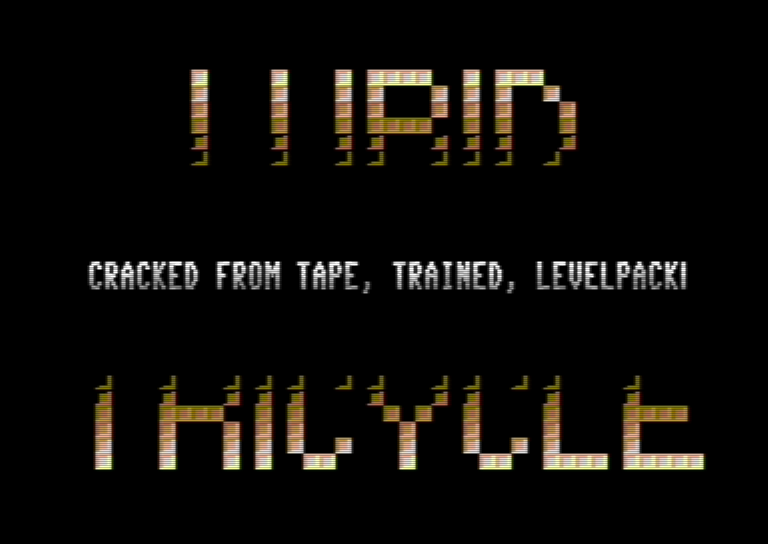
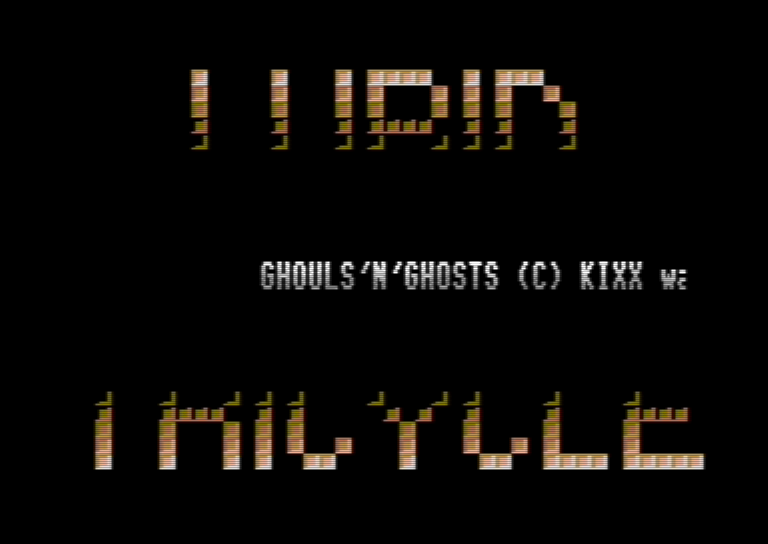
Ghouls 'n Ghosts C64 loading screen
Ghouls 'n Ghosts C64 - loading screen (1989). U.S. Gold / Software Creations.

What a SID Chip Can Do in the Right Hands

Capcom's Ghouls 'n Ghosts was an arcade game before it was a home computer game. The arcade original - released in 1988 as Dai Makai Mura - had dedicated FM sound hardware, multiple channels, and the processing headroom to produce a complex, layered score. The Commodore 64 port, handled by Software Creations and published by U.S. Gold, had three oscillator voices, an analogue filter, and Tim Follin.

The C64 version's soundtrack is not a faithful reproduction of the arcade score. It is a Tim Follin composition that occupies the same emotional territory as the original through completely different means. It is also, by wide consensus across the C64 music community, a more interesting piece of music than the original it was nominally adapting.

The Score That Put Follin on the Map

By 1989 Tim Follin had been composing for Software Creations for four years, starting on the ZX Spectrum - a platform whose beeper hardware offered almost no musical flexibility - and progressing through early C64 work on titles like Bionic Commando (1988) and LED Storm (1988). Ghouls 'n Ghosts was the assignment that brought his C64 work to wider attention in the European game music community.

The Commodore 64 was the dominant home computer in Europe at the time, with a dedicated SID music scene whose composers were taken seriously as musicians in their own right. The HVSC (High Voltage SID Collection) and the Commodore 64 scene's preservation culture meant that SID compositions were documented, archived, and discussed with a critical rigour unusual for game music of the era. When Ghouls 'n Ghosts C64 appeared, it landed in a community that was paying attention.

"I was influenced by a lot of progressive rock - Yes, Genesis, that sort of thing. And classical music. Film scores. All of that fed into what I was doing on the SID chip. You try to do with three voices what an orchestra does with sixty."

Tim Follin, Super Marcato Bros exclusive interview, 2018
Ghouls 'n Ghosts C64 gameplay screenshot
Ghouls 'n Ghosts C64 gameplay. The visual fidelity of the port is less remarkable than the audio.

Filter Sweeps as Orchestration

The SID chip (MOS 6581) was designed by Bob Yannes, who went on to co-found Ensoniq. Its design includes three independent oscillator voices, each capable of four waveforms (triangle, sawtooth, pulse, noise), plus a multimode analogue filter that processes the combined oscillator output. The filter was a design element Yannes considered something of a happy accident in the final chip - its resonance characteristics were not precisely specified and varied between individual chips.

Follin used the SID filter not as a static tone-shaping tool but as a real-time expressive element, sweeping it across the frequency spectrum mid-phrase to create timbral changes that simulate orchestral articulations: brass swells, string attacks, wind crescendos. Combined with ring modulation between voices - which adds inharmonic frequency content that suggests more complex timbres - the result is C64 audio that sounds richer and more dynamically varied than three oscillators should produce.

The Lemon64 Community Still Talks About It

The Ghouls 'n Ghosts C64 soundtrack achieved recognition within the European C64 community relatively quickly. The Lemon64 game database - which includes user ratings and reviews accumulated over decades - reflects consistent appreciation for the music specifically, with commentary that treats the score as a primary reason to experience the game. The CSDb (Commodore Scene Database) has documented the score within discussions of SID music technique.

The game itself received mixed reception on release: the C64 was visually outmatched by the arcade original, and the gameplay compromises of porting to home hardware were apparent. The music was not a compromise. It was an original work by a composer who understood his instrument better than the hardware designers expected anyone to.

The Template for SID Exploitation

Within the C64 music community, Follin's Ghouls 'n Ghosts score is cited as a demonstration of what the SID filter could do in expressive compositional hands - an approach that influenced how later composers thought about the chip's capabilities. The HVSC entry for the composition is among the most downloaded Tim Follin SIDs in the archive.

For the full C64 SID catalogue and playback in your browser, see the Music Browser. For more on Follin's compositional approach and influences, see People.

SNES 1993 - Tradewest / Software Creations

Plok!

Plok! SNES cover screenshot
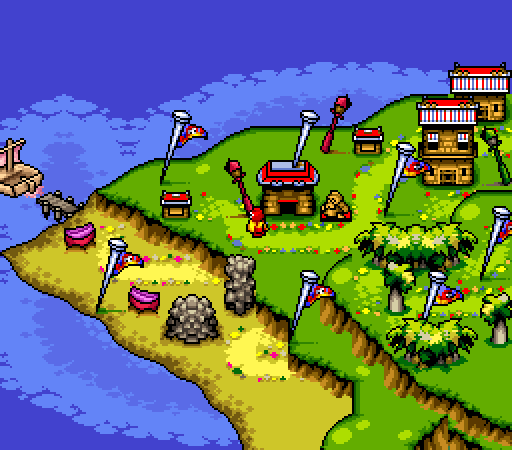
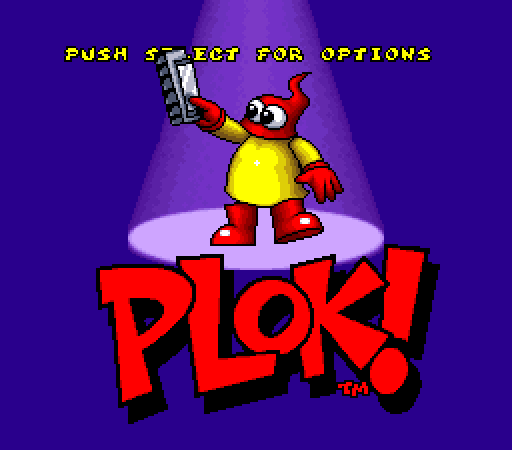
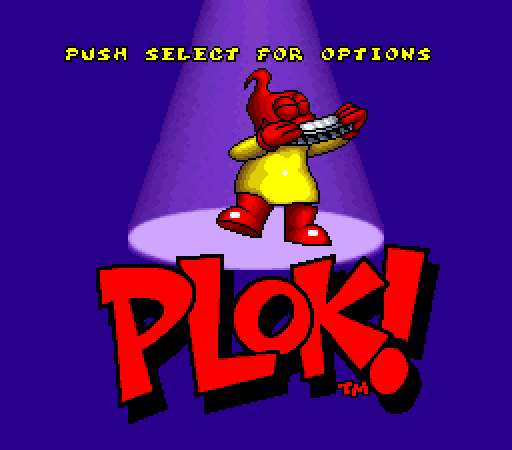
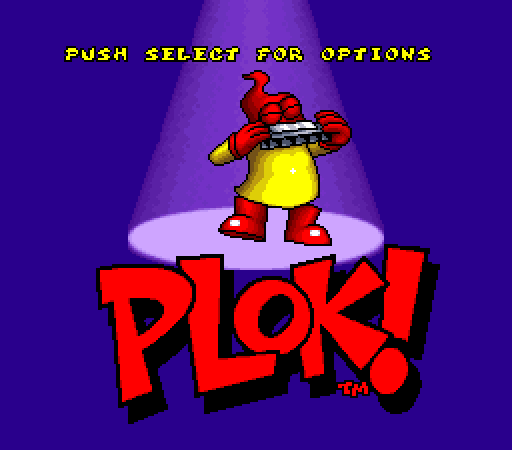
Plok! SNES title screen (1993). Tradewest / Software Creations.

A Collaboration Forty Years Later Still Has No Equal

Plok! (SNES, 1993) is the product of a brief that most game composers never receive: write original music for every stage, with no reference track required and no stylistic mandate beyond quality. Tim Follin and his brother Geoff Follin shared the composition duties, producing a soundtrack of such range and invention that it is now listed, with some regularity, among the finest SNES scores ever produced. It is the Follin brothers' definitive collaborative statement.

The game was designed by Ste and John Pickford for Software Creations and published by Tradewest in North America and Nintendo in Europe. Plok is a cartoon character made of limbs that he can fire as projectile weapons - an original creation for a platform game that took three years to develop. The development team had time and confidence; the music reflects both.

The Brief Every Composer Dreams Of

Geoff Follin described the Plok! assignment in a 2019 interview with Gaming Alexandria as close to an ideal compositional brief by the standards of commercial game development. There was no requirement to adapt existing music, no licensed property constraining the score's character, and no explicit stylistic direction from the publisher beyond the expectation that the music match the game's visual energy and humour.

Tim and Geoff divided the compositions between them, with each brother handling different stages. The division of labour is not always audible - the score has a unified sensibility across its tracks - but Geoff's distinctive harmonic language and Tim's tendency toward more complex rhythmic structures both appear across the soundtrack. The result is a score that sounds like a creative conversation rather than a divided commission.

"Plok was a project where we both had a lot of freedom. The brief was basically 'write great music for each stage.' That's the kind of brief every composer dreams of."

Geoff Follin, Gaming Alexandria interview, 2019
Plok! SNES gameplay screenshot showing platforming action
Plok! SNES gameplay. Each stage has a distinct musical theme.

A Different Identity for Every Stage

The Plok! soundtrack's most immediate quality is its variety. The Cotton Island theme is playful and tropical, built on a light rhythmic figure with bright brass samples and a melody that feels effortlessly cheerful. The Akrillic theme moves into more complex harmonic territory - jazz-adjacent chords, syncopated rhythms, a bass line that establishes its own melodic interest. The Flea Circus theme is frenetic and percussive, driven by rapid-fire rhythmic patterns that use the SPC700's drum samples aggressively.

The final boss music abandons the playfulness entirely, adopting a driving, almost industrial character that signals the shift in narrative stakes. That a soundtrack can move through tropical, jazzy, frenetic, and industrial within the same game - without any track feeling out of place - reflects compositional confidence and a shared understanding between the two composers of what the game's world required.

SPC700 as Orchestral Stage

The Super Nintendo's SPC700 audio processor - a Sony-designed 8-bit CPU with eight independent sample-based voices and a DSP with echo and reverb effects - was a fundamentally different compositional instrument from the SID chip or the NES audio hardware. Where those platforms required composers to synthesise sound from basic waveforms and analogue filtering, the SPC700 played back sampled audio. A composer could include recordings of real instruments - brass, strings, percussion - within the cartridge's sample memory limitations.

The Follins built a sound palette that mixed sampled acoustic instruments with electronic textures, exploiting the SPC700's echo DSP to give the score a spatial depth uncommon in SNES music. The echo on the Cotton Island theme gives it a physical environment - an outdoor acoustic that suggests actual space rather than the enclosed, dry sound of most SNES soundtracks. The reverb on the boss themes creates the opposite: a closed, pressurised feeling appropriate to confrontation.

"Tim had a very specific way of hearing things. He could hear a piece of music in his head and then translate it directly to hardware values. I'd sometimes hear what he was working on and think - how did he know that would sound like that?"

Geoff Follin, Gaming Alexandria interview, 2019
Plok! SNES stage screenshot showing game environment
Plok! SNES - stage environment. Each zone had its own musical personality.

The Game You Missed; the Music You Didn't

Plok! sold modestly on release. The platformer market on SNES was saturated in 1993, and Plok faced competition from established franchises with larger marketing budgets. The game was well-reviewed - critics noted the music specifically - but did not achieve the sales that would have guaranteed a sequel or raised its profile at the time. Tradewest, the North American publisher, went out of business in 1994; the game was effectively orphaned.

The soundtrack's reputation grew independently of the game's commercial fate. SPC file preservation - which allowed the SNES audio data to be extracted and played back on PC - created an audience for the Plok! score that had nothing to do with playing the game. By the 2000s, the soundtrack was routinely cited in retro game music discussions as a SNES highlight; by the 2010s, it had achieved consensus status as one of the platform's finest scores.

Still the Highest Water Mark

The Plok! soundtrack is the work most frequently cited when discussing the combined Follin brothers legacy, precisely because it cannot be attributed to either brother alone. It collapses the distinction between Tim's programming approach and Geoff's more conventional musical training into a unified result. Both composers are present in every track without the seams being audible.

For SNES music analysis, the Plok! score is a reference point in discussions of sample usage, DSP exploitation, and the balance between electronic and acoustic textures. It is cited not only in fan communities but in academic treatments of game music composition. The fact that it was attached to a modestly selling platform game that few people completed has not diminished its influence. See the People page for more on Geoff Follin and the full Music catalogue for all SNES tracks.

Plok! SNES screenshot showing later game environment
Plok! SNES - later stage. The musical identity shifts with each zone.
Dreamcast / PS2 2000 - Appaloosa Interactive / Sega

Ecco the Dolphin: Defender of the Future

Without Constraints, Pure Composition

Ecco the Dolphin: Defender of the Future is the outlier in Tim Follin's flagship catalogue. Released in 2000 for the Dreamcast and later ported to PlayStation 2, it was composed on hardware with no meaningful audio limitations - CD-quality stereo, full orchestral sample libraries, no memory constraints that would force compositional compromises. Everything that made Follin's earlier work remarkable - the technical ingenuity, the solutions to hardware problems - was irrelevant here.

What the Ecco score reveals is the musical voice that was always present behind the hex values. Released from constraint, Follin produced music that is lush, atmospheric, and genuinely cinematic - and that possesses the same quality of attention and care that characterised his 8-bit and 16-bit work. The question of whether his earlier achievements were a product of his constraints or of his compositional instincts is answered unambiguously by Ecco: he was always a composer first.

Fifteen Years of Hardware Limits, Then Freedom

Appaloosa Interactive - the studio responsible for the Ecco franchise since the Mega Drive originals - commissioned Follin to score the Dreamcast revival, which was itself a significant production: a full 3D sequel to the beloved Sega series, with a new storyline that expanded the game's science-fiction mythology considerably. The score needed to match a visual and narrative ambition that the earlier Ecco games, with their Mega Drive-era hardware, could only suggest.

Follin composed for a game in which the player spends most of their time moving through water - an environment that imposes its own acoustic logic. Sound travels differently underwater; music feels different when the implied environment is fluid rather than solid. Follin built the score around this physical reality, creating pieces that feel suspended rather than grounded, ambient rather than kinetic.

Underwater, Weightless, Cinematic

The Aquamarine Bay theme is the score's most immediately accessible piece: a shimmering, ambient composition that uses sustained string pads, light melodic figures, and careful dynamic shaping to create a sense of depth and space. It does not drive; it moves, the way water moves - with momentum but without urgency. The City of Forever theme is grander and more melancholic, building through orchestral layers to a sense of historical weight that suits the game's storyline.

The Lunar Bay theme is among the most discussed pieces in the score: a floating, almost weightless composition that achieves the quality of suspension more completely than anything else in Follin's catalogue. It is the piece most frequently cited as evidence that the Ecco score deserves consideration alongside the best ambient game music of the early 2000s - a competitive field that includes landmark work from Yasunori Mitsuda and Hitoshi Sakimoto in the same era.

When the Craft Outlasts the Hardware

Composing for the Dreamcast required working with the platform's AICA sound chip, which offered four megabytes of dedicated audio RAM and 64 sound channels - capabilities so far beyond the NES's five channels or the C64's three voices that comparison becomes meaningless. The technical challenge was no longer how to produce the most music from the least hardware; it was how to use abundance without waste.

Follin's solution was restraint. The Ecco score is not a score that shows off its access to CD-quality audio by filling every channel at maximum complexity. It is a score that uses its expanded palette selectively, adding layers when the emotional content requires them and removing them when silence or near-silence serves better. This is a compositional discipline - the same discipline visible in Solstice's use of melodic space on the NES - applied to a fundamentally different medium.

"You don't need notation when you're talking directly to the hardware. The notation is the hex. Once you understand what each value does, you just think in those terms."

Tim Follin, Super Marcato Bros exclusive interview, 2018

Heard Only by Those Who Found It

The Ecco Dreamcast revival was not a commercial success. The game received generally positive reviews - critics noted the visual ambition and the quality of the score - but Sega's position in the console market was deteriorating rapidly in 2000, and the Dreamcast itself was discontinued the following year. The game sold in limited numbers and the score reached a correspondingly limited audience on initial release.

The PlayStation 2 port in 2002 extended the game's availability, but Ecco remained a cult item - familiar to fans of the original series who sought out the sequel, less known to the broader gaming audience. The soundtrack's reputation built through the same preservation and archival community channels that had spread awareness of Follin's earlier work: ripped audio files circulating through game music forums, later through streaming.

The Album Tim Follin Never Made

The Ecco score is sometimes discussed as the closest Follin came to producing a standalone listening experience - music that works entirely outside its game context as an ambient composition. The earlier work was always inseparable from its hardware: Silver Surfer is appreciated partly as a demonstration of what an NES can do, Plok! as a demonstration of what the SPC700 can do. Ecco has none of that framing. It is simply a score, listenable on its own terms.

Tim Follin left commercial game music composition after Ecco the Dolphin: Defender of the Future. His 2020 return with At Dead of Night - a first-person horror game he made under his Baggy Cat Ltd studio - represented a different kind of return: as designer and composer simultaneously. The Ecco score was the last purely compositional statement of his first career, and it is a fitting end to that career: music of genuine quality, released into near-silence, appreciated by the few who found it. See People for the full biographical timeline.