Silver Surfer
The Music That Outlived the Game
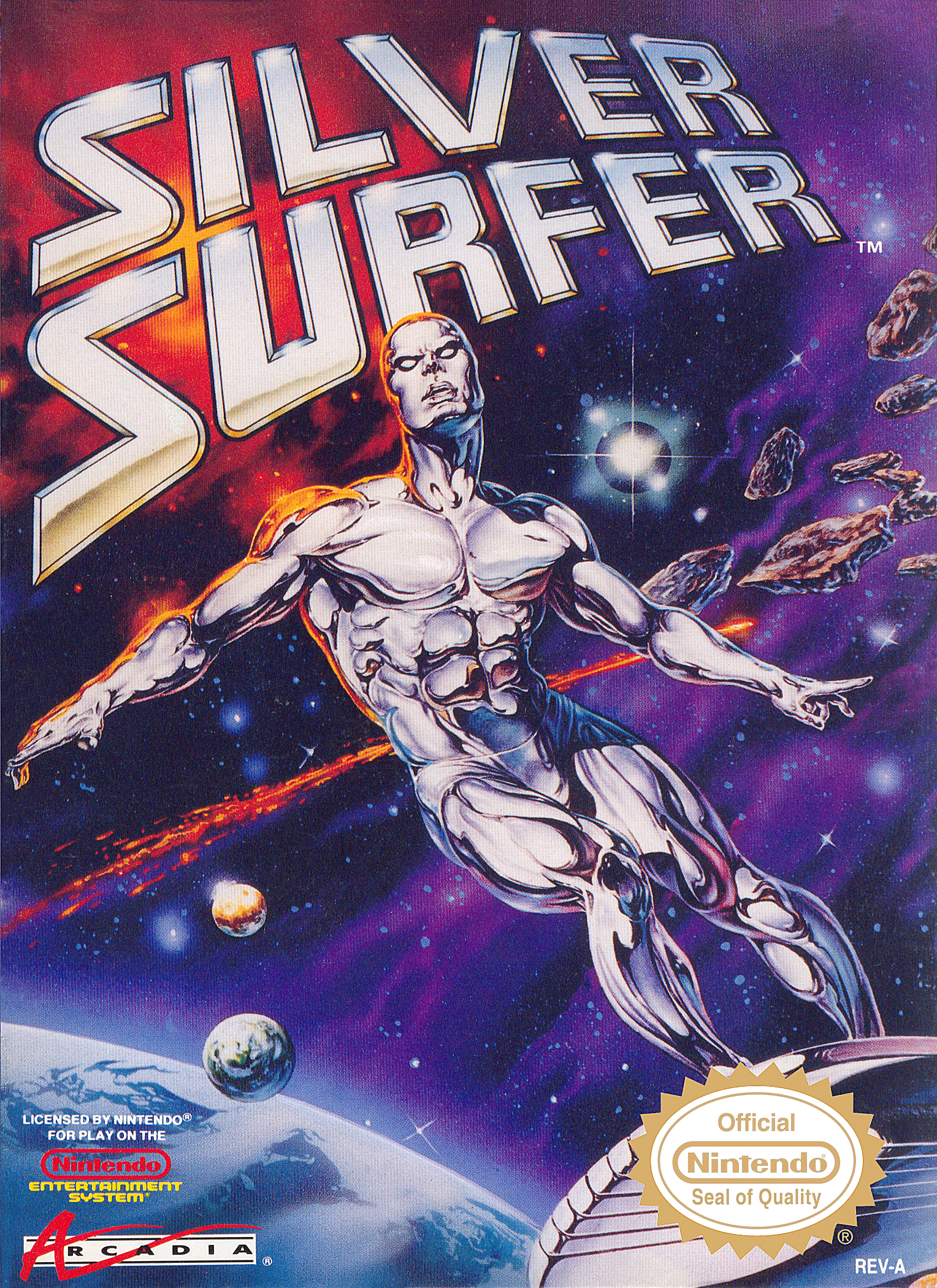
Silver Surfer (NES, 1990) is a notoriously punishing side-scrolling shooter featuring Marvel's cosmic hero. Most players never reached stage two. The game itself is remembered primarily as a curiosity of licensed-property publishing from the early nineties - underpowered visually, unforgiving mechanically, and largely forgotten within years of release.
The soundtrack is something else entirely. Tim Follin's score for Silver Surfer is consistently cited as one of the most technically ambitious pieces of music ever composed for the Nintendo Entertainment System, and the game's reputation today rests almost entirely on it. Players who gave up after thirty seconds of gameplay still remember the music three decades later.
Software Creations, Licensed Games, and the Music-First Brief
By 1990 Tim Follin had been composing game music at Software Creations for five years, working his way from ZX Spectrum beeper arrangements through C64 SID programming to the NES audio hardware. Silver Surfer was a licensed Arcadia title - the kind of project that rarely attracted adventurous production budgets or extended development schedules. Follin's brief was to fill the game's stages with appropriate music.
What he delivered was not appropriate music. It was progressive rock composition in hexadecimal, squeezed into a ROM that most of its players would abandon before hearing the second stage. The disconnect between the game's commercial context and the musical ambition of its soundtrack is part of what makes Silver Surfer a remarkable artifact: the most celebrated work in Tim Follin's catalogue was incidentally attached to a licensed superhero game nobody played.
Five Channels, No Room Left Unused
The NES audio architecture provides five channels: two pulse wave generators, one triangle wave, one noise channel, and one delta modulation channel (DMC). Follin used all five simultaneously. The triangle wave carries the bass line - the NES equivalent of a bass guitar or cello - while the two pulse channels trade melodic phrases across each other's range, creating the impression of two independent melodic instruments in conversation. The noise channel provides rhythmic punctuation: precise accents rather than blunt percussion. The DMC channel adds additional textural depth.
Stage 1's theme - known in the community as "Cosmic Wave" - opens with an accelerating minor-key riff and builds through several modulations, driven forward by the triangle wave's bass and the two pulse channels' interlocking melodic counterpoint. Listeners frequently describe it as containing more than three simultaneous melodic voices. It contains exactly three. The perception of greater density is a compositional effect: Follin's voice leading is so efficient that each channel appears to carry more musical weight than its hardware role strictly allows.
"Silver Surfer - the game was terribly difficult. Nobody could get past the first stage. But the music was there to make you feel like you were experiencing something cosmic, even when you were dying for the hundredth time."
Tim Follin, Super Marcato Bros exclusive interview, 2018
Oscilloscope Visualisation - Stage 1
Oscilloscope visualisations render each NES audio channel as a separate waveform in real time, making the multi-channel counterpoint immediately visible. The Silver Surfer Stage 1 visualisation shows all five channels active simultaneously - see Videos for the full curated collection.
Oscilloscope visualisation - Silver Surfer NES Stage 1. See Videos for the full curated oscilloscope collection.
Critics Noticed the Music, Missed the Point of the Game
Contemporary reviews of Silver Surfer universally noted the quality of the music while criticising the game's excessive difficulty. The NES was not a platform on which reviewers commonly singled out soundtracks for special attention - audio was typically assessed alongside graphics as part of a technical package - yet Silver Surfer's score was distinctive enough to demand separate treatment. The game scored poorly in most publications; the music did not.
The score's wider reputation developed gradually through the 2000s and accelerated sharply after 2012, when oscilloscope visualisation videos began circulating on YouTube. Viewers who had never played the game encountered Follin's NES work for the first time and responded to it with the same surprise that had characterised the original reviews. The "impossible NES music" narrative - music that appears to exceed what the hardware can produce - proved highly shareable and brought Follin to an audience far larger than the game had ever reached.
The NES Benchmark That Held for Three Decades
Silver Surfer's influence on NES music composition is difficult to measure directly because the NES platform was already declining when the game shipped. No commercial NES game released after 1990 demonstrably built on Follin's techniques - the development community had moved on. The soundtrack's influence operated instead through the retro game music community: as a reference point, a challenge, and a demonstration of what was possible within the five-channel constraint.
For composers working in the chiptune and homebrew NES scenes of the 2000s and 2010s, Silver Surfer's stage themes set a standard for counterpoint density and voice-leading efficiency that remained a live reference decades after the original hardware had been superseded. See the full Music catalogue and People page for biographical context.