From Japanese electronics manufacturer to NES powerhouse to modern IP revival —
the full arc of one of gaming's most technically gifted studios.
Founding — Sun Electronics, 1971
Sun Electronics Corporation was founded in 1971 in Japan as a manufacturer of
electronic components and amusement equipment.[1]
The company's game development and publishing division became known internationally
as Sunsoft — a portmanteau of "Sun Software" — though
the legal entity remained Sun Electronics throughout the company's history.
Throughout the 1970s, Sun Electronics operated primarily in the domestic Japanese
market, supplying components to the nascent amusement industry. The shift toward
game development came organically as the Japanese arcade market expanded in the
late 1970s and early 1980s, with Sun Electronics initially producing licensed
titles for larger publishers before developing its own properties.
"The NES years were when we really found our identity as a developer —
the hardware constraints forced us to be creative in ways that set us apart."
- Paraphrase of Sunsoft developer philosophy, retro gaming community retrospectives
Arcade Era — Early 1980s
Sun Electronics entered the coin-op arcade market in the early 1980s, producing
a mix of licensed and original arcade titles. The company's most significant arcade
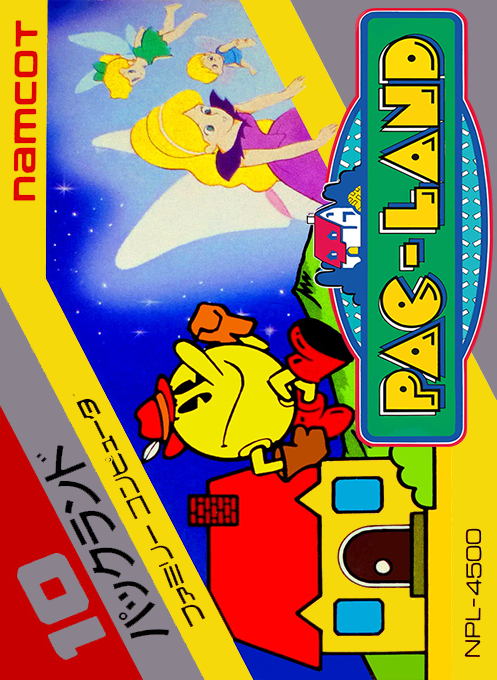
work of this period was the licensed adaptation of Namco's Pac-Land (1984)
— one of the first arcade games to feature a side-scrolling platformer
structure with a defined narrative arc.[2]
Pac-Land represented a significant technical and commercial achievement for Sunsoft.
Licensed from Namco, the game featured horizontal scrolling across multiple distinct
zones - an unusual structural choice for the era that anticipated the platformer
conventions that would define the NES generation. Atari Games distributed Pac-Land
in North American arcades, giving Sunsoft its first significant exposure in the
Western market.
Sun Electronics produced several other arcade titles during the early-to-mid 1980s
before pivoting heavily toward the Famicom/NES home market. The transition
represented a strategic bet on domestic console gaming that would define the company's
identity for the following decade.
Pac-Land (1984 arcade; 1985 Famicom port shown) - Sunsoft's most significant arcade contribution, licensed from Namco.
NES Golden Run — 1988–1993
Sunsoft's NES/Famicom development period from approximately 1988 to 1993 is widely
regarded by retro gaming communities as the company's creative and commercial
peak.[3] In this five-year window,
Sunsoft produced a string of technically accomplished, commercially successful
titles that consistently pushed the hardware beyond what most publishers attempted.
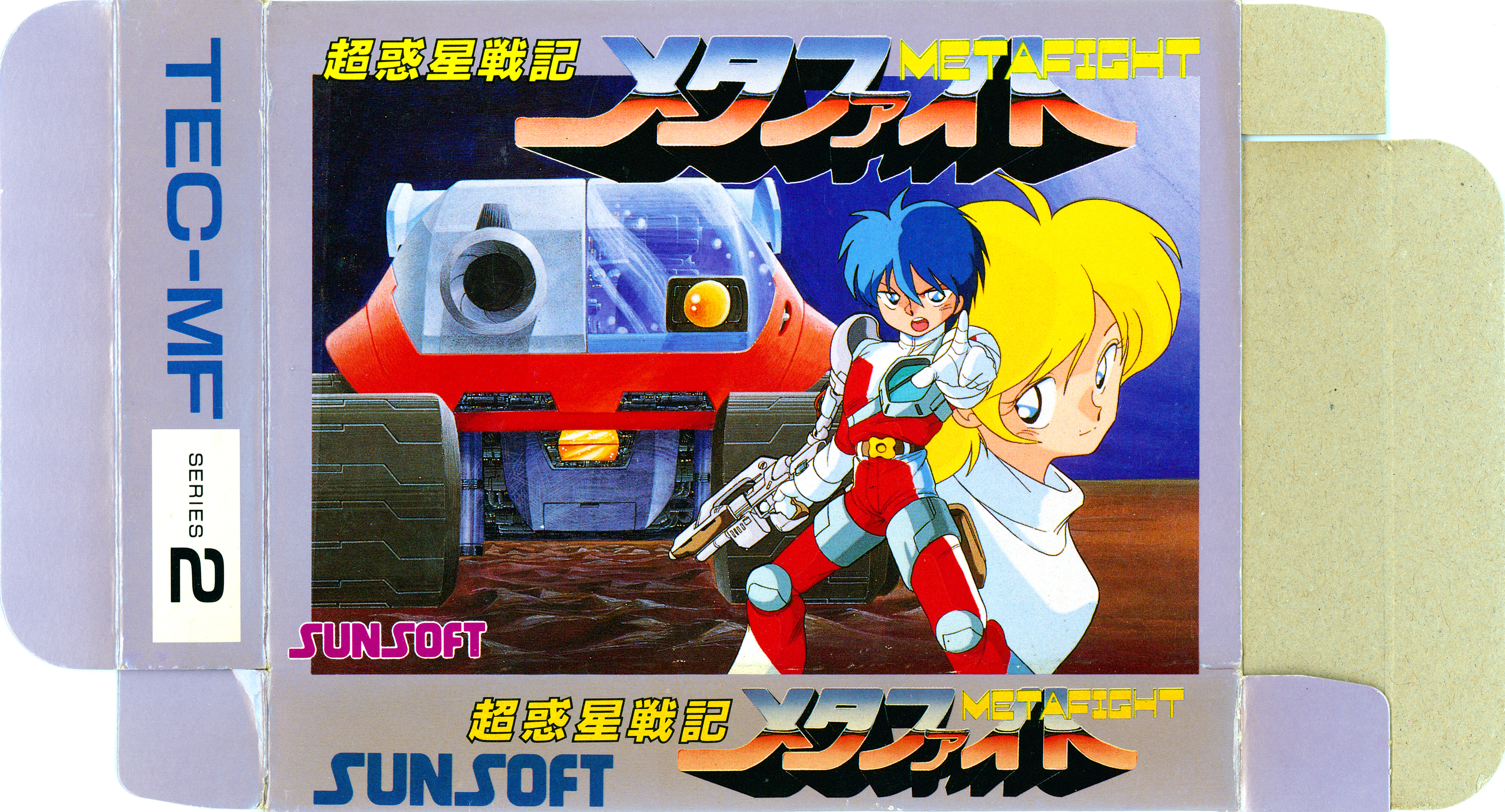
The period opened with Blaster Master (1988, NES North America;
released in Japan as Chō Wakusei Senki Metafight on the Famicom). The
game's dual-mode structure — alternating side-scrolling tank sections with
top-down on-foot action — was unusual for its time, and Naoki Kodaka's score
immediately established Sunsoft as a studio with exceptional audio ambitions.
Batman (1989, NES) remains Sunsoft's most celebrated single
title. The Tim Burton film licence gave the game commercial momentum, but its
lasting reputation rests on Kodaka's soundtrack — five stage themes of
extraordinary density and expression that captured Gotham City's midnight atmosphere
more effectively than most film composers managed with full orchestras.
The period continued with Fester's Quest (1989, The Addams
Family licence), Journey to Silius (1990, originally a Terminator 2
tie-in), Gremlins 2: The New Batch (1990), Batman:
Return of the Joker (1991), and Hebereke (1991, Japan
only; PAL NES as Ufouria: The Saga).
Batman: Return of the Joker (NES, 1991) - Sunsoft's Batman sequel, independent of any film.Blaster Master / Chō Wakusei Senki Metafight (Famicom, 1988) - Sunsoft's first NES classic.
"The NES sound chip gave you five voices, and Kodaka made each one carry the
weight of a full section. That's not programming — that's composing."
- Community analysis, NESdev forums
Later Years — 1992–2000s
As the NES era closed, Sunsoft transitioned to 16-bit publishing.
Super Spy Hunter (NES, 1992 NA; 1991 Famicom as Battle
Formula) represented the company's NES swansong — a vehicular
combat shooter that served as a spiritual sequel to the Midway arcade classic.
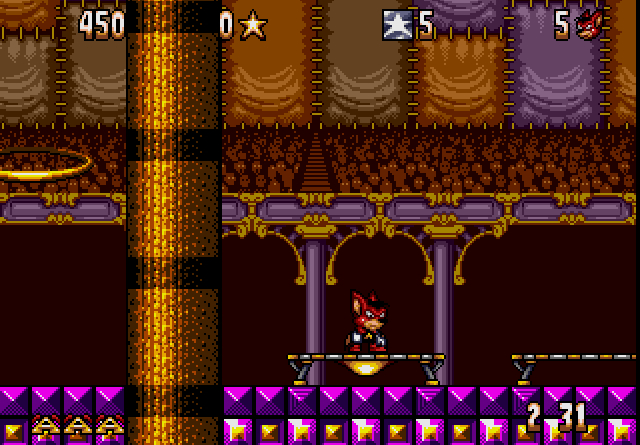
On the SNES, Sunsoft published Aero the Acro-Bat (1993), developed
by Iguana Entertainment — a mascot platformer with technical polish but a
reception more mixed than the NES golden era titles. The Mega Drive version followed
in 1994.
Sunsoft's publishing activity declined through the mid-to-late 1990s as the company
shifted toward pachinko and mobile gaming. Several of the original development
team members moved to other studios; Naoki Kodaka's post-Sunsoft career is
sparsely documented in English-language sources.
Aero the Acro-Bat (SNES, 1993) - published by Sunsoft; developed by Iguana Entertainment.
Modern Revival — 2021 Onwards
Sunsoft's brand and intellectual property was revived in 2021–2022 under
new ownership, with announcements of classic game re-releases and new development
projects. The revival drew significant attention from retro gaming communities
who had maintained affection for the NES catalogue.
The spiritual successors to Blaster Master — Blaster Master
Zero (2017), Blaster Master Zero 2 (2019), and
Blaster Master Zero 3 (2021), developed by Inti Creates with
Sunsoft involvement — kept the series alive and introduced the franchise to
a new generation. Naoki Kodaka contributed original compositions to these titles,
reconnecting with the series he had helped define.
"The Blaster Master Zero games honour what made the original special: the combination
of exploration, dual-mode gameplay, and music that carries the player forward."
- Inti Creates developer commentary, paraphrased