▲ TOP

Origins: Sega's Answer to Final Fight

By 1990, Capcom's Final Fight had demonstrated that the beat 'em up genre could be both commercially and artistically compelling. Sega's AM7 division - tasked with developing Mega Drive exclusives - set out to create a rival that would capitalise on the Mega Drive's hardware advantages and Sega's own brand identity.

The result, released in Japan in August 1991 as Bare Knuckle: Ikari no Tekken (Bare Knuckle: Iron Fist of Fury), drew directly from Final Fight's template but added distinctly Sega flavour: slicker animations, a police car special attack, and the world's first FM synthesis score composed to sound like a contemporary nightclub.

The three original protagonists - Axel Stone (the balanced brawler), Blaze Fielding (the judo-trained speed fighter), and Adam Hunter (the powerful but slower heavyweight) - were designed to give players meaningful choice in play style.
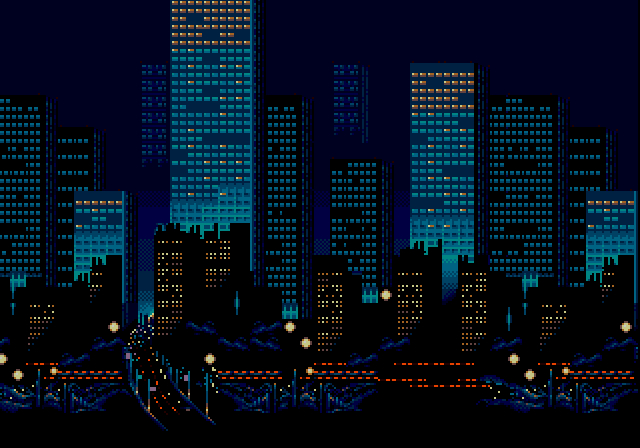
Streets of Rage 1 - street fighting scene, Mega Drive 1991
Streets of Rage (1991) - the original street fighting scene that started the series.

Yuzo Koshiro's Musical Revolution

While the game design was ambitious, it was the soundtrack that truly set Streets of Rage apart. Yuzo Koshiro - already celebrated for his work on Ys I & II and Revenge of Shinobi - was brought in as composer. Rather than writing conventional game music, he approached the Mega Drive's Yamaha YM2612 FM synthesis chip as a professional synthesiser.

Koshiro developed a custom sequencer application in C on an NEC PC-88 computer, giving him granular control over the FM chip's parameters that off-the-shelf music tools of the era could not provide. He immersed himself in the techno and house music emerging from Detroit, Chicago, and the UK rave scene - and fed those influences directly into the soundtrack.

The result was unlike anything heard in games before: polyrhythmic percussion, acid bass lines, atmospheric pads, and relentless four-to-the-floor energy. Tracks like Fighting in the Street and Violent Breathing were genuine club music that happened to be written for a Mega Drive game.

"I wanted to make music that could stand alongside club tracks of the time. The Mega Drive's FM chip was capable of far more than people realised - you just needed to know how to program it." - Yuzo Koshiro
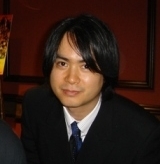
Yuzo Koshiro, composer of the Streets of Rage soundtrack
Yuzo Koshiro - composer, programmer, and co-founder of Ancient Inc.

Streets of Rage 2: The Masterpiece (1992)

Development of Streets of Rage 2 moved to Ancient Inc., Koshiro's company, which took responsibility for both the game design and the music. The shift was transformative: where the original had been a competent genre entry, the sequel was a landmark achievement.

The roster was expanded to four fighters. Returning heroes Axel and Blaze were joined by Max Thunder - a huge wrestling champion and Adam's sparring partner - and Eddie "Skate" Hunter, Adam's younger brother who fights on rollerblades. Each character had a more expansive move set, including throws, back attacks, and character-specific specials that gave Streets of Rage 2 genuine depth beyond button-mashing.

Eight stages took players from a funfair through a jungle, a ship, a warehouse, and finally Mr. X's skyscraper. Each environment was rendered with extraordinary sprite work that showcased what the Mega Drive could achieve in experienced hands.

Koshiro's soundtrack went further than the original. Working with co-composer Motohiro Kawashima, he pushed his custom sequencer to create tracks that incorporated breakbeat, techno, and early rave influences. The track Go Straight became one of the most celebrated pieces of game music ever written.

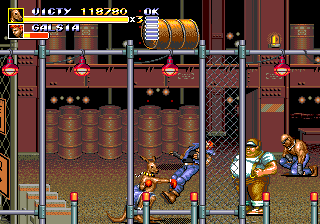
Streets of Rage 2 - gameplay screenshot showing the expanded combat system
Streets of Rage 2 (1992) - the expanded cast and refined combat made this the definitive entry.
"Streets of Rage 2 was the culmination of everything I'd learned about FM synthesis. I was listening to a lot of techno and house music at the time, and I wanted to bring that energy to the game." - Yuzo Koshiro, Red Bull Music Academy interview

Series Retrospective

Streets of Rage: The Complete History - a detailed documentary covering the full development history of all three games.

Streets of Rage 3 and the East-West Divide (1994)

Released in Japan as Bare Knuckle III in March 1994, the third instalment represented Ancient's most mechanically ambitious attempt. A run button was added for the first time, allowing players to close distances more aggressively. Special moves were reworked: they could now drain life, adding a risk-reward element absent from the previous games. Multiple endings based on completion time and difficulty settings added replayability.

New characters included Dr. Zan, a cyborg police officer with electrical attacks, and Shiva, Mr. X's martial arts bodyguard, as hidden unlockable fighters. The narrative became more complex, involving robot duplicates and a shadow government conspiracy.

The Western localisation, however, substantially altered the game. Character designs were changed (including a significant redesign of Ash, a flamboyant villain), dialogue was modified, the difficulty was increased, and some story elements were cut or changed. The result was a noticeably different experience from the Japanese original - one that divided critics.

Many retro gaming historians consider the Japanese Bare Knuckle III to be the definitive version, representing Ancient's uncompromised vision for the conclusion of the original trilogy.

Streets of Rage 3 - Bare Knuckle III gameplay
Streets of Rage 3 (1994) - the most mechanically complex of the trilogy, and the most divisive.

Series Timeline

August 1991

Streets of Rage released in Japan as Bare Knuckle: Ikari no Tekken by Sega AM7.

October 1991

Streets of Rage launches in North America and Europe. Becomes one of the best-selling Mega Drive titles.

December 1992

Streets of Rage 2 (Bare Knuckle II) releases in Japan, developed by Ancient Inc. Critical acclaim and massive commercial success.

January 1993

Streets of Rage 2 launches in North America and Europe to widespread critical praise. Named game of the year by numerous publications.

March 1994

Bare Knuckle III (Streets of Rage 3) releases in Japan. More mechanically complex but more divisive reception.

September 1994

Altered Western version of Streets of Rage 3 releases in North America and Europe.

April 2020

Streets of Rage 4 releases, developed by Dotemu, Guard Crush, and Lizardcube. Yuzo Koshiro contributes to the soundtrack. Critical and commercial success.