One Game, Two Cartridges
Sonic 3 & Knuckles is the combined experience Yuji Naka and Hirokazu Yasuhara intended from the beginning. Twelve zones. Twenty-six acts. Three playable characters with entirely distinct abilities. A narrative arc running from the burning Angel Island to the Master Emerald's orbit above the atmosphere. It is the largest and most mechanically complete game of the classic Sonic era, and one of the few titles from the 16-bit generation that still functions as a systemic masterwork.
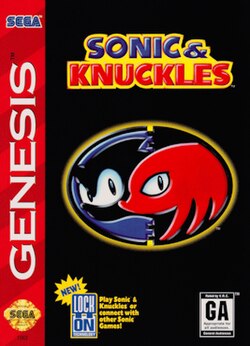
The split was commercial necessity. Sega could not finish the full twelve-zone project in time for Christmas 1993. Rather than delay, they divided the game - releasing the first six zones as Sonic 3 in February 1994 and the second six as Sonic & Knuckles in October 1994. The lock-on cartridge technology, a patented Sega innovation, resolved the split in hardware: plugging Sonic 3 into the pass-through slot on top of Sonic & Knuckles merged both ROMs into one combined program.
The Christmas That Split One Game Into Two
Sonic 3 entered development almost immediately after Sonic 2 shipped in November 1992. Yuji Naka's team at Sega Technical Institute in San Jose was now working alongside Sonic Team Japan, and the ambition had grown considerably. The planned game would span twelve full zones, introduce a third playable character with entirely different movement abilities, and implement a save system - the first in the series.
The save system alone was a statement of intent. Naka designed it as an acknowledgment that the game was too long to complete in a single session - an admission no previous Sonic title had made. The battery-backed cartridge would remember which character you chose, which Chaos Emeralds you had collected, and where in the zone sequence you had stopped.
By late 1993 it was clear the twelve-zone project would miss Christmas. Sega's international offices had committed to a February 1994 launch. Naka and Yasuhara divided the game: the first six zones shipped as Sonic 3, the second six followed in October 1994 as Sonic & Knuckles. The lock-on cartridge concept was then developed to reunite the two halves without either product appearing incomplete. The People page covers Naka and Yasuhara's broader careers and working relationship.
We introduced a save feature in Sonic 3 because we finally made a Sonic game long enough that you couldn't finish it in one sitting. That was completely deliberate - and completely new for the series.
The Lock-On Cartridge
The Sonic & Knuckles cartridge contains a hardware pass-through slot at its top - a physical socket that accepts any Mega Drive cartridge and reads its ROM data. When Sonic 3 is inserted into this slot, the hardware merges both ROMs in memory and executes them as a single combined program. The result is Sonic 3 & Knuckles.
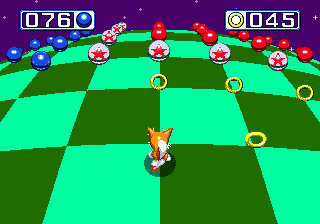
The technology was patented by Sega and is the only commercial example of this approach in the Mega Drive's library. Two other combinations are possible: inserting Sonic 2 into the slot unlocks Knuckles as a playable character in Sonic 2 (with unique routes through Chemical Plant, Aquatic Ruin, and other zones), while inserting Sonic 1 unlocks a collection of Blue Sphere special stages from Sonic 3 as a standalone bonus game.
The lock-on mechanism was designed specifically to avoid the consumer perception of an "incomplete" game. Both Sonic 3 and Sonic & Knuckles are fully playable standalone products. The combination is a bonus feature, not a correction - though in practice, the combined game is what most players remember.
The First Six Acts
Sonic 3 opens with one of the most dramatically staged zone sequences in the classic era.
Angel Island Zone
The most dramatically staged zone in Sonic 3 opens in tropical paradise and ends on fire. Robotnik sets Angel Island ablaze at the close of Act 1 - one of the most visually striking zone transitions in the series. The fire effect transforms the colour palette entirely and raises the ambient temperature of every visual element.
Hydrocity Zone
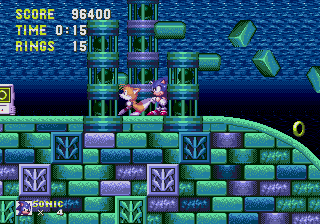
Hydrocity is arguably the most mechanically inventive zone of the classic era. High-speed underwater channels use the Mega Drive's horizontal scrolling at extreme velocity; suction tubes transport Sonic through submerged tunnels; spinning turbines function as both hazards and launch pads. The zone redefines what underwater gameplay can feel like after Labyrinth Zone's deliberate sluggishness.
Marble Garden Zone
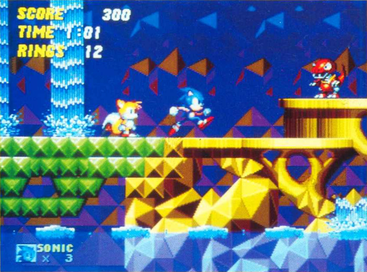
Ancient ruins intertwined with Robotnik's machinery - drill-driving Eggrobos ride mechanical platforms over collapsing stone columns. Marble Garden is slower and more methodical than Hydrocity, emphasising the vertical structure of the ruins. The boss fight, fought on a drill-fitted flying machine, is one of Naka's most dynamic confrontations.
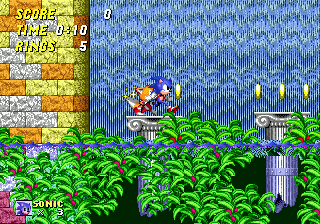
Carnival Night Zone
A floating carnival on the island - bumper cars, balloon animals, and carnival decorations overlay a mechanical sky platform. Act 2 contains the infamous barrel puzzle, where Sonic must stand on a spinning barrel and press up and down to move it vertically. No in-game hint explains this. The puzzle stumped players so thoroughly that Nintendo Power published a guide.
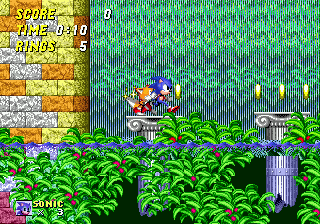
IceCap Zone
IceCap opens with Sonic snowboarding down an icy mountain slope in Act 1 - a setpiece that functions as both a tutorial in momentum control and a visual spectacle. The zone's music is among the most disputed in gaming history: the IceCap Act 1 theme closely mirrors Michael Jackson's unreleased composition "Donut Joe," and Jackson's collaborator Brad Buxer confirmed his involvement to journalists in 2009.
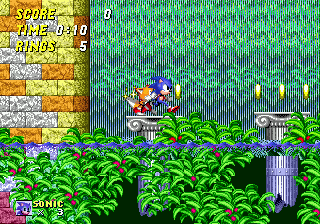
Launch Base Zone
Robotnik's orbital launch facility - the docking station for the Death Egg. Launch Base escalates in mechanical complexity across two acts, culminating in a two-phase boss that functions as both a confrontation with Knuckles and a transition to space. The zone's industrial aesthetic is at its most grandiose here, with the Death Egg looming in the background throughout.
The Second Half
Mushroom Hill Zone
Lush forest with mushroom trampolines and autumn leaves - a deliberately warm and inviting opening before the game escalates dramatically. The zone introduces Knuckles' glide mechanics to players unfamiliar with them and establishes the visual richness of Sonic & Knuckles' art direction.
Flying Battery Zone
Robotnik's aerial warship - chains, magnets, and industrial fans are the primary hazards. Flying Battery first appeared in Sonic 3's opening animation months before the zone became playable in Sonic & Knuckles. Its dual appearance is one of the most sustained pieces of environmental storytelling in the series.
Sandopolis Zone
Desert pyramids in Act 1 give way to ghost-infested pyramid interiors in Act 2. The light switches scattered through Act 2 must be kept active - ghosts multiply in darkness and become aggressive at the highest population. One of the most atmospheric zones in the classic era.
Lava Reef Zone
Underground magma caves that transform dramatically mid-zone as the Death Egg is damaged. The colour palette shifts from molten orange and red to crystalline blue-grey - one of the most visually dramatic environmental changes in the entire series.
Hidden Palace Zone
A brief, story-critical zone where Knuckles confronts Robotnik and discovers the Master Emerald has been stolen. Hidden Palace is the emotional centrepiece of the S&K narrative - Knuckles' arc from antagonist to ally is completed here in a cutscene rather than gameplay.
Sky Sanctuary & Doomsday
Sky Sanctuary is the climactic approach - crumbling ancient ruins above the clouds, filled with atmospheric decay and the ghost of Mecha Sonic. The Doomsday Zone is the Super Sonic-only finale: an open-sky chase sequence following Robotnik across the upper atmosphere, one of the most kinetic sequences in the classic era.
Ninety-Six Percent and Still Underselling It
Sonic 3 launched in February 1994 to strong reviews. Mean Machines Sega awarded it 92% and praised the save system and elemental shields as meaningful additions rather than padding. Electronic Gaming Monthly gave it 9, 8, 9, and 9 from four reviewers, with Sushi-X singling out the zone variety as the best in the series. The general critical reading was that Sonic 3 was Sonic 2 with more of everything that mattered - and the three-character routing added replay value the earlier games lacked.
Sonic & Knuckles received even stronger notices when it arrived in October 1994. The lock-on technology drew consistent coverage as a genuine engineering curiosity - reviewers who had purchased Sonic 3 months earlier found it could be retroactively extended into a longer, richer experience. Mega (UK) rated Sonic & Knuckles 96% and described the combined Sonic 3 & Knuckles as the definitive Sonic game. Mean Machines Sega's retrospective treatment of the combined experience ran to five pages.
Commercially, Sonic 3 moved over one million units in North America in its launch month at $69.99, during Sega's peak market share period when the Mega Drive held over 50% of the 16-bit console market. Sonic & Knuckles, despite the unusual cartridge format with no commercial precedent, found its audience among existing Sonic 3 owners who understood the lock-on proposition from Sega's marketing.
Sonic 3 was always intended to connect to Sonic & Knuckles. The two games were designed as one project split by a Christmas release deadline. The lock-on cartridge was the solution we found to keep both products complete on their own terms.
Sonic 3 & Knuckles in Motion
Full Playthrough - Sonic 3 & Knuckles
The complete combined game from Angel Island to The Doomsday Zone - 26 acts of the most ambitious classic Sonic project ever completed.
Sonic 3 Complete Soundtrack
The officially credited soundtrack by Brad Buxer, Cirocco Jones, and others - including the disputed IceCap Zone theme and the thunderous Launch Base boss music.
Why Sonic 3 & Knuckles Still Matters
Sonic 3 & Knuckles completed the classic era on its own terms. Every system introduced across the three preceding titles - spin dash, Super Sonic, elemental shields, save states - was integrated into a single coherent experience. The zone design reached its structural peak in Sky Sanctuary's atmospheric ruins and its emotional peak in Hidden Palace's narrative pivot.
The game's legacy is complicated by the Michael Jackson controversy, by the commercial split between two cartridges, and by the fact that the combined ROM has never received an official current-generation re-release with its original music intact. The IceCap Zone licensing situation has prevented the game's inclusion in multiple Sega collections. Players encounter it today primarily through emulation or original hardware.
None of this has diminished the game's reputation. Sonic 3 & Knuckles remains the consensus choice for the best game of the classic era - and among the finest platform games made on the Mega Drive.
I wanted players to feel the speed - not just see it. The physics engine had to make you feel like you were actually running at that pace, with real weight and momentum behind every movement.