AES · MVS · CD · Pocket

The Hardware

One board. Two housings. The identical arcade hardware argument - and the family it spawned.

AES vs MVS - One Board, Two Housings

The Neo Geo’s fundamental selling point was a genuine engineering decision: SNK designed a single hardware specification for both the MVS (Multi Video System) arcade board and the AES (Advanced Entertainment System) home console. Both units use the same CPU, sound chip, video hardware, and ROM access architecture.

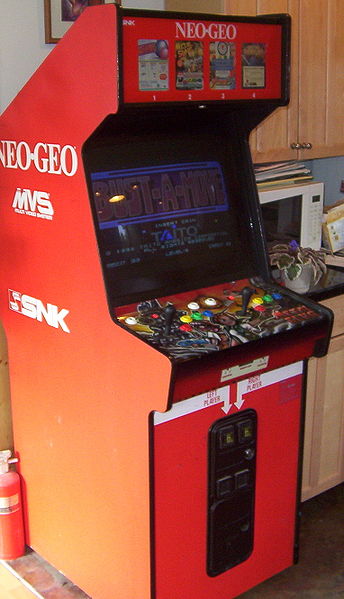
The MVS came in several configurations - 1-slot, 2-slot, 4-slot, and 6-slot cabinets - allowing arcade operators to run multiple games in a single cabinet by swapping cartridges. The AES packaged the same board in a home console form factor with two joystick ports and an AV output. When a new SNK title appeared on MVS, home players could purchase the AES version and play the identical experience.
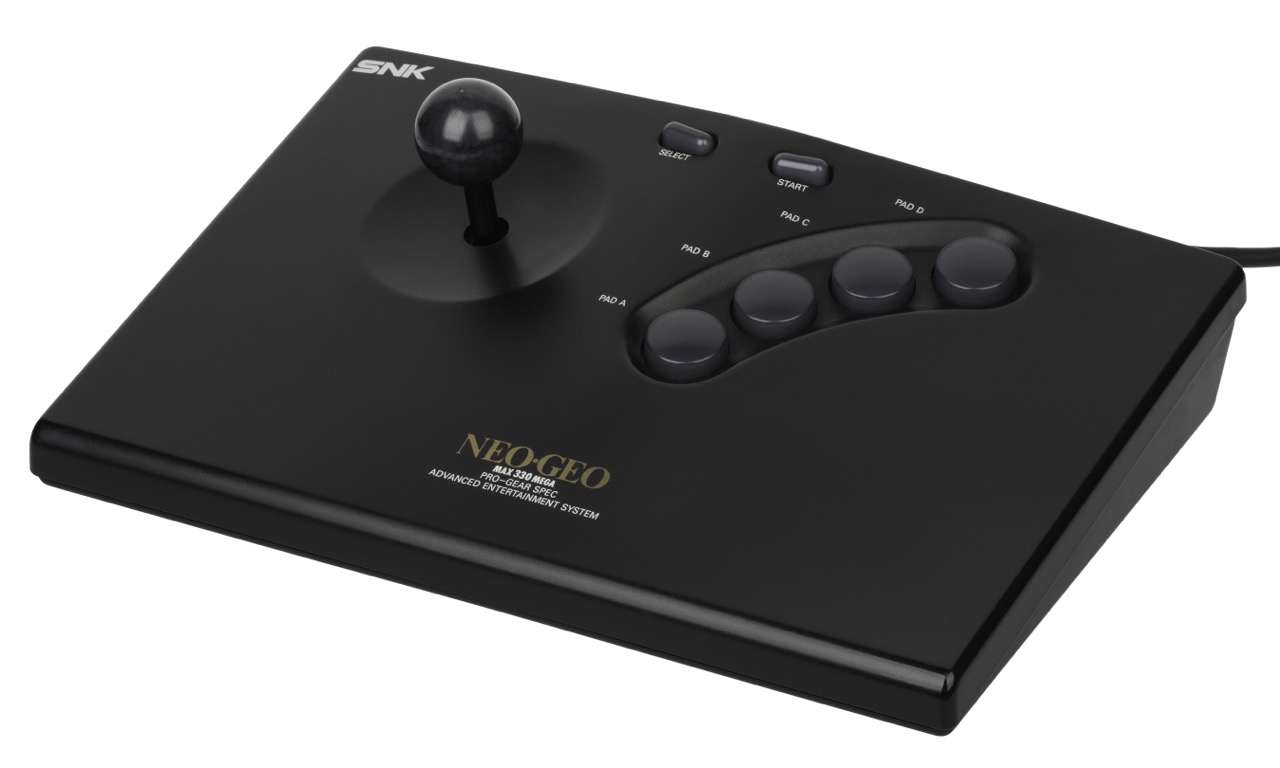
Neo Geo AES console with arcade joystick controller - the home version of SNK's identical arcade hardware
Neo Geo AES (1990) with arcade-style joystick. Photo: Evan-Amos / Wikimedia Commons (CC0).

Neo Geo AES (1990)

CPUMotorola 68000 @ 12 MHz + Zilog Z80 @ 4 MHz
RAM64 KB main + 84 KB video + 2 KB sound
Resolution320×224 px (fixed)
Colours4,096 on-screen from 65,536 palette
SoundYamaha YM2610 (FM + ADPCM)
Max ROM716 Mbit per cartridge
Launch price$649 USD (1990)
Units sold~980,000

Neo Geo MVS (1990)

CPUMotorola 68000 @ 12 MHz + Zilog Z80 @ 4 MHz
BoardIdentical to AES
Slots1, 2, 4, or 6 cartridge slots
Cabinet cost~$2,500 (4-slot) - $3,500 (6-slot)
Titles304 MVS releases
Production1990 – 2004
CartridgesInterchangeable with AES
RegionGlobal arcade deployment
Neo Geo MVS arcade cabinet - SNK's multi-cartridge arcade board system deployed in arcades worldwide
Neo Geo MVS arcade cabinet. Operators could swap cartridges rather than replacing entire boards. Photo: Wikimedia Commons.

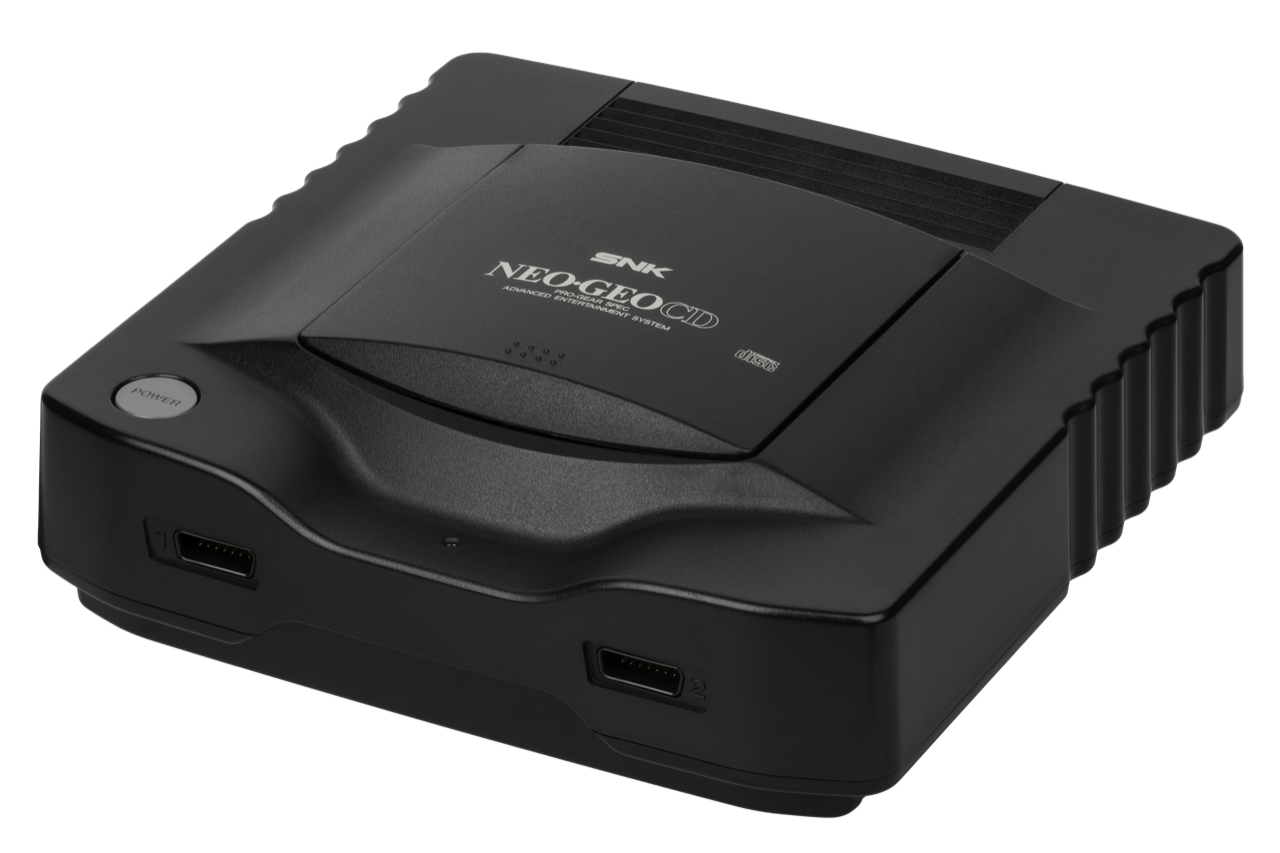
Neo Geo CD

Released in September 1994 in Japan and 1995 internationally, the Neo Geo CD was SNK’s attempt to address the AES’s most significant barrier: cartridge pricing. By moving to CD-ROM storage, SNK could offer Neo Geo titles at significantly lower prices - typically $50–$70 versus $100–$200 for AES cartridges.

The tradeoff was load times. The original Neo Geo CD used a single-speed CD-ROM drive (150 KB/s), resulting in load times of 30–90 seconds between stages - a significant interruption to arcade-derived titles designed for seamless play. SNK released the Neo Geo CDZ in 1995 (Japan-only) with a double-speed drive that reduced load times to a more acceptable 15–40 seconds.

Neo Geo CD top-loading console by SNK (1994) - the CD-ROM alternative to the expensive AES cartridge format
Neo Geo CD - top-loading model (1994). Load times of 30–90 seconds were the main drawback. Photo: Evan-Amos / Wikimedia Commons (CC0).

Neo Geo CD (1994)

CPUMotorola 68000 @ 12 MHz (same as AES)
Drive1× CD-ROM (150 KB/s)
Load times30–90 seconds
Launch price¥49,800 Japan / $299 US
Library~100 CD titles
VariantsTop-loading, Front-loading, CDZ (2×)

Neo Geo Pocket & Pocket Color

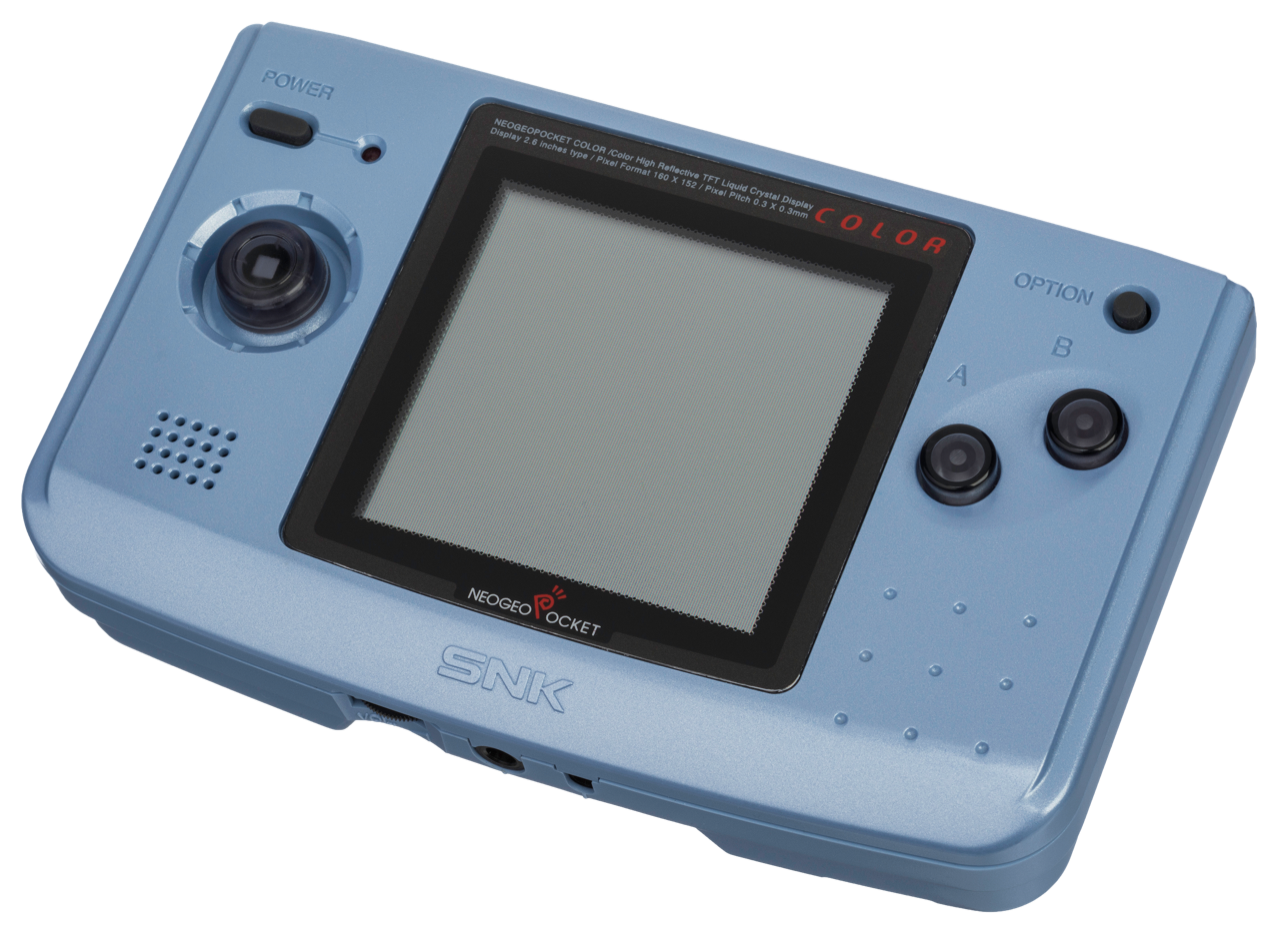
The Neo Geo Pocket launched in October 1998 in Japan - a handheld system with a monochrome display. It was replaced in March 1999 by the Neo Geo Pocket Color, a colour-capable model that launched globally. The Pocket Color competed directly with the Nintendo Game Boy Color, releasing in the same year.

Despite a strong library - including SNK vs. Capcom: Match of the Millennium (widely regarded as the finest fighting game on a handheld until Street Fighter IV 3DS), King of Fighters R-2, and Sonic the Hedgehog Pocket Adventure - the Neo Geo Pocket Color was discontinued in 2000 following SNK’s financial difficulties. Production of cartridges continued by third parties through 2001.

Neo Geo Pocket Color handheld gaming console by SNK (1999) - the 16-bit competitor to the Game Boy Color
Neo Geo Pocket Color (1999) - blue variant. 40-hour battery life, 16-bit CPU, and a fighting game library widely considered superior to the Game Boy Color. Photo: Evan-Amos / Wikimedia Commons (CC0).

Neo Geo Pocket Color (1999)

CPUToshiba TLCS-900H @ 6.144 MHz + Z80 @ 3.072 MHz
Display2.7” 160×152 px colour LCD
RAM64 KB main + 16 KB sound
Power2×AA batteries (~40 hours)
Launch price$69.95 US
Library~82 titles
Discontinued2000 (Japan), 2001 (US)

Neo Geo AES Duo-R

The Neo Geo AES Duo-R was a revised version of the AES console released in Japan in 1993. It featured a redesigned case with a top-loading cartridge slot (replacing the front-loading design of the original AES) and used the same hardware internally. The revision was primarily cosmetic and ergonomic, with no changes to the game board or compatibility.

The Duo-R is noticeably more compact than the original AES and was the version of the home hardware most commonly found in Japanese households during the platform’s commercial peak. Internationally, the original AES design remained in production.