Tim Stamper
Co-founder — Lead Programmer
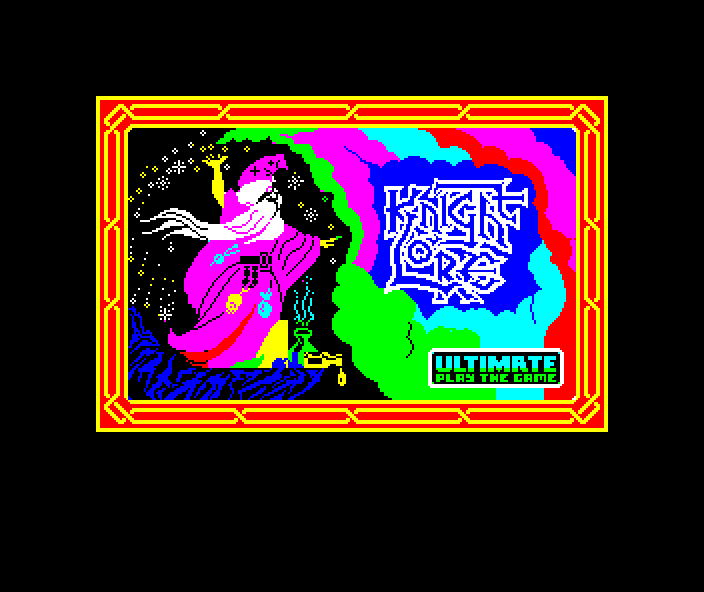
Tim Stamper co-founded Ultimate Play the Game with his brother Chris in 1982. As the primary programmer of the early operation, Tim’s technical capabilities defined what Ultimate and later Rare could achieve. His mastery of ZX Spectrum hardware produced games like Knight Lore — titles that operated at a level competitors couldn’t touch.
After rebranding to Rare in 1985, Tim was instrumental in the decision to reverse-engineer Nintendo hardware and target the NES — an audacious move that paid off handsomely. The Stampers built a studio where technical excellence was the floor, not the ceiling. Tim departed Rare around 2007 following Microsoft’s 2002 acquisition.
“The aim was always to produce something that nobody had seen before. That’s what kept us going. Every game had to push past what people thought was possible.”
— Tim Stamper
Chris Stamper
Co-founder — Hardware Engineer
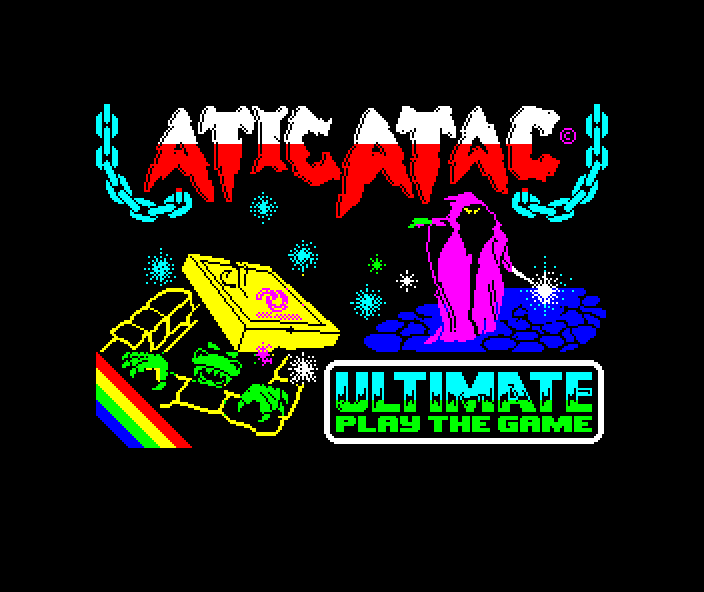
Chris Stamper specialised in hardware reverse-engineering, a skill that proved critical at every stage of Rare’s development. He reverse-engineered the ZX Spectrum to build Ultimate’s initial toolkit; he reverse-engineered the NES without Nintendo’s authorisation to gain access to the platform; and he played a key role in integrating Silicon Graphics workstations for the ACM technique that made Donkey Kong Country possible.
Chris departed Rare alongside his brother Tim around 2007. The pair’s combined contribution to British game development is arguably unmatched — from the isometric pioneer era through to one of the most celebrated franchise launches in Nintendo’s history.
“The hardware was a puzzle. We figured it out. That’s what we did.”
— Chris Stamper
David Wise
Composer — In-house, Rare Ltd
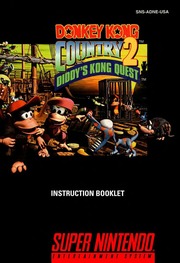
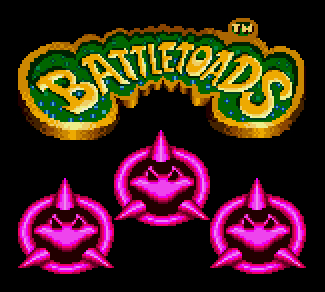
David Wise joined Rare in the mid-1980s and remained the studio’s primary in-house composer through 2009 — one of the longest-serving composers in the industry. Over more than 40 game credits, Wise developed a compositional voice that balanced driving energy with ambient emotional depth.
His early NES work on R.C. Pro-Am (1988) and Battletoads (1991) demonstrated technical mastery of the NES sound channels. His SNES work for the DKC trilogy — especially DKC1 and DKC2 — is where Wise’s compositional ambition fully materialised. Aquatic Ambiance from DKC1 and Stickerbush Symphony from DKC2 are among the most beloved pieces in the entire SNES library.
Wise left Rare in 2009 and continued as a freelance composer, returning to write the DKC: Tropical Freeze score for Retro Studios. His music has retained a devoted following, and Stickerbush Symphony in particular has millions of YouTube streams.
“I was working within the constraints of the SPC700 chip, but within those constraints I could do anything. I pushed every channel to its absolute limit.”
— David Wise, on composing for the SNES
Eveline Novakovic-Fischer
Composer — In-house, Rare Ltd
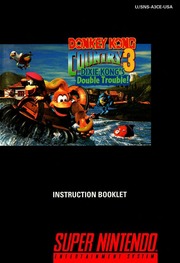
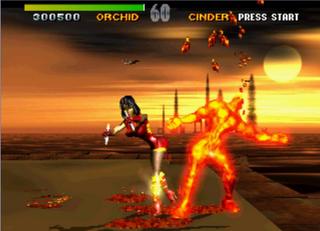
Eveline Novakovic-Fischer was a Rare in-house composer whose credits included the SNES version of Killer Instinct (1995, co-composed with Robin Beanland) and the SNES score for Donkey Kong Country 3: Dixie Kong’s Double Trouble! (1996).
Her DKC3 score is stylistically distinct from David Wise’s work on DKC1 and DKC2, favouring more industrial and ambient textures that suited the game’s exploration-focused design. The GBA remake of DKC3 featured a new score by David Wise, but Eveline’s original SNES compositions remain the definitive version for many fans.
“DKC3 had a different personality from the first two games — more exploring, more discovery — and the music needed to reflect that sense of the unknown.”
— Eveline Novakovic-Fischer
Grant Kirkhope
Composer — In-house, Rare Ltd
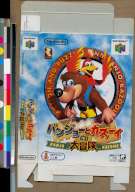
Grant Kirkhope joined Rare in 1995 and became the studio’s primary composer for the N64 era. His score for Banjo-Kazooie (1998) — playful, melodic, endlessly inventive — is among the most celebrated N64 soundtracks. The distinctive jingle motifs for each level world became instantly recognisable to a generation of players.
Kirkhope has been unusually accessible to the retro gaming community, giving multiple interviews about his time at Rare, his compositional process, and the making of Banjo-Kazooie’s score. He has remained active as a composer following his Rare years.
“I wanted Banjo’s world to feel alive. Every area had its own personality, and the music was how you understood where you were and what it felt like to be there.”
— Grant Kirkhope, on Banjo-Kazooie
Tim Follin
Freelance Composer — Solstice (NES, 1990)
Tim Follin was not a Rare staff member but composed the NES score for Solstice: The Quest for the Staff of Demnos (1990), published by CSG Imagesoft and developed by Rare. His Solstice NES score is considered among the most technically impressive ever produced for the platform — a complex, multi-channel composition that exploited the NES sound hardware beyond what most developers attempted.
Follin was a prolific freelance composer throughout the 8-bit and 16-bit eras, with credits on Amiga, C64, ZX Spectrum, and NES titles. His work on Solstice brought him into contact with Rare’s output at a key moment, and the Solstice score remains one of the defining pieces in the NES music canon.