Listen In-Browser — SNES SPC700
Battletoads / Double Dragon
Battletoads
Killer Instinct
Battletoads (Game Boy GBS) — loops; use Next to advance
Loading audio engine…
SNES SPC700 & Game Boy DMG via Game_Music_Emu WASM.
David Wise
In-house Composer — Rare Ltd, mid-1980s to 2009
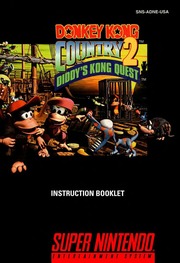
David Wise spent more than two decades as Rare’s primary in-house composer, building one of the most distinctive bodies of work in game music. His career at Rare spanned the NES era (R.C. Pro-Am, Battletoads), the SNES golden period (DKC trilogy), and early N64 work before Grant Kirkhope took the lead on flagship N64 titles.
Wise’s compositional philosophy centres on atmosphere: creating music that extends the environment rather than decorating it. His underwater themes — Aquatic Ambiance from DKC1, Lockjaw’s Saga from DKC2 — are considered masterclasses in ambient game music. His jungle themes blend energy with tropical warmth. His final-boss music carries genuine dramatic weight.
Key Works
- R.C. Pro-Am (NES, 1988)
- Battletoads (NES, 1991)
- Donkey Kong Country (SNES, 1994) — co-composed with Eveline Novakovic-Fischer and Robin Beanland
- Donkey Kong Country 2: Diddy’s Kong Quest (SNES, 1995) — sole composer
- Donkey Kong Country: Tropical Freeze (Wii U, 2014) — freelance return
“I think Aquatic Ambiance and Stickerbush Symphony are the ones people mention most — and they’re both about creating a sense of place. Music should make you feel like you’re actually there.”
— David Wise
Eveline Novakovic-Fischer
In-house Composer — Rare Ltd
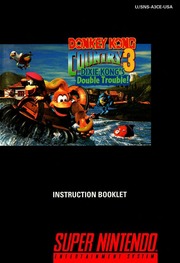
Eveline Novakovic-Fischer was an in-house Rare composer whose contributions spanned two high-profile titles. Her work on the SNES version of Killer Instinct (1995, co-composed with Robin Beanland) helped establish the fighting game’s audio identity. Her score for Donkey Kong Country 3: Dixie Kong’s Double Trouble! (1996) is her most prominent solo work.
The DKC3 SNES score occupies a different emotional register from Wise’s DKC1 and DKC2 work. Where Wise favoured jungle warmth and ambient melancholy, Eveline’s DKC3 sound is more industrial, more exploratory — appropriate for a game with a greater emphasis on world navigation and discovery. The lakeside world themes in particular achieve a specific pastoral quality that stands apart from the rest of the trilogy.
The SNES SPC700 Sound Chip
The SPC700’s 64KB RAM constraint was the defining limitation for SNES composers. Every sample — every instrument sound — had to share space with the song data itself. Composers were forced to use small, high-quality samples and rely on careful reuse across different pitch registers.
David Wise became particularly skilled at exploiting the echo DSP register. By routing channels through the echo effect with carefully chosen delay and feedback values, he created the layered, reverberant sound that defines tracks like Aquatic Ambiance and Stickerbush Symphony. The technique required careful management of the echo buffer against the RAM budget — a constraint that became an expressive tool.
“Working within 64KB sounds limiting. But limits force creativity. You learn to do more with less, and sometimes less is exactly what a piece needs.”
— David Wise, on SNES composition constraints